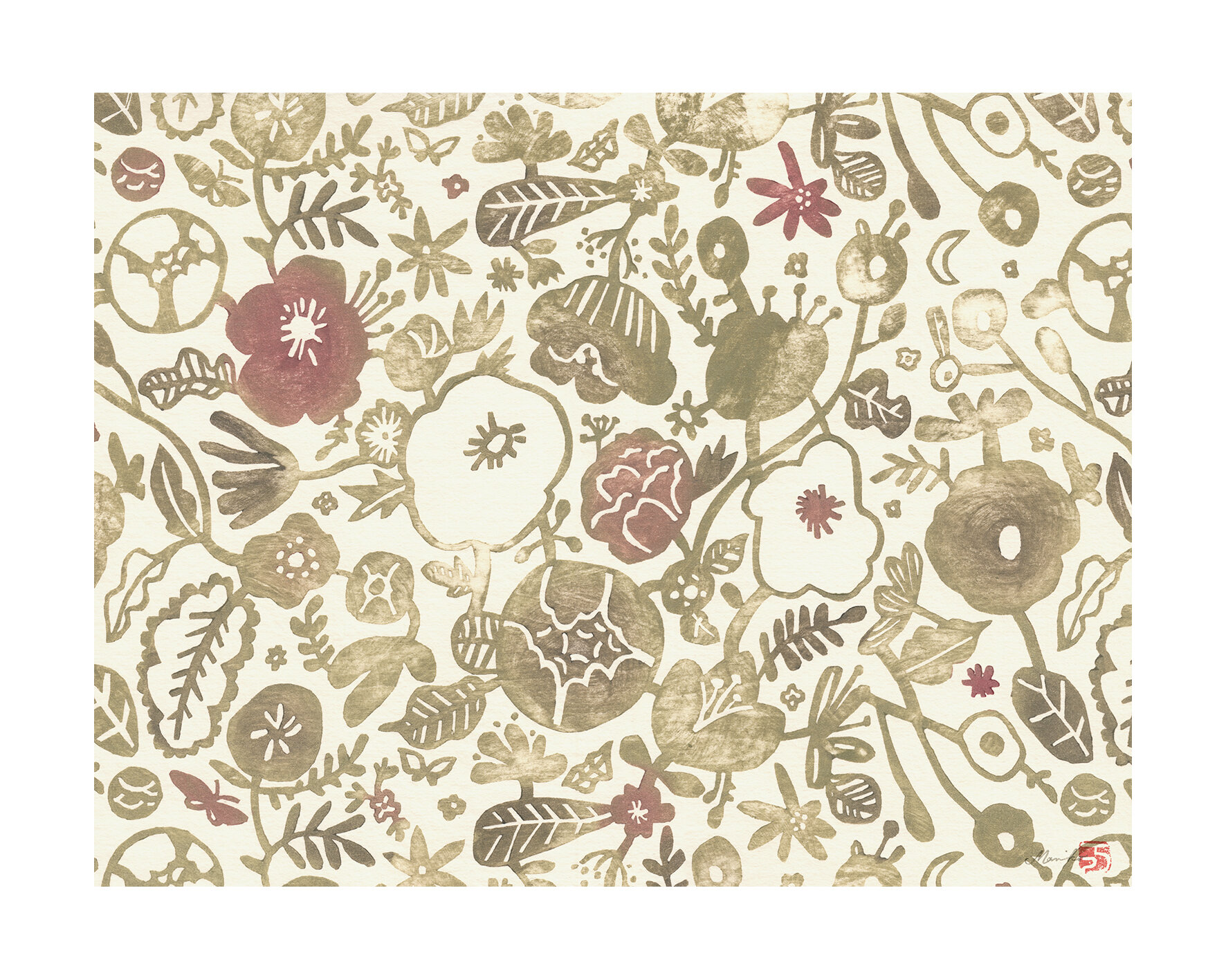
Night Garden (Green and Pink)
by Mariko Jesse
- Medium:
- Mokuhanga on washi
- Image courtesy of
- Artist Website
Description
Night Garden (Green and Pink) depicts an after-dark garden in a deliberately unexpected chromatic key. Nocturnal scenes in traditional Japanese printmaking often employed deep indigo or black grounds with pale figures rendered in reserve — a convention Jesse sets aside in favor of green and pink, a pairing that produces a softly luminous, almost dreamlike atmosphere rather than the drama of deep contrast. In mokuhanga on washi, both colors would be built through layered applications of water-based pigment, the transparency of each layer contributing to the overall optical warmth. Green might denote foliage, lawn, or reflected light from vegetation; pink could indicate blossoms, ambient glow, or the flush of artificial light on a path or wall. The night garden as subject carries associations with privacy, sensory heightening, and the transformation of familiar daytime spaces into something less bounded — an atmosphere that Jesse's color choices actively support.
More Prints by Mariko Jesse

More Landscapes Prints

Lake Kugushi in Wakasa Province (Wakasa Kugushiko), from the series Souvenirs of Travel I (Tabi miyage dai isshu)"
Wakasa Kugushiko
1920
Color woodblock print; oban
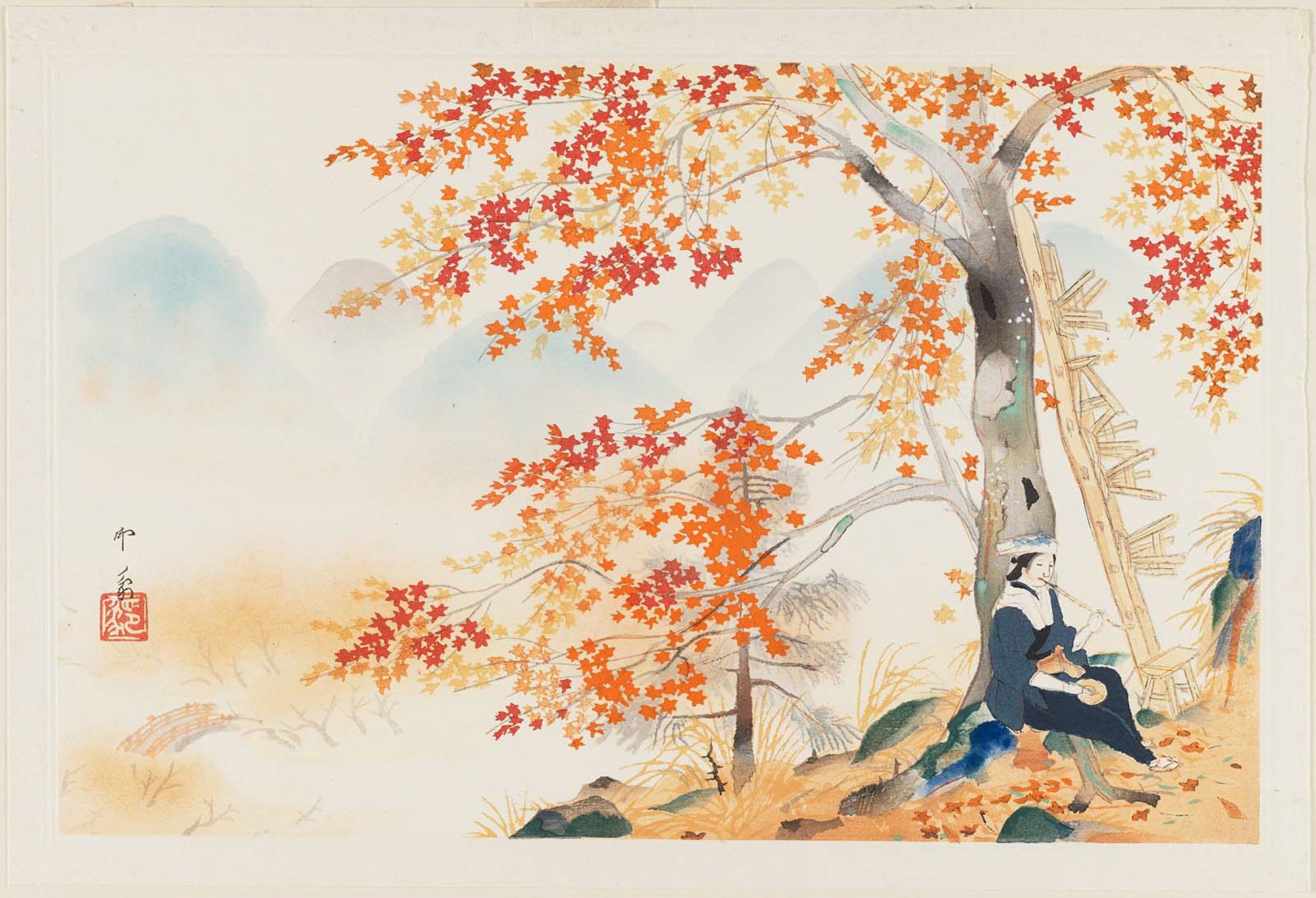
Autumn Maple Leaves at Takao, from the album Eight Views of Kyoto (Kyôto hakkei)
Woodblock print

The Beach at Kaiganji in Sanuki Province (Sanuki Kaiganji no hama), from the series "Collection of Views of Japan II, Kansai Edition (Nihon fukei shu II Kansai hen)"
1934
Color woodblock print; oban

Tea Kettle, section of a sheet from the series "Mirror of Stone Rubbings of Views of the Provinces" (Kohon meihitsu ishizuri kagami)
n.d.
Woodblock print; ishizuri-e, section of harimaze sheet
Featured in Collections
Curated cross-cuts that include this print.
Frequently Asked Questions
Night Garden (Green and Pink) was created by Mariko Jesse.
Night Garden (Green and Pink) uses Washi, on mokuhanga on washi.
Night Garden (Green and Pink) depicts landscapes, night scenes, and gardens.