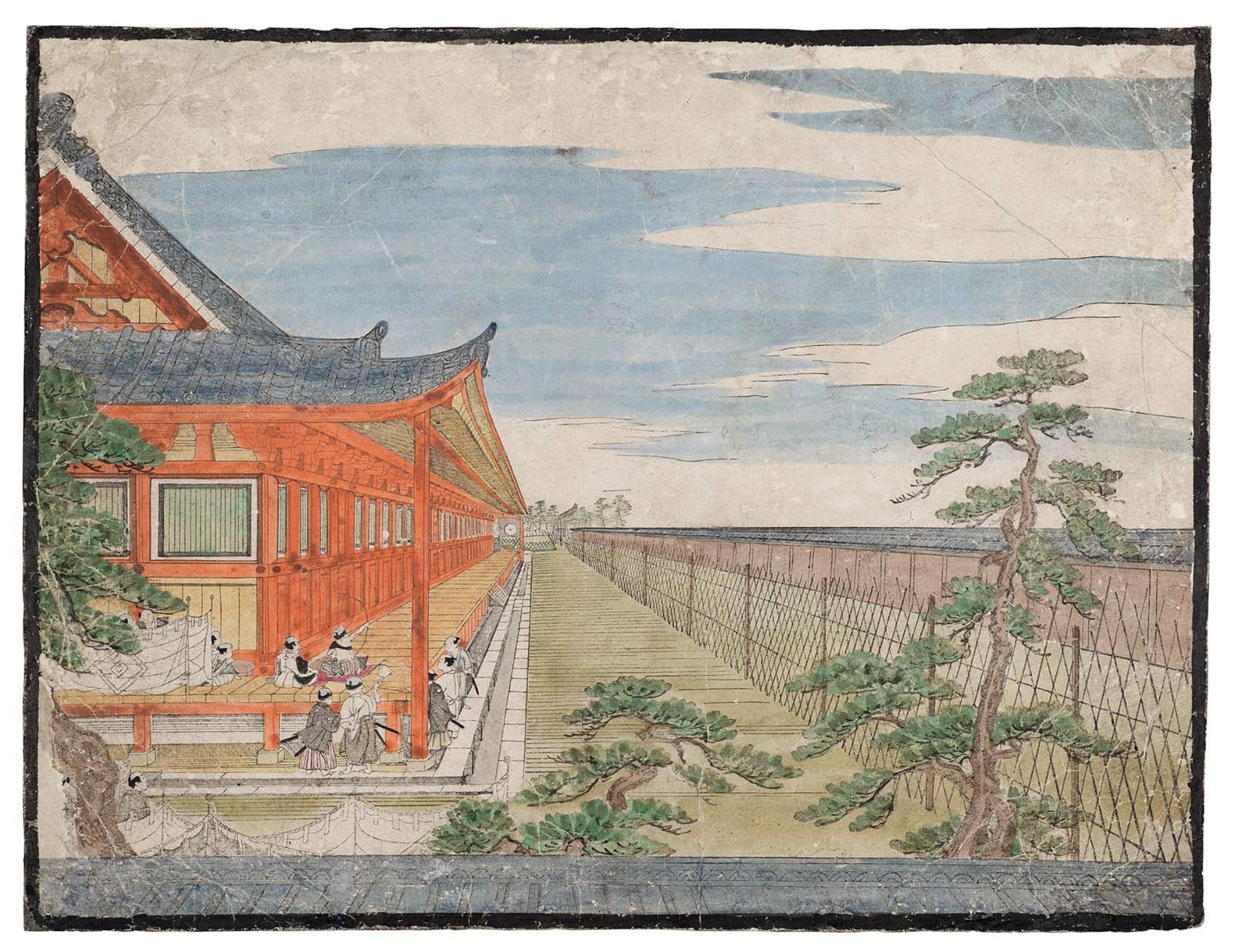
Archery Contest at the Sanjūsangendō
三十三間堂通し矢図
- Date:
- 1759 (uki-e perspective print for nozoki-karakuri)
- Medium:
- Woodblock print with hand-applied color
Description
This Archery Contest at the Sanjūsangendō, held by the Museum of Fine Arts, Boston (sc169497), is an earlier and closely related version of the FAMSF Sanjūsangen archery print, with the museum recording 1759 as its date — that is, the apprentice period when Ōkyo was working at the Owariya toy shop in Kyoto. The composition treats the same subject: the tōshi-ya long-shot archery contest at the Sanjūsangen-dō temple, with archers ranged along the temple's 120-meter veranda firing toward a distant target. The perspective treatment uses parallel beams and floorboards converging toward a single vanishing point at the far end of the corridor, exploiting the temple's exceptional length as a perspectival demonstration. As with the other early megane-e, the print was designed for viewing through a nozoki-karakuri optical viewer fitted with a biconvex lens that produced an illusion of depth. The Sanjūsangen-dō (Hall of Thirty-Three Bays) is one of Kyoto's most famous temples, housing 1001 standing Kannon figures along its long veranda. The tōshi-ya archery contest, held annually in the eighth lunar month, was a major Kyoto spectator event from the Edo period; the record-holder Wasa Daihachirō (1670) is said to have shot 8,133 arrows the full length of the veranda in 24 hours. Ōkyo's megane-e treatment of the subject was repeated in slightly varying compositions across the late 1750s and 1760s.
More Prints by Maruyama Ōkyo

Page 11 from the book Ōkyo Shūbi gafu
応挙手筆画譜
1892 (after original brush designs by Ōkyo, 1733–1795)
Color woodblock print, page from an illustrated book
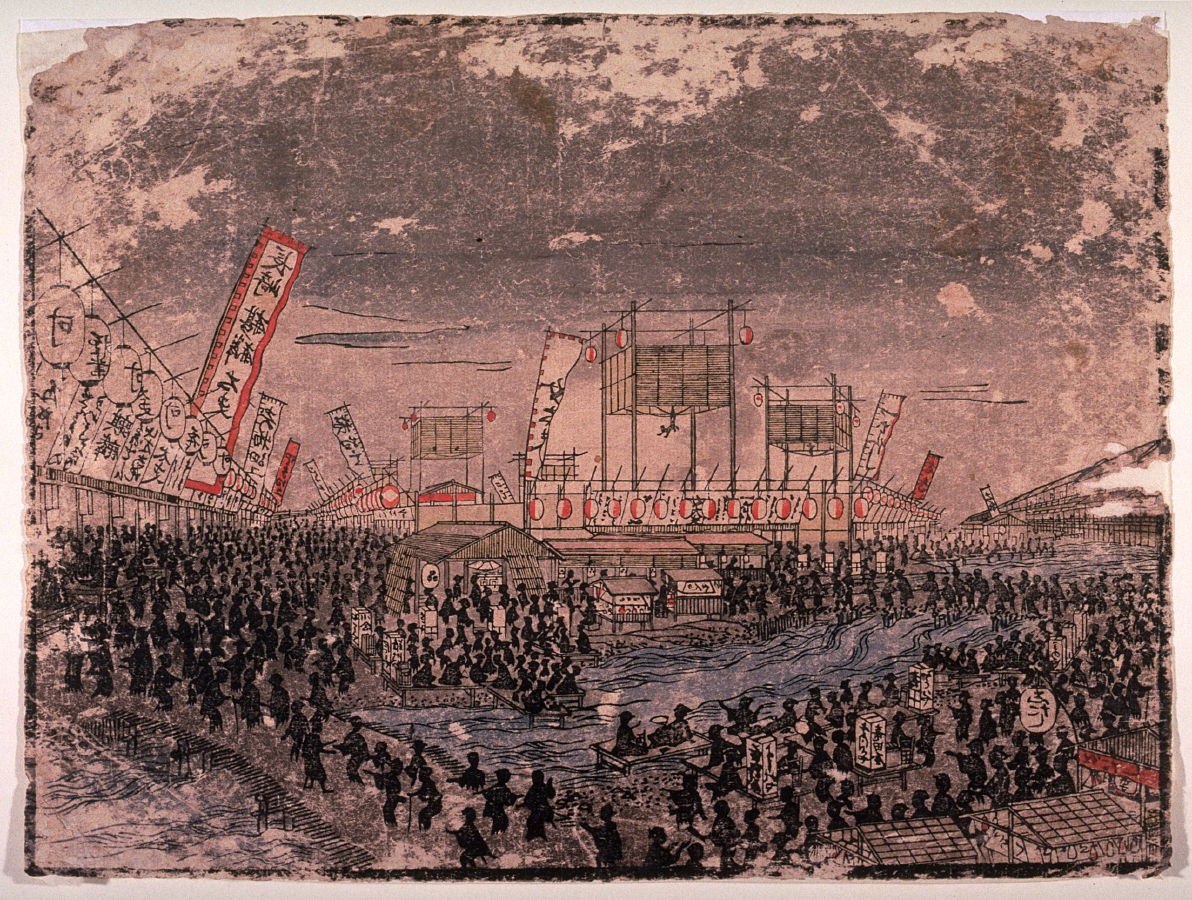
Summer Night on the Banks of the Kamo River near Shijō, from an untitled series of Kyoto landscapes for an optical viewer device
四条河原納涼図
ca. 1765–1775
Woodcut with hand-applied color (uki-e for a nozoki-karakuri optical viewer)
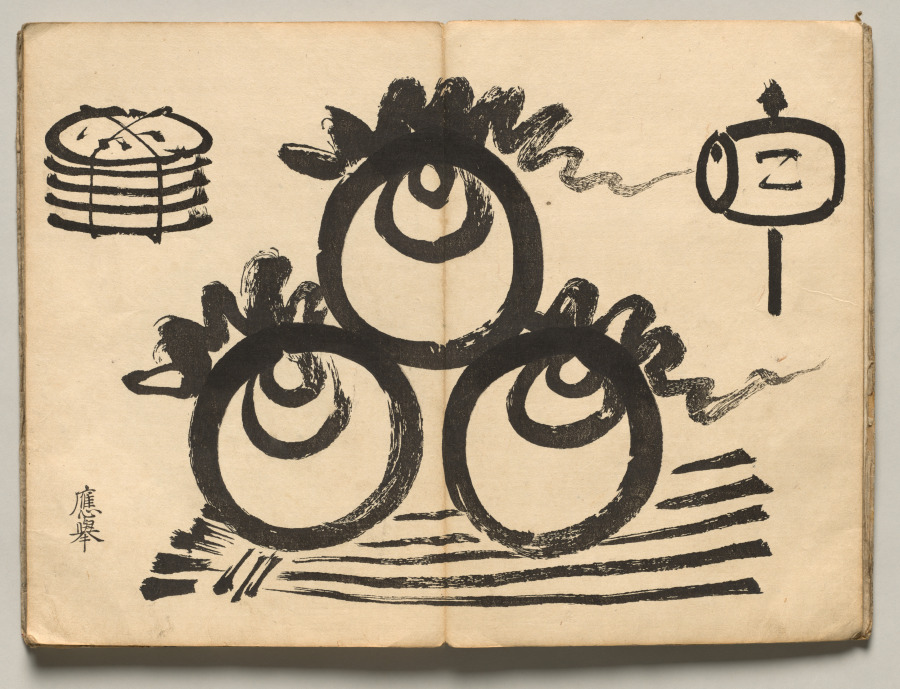
Flaming Jewels, from Ōkyo gafu (Ōkyo Picture Book)
応挙画譜 — 火焔宝珠
1850 (accordion-bound woodblock-printed picture book after Ōkyo's brush designs)
Accordion-style woodblock printed folding book; ink and color on paper
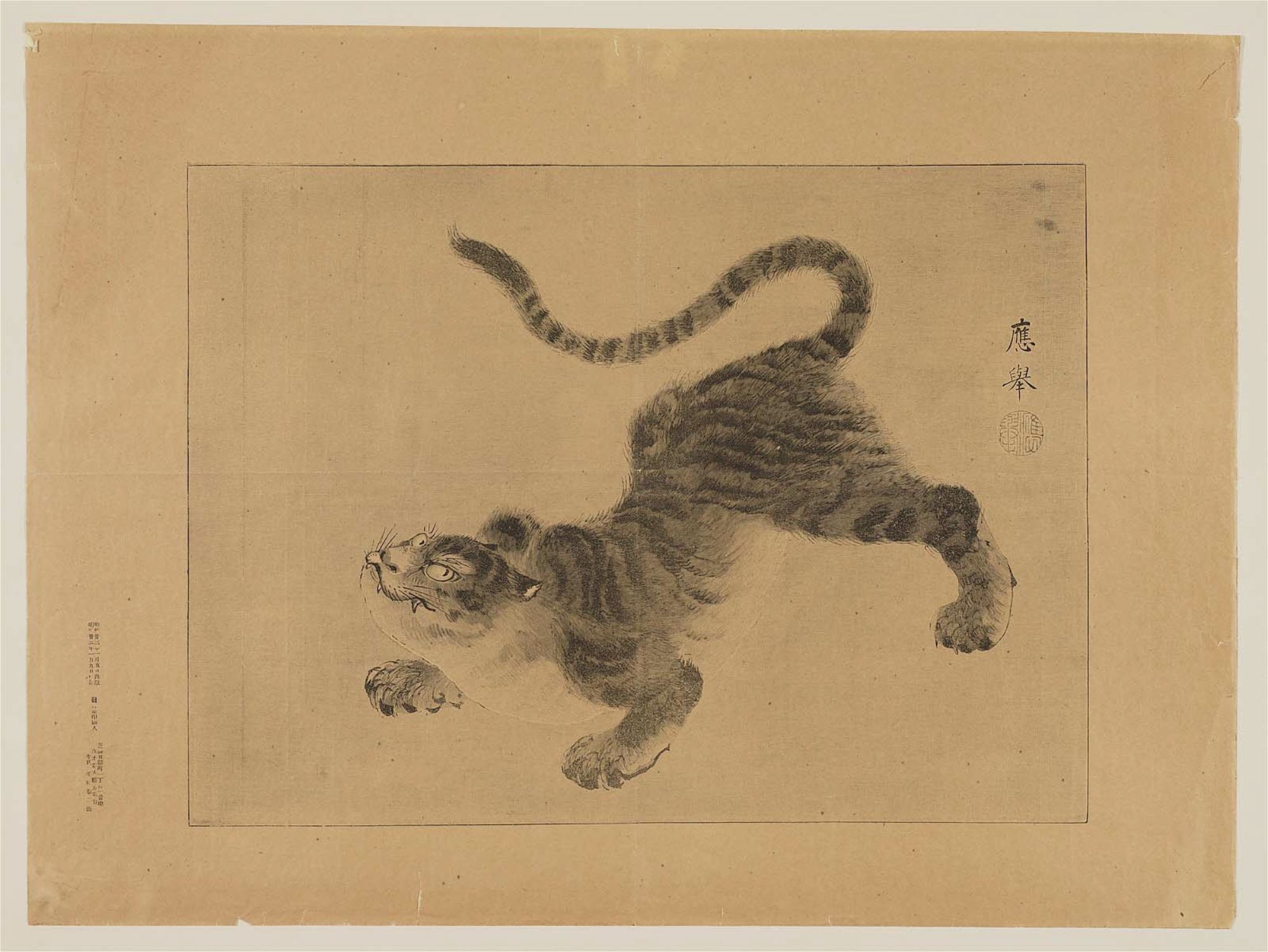
Tiger
虎図
1890 (Meiji-era woodblock impression after an Ōkyo brush original)
Color woodblock print
Frequently Asked Questions
Archery Contest at the Sanjūsangendō (三十三間堂通し矢図) was created by Maruyama Ōkyo (円山応挙) in 1759 (uki-e perspective print for nozoki-karakuri).