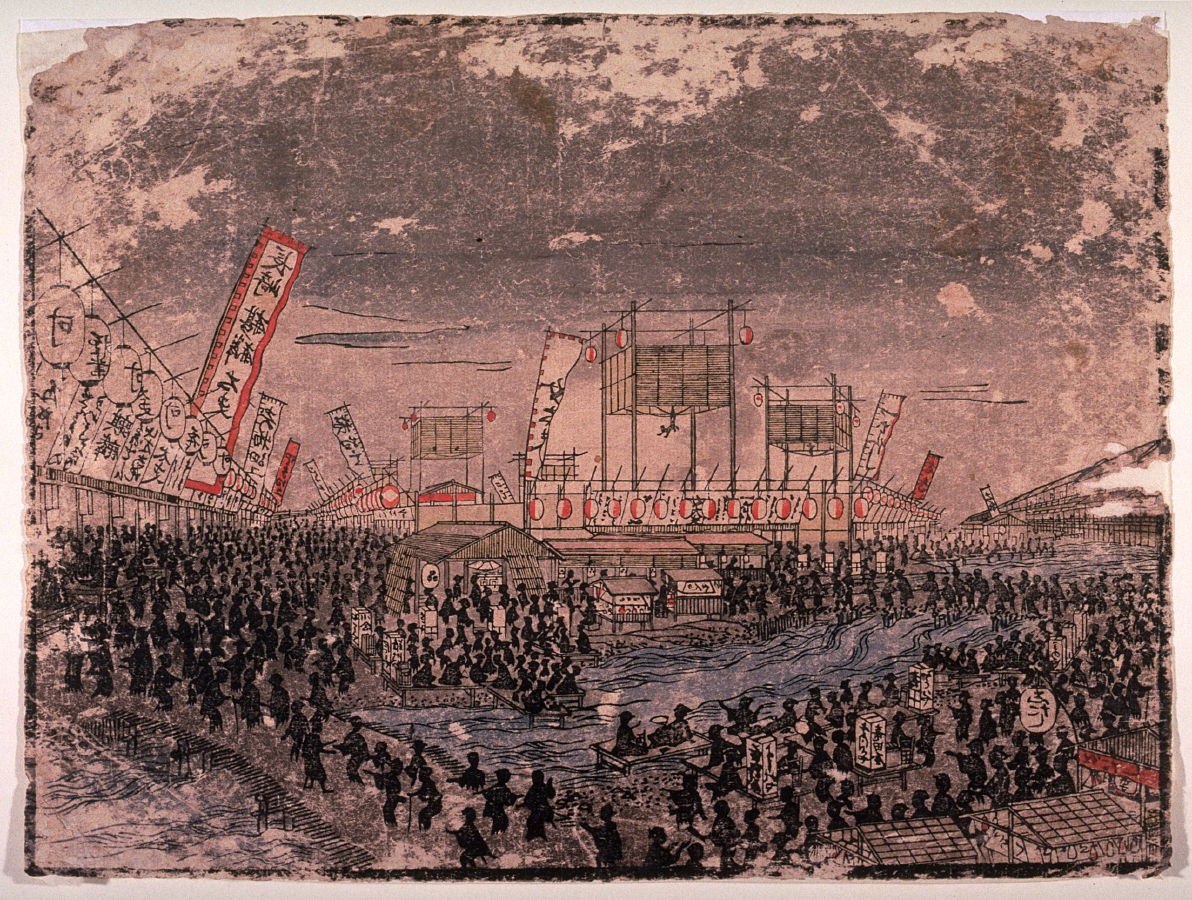
Summer Night on the Banks of the Kamo River near Shijō, from an untitled series of Kyoto landscapes for an optical viewer device
四条河原納涼図
- Date:
- ca. 1765–1775
- Medium:
- Woodcut with hand-applied color (uki-e for a nozoki-karakuri optical viewer)
Description
Summer Night on the Banks of the Kamo River near Shijō is the companion to the Sanjūsangen archery print and is held by the Fine Arts Museums of San Francisco (Legion of Honor, 1969.36.2), also from the R.E. Lewis gift. The composition, dated circa 1765–1775 and measuring 199 by 264 mm, depicts the riverside cool-of-the-evening (yūsuzumi) entertainment scene at Shijō on the Kamo River — a Kyoto summer custom in which temporary platforms (yuka or kawadoko) were erected over the riverbed for elite diners and pleasure-seekers escaping the city's summer heat. Ōkyo's megane-e treatment renders the platforms in perspectival recession, with the riverbed extending toward a distant vanishing point and figures ranged in groups across the foreground and middle distance. The hand-applied color is restrained, dominated by greens, blues, and warm whites suggesting moonlight and lantern illumination. Like the Sanjūsangen view, the print was designed for the Owariya's nozoki-karakuri optical viewers and represents an early phase in Ōkyo's adoption of Western perspective into a Kyoto subject vocabulary. The Shijō riverside scene was an established subject in Kyoto genre painting since at least the Momoyama period, and Ōkyo's contribution applies the perspective vocabulary of European prints (transmitted through Chinese export imagery) to a thoroughly local theme.
More Prints by Maruyama Ōkyo

Page 11 from the book Ōkyo Shūbi gafu
応挙手筆画譜
1892 (after original brush designs by Ōkyo, 1733–1795)
Color woodblock print, page from an illustrated book
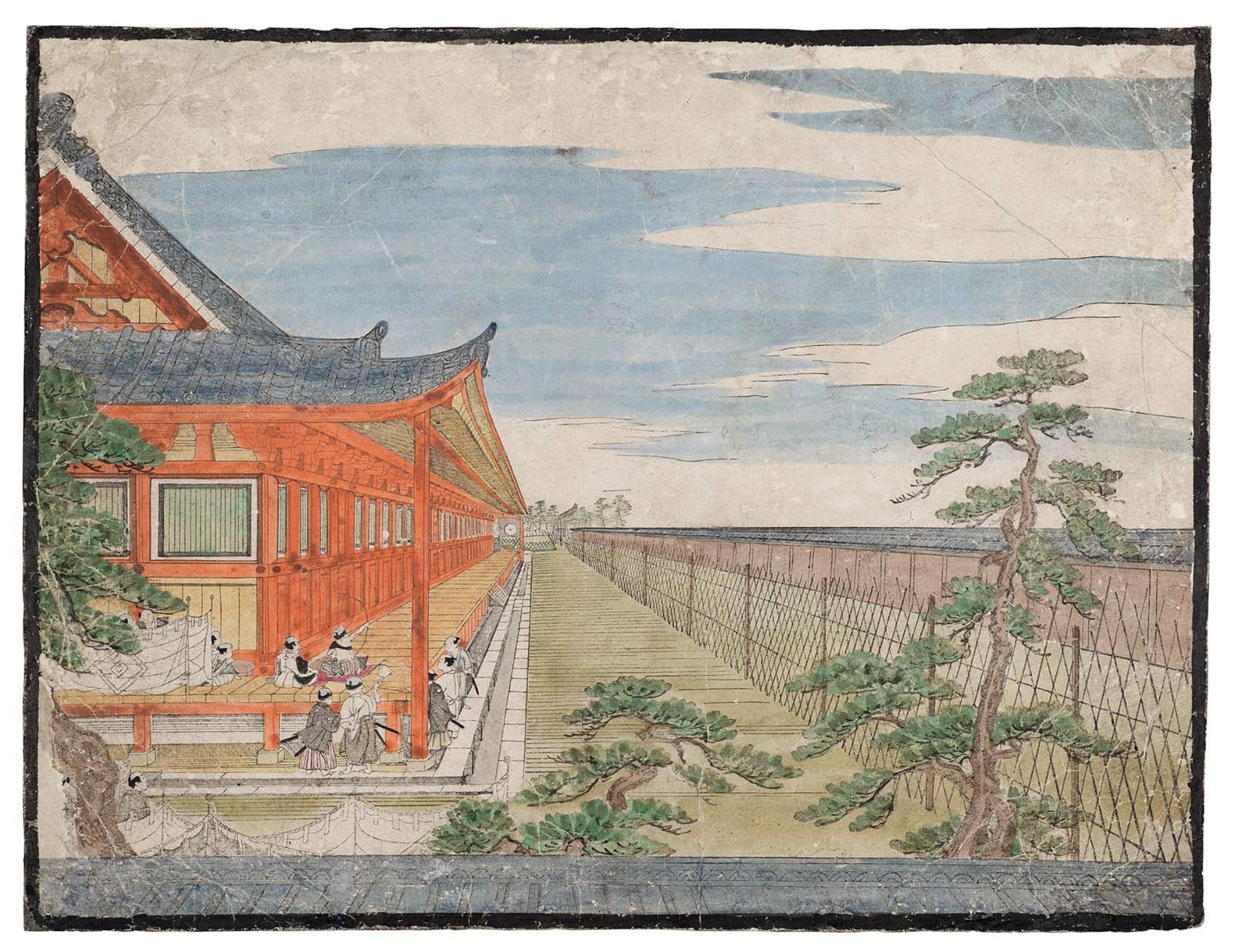
Archery Contest at the Sanjūsangendō
三十三間堂通し矢図
1759 (uki-e perspective print for nozoki-karakuri)
Woodblock print with hand-applied color
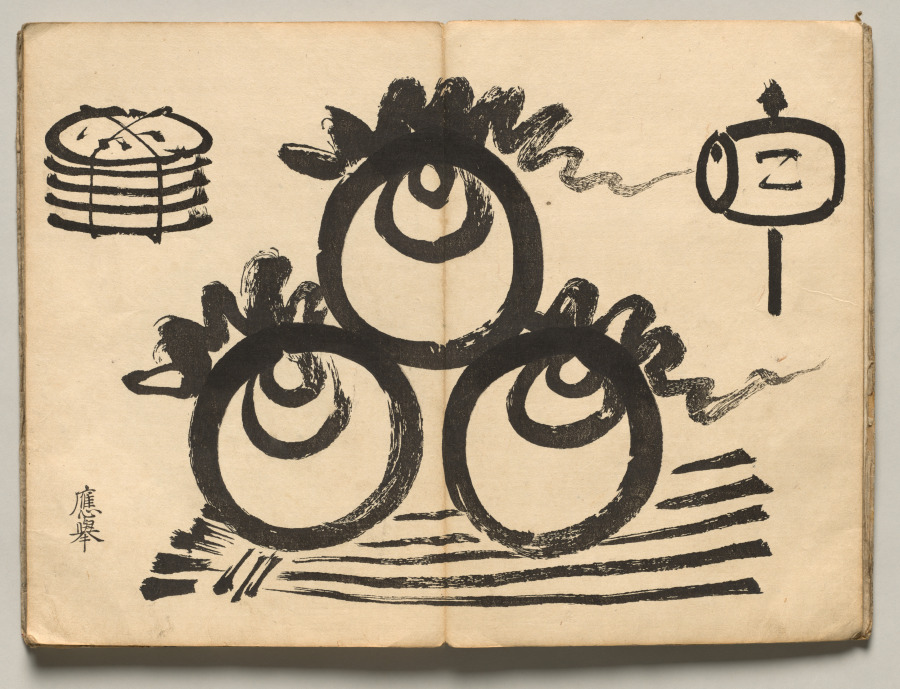
Flaming Jewels, from Ōkyo gafu (Ōkyo Picture Book)
応挙画譜 — 火焔宝珠
1850 (accordion-bound woodblock-printed picture book after Ōkyo's brush designs)
Accordion-style woodblock printed folding book; ink and color on paper
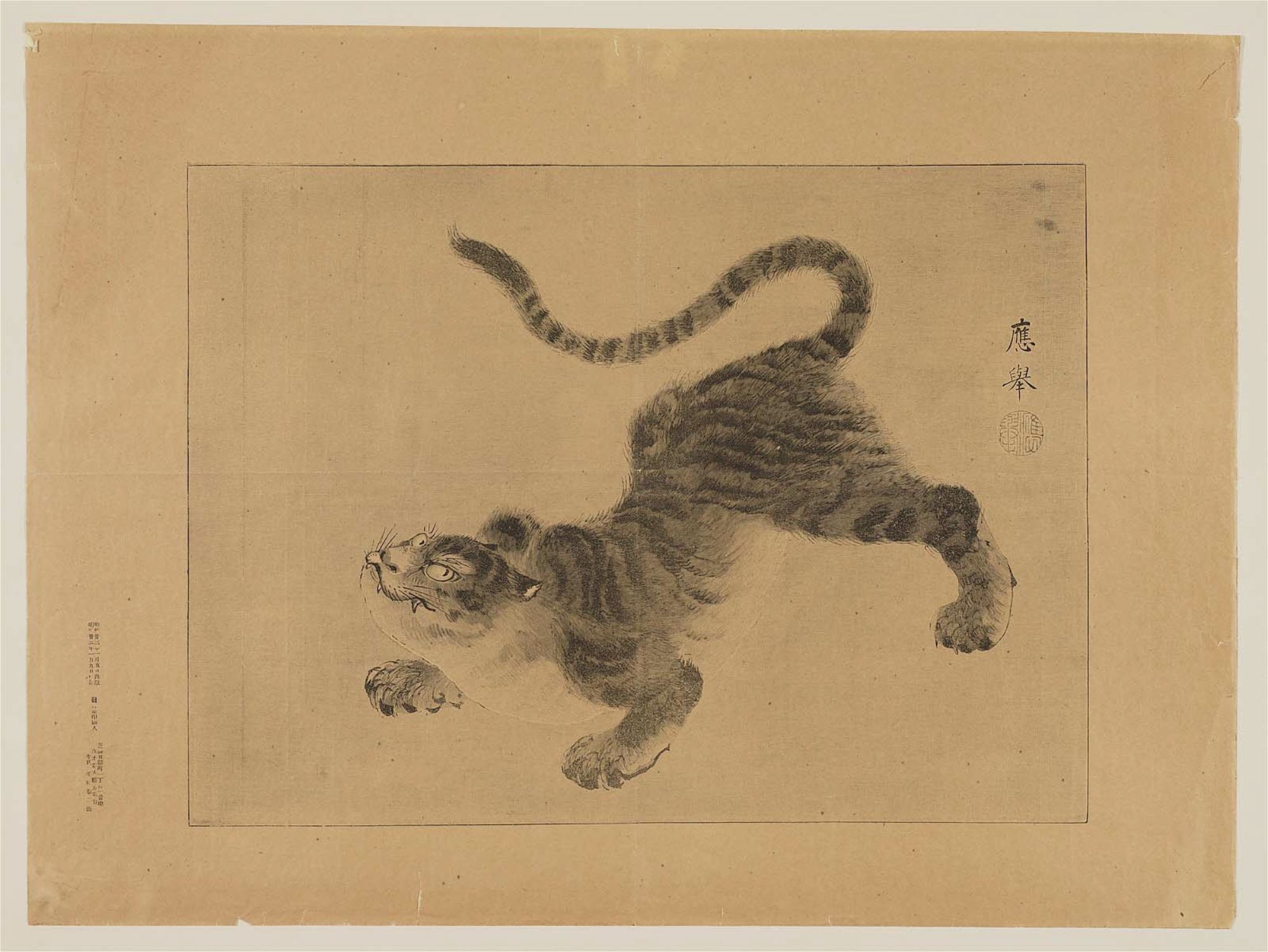
Tiger
虎図
1890 (Meiji-era woodblock impression after an Ōkyo brush original)
Color woodblock print
More Summer Prints
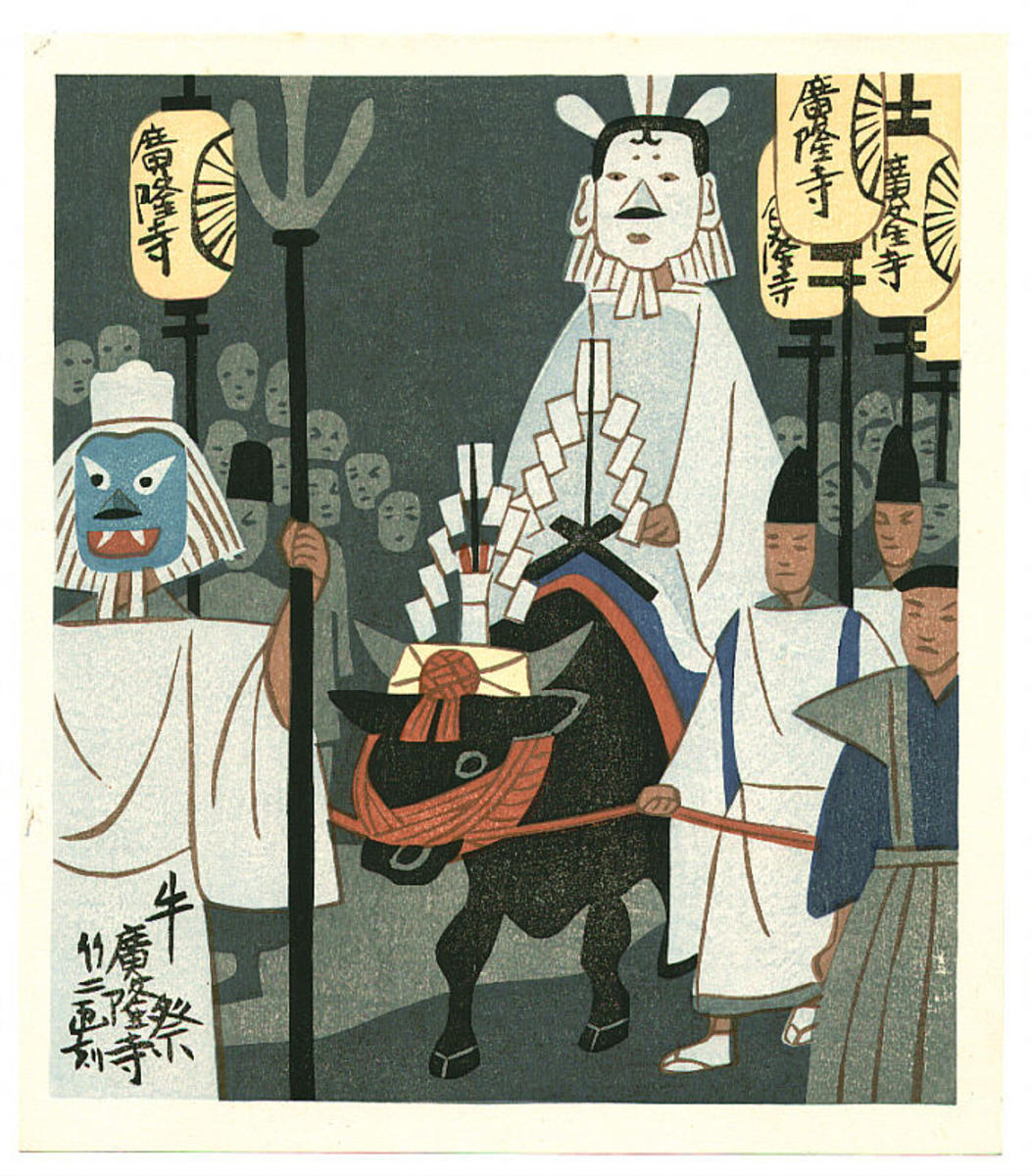
Bull Festival at Koryuji
広隆寺牛祭
Woodblock print
February (The Annual Festival of the Fushimi Inari)
二月 (伏見稲荷大社祭)
second half 20th century
Woodblock print, ink and color on paper

July (Gorgeous Procession of Yama-hoko or the Floats at the Gion Festival)
七月 (祇園祭山鉾巡行)
second half 20th century
Woodblock print, ink and color on paper

August (The Bonfire Festival of the Daimonji Hill Viewed from the Sanjo Bridge)
八月 (三条大橋より大文字)
second half 20th century
Woodblock print, ink and color on paper
Frequently Asked Questions
Summer Night on the Banks of the Kamo River near Shijō, from an untitled series of Kyoto landscapes for an optical viewer device (四条河原納涼図) was created by Maruyama Ōkyo (円山応挙) in ca. 1765–1775.
Summer Night on the Banks of the Kamo River near Shijō, from an untitled series of Kyoto landscapes for an optical viewer device depicts summer.