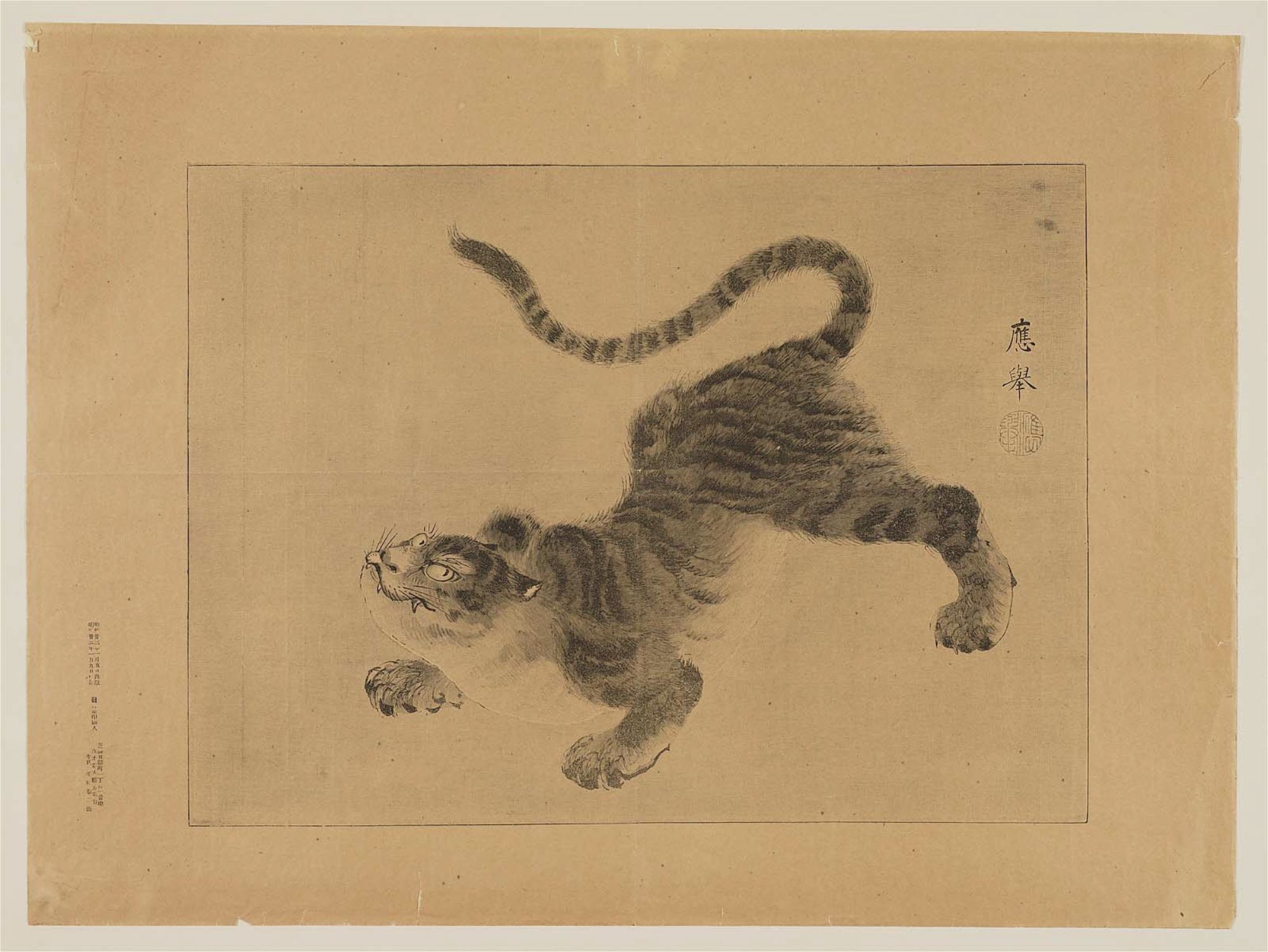
Tiger
虎図
- Date:
- 1890 (Meiji-era woodblock impression after an Ōkyo brush original)
- Medium:
- Color woodblock print
Description
Tiger is held by the Museum of Fine Arts, Boston (accession sc224228 in the museum's prints catalog) and is dated 1890 — that is, a Meiji-era woodblock impression after an Ōkyo brush original of the late eighteenth century. The tiger was one of Ōkyo's most celebrated subjects, and his painted tiger compositions (including the famous Tiger pair at the Tokyo National Museum and the Daijō-ji and Kongō-ji temple sets) were widely copied and reproduced throughout the nineteenth century. The 1890 woodblock impression belongs to the wave of Meiji-era publications that issued Ōkyo's animal designs in color print form as study materials for Kyoto painting students and as collectible reproductions for the broader market. Ōkyo had famously never seen a live tiger — no live tigers were imported to Japan in the eighteenth century — and his tiger paintings were built up from imported Chinese painting models, surviving tiger pelts, and observation of domestic cats whose poses and musculature he extrapolated to the larger animal. The shasei (drawing from life) principle that defined his practice thus operated on borrowed and substituted evidence in the case of the tiger, producing a hybrid creature that combined naturalist musculature with conventional Kanō-school iconographic features. The 1890 woodblock reproduction preserves these qualities through the carver's reading of the brush original.
More Prints by Maruyama Ōkyo

Page 11 from the book Ōkyo Shūbi gafu
応挙手筆画譜
1892 (after original brush designs by Ōkyo, 1733–1795)
Color woodblock print, page from an illustrated book
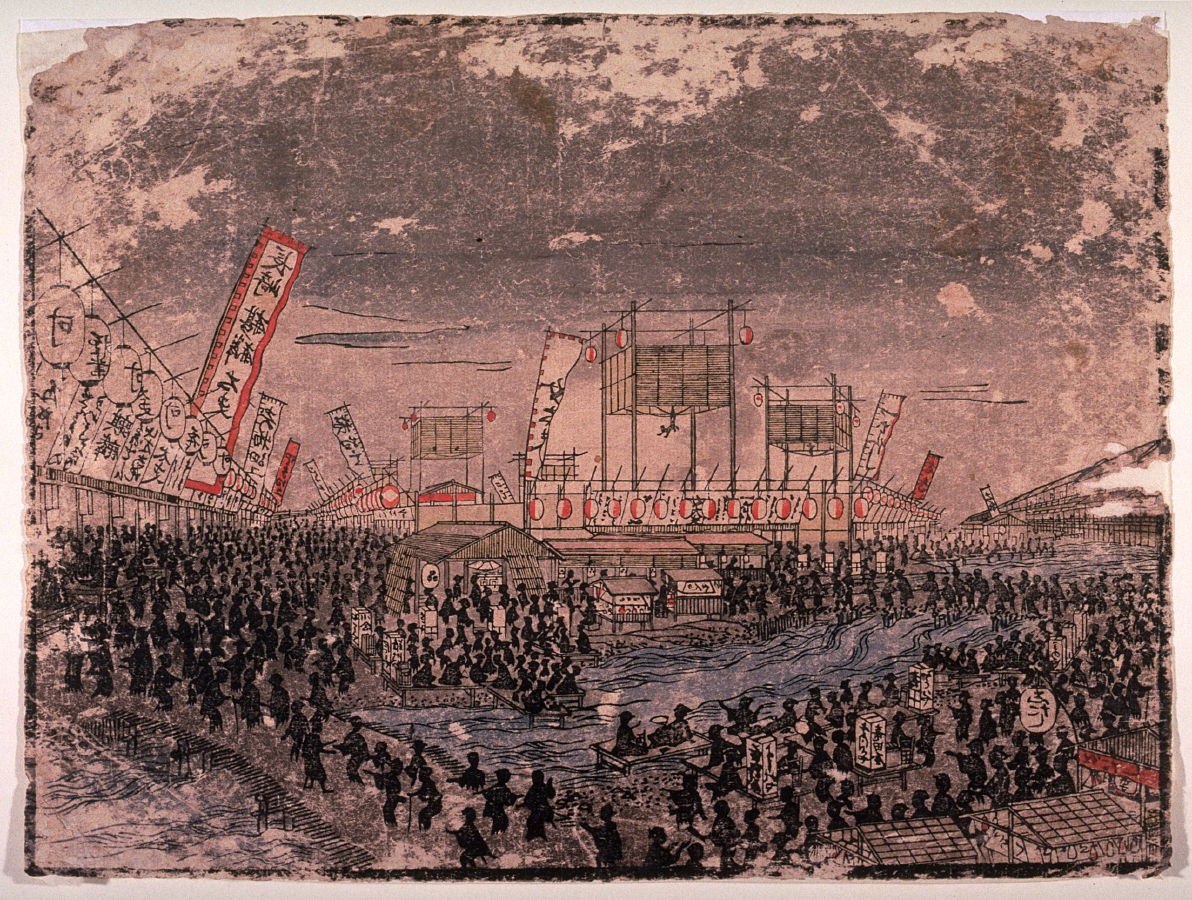
Summer Night on the Banks of the Kamo River near Shijō, from an untitled series of Kyoto landscapes for an optical viewer device
四条河原納涼図
ca. 1765–1775
Woodcut with hand-applied color (uki-e for a nozoki-karakuri optical viewer)
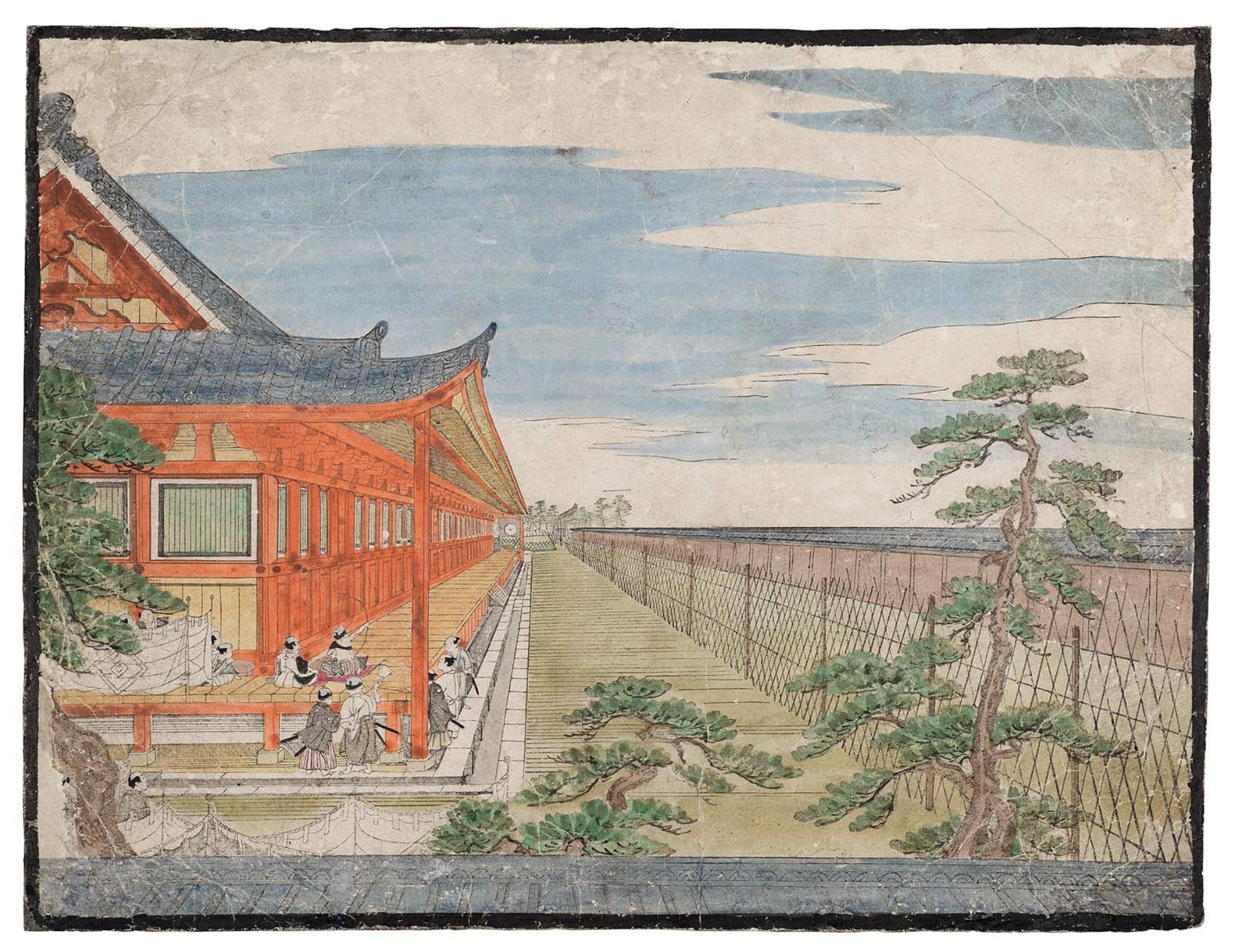
Archery Contest at the Sanjūsangendō
三十三間堂通し矢図
1759 (uki-e perspective print for nozoki-karakuri)
Woodblock print with hand-applied color
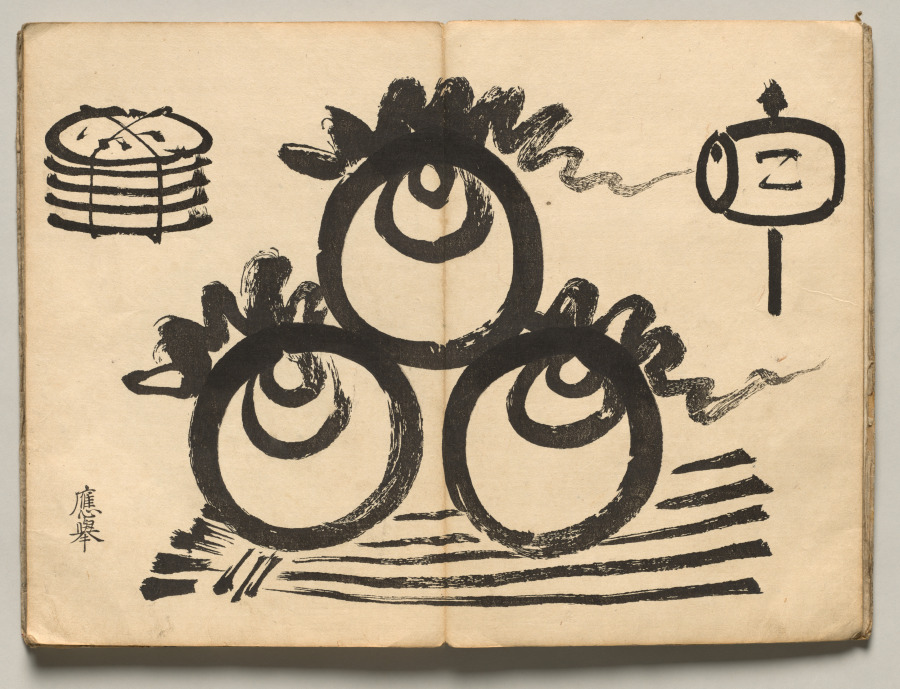
Flaming Jewels, from Ōkyo gafu (Ōkyo Picture Book)
応挙画譜 — 火焔宝珠
1850 (accordion-bound woodblock-printed picture book after Ōkyo's brush designs)
Accordion-style woodblock printed folding book; ink and color on paper
Frequently Asked Questions
Tiger (虎図) was created by Maruyama Ōkyo (円山応挙) in 1890 (Meiji-era woodblock impression after an Ōkyo brush original).