Maruyama Ōkyo
円山応挙
1733–1795
Japan
Biography
Maruyama Ōkyo (円山応挙, 1733–1795) was among the most influential painters working in Kyoto in the second half of the eighteenth century and the founder of the Maruyama school, whose program of close observation from life reshaped Japanese painting and provided the foundation for the broader Maruyama-Shijō tradition that dominated Kyoto practice into the twentieth century. Born to a farming family in the village of Anō in Tanba Province (now part of Kameoka, Kyoto Prefecture) on June 12, 1733, he was intended by his family for the Buddhist priesthood but showed an early aptitude for painting, and he entered the studio of Ishida Yūtei (1721–1786), a Kanō-school master with an active commercial workshop in Kyoto. Yūtei's training gave him the standard Kanō repertoire of brushwork, but the formative influences on his mature style lay elsewhere.
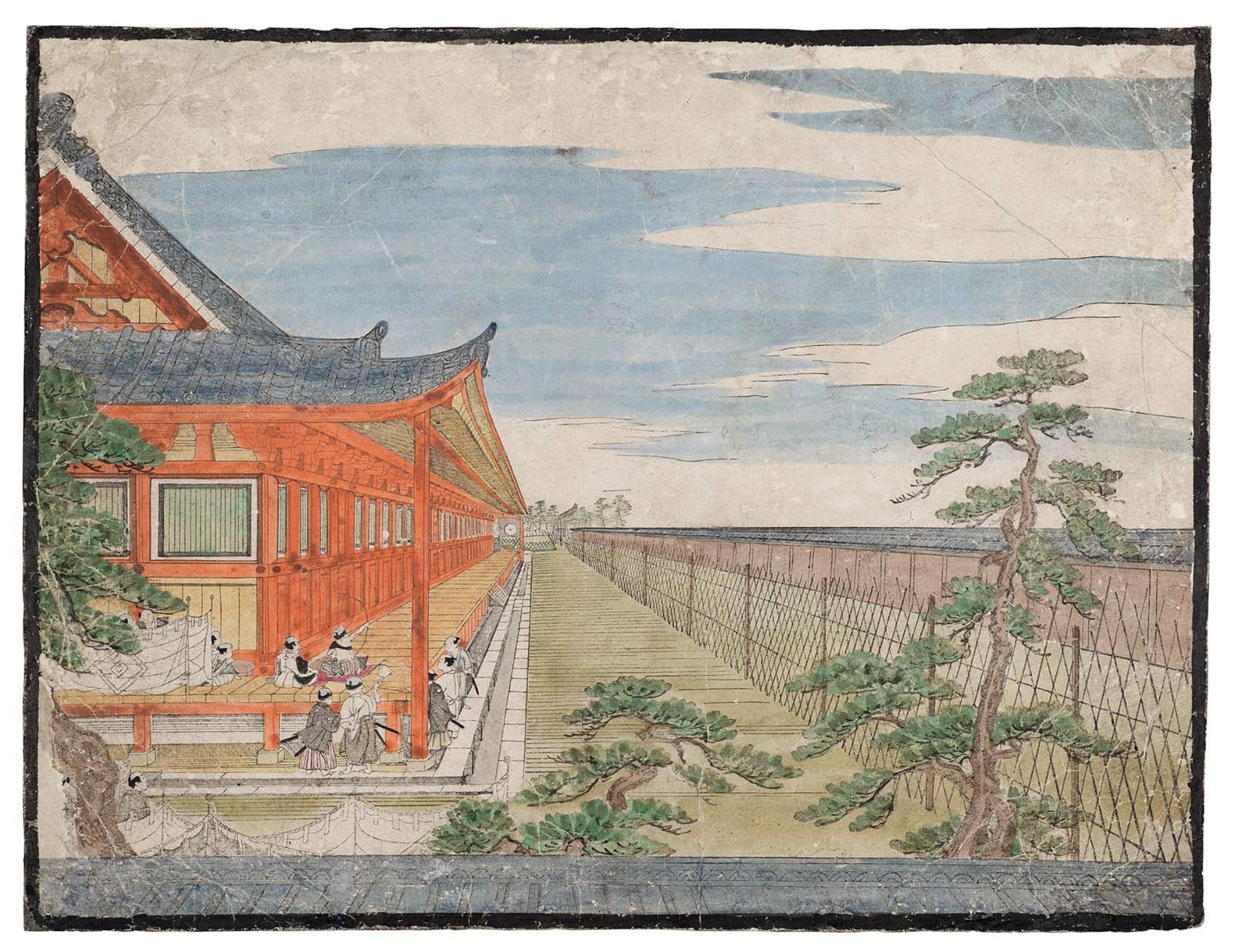
The young painter's early livelihood came from work for a Kyoto toy shop, where he designed megane-e (perspective pictures) and other prints to be viewed through nozoki-karakuri optical viewers — wooden cabinets fitted with lenses that produced an illusion of depth. Megane-e were the Japanese branch of a European fashion that had reached East Asia through Dutch and Chinese intermediaries; the genre forced Ōkyo to study Western single-point perspective in a way that no painter trained purely in the Kanō tradition would have done, and to translate that perspective into a domestic visual idiom, often working from Chinese export prints of European originals as his models. He adopted the name Ōkyo (応挙) around the early 1760s — a tribute to the Chinese painter Qian Xuan, whom he admired — and began signing his independent paintings with it.
The defining intellectual move of his career was the systematic adoption of shasei (写生, 'drawing from life') as the foundation of his practice. From the mid-1760s Ōkyo kept extensive sketchbooks of plants, insects, birds, mammals, and human figures observed directly, often in series of motion studies that captured an animal in successive postures. His patron Yūjō, abbot of the Enman'in monzeki in Ōtsu, gave him access to the temple's holdings of Chinese paintings and the freedom to focus on shasei without market pressure, and the Enman'in years produced the master sketchbooks that became school study materials. His mature paintings combined this shasei foundation with a sophisticated handling of Chinese ink-painting conventions and the residual Kanō decorative vocabulary inherited from Yūtei. Two of his most celebrated works — the Pine Trees in Snow screens (1786), painted for the wealthy Mitsui family and later designated a National Treasure, and the painting program at the Daijō-ji temple in Hyōgo — show him deploying this fusion at full scale.
The school Ōkyo gathered around himself in Kyoto was among the most consequential painting workshops of late-eighteenth-century Japan. His immediate pupils included Komai Genki, Yamaguchi Soken, Watanabe Nangaku, Mori Tetsuzan, his son Maruyama Ōzui, and Nagasawa Rosetsu, who would emerge as the school's most eccentric talent. Through Matsumura Goshun — who trained under the poet-painter Yosa Buson before aligning himself with Ōkyo and going on to found the parallel Shijō school — the Maruyama lineage merged with the Buson-derived literati tradition to produce the hybrid Maruyama-Shijō movement that would dominate Kyoto painting for generations. Through its successive masters, down to later Kyoto painters such as Kōno Bairei, Takeuchi Seihō, and Uemura Shōen, Ōkyo's shasei program helped shape the Meiji nihonga reformation and provided the technical foundation for early-twentieth-century Kyoto naturalism. He died in Kyoto on August 31, 1795.
Woodblock prints occupy a distinctive but minor place in Ōkyo's output. The early megane-e — designed for the optical-viewer market and produced in small runs as commercial prints — are essentially the only ukiyo-e-style prints he made in his lifetime. The larger printed presence is posthumous: throughout the Meiji and Taishō periods, Kyoto publishers issued woodblock-printed picture books (gafu) and album sets reproducing his brush sketches as study materials and collectible reference works. These reproduction prints were a principal vehicle through which Ōkyo's animal, plant, and figural designs reached subsequent generations of Japanese painters, and they remain the form in which much of his work survives in Western museum print collections today.
Key Facts
- Active Period
- 1733–1795
- Nationality
- 🇯🇵Japan
- Subjects
- Summer
- Works Indexed
- 9
Frequently Asked Questions
Maruyama Ōkyo (円山応挙, 1733–1795) was among the most influential painters working in Kyoto in the second half of the eighteenth century and the founder of the Maruyama school, whose program of close observation from life reshaped Japanese painting and provided the foundation for the broader Maruyama-Shijō tradition that dominated Kyoto practice into the twentieth century. Born to a farming family in the village of Anō in Tanba Province (now part of Kameoka, Kyoto Prefecture) on June 12, 1733, he was intended by his family for the Buddhist priesthood but showed an early aptitude for painting, and he entered the studio of Ishida Yūtei (1721–1786), a Kanō-school master with an active commercial workshop in Kyoto. Yūtei's training gave him the standard Kanō repertoire of brushwork, but the formative influences on his mature style lay elsewhere.
Maruyama Ōkyo was active from 1733 to 1795.
Maruyama Ōkyo's prints frequently feature summer.
Original prints by Maruyama Ōkyo can be found in collections including Art Institute of Chicago, Fine Arts Museums of San Francisco (Legion of Honor) via ukiyo-e.org, Museum of Fine Arts, Boston via ukiyo-e.org, Cleveland Museum of Art.
Woodblock Prints by Maruyama Ōkyo (9)
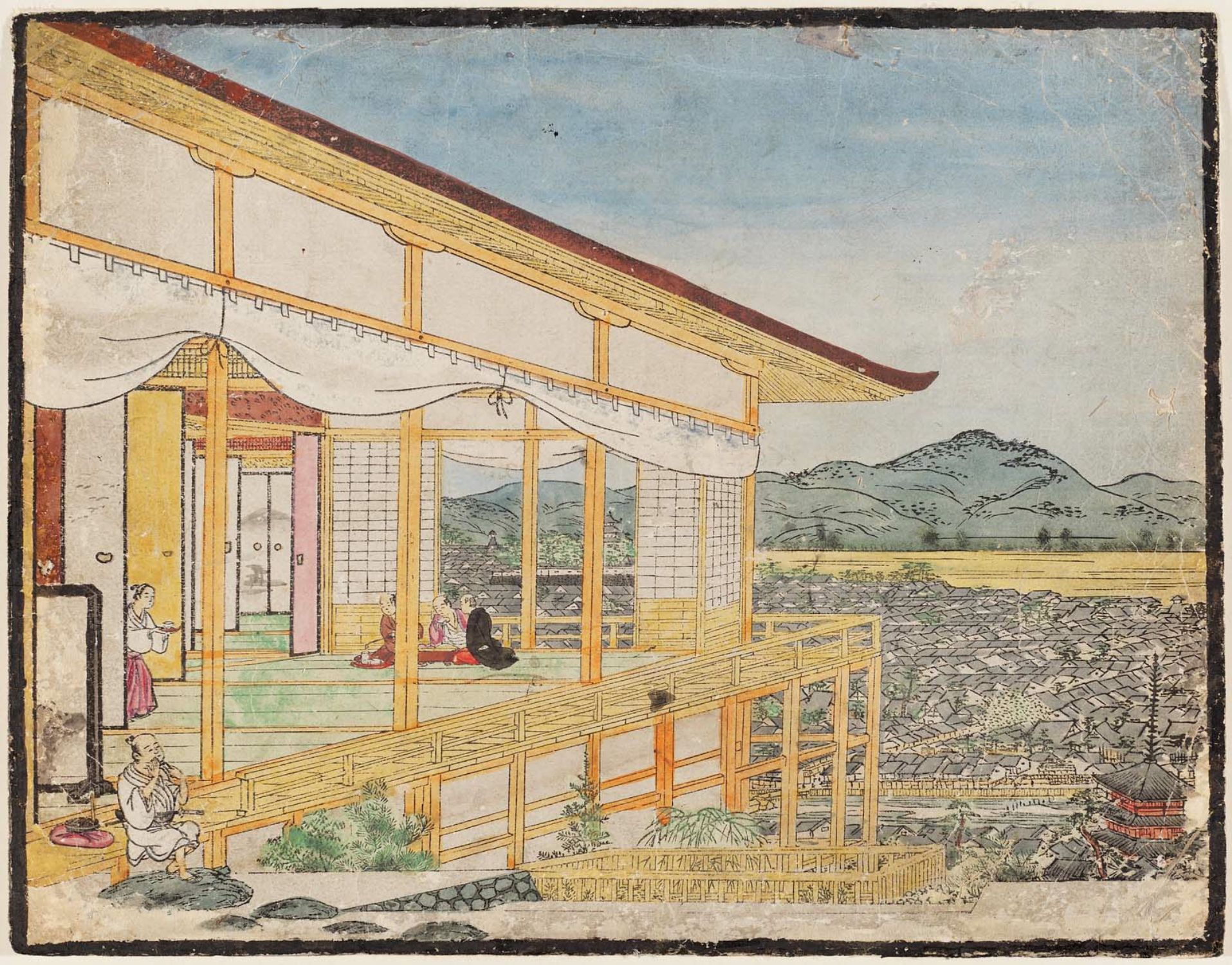
A Room at Maruyama
円山一隅
1759 (uki-e perspective print)
Woodblock print with hand-applied color
Archery Contest at the Sanjūsangendō
三十三間堂通し矢図
1759 (uki-e perspective print for nozoki-karakuri)
Woodblock print with hand-applied color
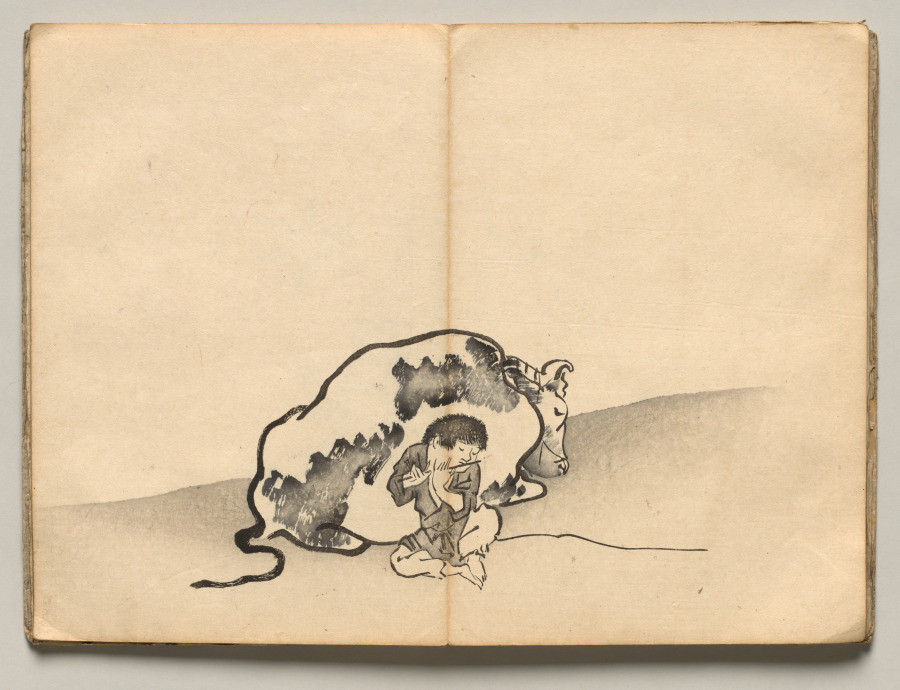
Oxherd, from Ōkyo gafu (Ōkyo Picture Book)
応挙画譜 — 牧童
1850 (accordion-bound woodblock-printed picture book after Ōkyo's brush designs)
Accordion-style woodblock printed folding book; ink and color on paper
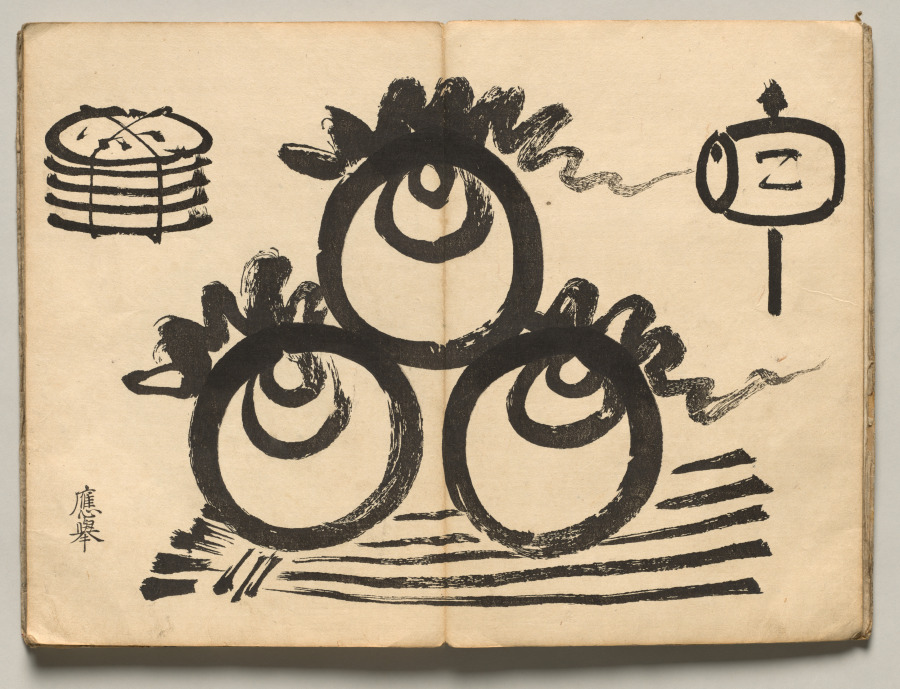
Flaming Jewels, from Ōkyo gafu (Ōkyo Picture Book)
応挙画譜 — 火焔宝珠
1850 (accordion-bound woodblock-printed picture book after Ōkyo's brush designs)
Accordion-style woodblock printed folding book; ink and color on paper
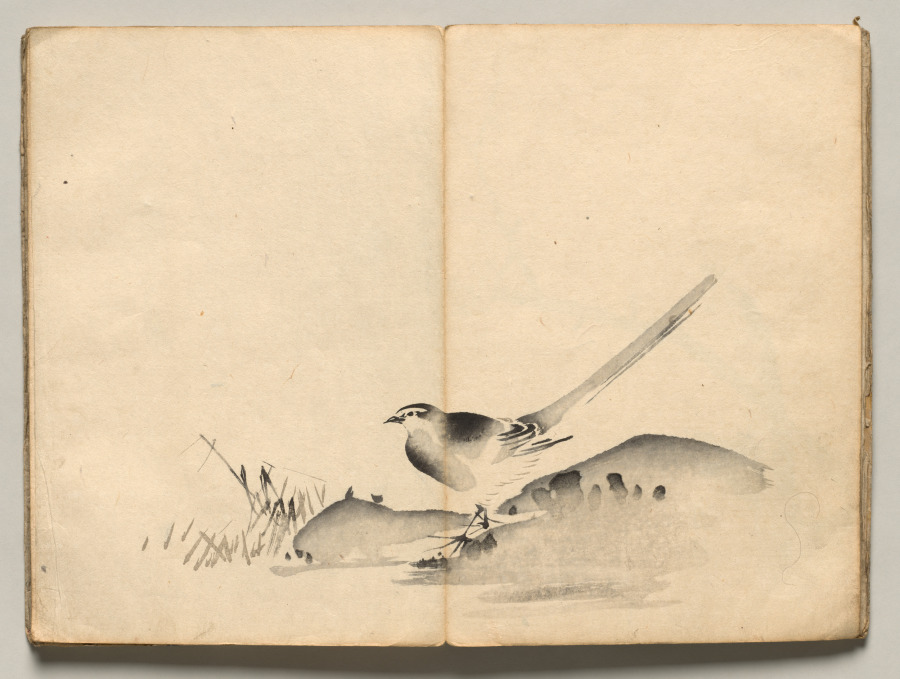
Azure-Winged Magpie, from Ōkyo gafu (Ōkyo Picture Book)
応挙画譜 — 尾長鳥
1850 (accordion-bound woodblock-printed picture book after Ōkyo's brush designs)
Accordion-style woodblock printed folding book; ink and color on paper
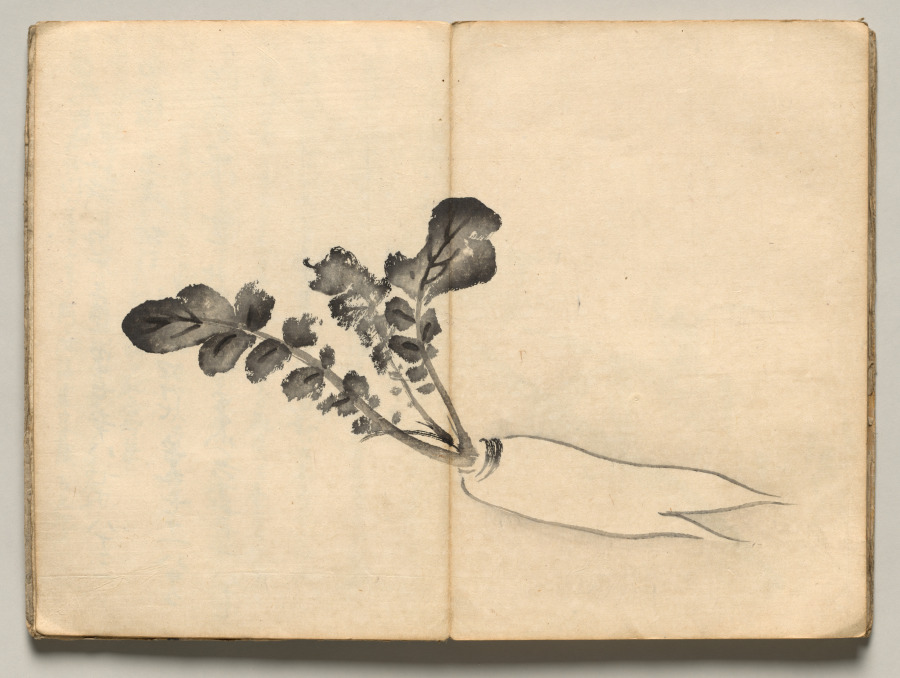
Radish, from Ōkyo gafu (Ōkyo Picture Book)
応挙画譜 — 大根
1850 (accordion-bound woodblock-printed picture book after Ōkyo's brush designs)
Accordion-style woodblock printed folding book; ink and color on paper
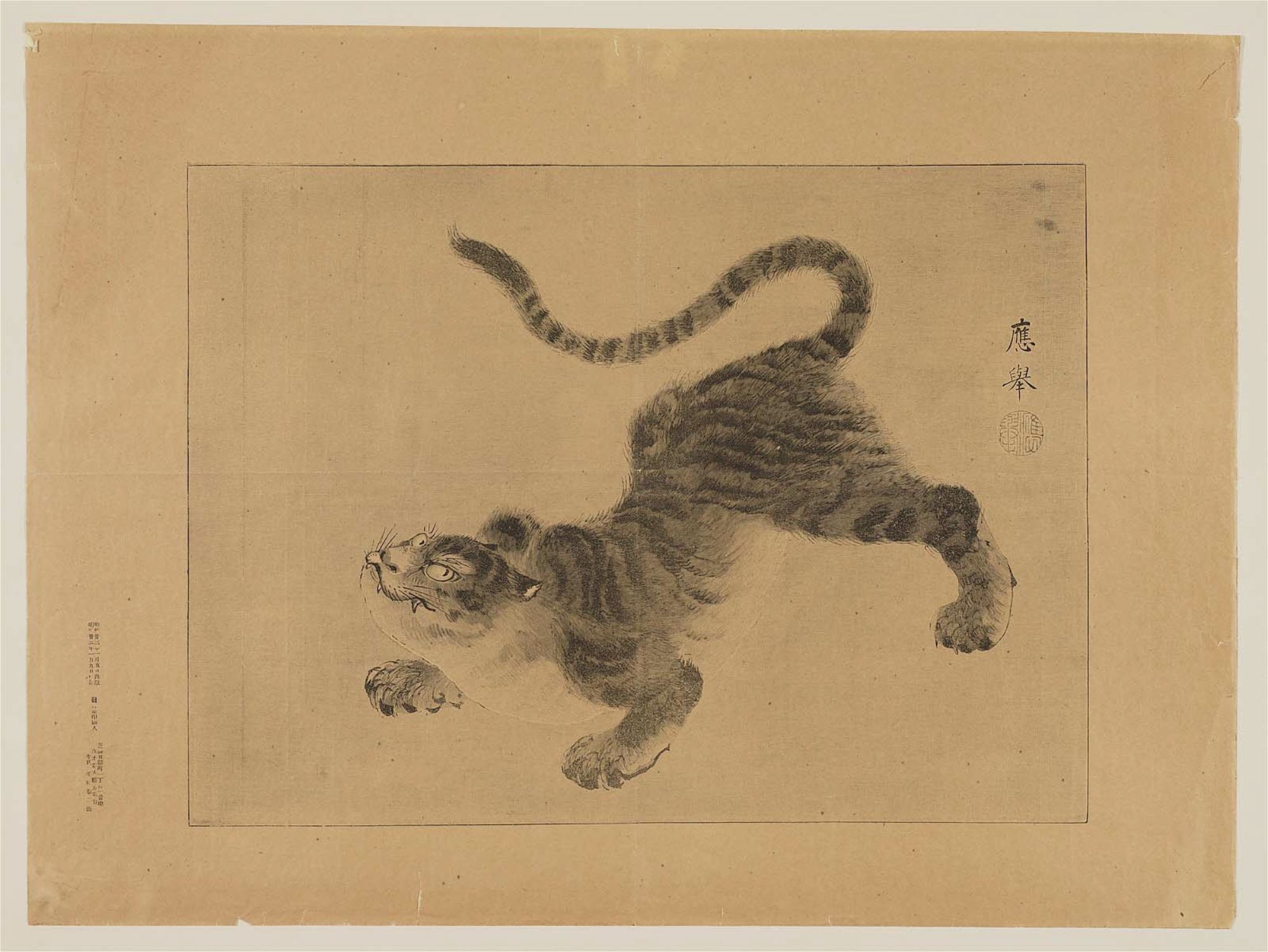
Tiger
虎図
1890 (Meiji-era woodblock impression after an Ōkyo brush original)
Color woodblock print

Page 11 from the book Ōkyo Shūbi gafu
応挙手筆画譜
1892 (after original brush designs by Ōkyo, 1733–1795)
Color woodblock print, page from an illustrated book
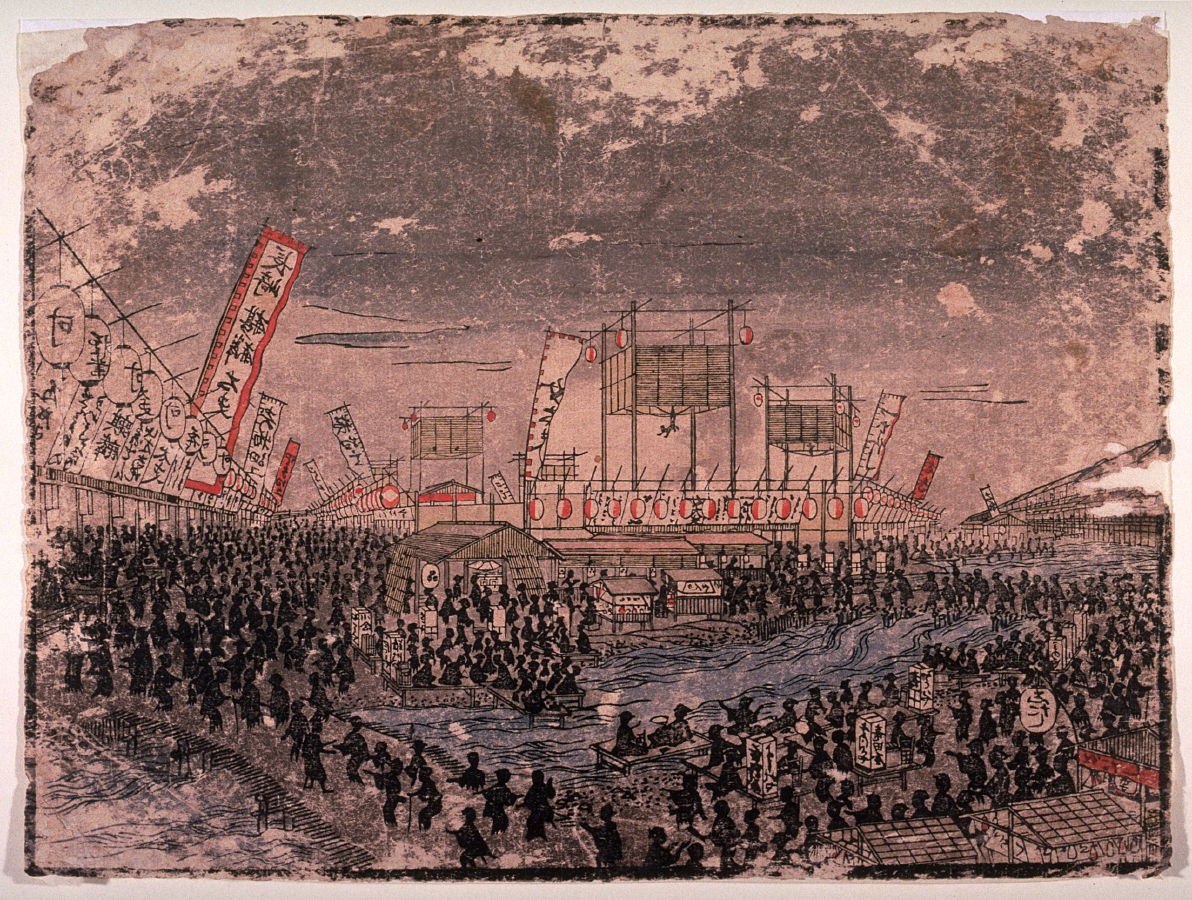
Summer Night on the Banks of the Kamo River near Shijō, from an untitled series of Kyoto landscapes for an optical viewer device
四条河原納涼図
ca. 1765–1775
Woodcut with hand-applied color (uki-e for a nozoki-karakuri optical viewer)