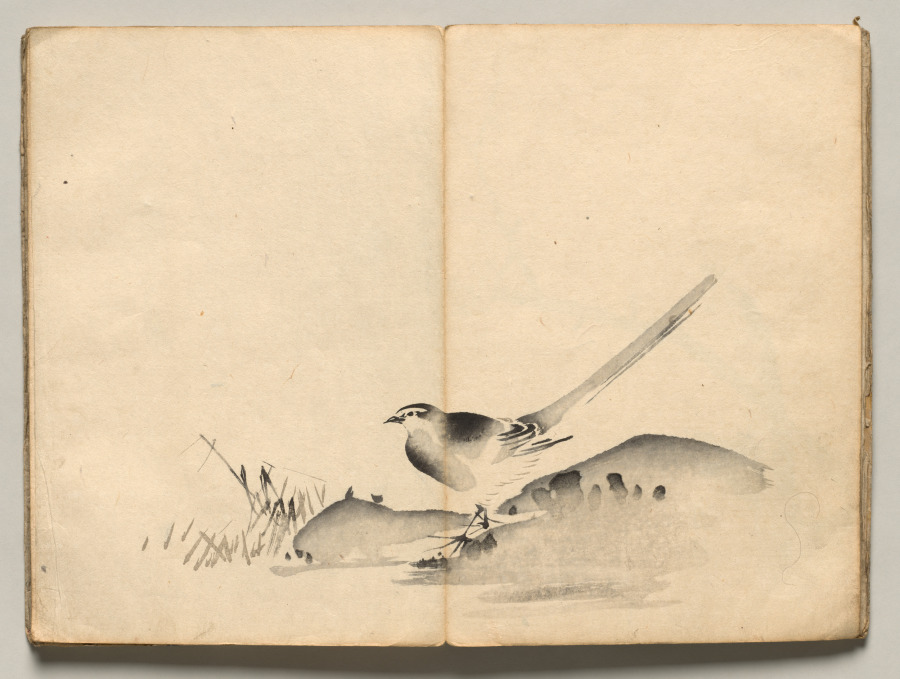
Azure-Winged Magpie, from Ōkyo gafu (Ōkyo Picture Book)
応挙画譜 — 尾長鳥
- Date:
- 1850 (accordion-bound woodblock-printed picture book after Ōkyo's brush designs)
- Medium:
- Accordion-style woodblock printed folding book; ink and color on paper
- Source:
- Cleveland Museum of Art
Description
Azure-Winged Magpie is another page from the 1850 Ōkyo gafu, also held by the Cleveland Museum of Art (1985.376.g, Kelvin Smith Collection). The composition shows the long-tailed bird standing on a low mound across a two-page spread, its light body, dark grey wings, and trailing tail rendered in subtle tonal washes with sharp linework defining the eye, beak, and primary feathers. The azure-winged magpie (Cyanopica cyanus japonica, Japanese onaga) is a familiar Kyoto urban bird, recognizable for its blue-grey wings and exceptionally long tail, and was a recurring subject in Ōkyo's bird studies — his shasei (drawing from life) program prioritized the careful observation of local fauna in characteristic postures. The Ōkyo gafu reproduces this kind of study sheet at small scale for use as a model book. The Cleveland Museum's example is part of an incomplete impression of the album missing a spread of cranes, indicating the volume was disassembled or partially preserved at some point in its history. The bird-and-mound composition exemplifies the Maruyama school's compositional economy: a single naturalist figure isolated against minimal pictorial ground, with the brush carrying the entire descriptive burden. The format — a tip-in of a sketch in an accordion-bound album — became a standard publication mode for Kyoto picture books of the mid-nineteenth century.
More Prints by Maruyama Ōkyo

Page 11 from the book Ōkyo Shūbi gafu
応挙手筆画譜
1892 (after original brush designs by Ōkyo, 1733–1795)
Color woodblock print, page from an illustrated book
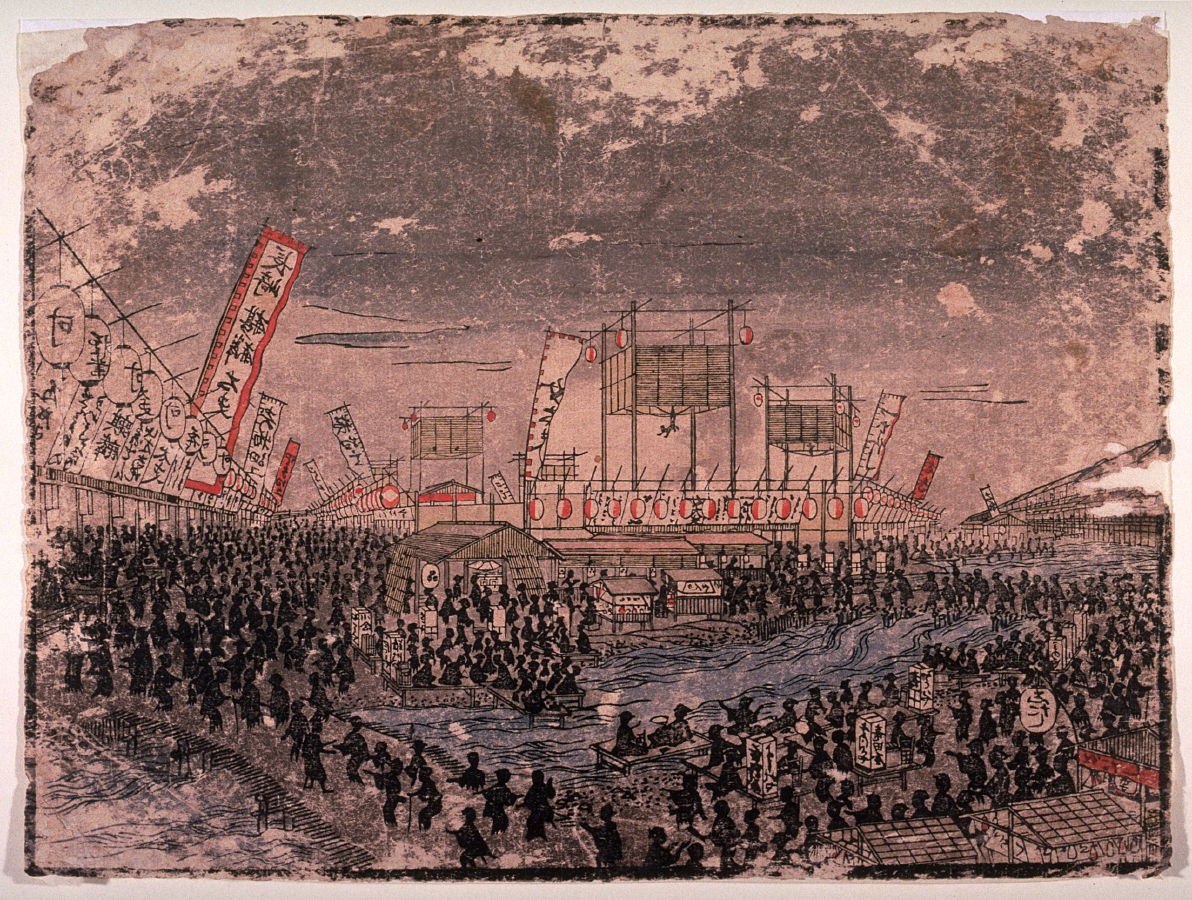
Summer Night on the Banks of the Kamo River near Shijō, from an untitled series of Kyoto landscapes for an optical viewer device
四条河原納涼図
ca. 1765–1775
Woodcut with hand-applied color (uki-e for a nozoki-karakuri optical viewer)
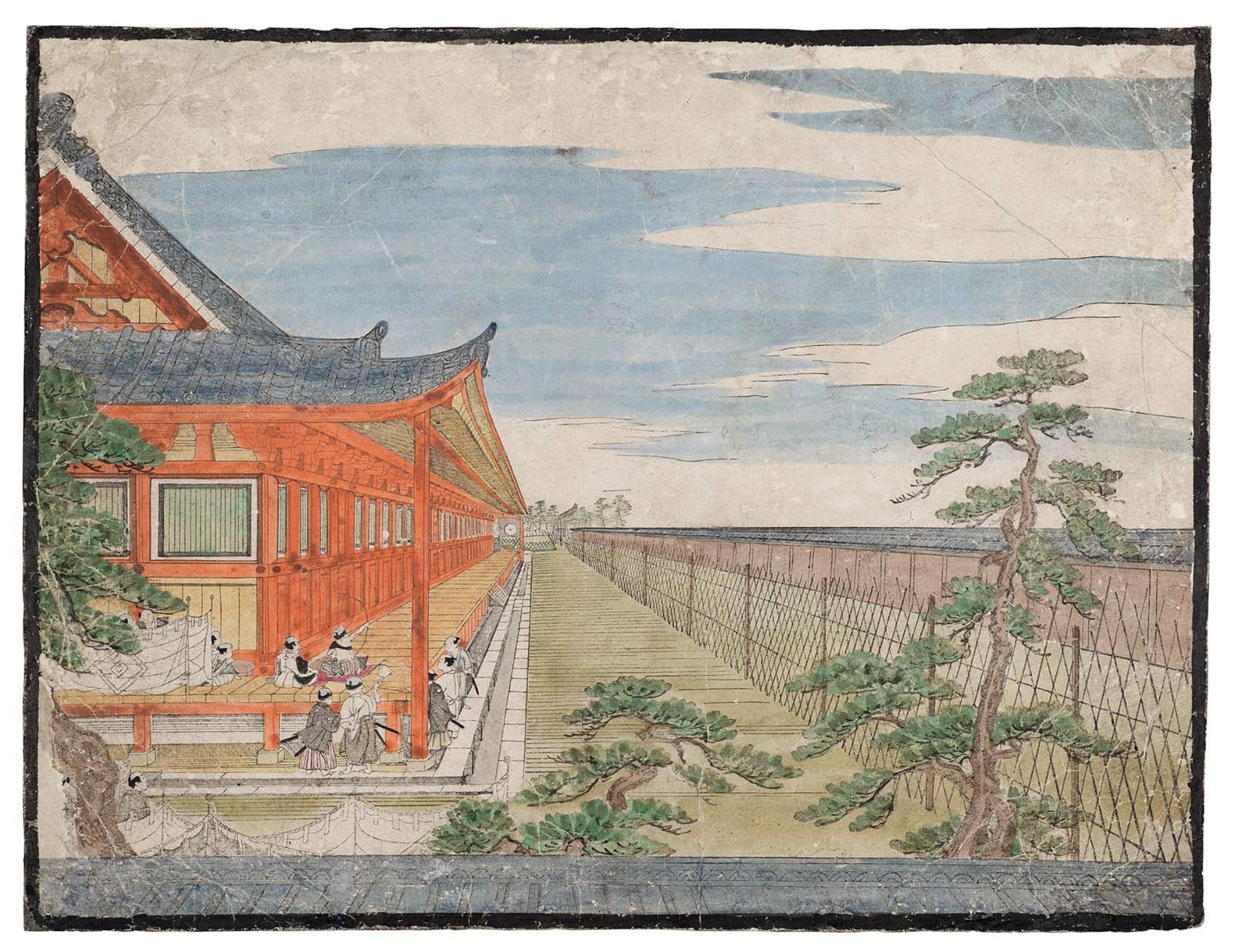
Archery Contest at the Sanjūsangendō
三十三間堂通し矢図
1759 (uki-e perspective print for nozoki-karakuri)
Woodblock print with hand-applied color
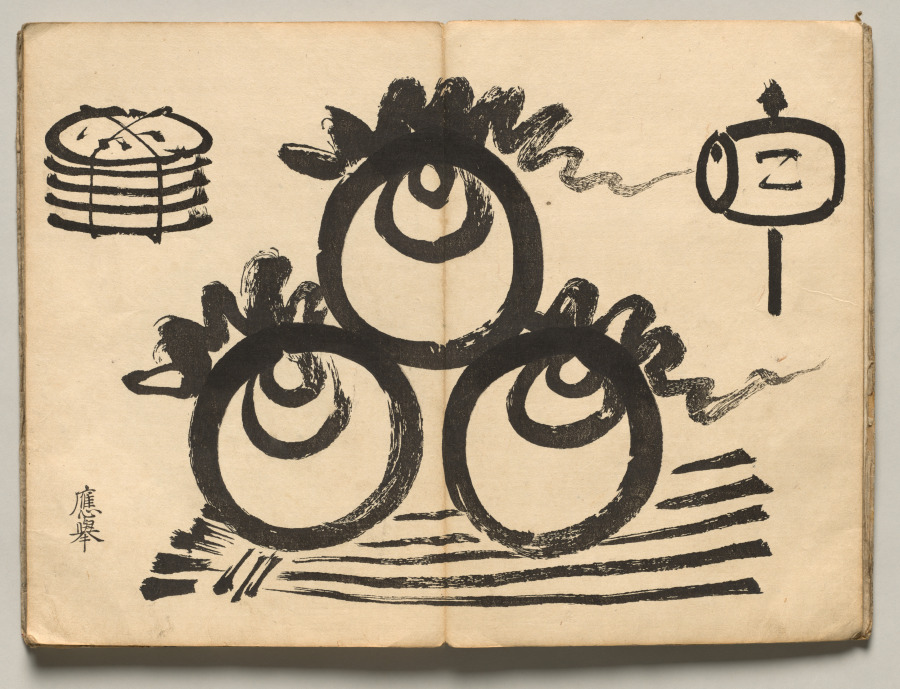
Flaming Jewels, from Ōkyo gafu (Ōkyo Picture Book)
応挙画譜 — 火焔宝珠
1850 (accordion-bound woodblock-printed picture book after Ōkyo's brush designs)
Accordion-style woodblock printed folding book; ink and color on paper
Frequently Asked Questions
Azure-Winged Magpie, from Ōkyo gafu (Ōkyo Picture Book) (応挙画譜 — 尾長鳥) was created by Maruyama Ōkyo (円山応挙) in 1850 (accordion-bound woodblock-printed picture book after Ōkyo's brush designs).