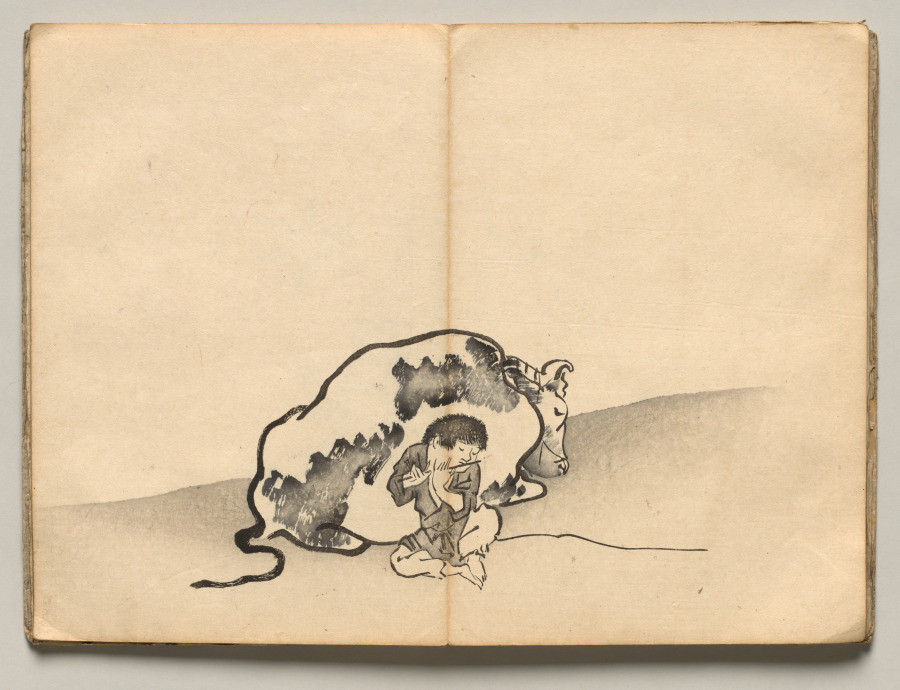
Oxherd, from Ōkyo gafu (Ōkyo Picture Book)
応挙画譜 — 牧童
- Date:
- 1850 (accordion-bound woodblock-printed picture book after Ōkyo's brush designs)
- Medium:
- Accordion-style woodblock printed folding book; ink and color on paper
- Source:
- Cleveland Museum of Art
Description
Oxherd is a page from the 1850 Ōkyo gafu held by the Cleveland Museum of Art (1985.376.s, Kelvin Smith Collection). The composition shows the iconographic figure of the young oxherd seated cross-legged in the foreground, holding a flute to his lips, with a large spotted ox at his side; the background is rendered as a minimal hillside in soft brushwork. The oxherd (bokudō, 牧童) is a deeply established subject in East Asian painting and Zen Buddhist iconography, most famously codified in the Ten Bulls (Jūgyū) sequence of the twelfth-century Chinese Chan master Kuoan Shiyuan, in which the search for and taming of an ox stands as an allegory for the search for enlightenment. The flute-playing oxherd specifically references the pastoral tranquility of the late stages of the Zen sequence, when the practitioner has tamed the mind and reached a state of integrated harmony. Ōkyo's treatment is naturalist rather than overtly allegorical, with the boy and ox observed in convincing relation to one another, but the iconographic resonance would have been immediately legible to nineteenth-century viewers. The 1850 Ōkyo gafu compiled designs of this kind as both pictorial reference for painters and as a Buddhist-inflected source of edifying imagery for general readers, in the tradition of Edo-period emaki and ehon production.
More Prints by Maruyama Ōkyo

Page 11 from the book Ōkyo Shūbi gafu
応挙手筆画譜
1892 (after original brush designs by Ōkyo, 1733–1795)
Color woodblock print, page from an illustrated book
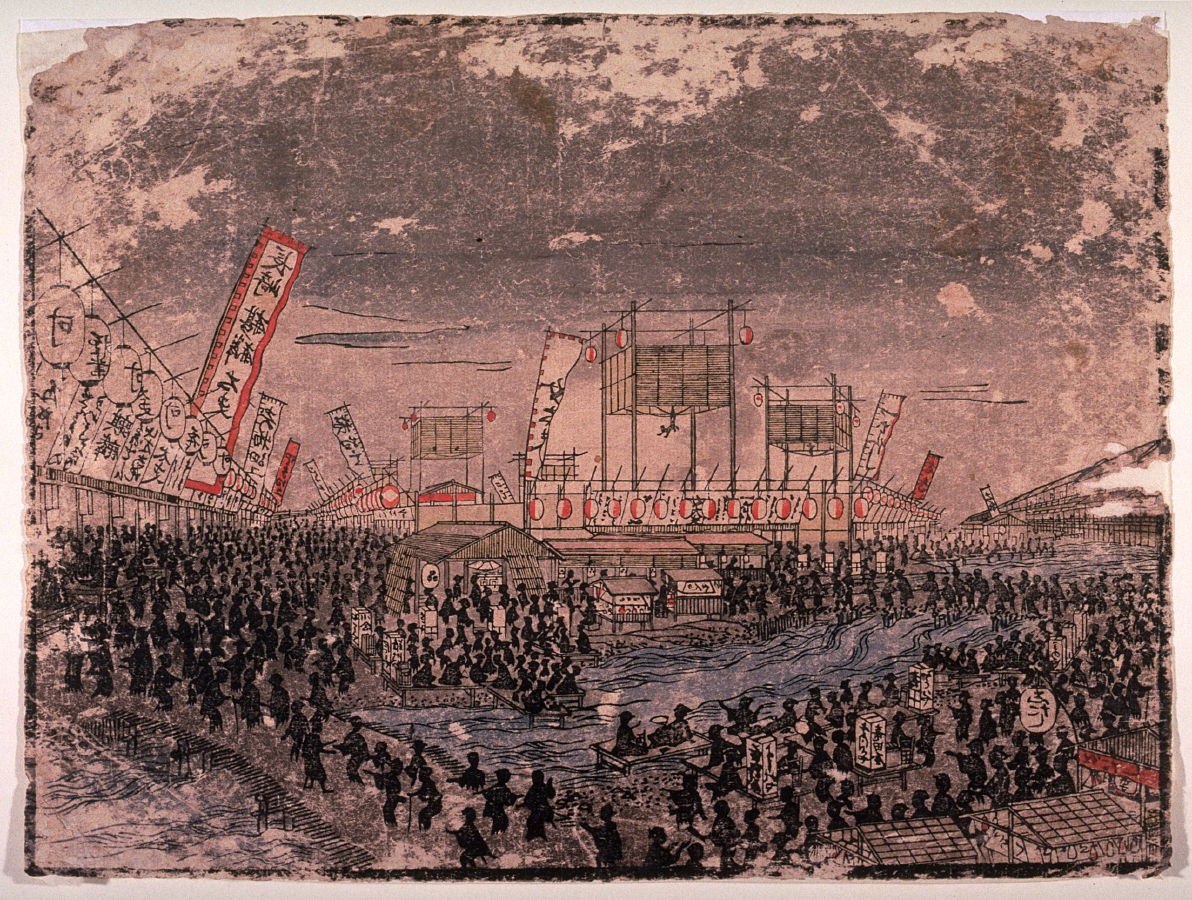
Summer Night on the Banks of the Kamo River near Shijō, from an untitled series of Kyoto landscapes for an optical viewer device
四条河原納涼図
ca. 1765–1775
Woodcut with hand-applied color (uki-e for a nozoki-karakuri optical viewer)
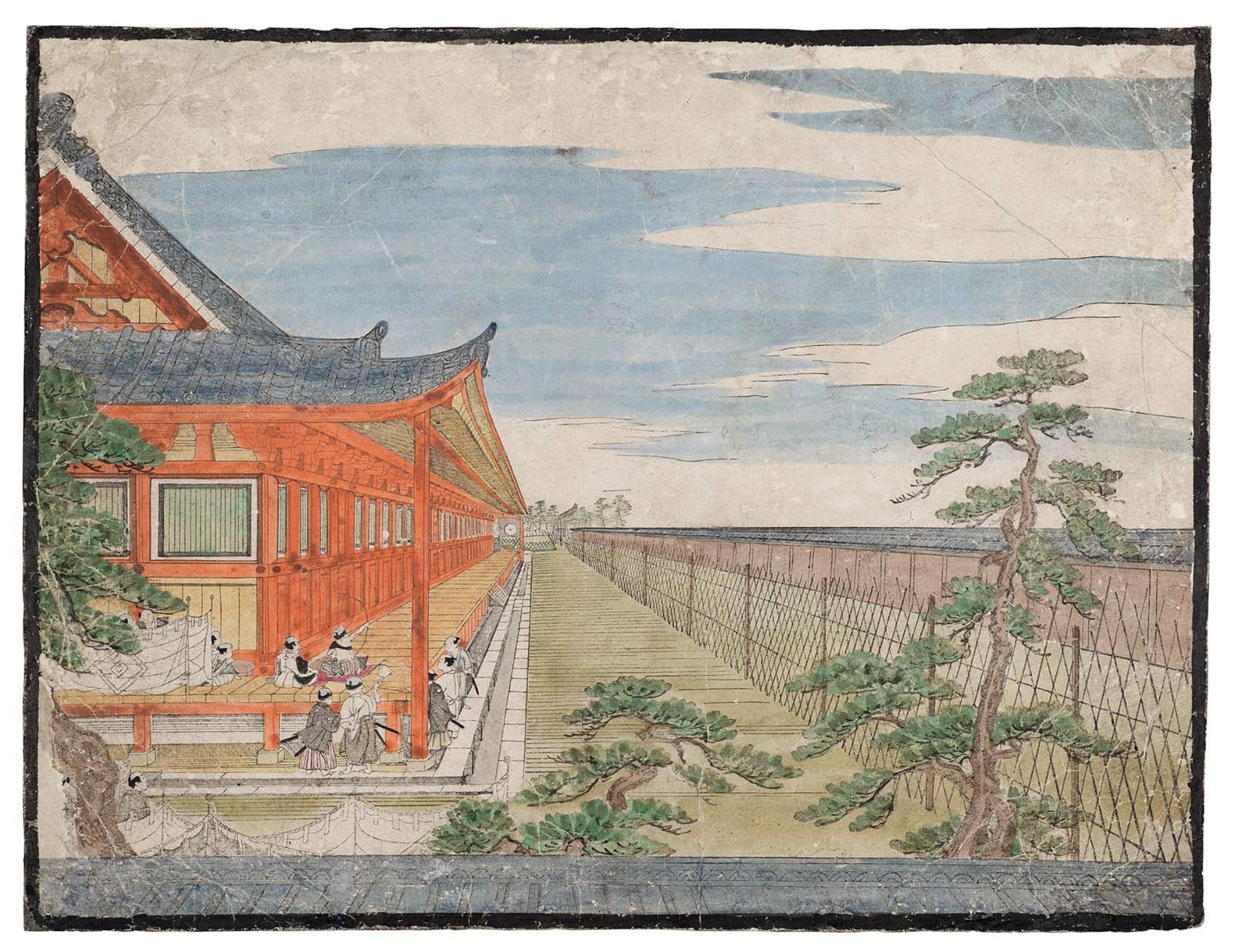
Archery Contest at the Sanjūsangendō
三十三間堂通し矢図
1759 (uki-e perspective print for nozoki-karakuri)
Woodblock print with hand-applied color
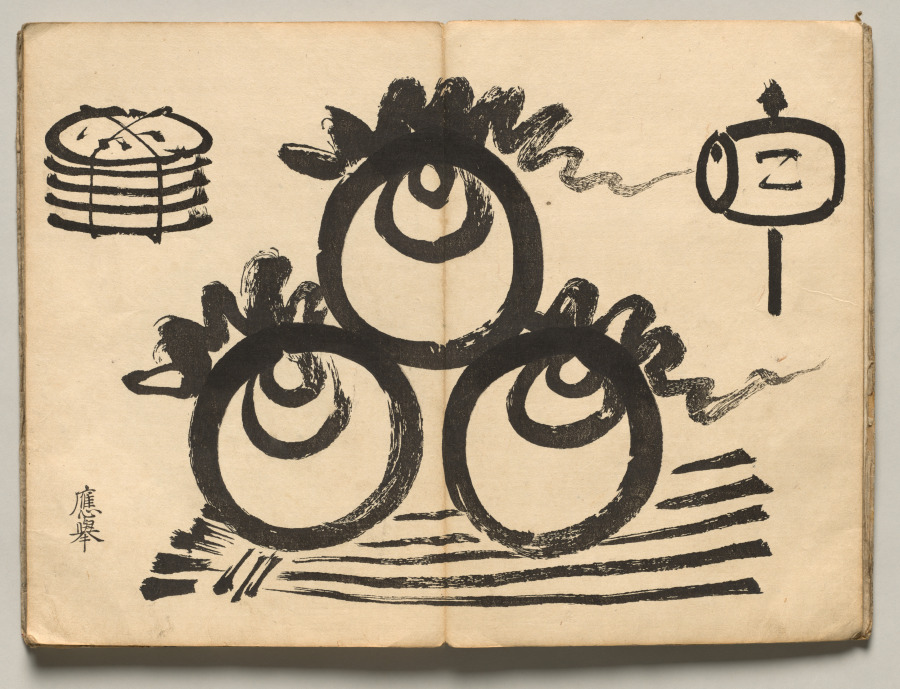
Flaming Jewels, from Ōkyo gafu (Ōkyo Picture Book)
応挙画譜 — 火焔宝珠
1850 (accordion-bound woodblock-printed picture book after Ōkyo's brush designs)
Accordion-style woodblock printed folding book; ink and color on paper
Frequently Asked Questions
Oxherd, from Ōkyo gafu (Ōkyo Picture Book) (応挙画譜 — 牧童) was created by Maruyama Ōkyo (円山応挙) in 1850 (accordion-bound woodblock-printed picture book after Ōkyo's brush designs).