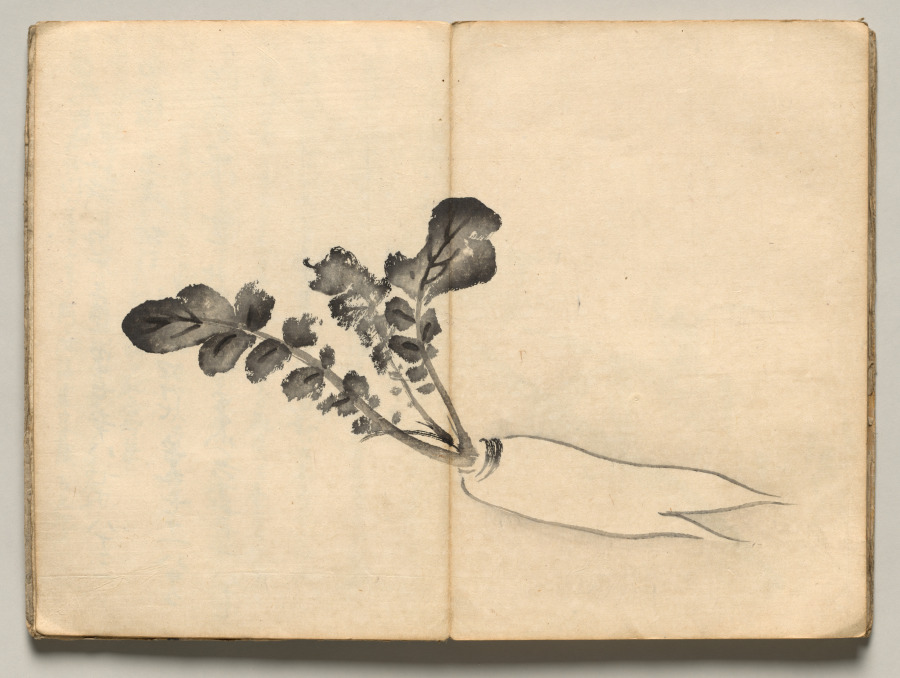
Radish, from Ōkyo gafu (Ōkyo Picture Book)
応挙画譜 — 大根
- Date:
- 1850 (accordion-bound woodblock-printed picture book after Ōkyo's brush designs)
- Medium:
- Accordion-style woodblock printed folding book; ink and color on paper
- Source:
- Cleveland Museum of Art
Description
Radish is a page from the 1850 Ōkyo gafu held by the Cleveland Museum of Art (1985.376.x, Kelvin Smith Collection). The composition shows a large white daikon radish spanning a two-page accordion-book spread, with the root and tapering tail at right and the leafy stalks fanning to the left, rendered in black ink with grey outlines and tonal modulation. The daikon was a defining vegetable of the Japanese culinary and agricultural calendar and a recurring subject in Edo-period painting, particularly in the Maruyama-Shijō tradition where humble seasonal vegetables were treated with the same pictorial seriousness as elevated court subjects — a stance Ōkyo's shasei program established as principled rather than incidental. The daikon also carried Zen-Buddhist iconographic associations through its frequent appearance in haiga (poem-painting) compositions and in the late paintings of monks like Sengai Gibon, where the vegetable's coarse simplicity stood for unforced enlightenment. Ōkyo's treatment of the radish is exemplary of his approach to vegetable subjects: tight observational drawing combined with calligraphic ink modulation, with neither symbolic exaggeration nor dismissive simplification. The 1850 Ōkyo gafu collected many such single-vegetable sketches across its accordion-book spreads, presenting them as both study material for painters and as a visual catalogue of the Kyoto kitchen garden translated into Maruyama-school pictorial idiom.
More Prints by Maruyama Ōkyo

Page 11 from the book Ōkyo Shūbi gafu
応挙手筆画譜
1892 (after original brush designs by Ōkyo, 1733–1795)
Color woodblock print, page from an illustrated book
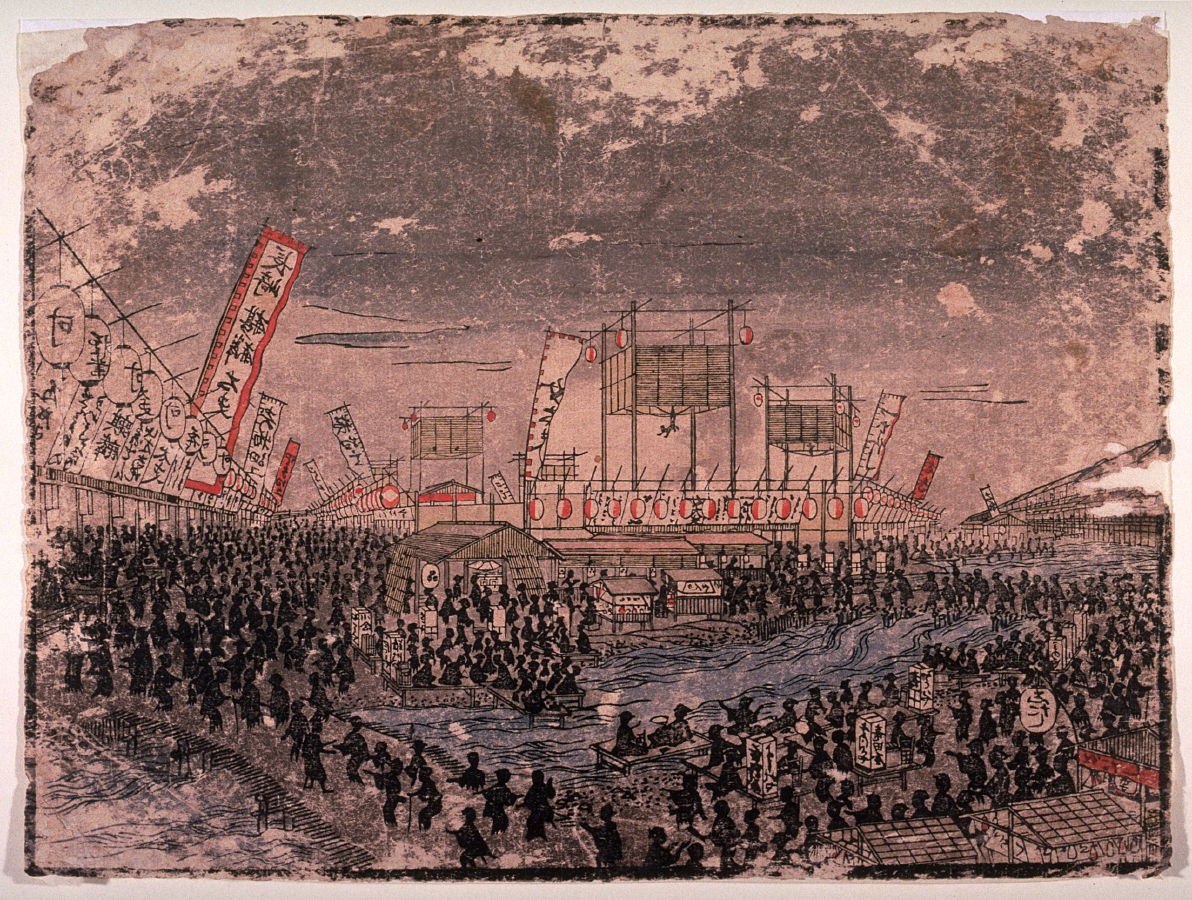
Summer Night on the Banks of the Kamo River near Shijō, from an untitled series of Kyoto landscapes for an optical viewer device
四条河原納涼図
ca. 1765–1775
Woodcut with hand-applied color (uki-e for a nozoki-karakuri optical viewer)
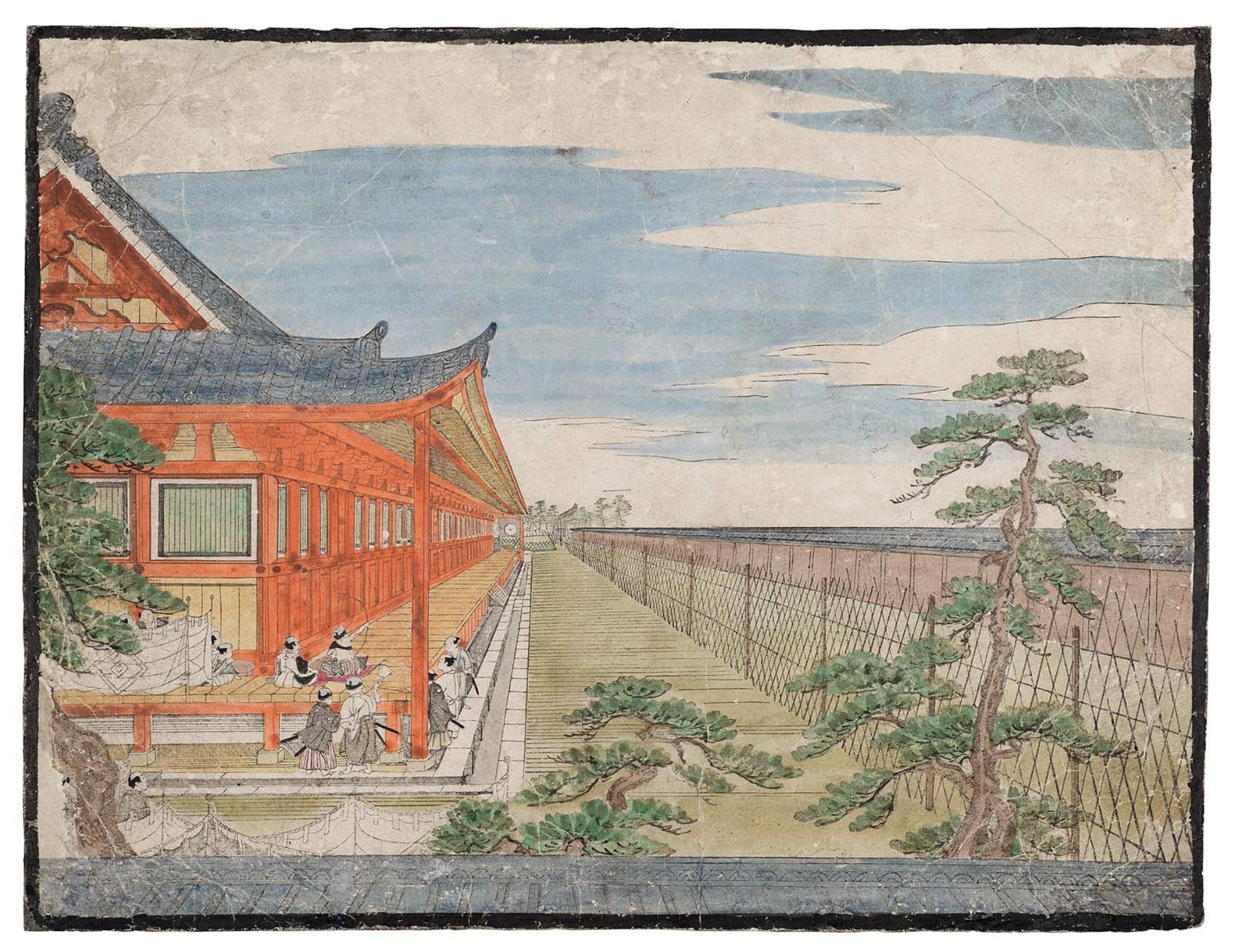
Archery Contest at the Sanjūsangendō
三十三間堂通し矢図
1759 (uki-e perspective print for nozoki-karakuri)
Woodblock print with hand-applied color
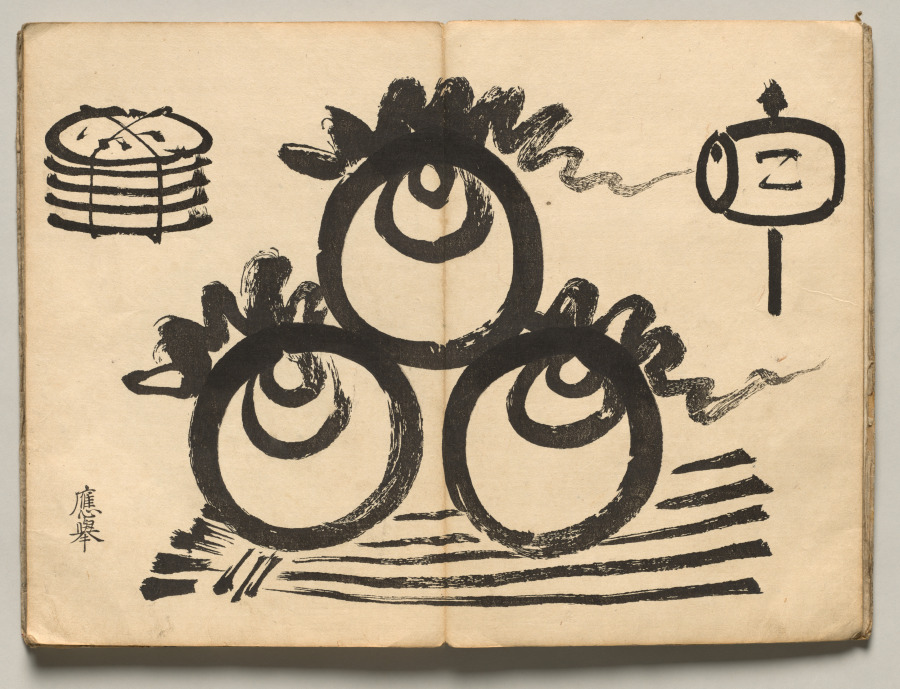
Flaming Jewels, from Ōkyo gafu (Ōkyo Picture Book)
応挙画譜 — 火焔宝珠
1850 (accordion-bound woodblock-printed picture book after Ōkyo's brush designs)
Accordion-style woodblock printed folding book; ink and color on paper
Frequently Asked Questions
Radish, from Ōkyo gafu (Ōkyo Picture Book) (応挙画譜 — 大根) was created by Maruyama Ōkyo (円山応挙) in 1850 (accordion-bound woodblock-printed picture book after Ōkyo's brush designs).