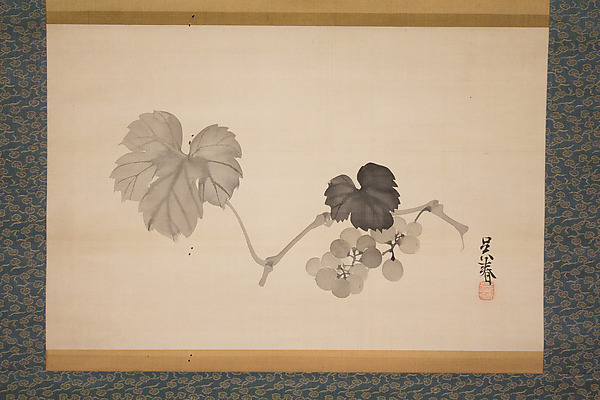
Grapevine
葡萄図
- Date:
- after 1790
- Medium:
- Hanging scroll; ink on silk
- Source:
- Metropolitan Museum of Art
Description
Grapevine is a hanging scroll by Matsumura Goshun in ink on silk (Metropolitan Museum of Art, 36.100.20), painted after about 1790 during the last decade of the artist's career. The subject is treated in the Chinese ink-monochrome manner that Goshun had absorbed from his nanga (literati) training under Yosa Buson: trailing vines and densely clustered grape leaves are rendered in broad strokes of ink, with the heavy hanging clusters of fruit suggested through massed dots of darker ink against a silvery ground. Grapevines were a long-established motif in East Asian ink painting, associated with autumn abundance and (through the legendary fourth-century painter Zhang Sengyao and his successors) with the disciplined, virtuoso brushwork that literati painting prized. Goshun's treatment here demonstrates his command of monochrome ink at the height of his career, when his Shijō manner had matured into a confident synthesis of literati brushwork and Maruyama-school natural observation. The scroll entered the Met in 1936 as part of the Howard Mansfield Collection of Asian art, one of the foundational gifts to the museum's Japanese painting collection in the first half of the twentieth century.
More Prints by Matsumura Goshun
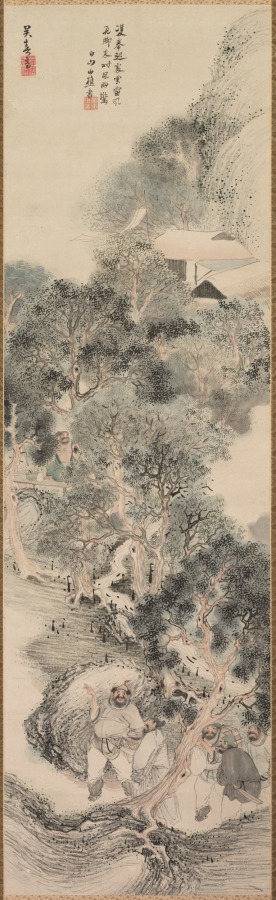
Happy Forest, from Water Margin
水滸伝快活林図
late 1700s
Hanging scroll; ink and color on paper
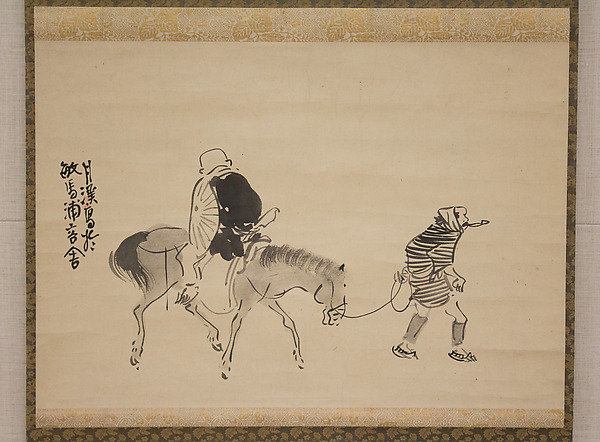
Monk Renshō Riding His Horse Backwards
蓮生法師逆乗馬図
after 1782, ca. 1784
Hanging scroll; ink on paper
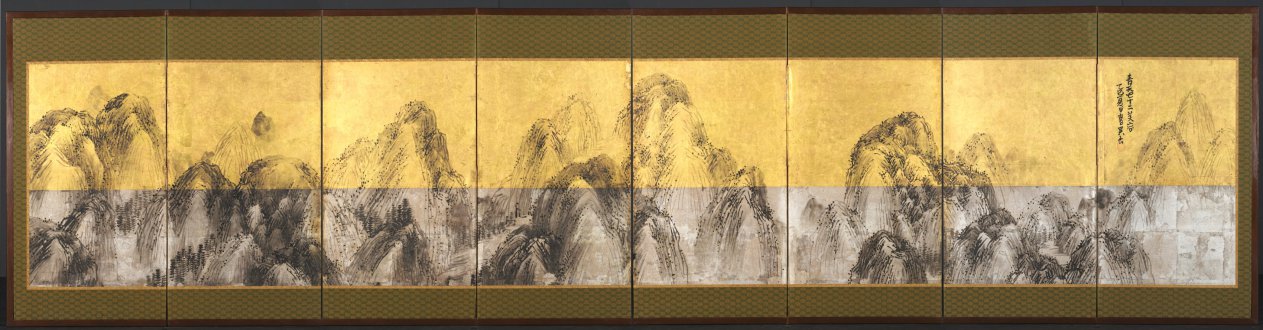
Seventy-Two Peaks Under the Blue Sky with Mount Furong
芙蓉峰青天七十二峰図
1785
Eight-panel folding screen; ink with gold and silver foil on paper
Cherry Blossoms
桜花図
late 18th century
Hanging scroll; ink and color on paper
Frequently Asked Questions
Grapevine (葡萄図) was created by Matsumura Goshun (松村呉春) in after 1790.