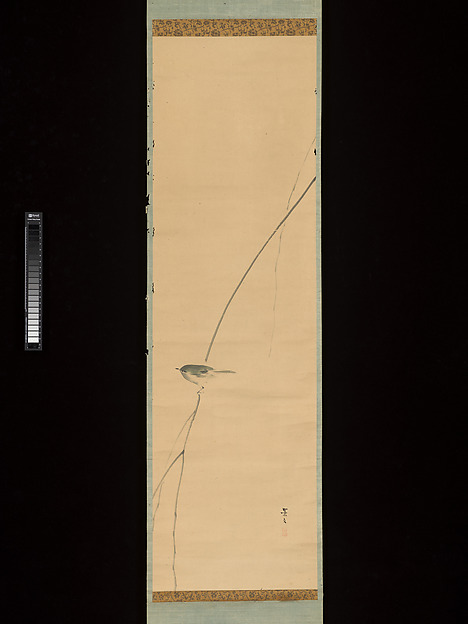
Nightingale on Willow Branch
柳に鶯図
- Date:
- Edo period
- Medium:
- Hanging scroll; ink and color on paper
- Source:
- Metropolitan Museum of Art
Description
Nightingale on Willow Branch is a hanging scroll in ink and color on paper by Matsumura Goshun (Metropolitan Museum of Art, 36.100.36), executed in the late eighteenth or early nineteenth century. The subject — the Japanese bush warbler (uguisu), conventionally translated as nightingale, perched on a budding willow branch — is one of the canonical seasonal motifs of Japanese painting and poetry, fixed at early spring and carrying centuries of waka and haiku resonance. Goshun's treatment exemplifies the Shijō kachō-ga (bird-and-flower) manner he was instrumental in establishing: the bird is closely observed in pose and feather structure, reflecting the Maruyama-school discipline of sketching from life, while the willow branch and the surrounding composition are handled with the open, atmospheric brushwork that connects the Shijō school to the literati painting tradition inherited from Yosa Buson. The scroll entered the Met as part of the Howard Mansfield Collection in 1936 and is among the early hanging scrolls in the museum's collection that helped establish a working understanding of the Maruyama-Shijō kachō-ga tradition in American scholarship.
More Prints by Matsumura Goshun
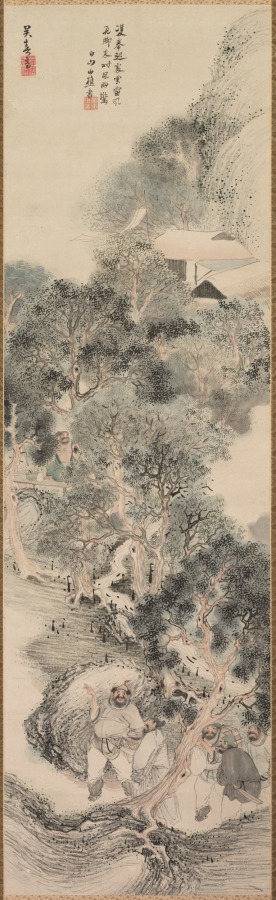
Happy Forest, from Water Margin
水滸伝快活林図
late 1700s
Hanging scroll; ink and color on paper
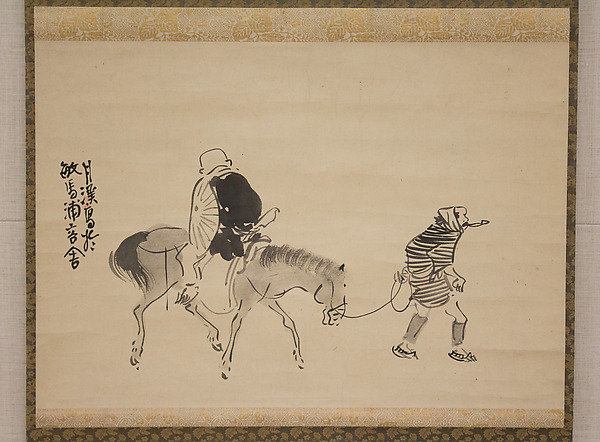
Monk Renshō Riding His Horse Backwards
蓮生法師逆乗馬図
after 1782, ca. 1784
Hanging scroll; ink on paper
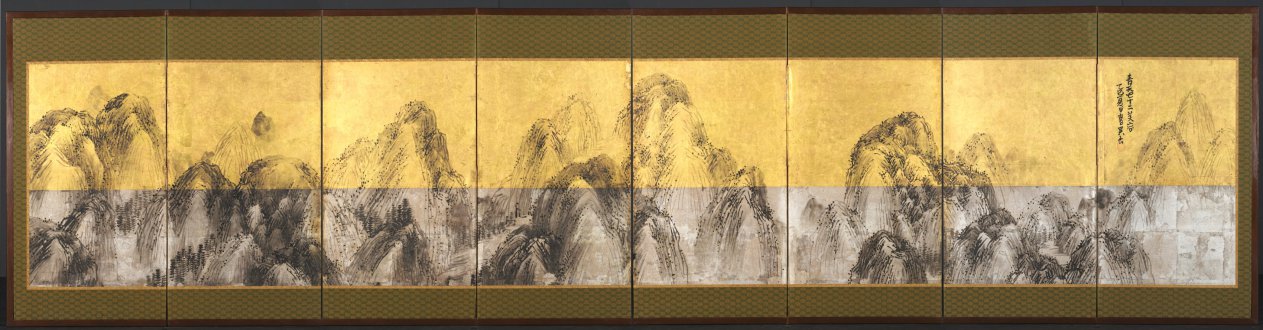
Seventy-Two Peaks Under the Blue Sky with Mount Furong
芙蓉峰青天七十二峰図
1785
Eight-panel folding screen; ink with gold and silver foil on paper
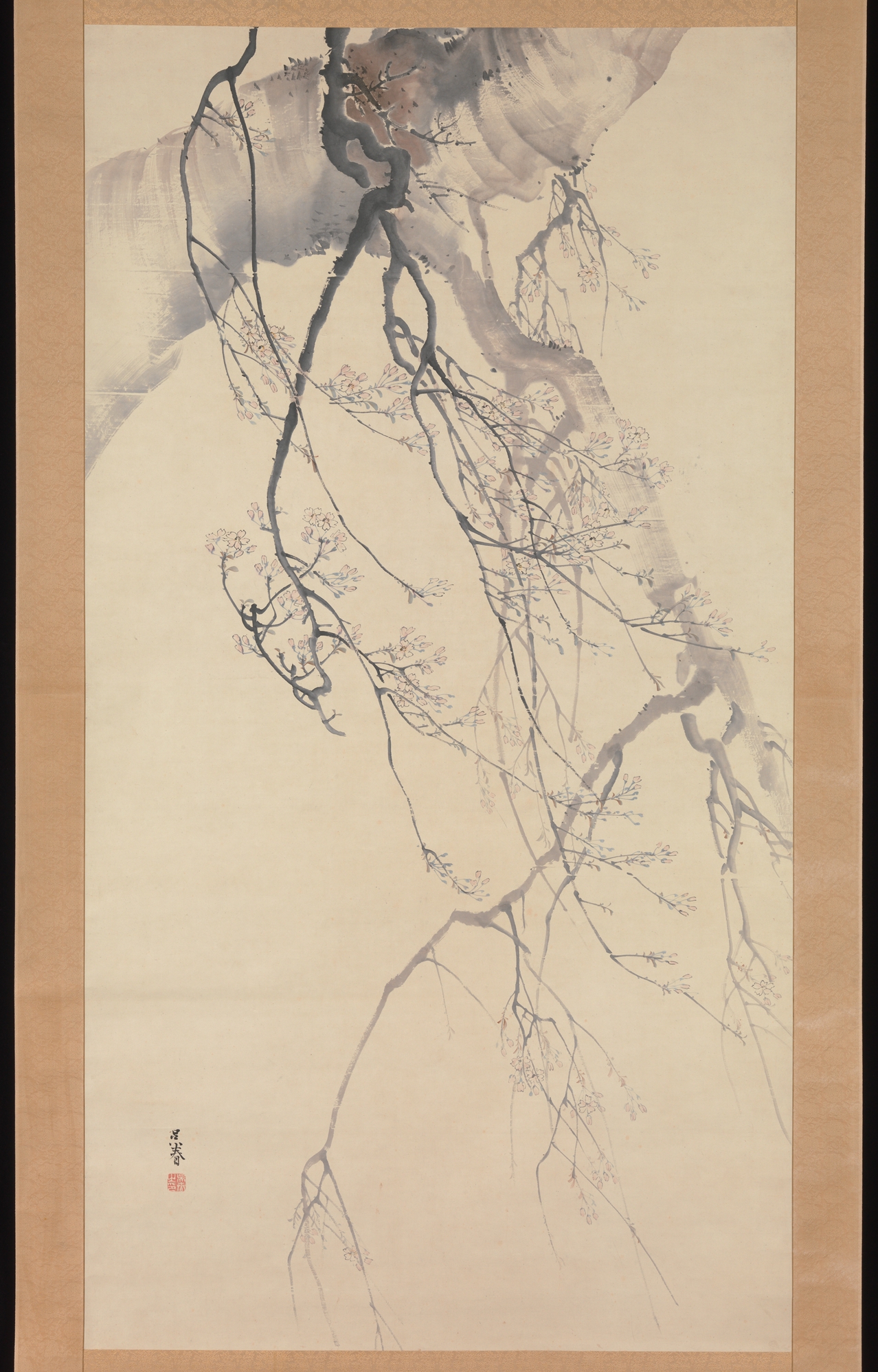
Cherry Blossoms
桜花図
late 18th century
Hanging scroll; ink and color on paper
Frequently Asked Questions
Nightingale on Willow Branch (柳に鶯図) was created by Matsumura Goshun (松村呉春) in Edo period.