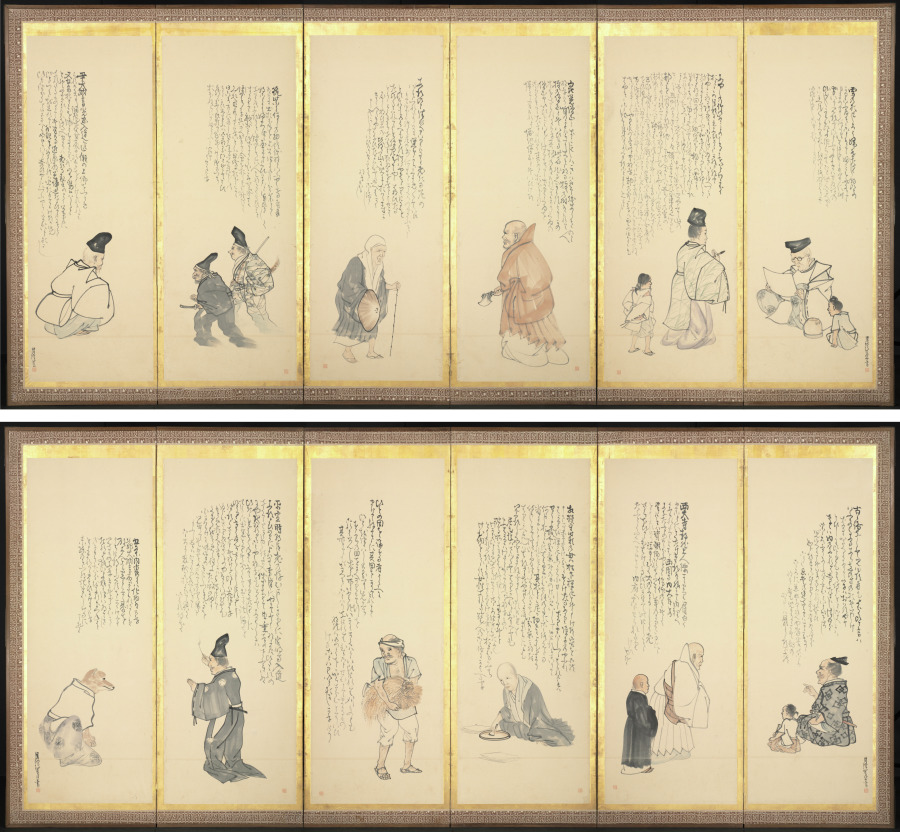
Scenes from Essays in Idleness (Tsurezuregusa)
徒然草図屏風
- Date:
- late 1700s–early 1800s
- Medium:
- Pair of six-panel folding screens; ink and color on paper
- Source:
- Cleveland Museum of Art
Description
Scenes from Essays in Idleness is a pair of six-panel folding screens in ink and color on paper by Matsumura Goshun (Cleveland Museum of Art, 1971.43.1-.2), dated to the late eighteenth or early nineteenth century. The subject is the Tsurezuregusa (Essays in Idleness) of the Buddhist monk Kenkō (Yoshida Kenkō, ca. 1283 – ca. 1352), one of the great works of Japanese prose literature, a loose collection of 243 essays and anecdotes ranging from social observation through aesthetic reflection to Buddhist commentary. Across the twelve combined panels Goshun arranges a sequence of vignettes drawn from selected essays, with figures, dwellings, plants, and landscape elements distributed in groups across the picture plane in the manner of medieval narrative painting (emakimono) but rendered in the open, atmospheric Shijō style. The treatment is characteristic of Goshun's literary-pictorial sensibility: the long tradition of Tsurezuregusa illustration — extending back through medieval painted scrolls and forward into the printed books of the Edo period — is reworked in the soft graduated washes and casual figure-drawing of the late-eighteenth-century Kyoto manner. The pair entered the Cleveland Museum in 1971 through the Andrew R. and Martha Holden Jennings Fund and is among the museum's principal documents of late Edo-period literary painting.
More Prints by Matsumura Goshun
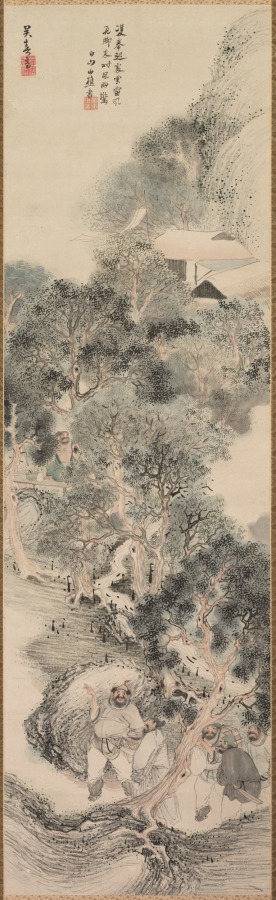
Happy Forest, from Water Margin
水滸伝快活林図
late 1700s
Hanging scroll; ink and color on paper
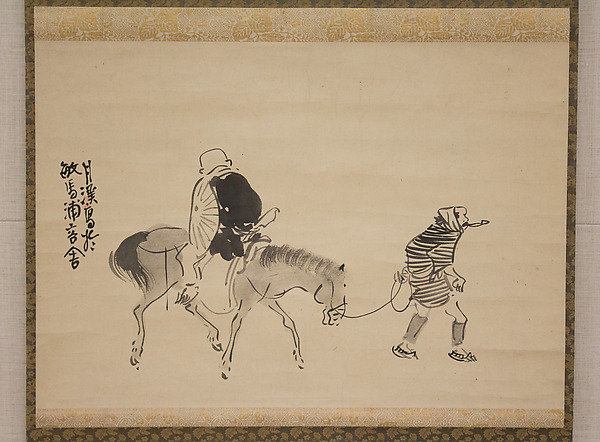
Monk Renshō Riding His Horse Backwards
蓮生法師逆乗馬図
after 1782, ca. 1784
Hanging scroll; ink on paper
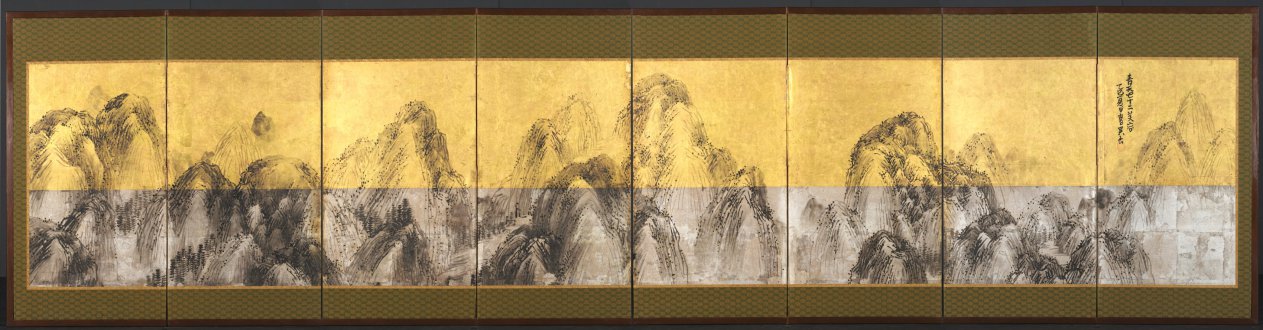
Seventy-Two Peaks Under the Blue Sky with Mount Furong
芙蓉峰青天七十二峰図
1785
Eight-panel folding screen; ink with gold and silver foil on paper
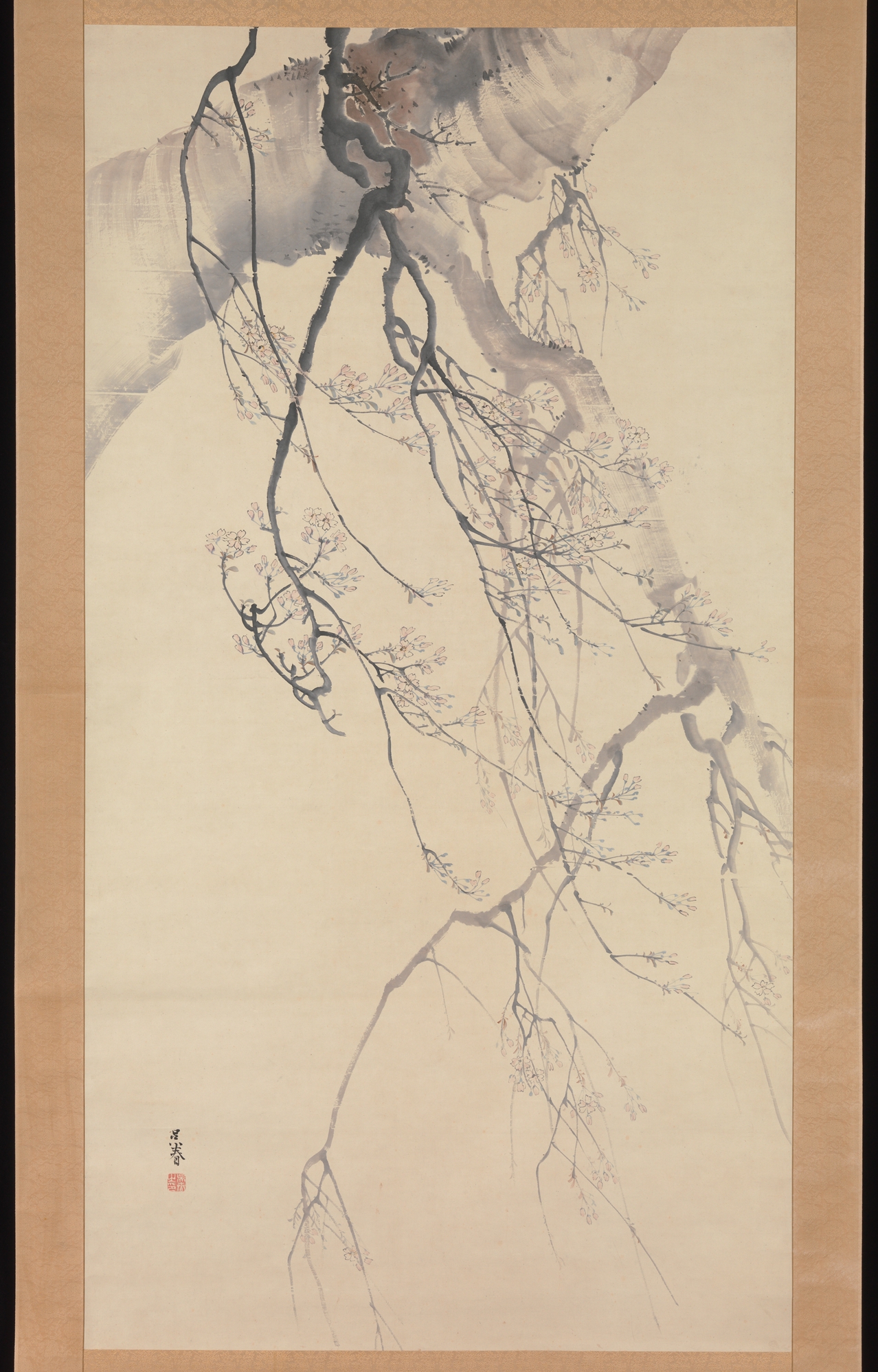
Cherry Blossoms
桜花図
late 18th century
Hanging scroll; ink and color on paper
Frequently Asked Questions
Scenes from Essays in Idleness (Tsurezuregusa) (徒然草図屏風) was created by Matsumura Goshun (松村呉春) in late 1700s–early 1800s.