
Shōki the Demon Queller
鍾馗図
- Date:
- late 18th century
- Medium:
- Hanging scroll; ink and color on paper
- Source:
- Art Institute of Chicago
Description
Shōki the Demon Queller is a hanging scroll in ink and color on paper by Matsumura Goshun in the collection of the Art Institute of Chicago (1976.110), dated by the museum to the late eighteenth or early nineteenth century. Shōki (Chinese: Zhong Kui) is a Chinese folk hero who entered Japanese popular religion through the Tang dynasty legend in which he protected the emperor Xuanzong from a malign dream-demon; in Japan he became one of the standard tutelary figures of the Boys' Festival (Tango no sekku, the fifth day of the fifth month) and a familiar subject for hanging scrolls displayed on that occasion to ward off illness and misfortune. Goshun handles the bearded, scowling Shōki figure with the kind of inventive, calligraphic brushwork that distinguishes Shijō figure painting from the more conventional Kanō-school treatments of the same subject: the robes are rendered in flowing lines of ink, the demon-queller's expression caught in a few quick strokes, and the whole composition organized around the contrast between vigorous ink and reserved color. The scroll entered the Art Institute in 1976 through the Russell Tyson Purchase Fund from the dealer Alice Boney, one of the most important post-war intermediaries between Japanese painting collections and American museums.
More Prints by Matsumura Goshun
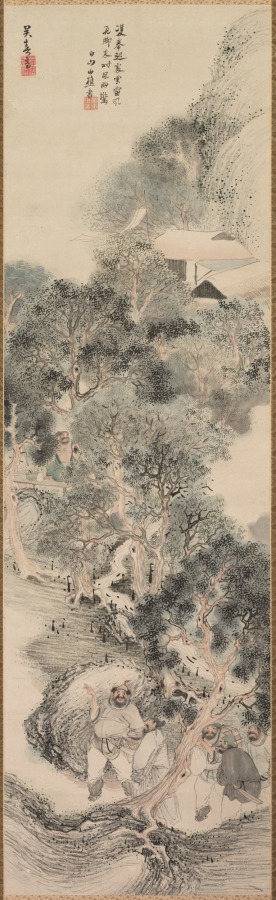
Happy Forest, from Water Margin
水滸伝快活林図
late 1700s
Hanging scroll; ink and color on paper
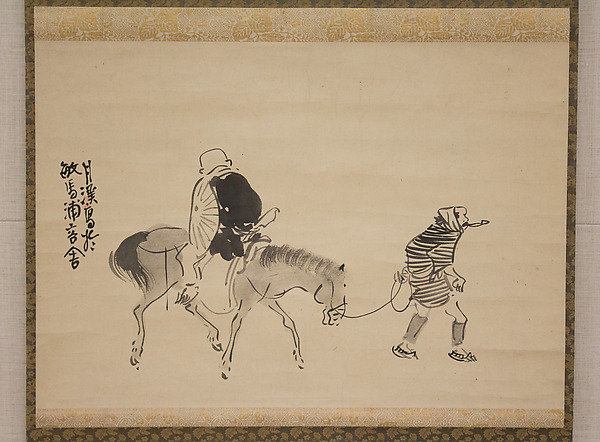
Monk Renshō Riding His Horse Backwards
蓮生法師逆乗馬図
after 1782, ca. 1784
Hanging scroll; ink on paper
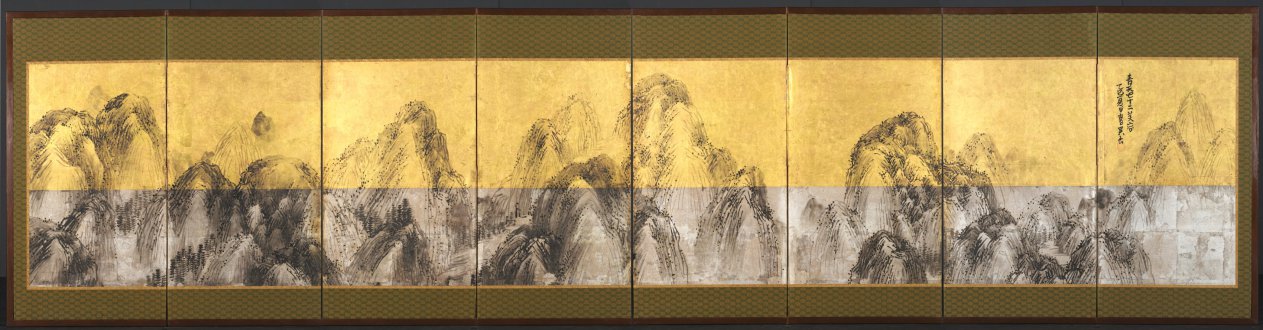
Seventy-Two Peaks Under the Blue Sky with Mount Furong
芙蓉峰青天七十二峰図
1785
Eight-panel folding screen; ink with gold and silver foil on paper
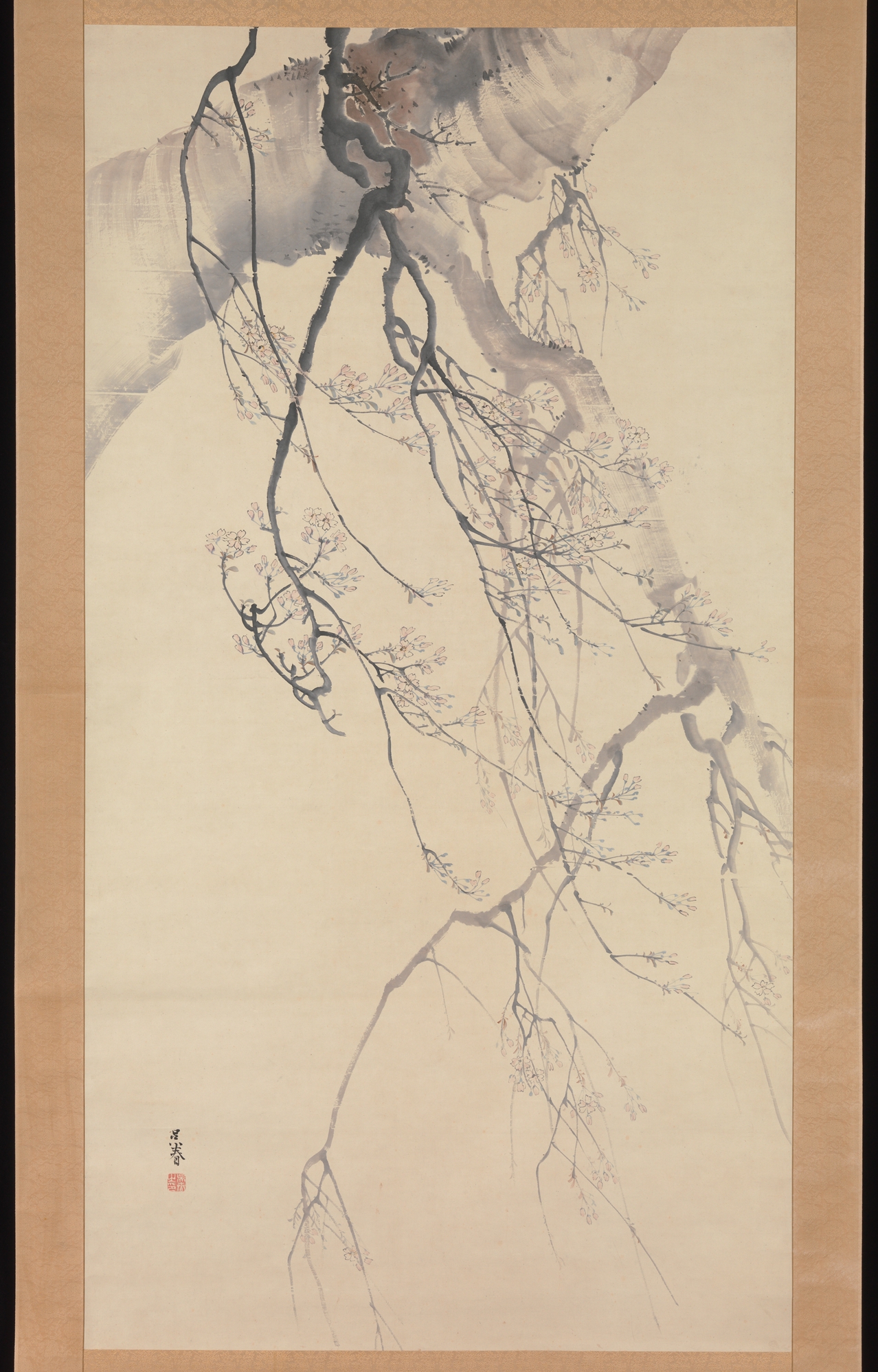
Cherry Blossoms
桜花図
late 18th century
Hanging scroll; ink and color on paper
Frequently Asked Questions
Shōki the Demon Queller (鍾馗図) was created by Matsumura Goshun (松村呉春) in late 18th century.