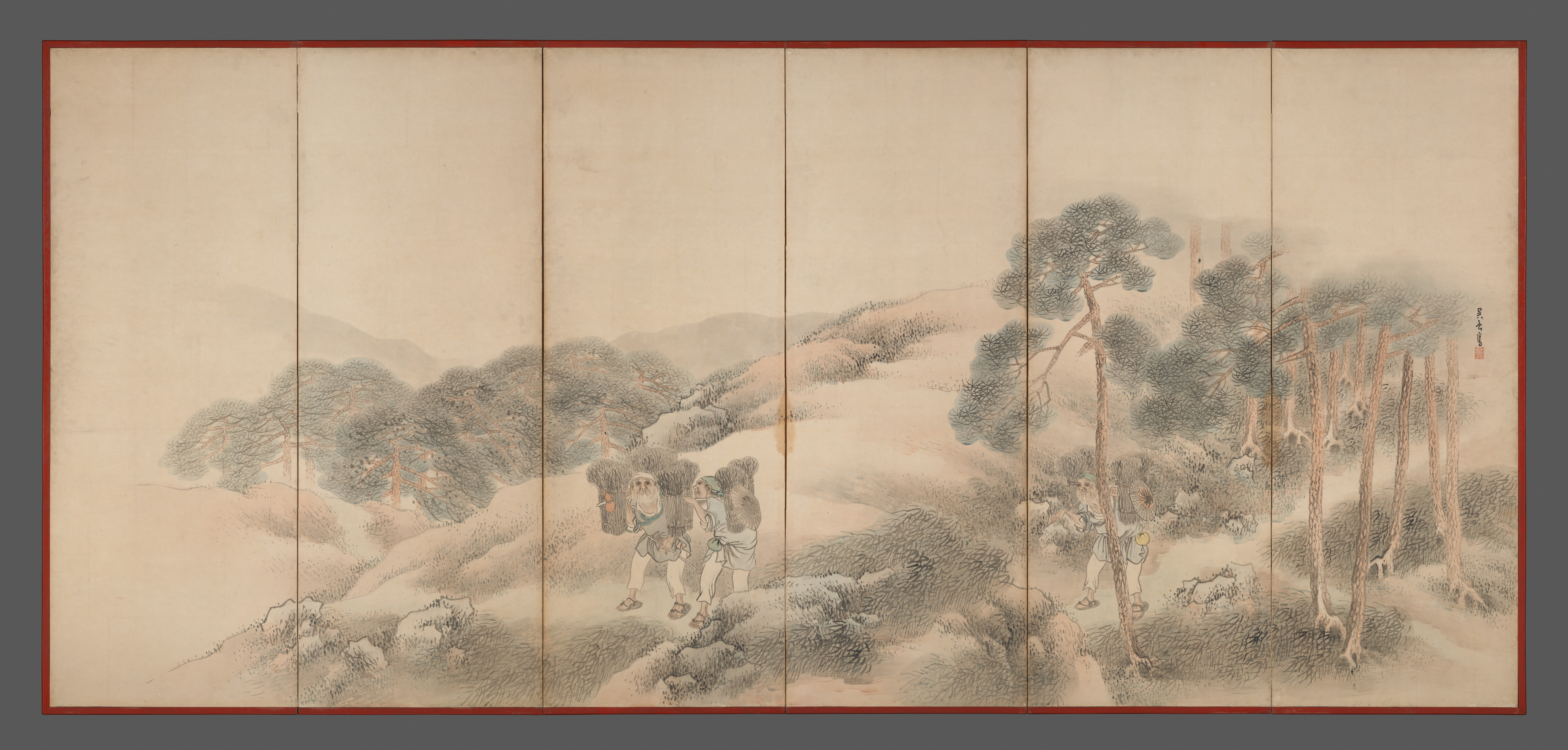
Woodcutters and Fishermen
山樵漁夫図屏風
- Date:
- ca. 1790–95
- Medium:
- Pair of six-panel folding screens; ink and color on paper
- Source:
- Metropolitan Museum of Art
Description
Woodcutters and Fishermen is a pair of six-panel folding screens (byōbu) in ink and color on paper by Matsumura Goshun (Metropolitan Museum of Art, 2015.300.206.1, .2), painted about 1790-95 during the most productive years of the artist's career. The subject — woodcutters in the mountains paired with fishermen at the water's edge — is one of the great set-pieces of East Asian landscape painting, descending from the Tang dynasty literary topos of the four virtuous occupations (fisherman, woodcutter, farmer, scholar) and through countless later Chinese and Japanese renderings to its place in the Kanō and nanga repertoires. Goshun's treatment uses the full twelve-panel sweep to construct an extended landscape in which the figures are placed against atmospheric ink-and-color terrain, with the lyrical brushwork he had developed under Yosa Buson tempered by the close attention to figure and gesture he had absorbed from Maruyama Ōkyo's circle. The pair entered the Met as part of the Mary Griggs Burke Collection, one of the most important post-war gifts of Japanese art to an American museum, and is among the principal documents of Goshun's mature handling of the multi-panel screen format that defined elite Kyoto painting in the late eighteenth century.
More Prints by Matsumura Goshun
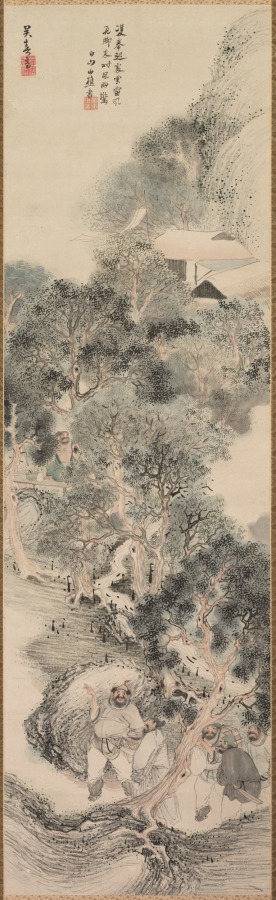
Happy Forest, from Water Margin
水滸伝快活林図
late 1700s
Hanging scroll; ink and color on paper
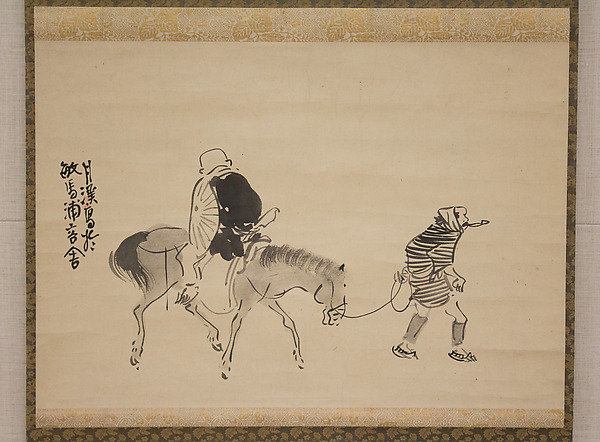
Monk Renshō Riding His Horse Backwards
蓮生法師逆乗馬図
after 1782, ca. 1784
Hanging scroll; ink on paper
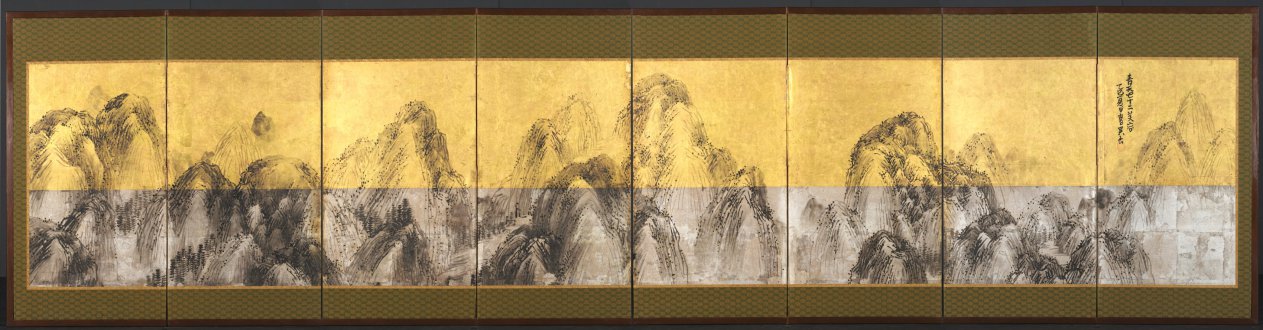
Seventy-Two Peaks Under the Blue Sky with Mount Furong
芙蓉峰青天七十二峰図
1785
Eight-panel folding screen; ink with gold and silver foil on paper
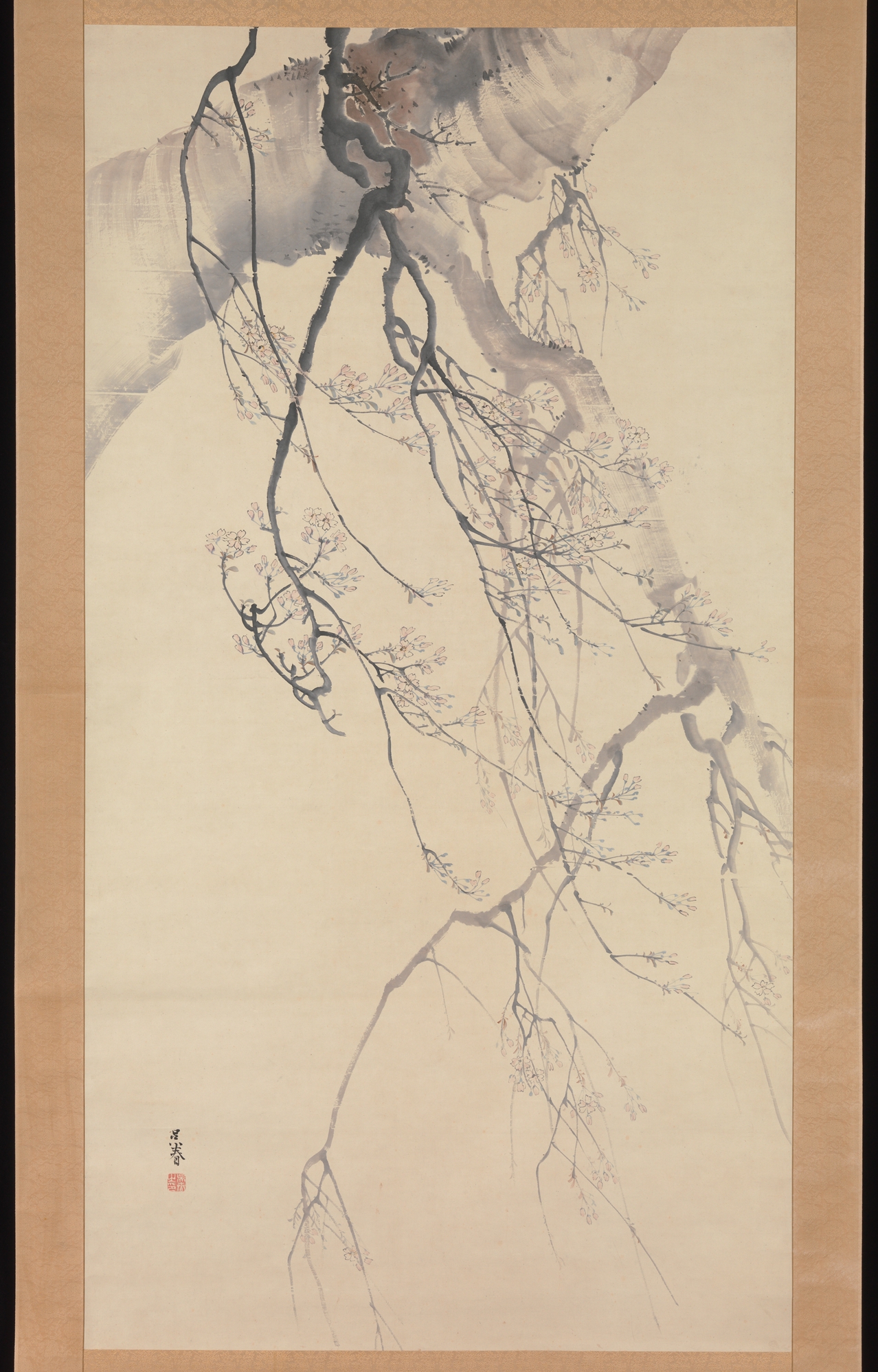
Cherry Blossoms
桜花図
late 18th century
Hanging scroll; ink and color on paper
More Fish Prints


Frequently Asked Questions
Woodcutters and Fishermen (山樵漁夫図屏風) was created by Matsumura Goshun (松村呉春) in ca. 1790–95.
Woodcutters and Fishermen depicts fish.