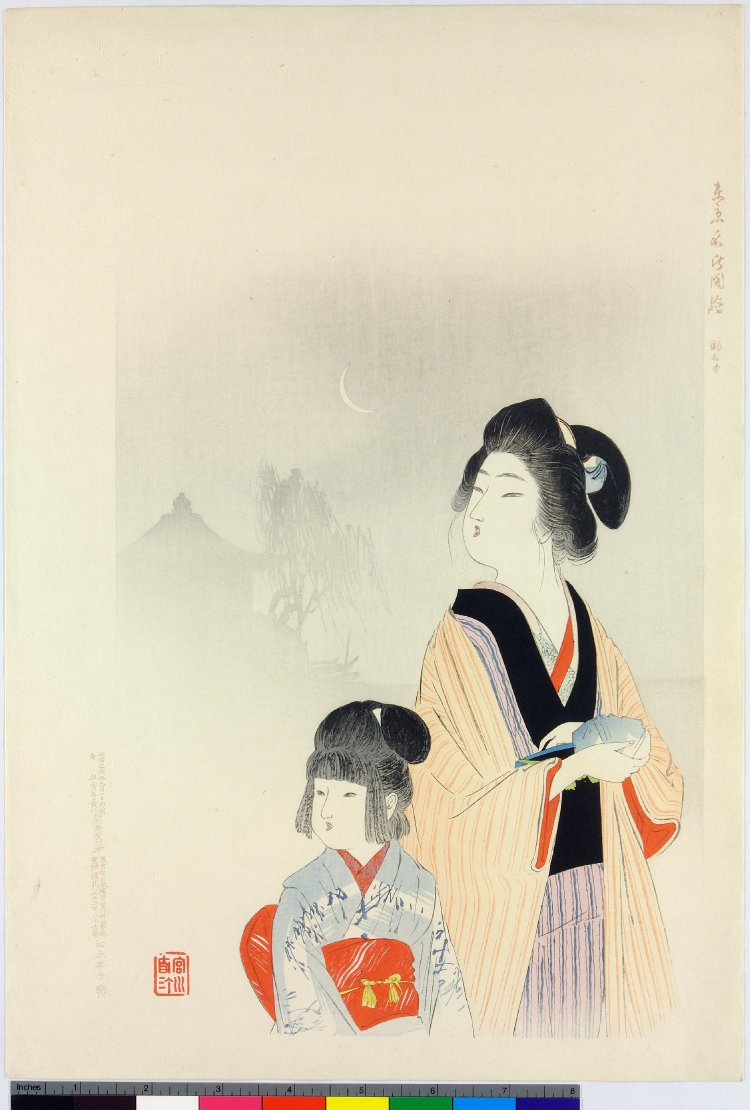
Komagata-do (Komagata Hall) / Tokyo meisho zue (Famous Places in Tokyo)
- Date:
- 1893 (1 September;printing; 5 September;published)
- Medium:
- Woodblock print
- Source:
- British Museum
Description
Komagata-do (Komagata Hall) — a Buddhist temple hall near the Sumida River in Asakusa, celebrated for its small statue of the horse-headed Kannon — is depicted in the 1893 "Famous Places in Tokyo" series. This riverside temple, modest in scale but significant in popular devotion, represented the kind of intimate urban sacred site that dotted Shitamachi Tokyo. Shuntei's rendering captures both the architectural character of the hall and its relationship to the surrounding urban environment of the Asakusa district.
More Prints by Miyagawa Shuntei
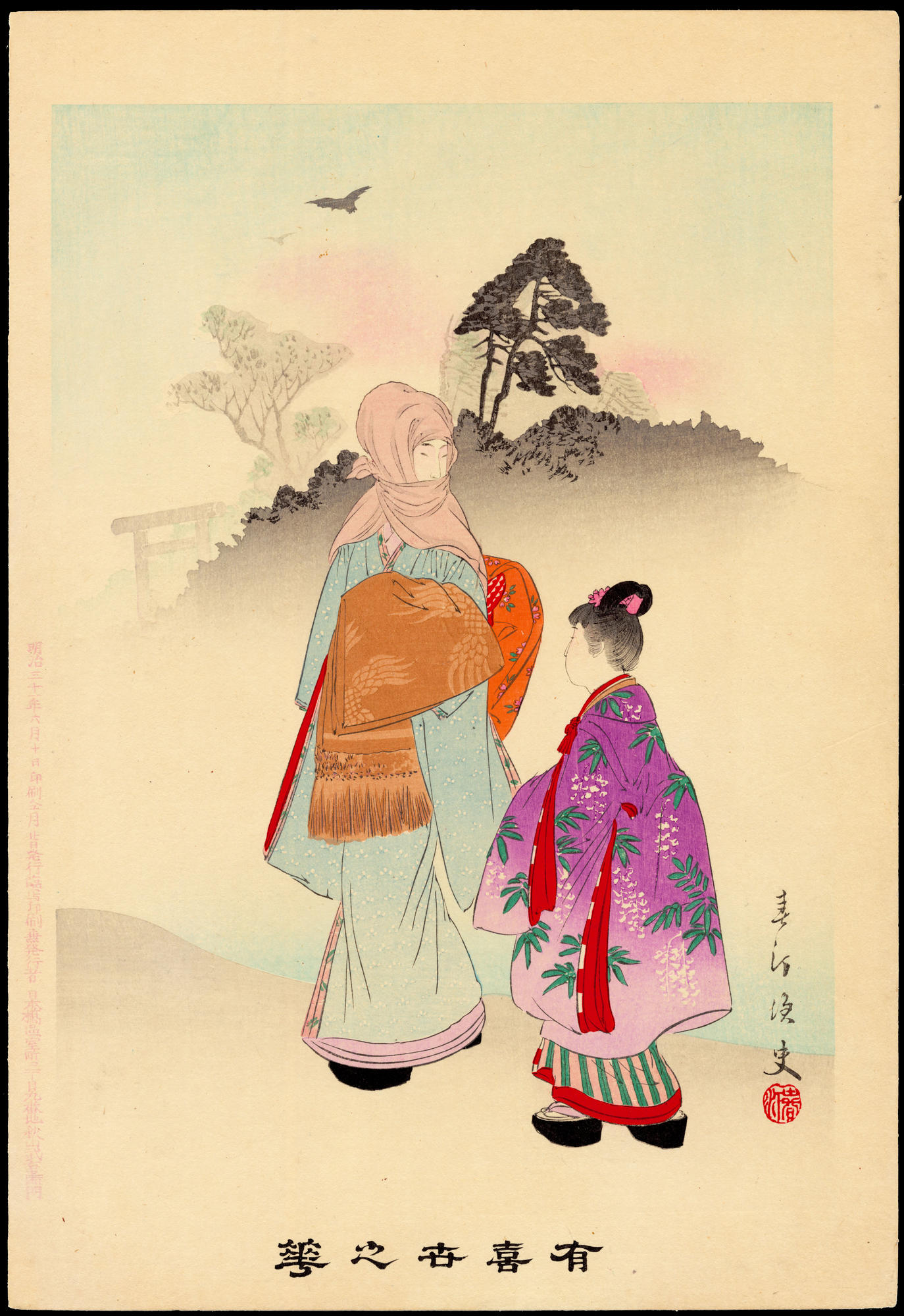
"Hatsumode (A Visit to a Shrine on New Year's Day) (1)"
Woodblock print

Autumn Flowers — 秋草
Not set
Woodblock print
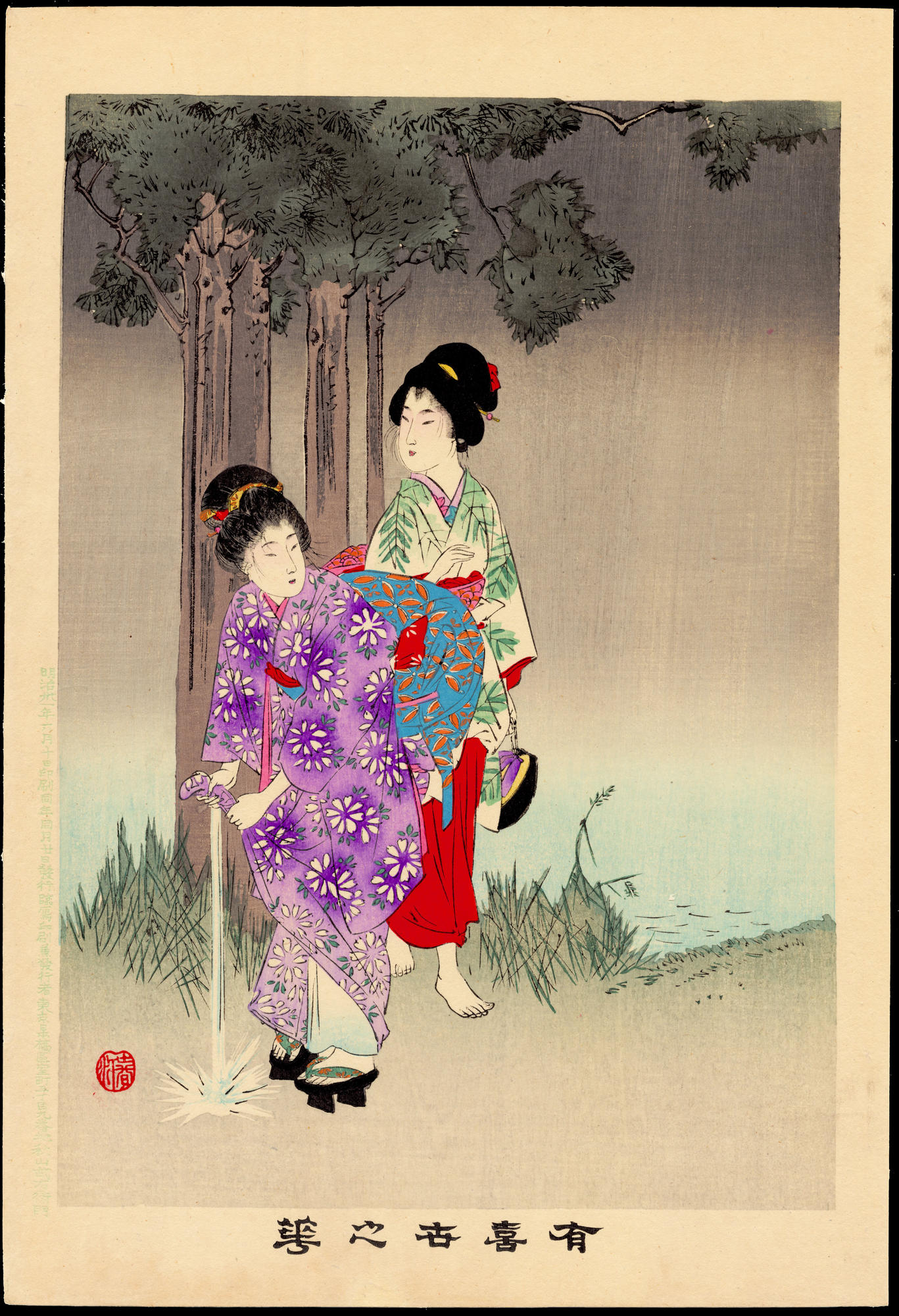
Wading in a River - 風呂や (1)
Woodblock print

Triptych: Village of Cherry Blossoms, from the series Esteemed Towns and Villages (Tôsei furaku tsû), Meiji period, 1897
Meiji period, 1868-1912
Woodblock print
More Architecture Prints


Frequently Asked Questions
Komagata-do (Komagata Hall) / Tokyo meisho zue (Famous Places in Tokyo) was created by Miyagawa Shuntei (宮川春汀) in 1893 (1 September;printing; 5 September;published).
Komagata-do (Komagata Hall) / Tokyo meisho zue (Famous Places in Tokyo) depicts architecture, set at Tokyo.