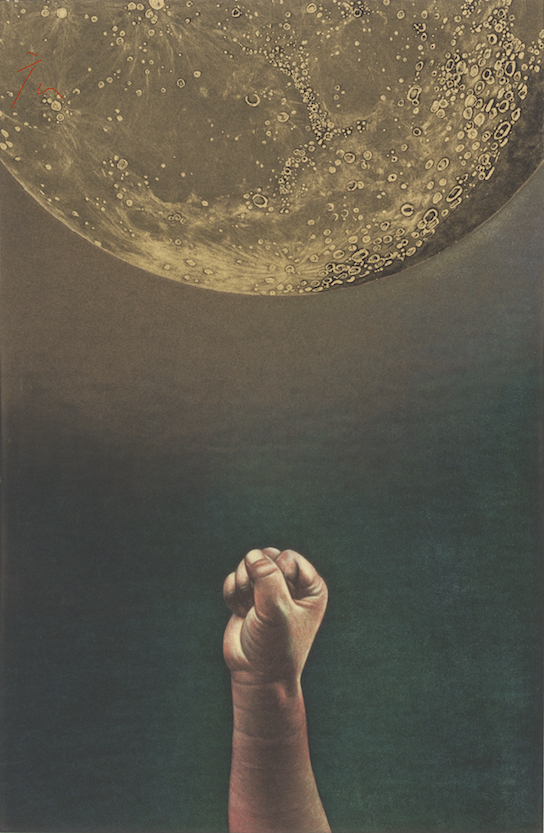
Kiritsubo (from In the Garden of Genji)
桐壺
- Medium:
- Aquatint, deep etching, gold leaf
- Image courtesy of
- Hiroaki Miyayama Official Site — In the Garden of Genji
Description
A large golden moon with a finely stippled, cratered surface fills the upper portion of the composition, its lower edge cutting across the picture against a dark teal-to-black gradient ground; a small red seal mark sits in the upper left corner. Below, a single clenched fist and forearm rise from the bottom edge of the composition, reaching up toward the moon. This is Kiritsubo (from In the Garden of Genji) by Hiroaki Miyayama, executed in aquatint, deep etching, and gold leaf; the date is unknown.
More Prints by Hiroaki Miyayama


More Gardens Prints
![[Garden of] Taj Mahal, No. 1 (Taji Maharu no niwa, dai ichi) by Hiroshi Yoshida](https://www.artic.edu/iiif/2/230993a7-d4f0-c979-c267-127d48e1ef1c/full/843,/0/default.jpg)
[Garden of] Taj Mahal, No. 1 (Taji Maharu no niwa, dai ichi)
Taji Maharu no niwa, dai ichi
1931
Color woodblock print; oban

Kiyozumi Garden in Moonlight
January 1938
Woodblock print, ink and color on paper

Moon over Kiyosumi Garden (Tsuki no Kiyosumien)
1938
Color woodblock print; oban
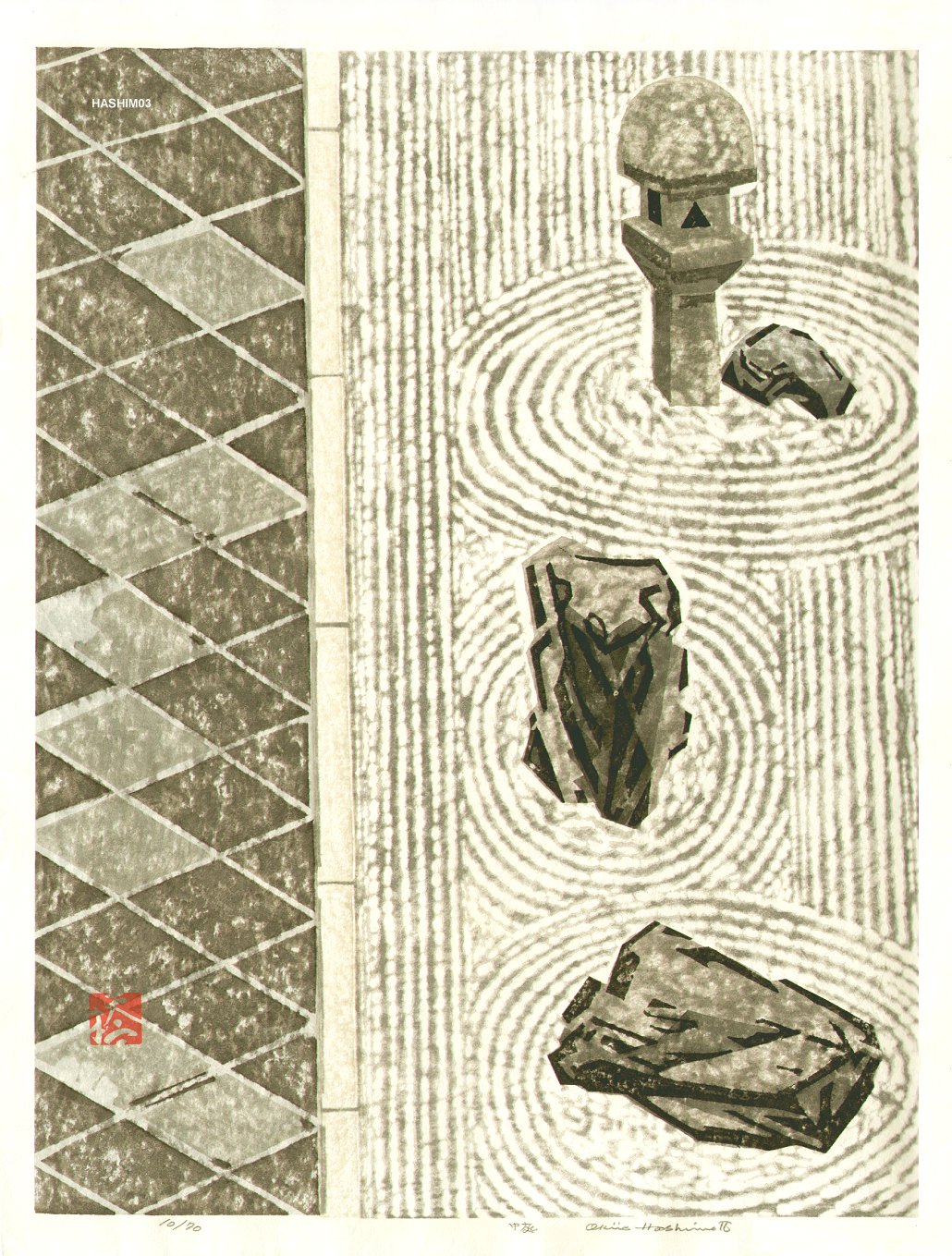
Rock garden
10/70, 1966
Woodblock print
Frequently Asked Questions
Kiritsubo (from In the Garden of Genji) (桐壺) was created by Hiroaki Miyayama (宮山 広明).
Kiritsubo (from In the Garden of Genji) depicts gardens and literary.