
Sakaki (from In the Garden of Genji)
賢木
- Medium:
- Aquatint, deep etching, gold leaf
- Image courtesy of
- Hiroaki Miyayama Official Site — In the Garden of Genji
Description
The tenth chapter draws its name from the sakaki, the evergreen used in Shinto ritual; the chapter's central scene takes place at the Nonomiya shrine where Genji visits the Rokujo Lady before her departure for Ise. Miyayama's print likely centres on a sakaki branch or its small berry-like fruit, possibly paired with the simple torii or shimenawa rope of the shrine setting. The rich blacks of deep etching are well suited to the chapter's autumnal mood and Shinto austerity, while burnished gold leaf provides the luminous ground against which the dark vegetation reads. Across the In the Garden of Genji series Miyayama tends to assign each chapter a single botanical or ritual emblem, a strategy that makes the cycle as much a contemporary herbarium of Heian poetics as a literary illustration project.
More Prints by Hiroaki Miyayama


More Gardens Prints
![[Garden of] Taj Mahal, No. 1 (Taji Maharu no niwa, dai ichi) by Hiroshi Yoshida](https://www.artic.edu/iiif/2/230993a7-d4f0-c979-c267-127d48e1ef1c/full/843,/0/default.jpg)
[Garden of] Taj Mahal, No. 1 (Taji Maharu no niwa, dai ichi)
Taji Maharu no niwa, dai ichi
1931
Color woodblock print; oban

Kiyozumi Garden in Moonlight
January 1938
Woodblock print, ink and color on paper

Moon over Kiyosumi Garden (Tsuki no Kiyosumien)
1938
Color woodblock print; oban
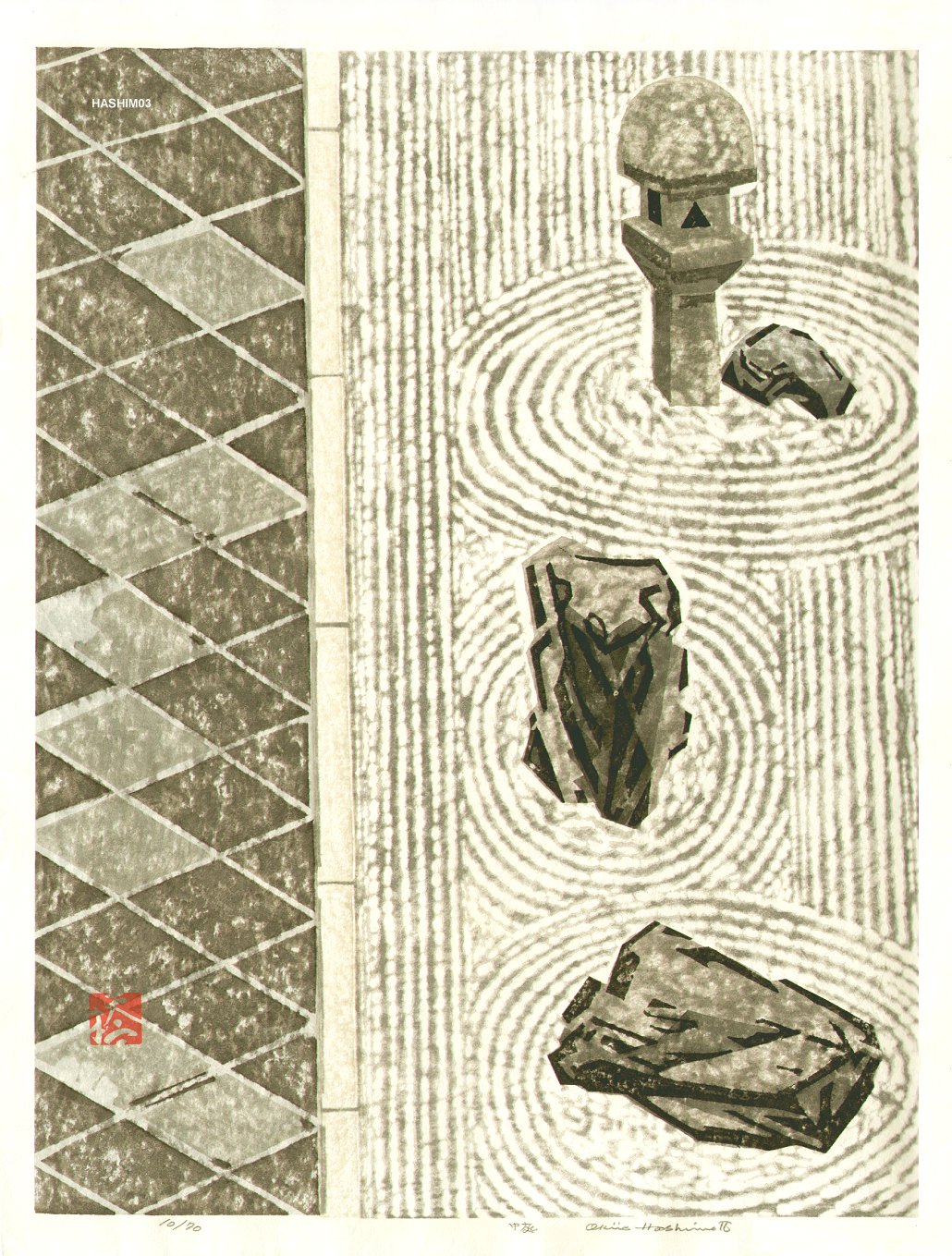
Rock garden
10/70, 1966
Woodblock print
Frequently Asked Questions
Sakaki (from In the Garden of Genji) (賢木) was created by Hiroaki Miyayama (宮山 広明).
Sakaki (from In the Garden of Genji) depicts gardens and literary.