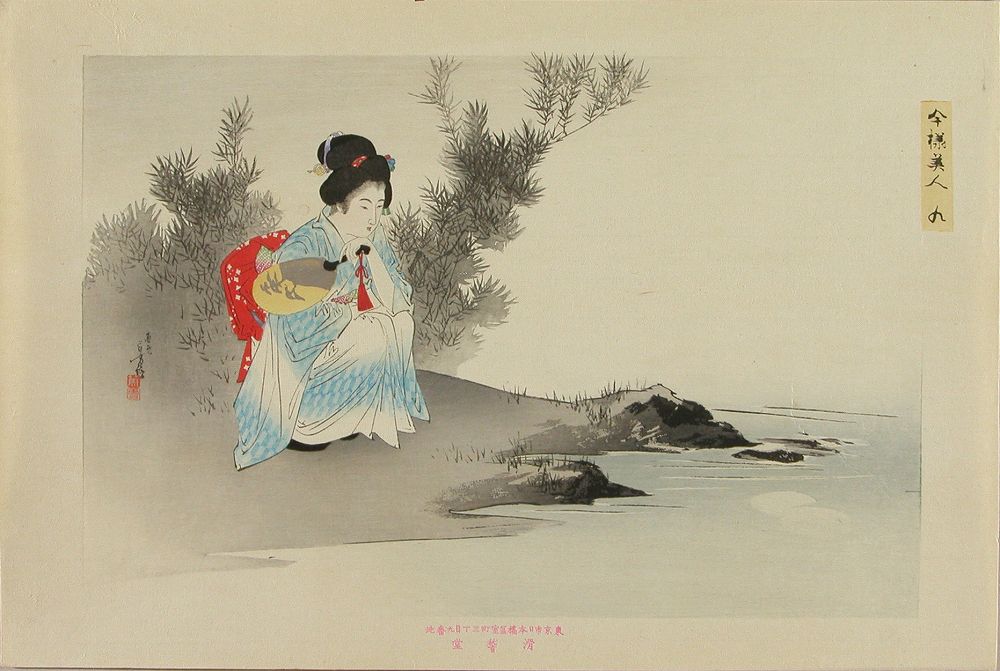
Beauty Looking at the Moon on the Water (Beauties of the Day)
- Medium:
- Woodblock print; ink and color on paper
Description
Beauty Looking at the Moon on the Water, with the parenthetical series qualification Beauties of the Day, is dated 1897 and belongs to the central period of Mizuno Toshikata's late-Meiji bijin-ga production. The composition concentrates a single feminine figure on a wooden walkway or boat platform at the edge of a Tokyo waterway, her gaze turned downward to the reflection of the autumn moon broken across the water's surface, the subject organized around the long tradition of mizu no tsuki, the moon on the water, that had carried significant Buddhist resonance in Japanese visual culture since the medieval period. The reflected moon had served in classical poetry and pictorial art as an emblem of the illusory nature of phenomenal appearance and the transience of beauty, and Toshikata's handling places his bijin-ga within that lineage while orienting it toward the modern Tokyo woman whose moon-viewing occurred from the urban waterways of the late-Meiji capital. The composition registers the figure's robe, hair, and slow downward inclination with the disciplined nihonga contour that Toshikata had refined under his master Tsukioka Yoshitoshi, and the chromatic palette is kept under the soft tonal restraint that distinguished his bijin-ga from more decorative contemporaries. By 1897 Toshikata had become one of the leading designers of late-Meiji bijin-ga and was working for publishers such as Akiyama Buemon and contributing kuchi-e frontispieces to the literary magazine Bungei Kurabu, then a central venue of late-Meiji popular literature. The image is recorded through Hara Shobō's dealer holdings on ukiyo-e.org (https://ukiyo-e.org/image/harashobo/16744_3). The print belongs to the body of work through which Toshikata established the visual language that his student Kaburaki Kiyokata would carry forward into the kuchi-e and nihonga production of the following generation, ultimately shaping the bijin-ga sensibility transmitted through Kiyokata to his own students Itō Shinsui and Kawase Hasui in the shin-hanga era.
More Prints by Mizuno Toshikata
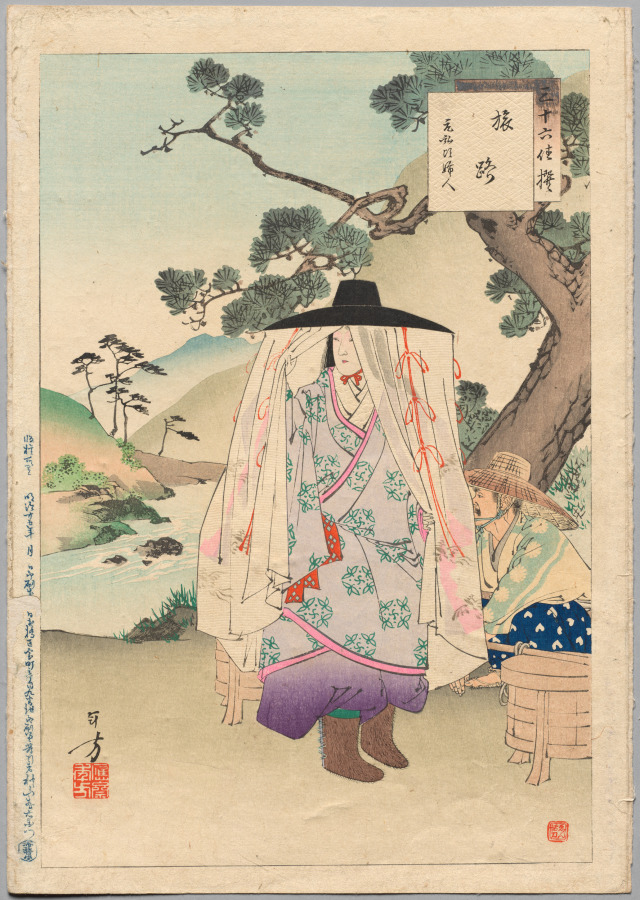
On the Road, A Lady of the Genkō Era (1313-34), from the series Thirty-Six Elegant Selections
1894
Woodblock print, ink and color on paper

Prime Minister Sanetomi Sanjo, with Samurai Daimyo
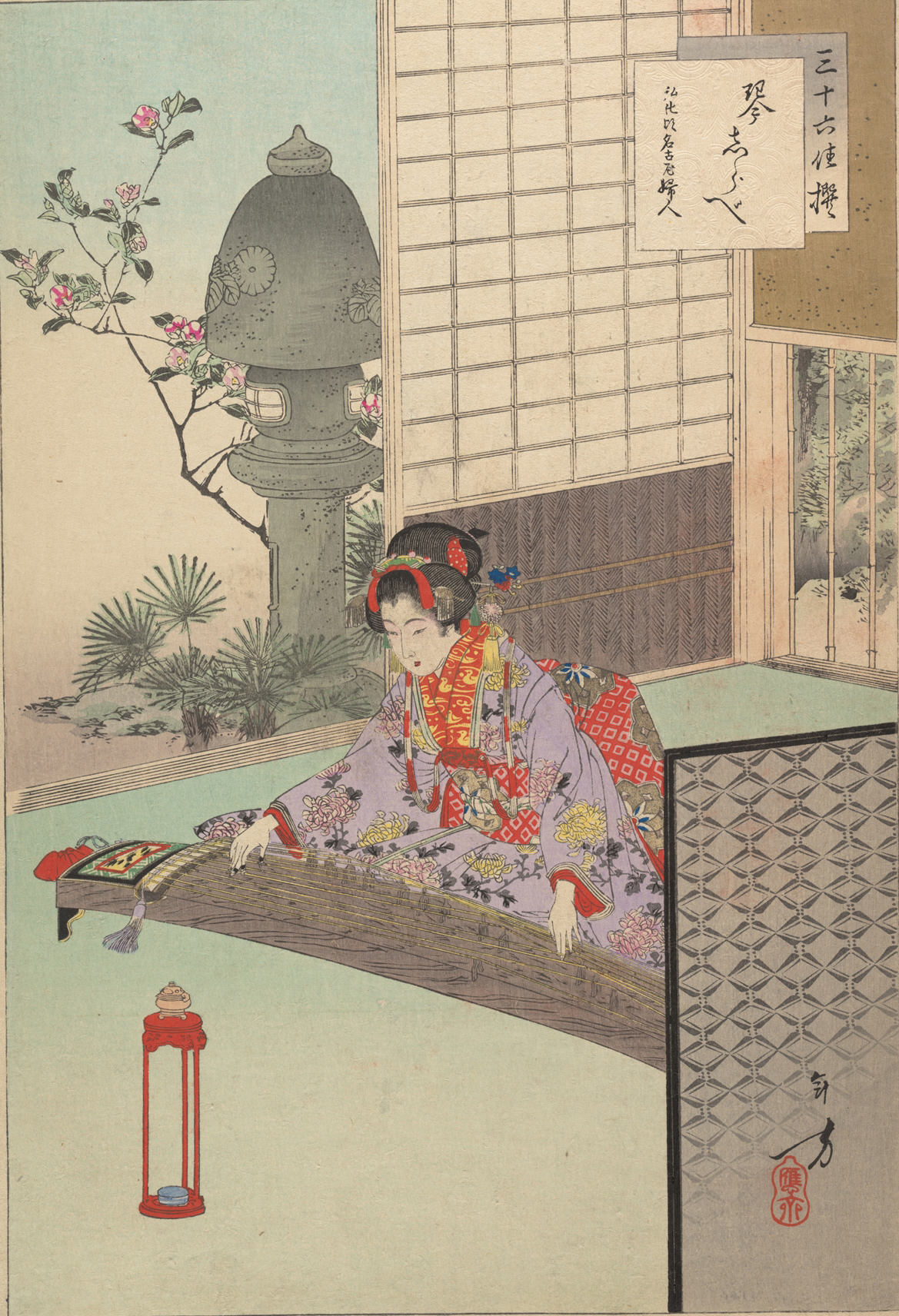
Noblewomen of the Tokugawa Period; Thirty-six Beauties (Sanjuroko kasensoro
1891–93
Album of 72 woodblock prints; ink and color on paper

Chanoyu hibigusa (Daily practice of the tea ceremony) 茶の湯日々草
1896-7
Frequently Asked Questions
Beauty Looking at the Moon on the Water (Beauties of the Day) was created by Mizuno Toshikata (水野年方).