
Onoguchi Tokuji during the Siege of Jinzhou Fortress
- Date:
- February 1895
- Medium:
- Triptych of woodblock prints (nishiki-e); ink and color on paper
- Source:
- Metropolitan Museum of Art
Description
Onoguchi Tokuji during the Siege of Jinzhou Fortress is a 1895 senso-e print by Mizuno Toshikata held by the Metropolitan Museum of Art (accession reference at metmuseum.org/art/collection/search/55316). Onoguchi Tokuji was an Imperial Japanese Army bugler whose name became attached to the assault on the walled town of Jinzhou (Kinshu) in November 1894, an early action of the Liaodong Peninsula campaign; later mythologized as Kiguchi Kohei, the heroic bugler who continued sounding his horn after being mortally wounded, he was widely commemorated in textbooks and prints. Toshikata, a Yoshitoshi student already known for biographical heroism in print form, was a natural choice for publishers building a roster of named war heroes. The Met's 1895 dating places this print within the most concentrated period of senso-e production, just as the war was concluding and the publishers were racing to memorialize specific incidents before public attention shifted. Toshikata's design follows the standard senso-e logic of isolating a named figure and pairing the image with a caption that supplies rank, unit, and feat. As Meiji prints, the senso-e of 1894–1895 remain among the most heavily collected and studied Japanese woodblock prints of the era, and Toshikata is one of the indispensable designers of the genre. Among his Sino-Japanese War prints, this Onoguchi impression is a clear example of the named-hero subject type and a useful reference point for collectors evaluating his wartime output.
More Prints by Mizuno Toshikata
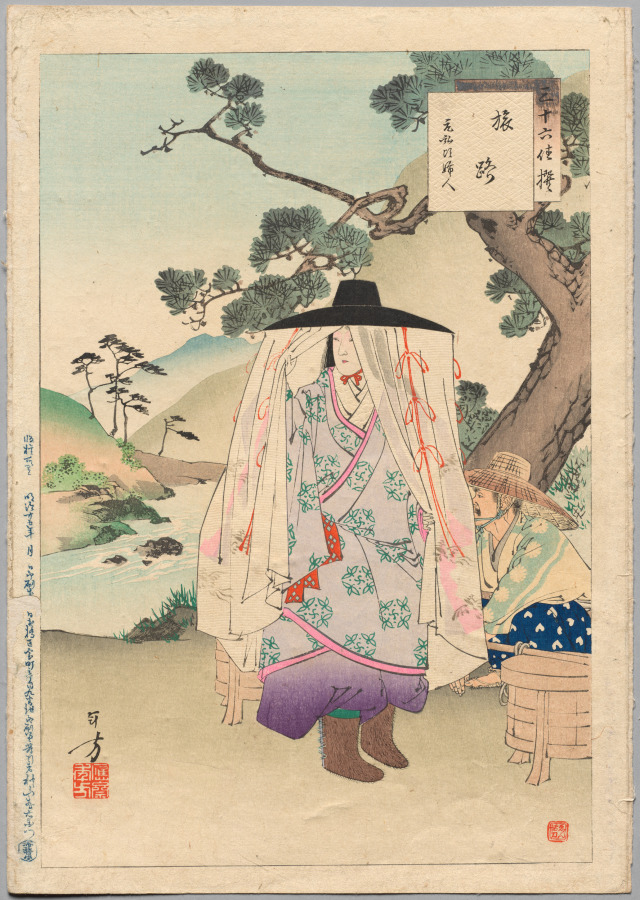
On the Road, A Lady of the Genkō Era (1313-34), from the series Thirty-Six Elegant Selections
1894
Woodblock print, ink and color on paper

Prime Minister Sanetomi Sanjo, with Samurai Daimyo
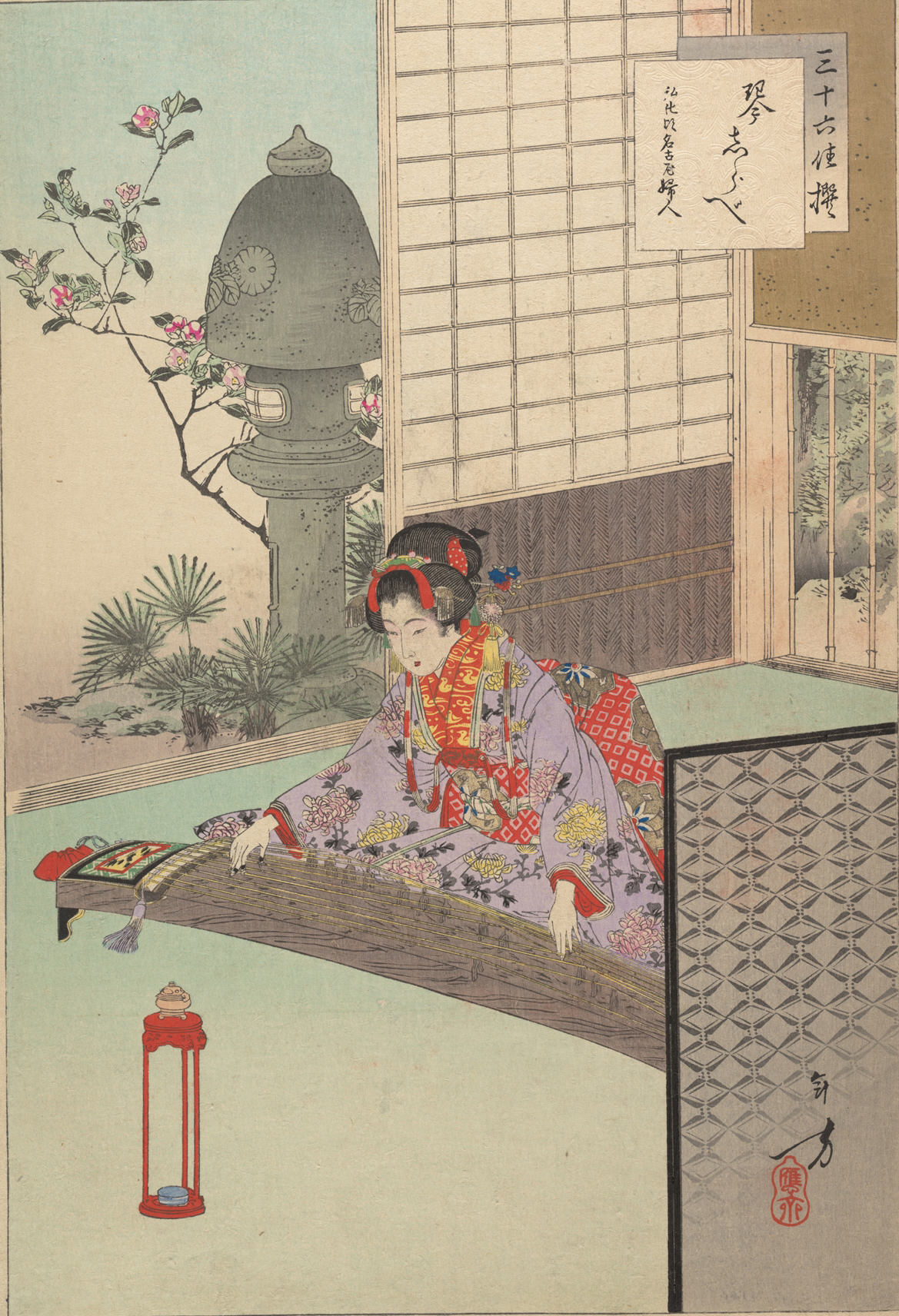
Noblewomen of the Tokugawa Period; Thirty-six Beauties (Sanjuroko kasensoro
1891–93
Album of 72 woodblock prints; ink and color on paper

Chanoyu hibigusa (Daily practice of the tea ceremony) 茶の湯日々草
1896-7
Frequently Asked Questions
Onoguchi Tokuji during the Siege of Jinzhou Fortress was created by Mizuno Toshikata (水野年方) in February 1895.