
Ornament Ball from kuchie (frontispiece) of a novel
- Date:
- ca. 1906
- Medium:
- Woodblock print; ink and color on paper
- Source:
- Metropolitan Museum of Art
Description
Ornament Ball, from a kuchie (frontispiece) of a novel, is a 1896 print by Mizuno Toshikata held by the Metropolitan Museum of Art (accession reference at metmuseum.org/art/collection/search/55366). The Japanese decorative ornament ball (kusudama or temari) was a traditional women's craft object often associated with auspicious occasions, and its appearance on a literary frontispiece signals an interest in feminine domestic culture as a visual entry point to the novel that the kuchie introduces. By the mid-1890s, the kuchie format had become one of Mizuno Toshikata's most important commercial outlets; as the market for traditional single-sheet ukiyo-e contracted, the literary magazine and novel industry kept senior designers actively employed. A Yoshitoshi student trained to compose meaningful objects around female figures, Toshikata used the small, vertical kuchie format to compress narrative into a single emblematic image. The Met's 1896 dating sits at the heart of the documented run of his frontispiece commissions, alongside his celebrated Surgical Ward and Mad Woman of Yawata kuchie. Among Meiji prints, these frontispieces are a discrete and increasingly studied subcategory; they show how the conventions of late ukiyo-e adapted to the new commercial environment of mass literary publishing. For collectors approaching Mizuno Toshikata, the kuchie body of work is essential for understanding the artist's late career and his role in the transition from single-sheet woodblock prints to illustrated mass-market fiction.
More Prints by Mizuno Toshikata
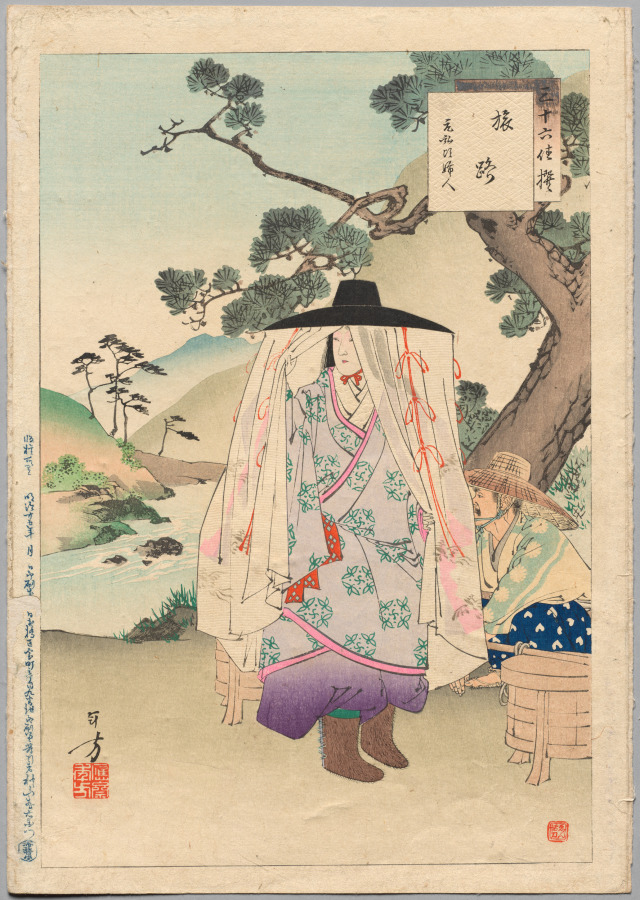
On the Road, A Lady of the Genkō Era (1313-34), from the series Thirty-Six Elegant Selections
1894
Woodblock print, ink and color on paper

Prime Minister Sanetomi Sanjo, with Samurai Daimyo
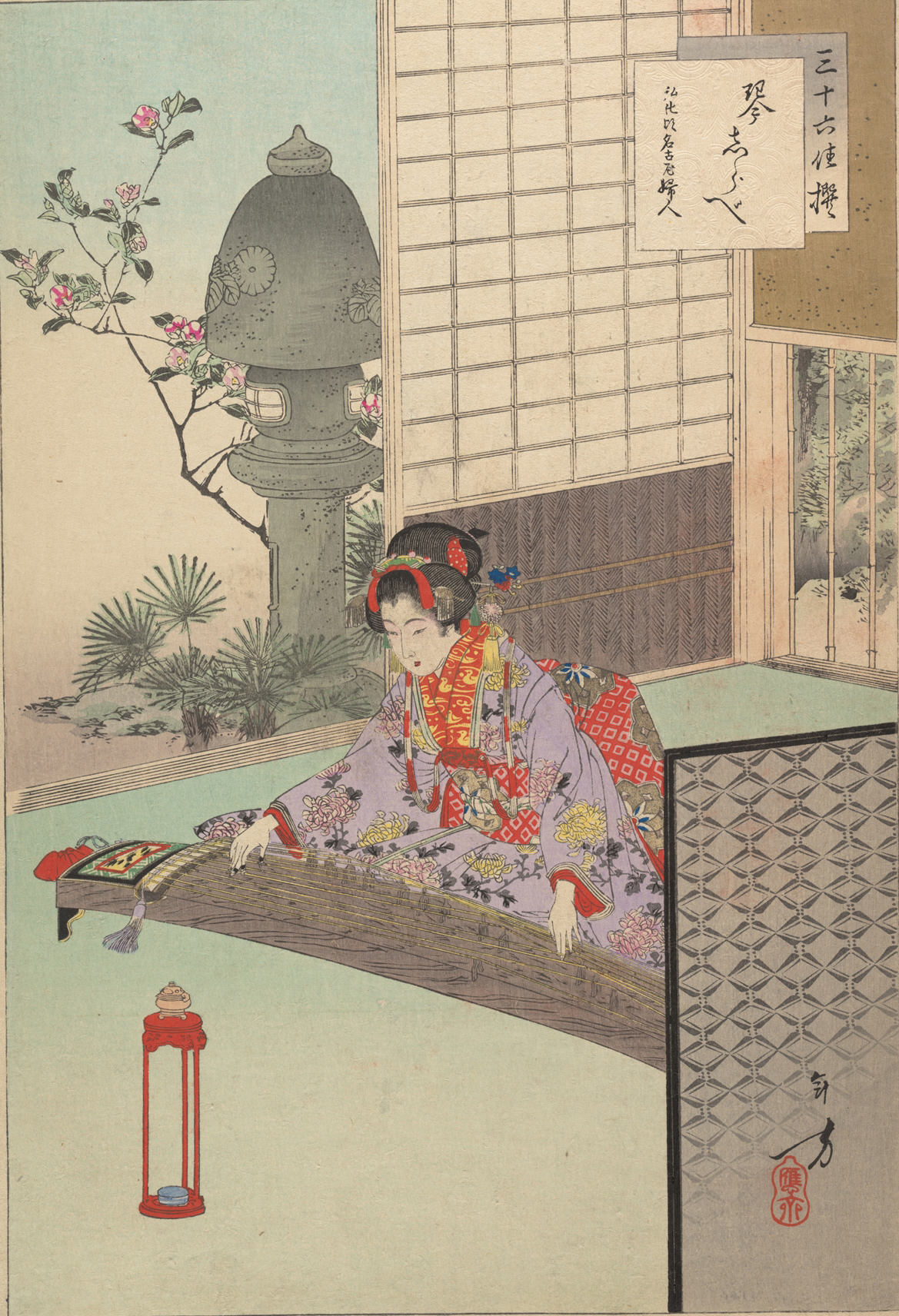
Noblewomen of the Tokugawa Period; Thirty-six Beauties (Sanjuroko kasensoro
1891–93
Album of 72 woodblock prints; ink and color on paper

Chanoyu hibigusa (Daily practice of the tea ceremony) 茶の湯日々草
1896-7
Frequently Asked Questions
Ornament Ball from kuchie (frontispiece) of a novel was created by Mizuno Toshikata (水野年方) in ca. 1906.