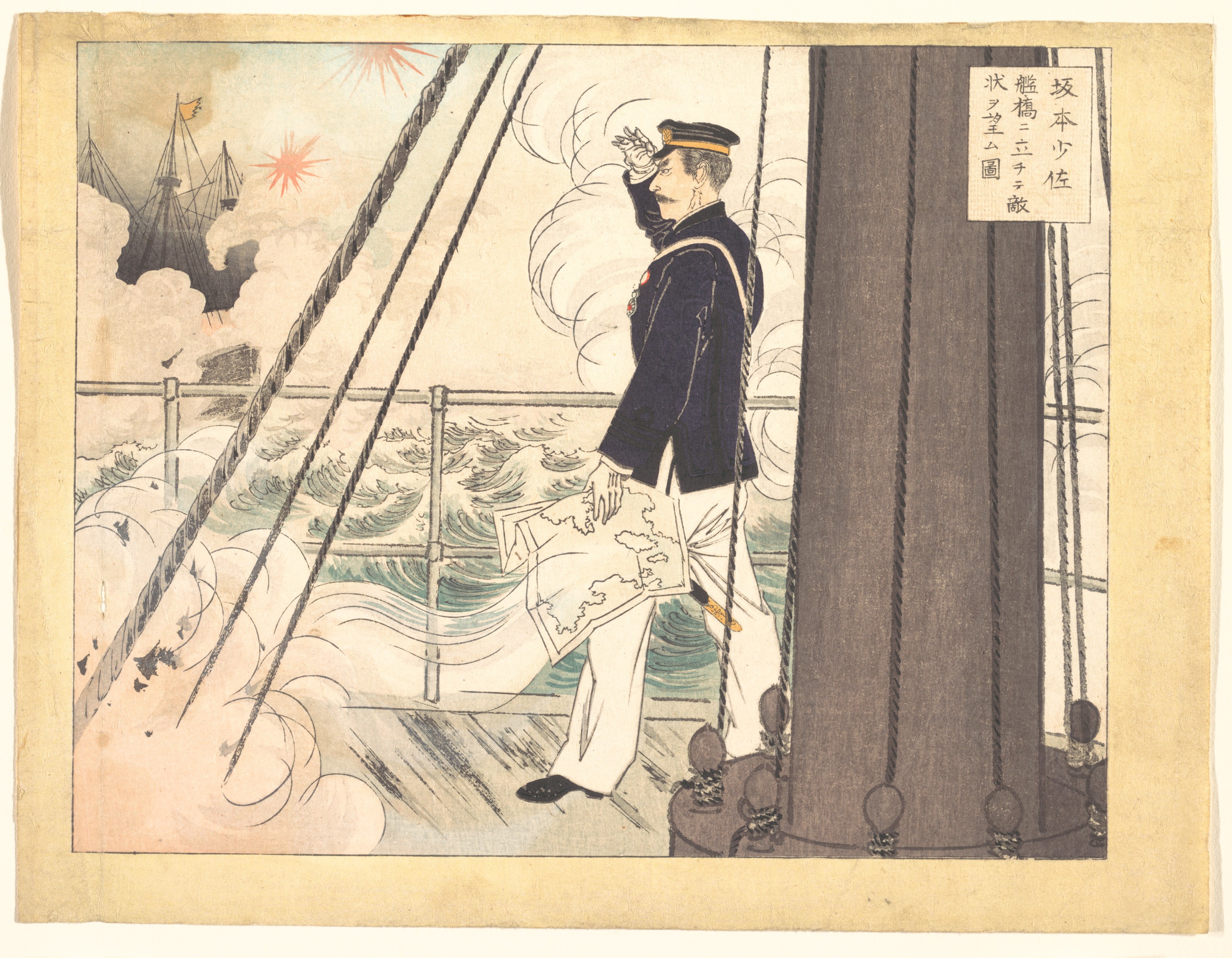
Sakamoto Otasuku
- Date:
- ca. 1894
- Medium:
- Woodblock print; ink and color on paper
- Source:
- Metropolitan Museum of Art
Description
Sakamoto Otasuku, dated 1884, is an early career print by Mizuno Toshikata held by the Metropolitan Museum of Art (accession reference at metmuseum.org/art/collection/search/55189). The 1884 date places this work near the beginning of Toshikata's independent activity as a Meiji prints designer, only a few years after he completed formal study as a Yoshitoshi student; he is recorded in biographies as having entered Tsukioka Yoshitoshi's studio around 1881. The print bears the marks of that fresh apprenticeship: the figural composition relies on the kind of single-subject biographical focus Yoshitoshi had used in his series of historical and contemporary worthies, and the title — simply the subject's name — declares that the print's value lies in commemorating a specific person. Sakamoto Otasuku is not as widely documented as his near-namesake Sakamoto Ryoma, but the print participates in a wider Meiji-period publishing practice of celebrating military officers, restoration loyalists, and other public figures who could be tied to the new national project. Toshikata would later become best known for senso-e prints of the Sino-Japanese War and for his bijinga series of the 1890s, but the Metropolitan's example shows how early he was already capable of disciplined portrait work. As a primary document of the artist's maturation, the print is informative: it sits at the start of a career that would soon expand into history, genre, and reportage. The Met's catalog record provides the firm date that anchors this work in 1884.
More Prints by Mizuno Toshikata
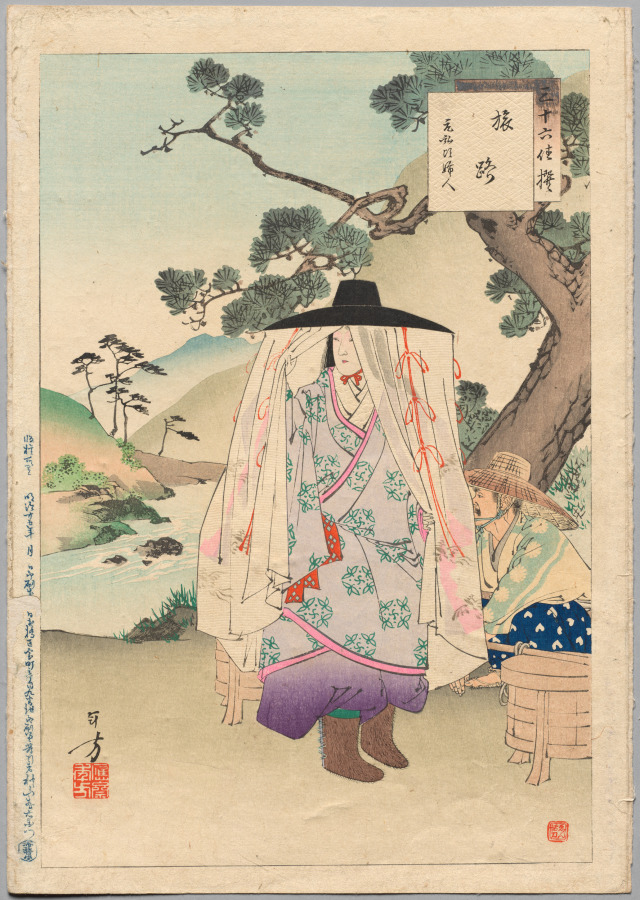
On the Road, A Lady of the Genkō Era (1313-34), from the series Thirty-Six Elegant Selections
1894
Woodblock print, ink and color on paper

Prime Minister Sanetomi Sanjo, with Samurai Daimyo
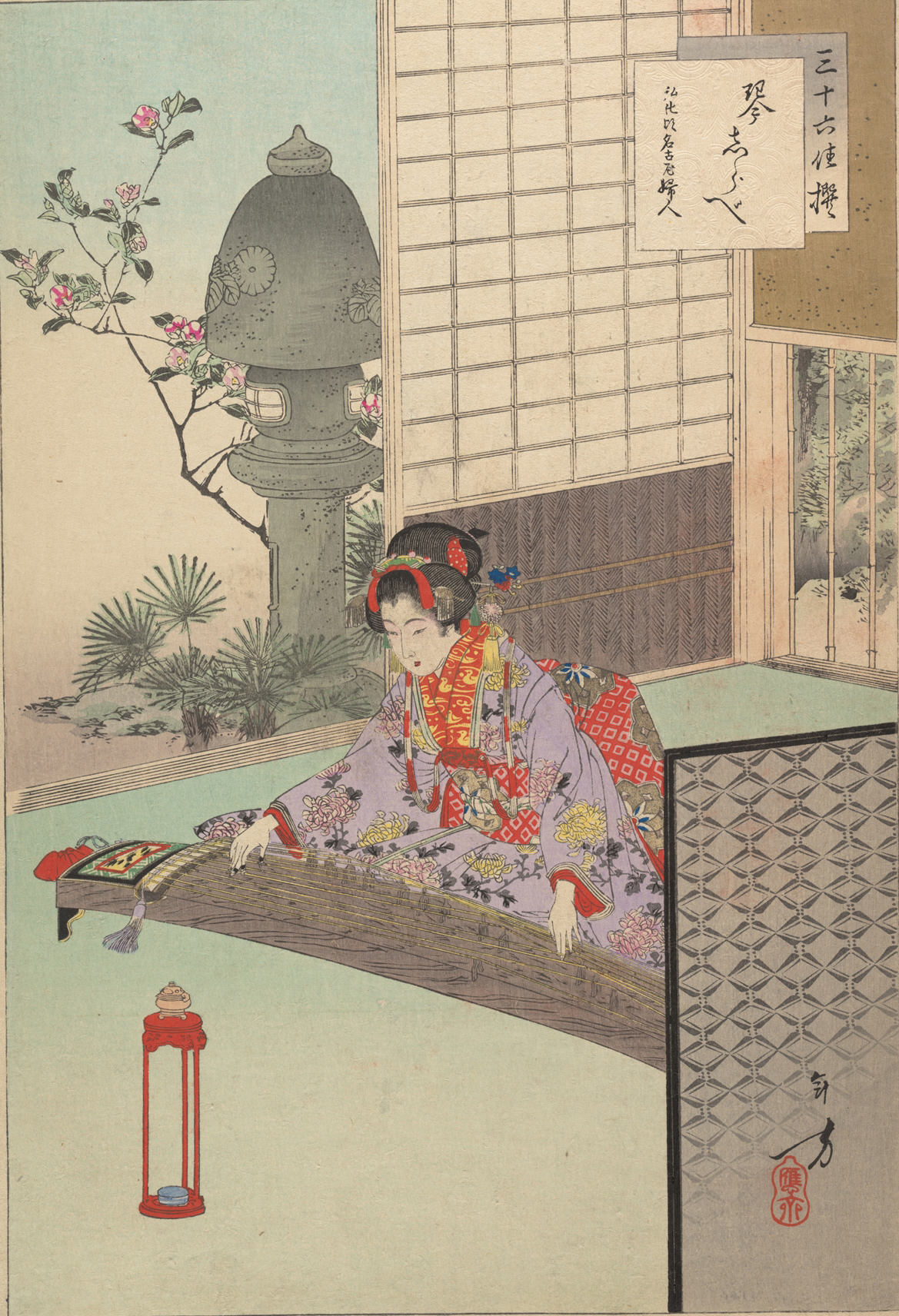
Noblewomen of the Tokugawa Period; Thirty-six Beauties (Sanjuroko kasensoro
1891–93
Album of 72 woodblock prints; ink and color on paper

Chanoyu hibigusa (Daily practice of the tea ceremony) 茶の湯日々草
1896-7
Frequently Asked Questions
Sakamoto Otasuku was created by Mizuno Toshikata (水野年方) in ca. 1894.