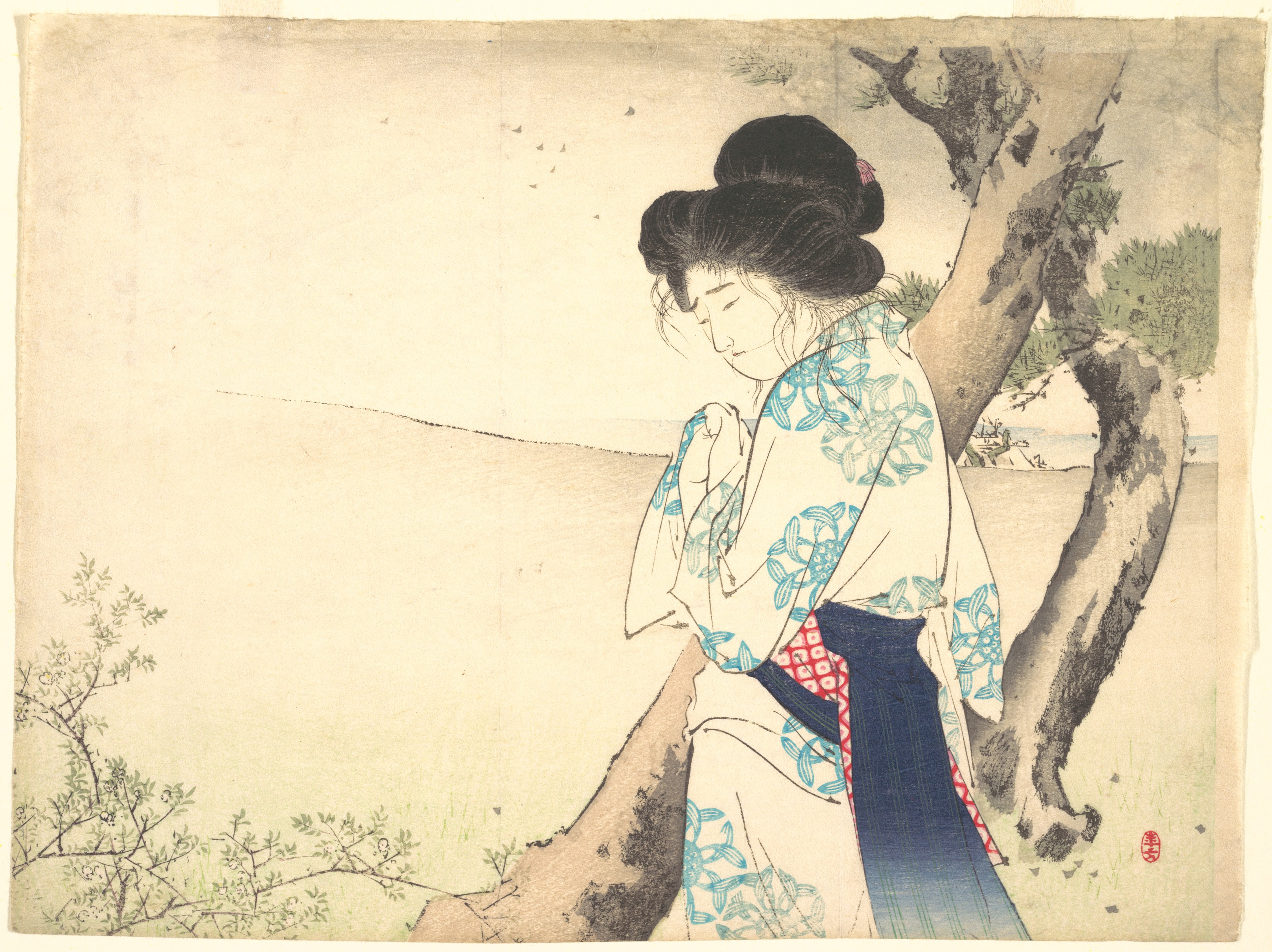
The Mad Woman of Yawata (Yawata no kyōjo) from kuchie (frontispiece) of a novel
- Date:
- ca. 1905
- Medium:
- Woodblock print; ink and color on paper
- Source:
- Metropolitan Museum of Art
Description
The Mad Woman of Yawata (Yawata no kyojo), from the kuchie or frontispiece of a novel, is a 1895 print by Mizuno Toshikata held by the Metropolitan Museum of Art (accession reference at metmuseum.org/art/collection/search/55381). Kuchie were the color woodblock or photomechanical frontispieces bound into Meiji literary magazines and novels, and they became a major late-career outlet for Toshikata and other senior designers as the broader market for single-sheet ukiyo-e contracted. The 1895 date places this work in the same year as Toshikata's intensive senso-e activity around the Sino-Japanese War, demonstrating his ability to pivot between mass-market battle pictures and literary illustration on demand. The subject — a madwoman wandering at Yawata — draws on a long Japanese poetic and theatrical tradition in which female madness, often caused by loss or separation, becomes a vehicle for emotional intensity; Noh plays featuring crazed women at famous places have a clear analogue here. As a Yoshitoshi student, Toshikata had absorbed his teacher's interest in extreme psychological states (Yoshitoshi's One Hundred Aspects of the Moon includes several such madwomen), and this kuchie extends that interest into the new literary medium. Kuchie were small in physical scale but ambitious in design, and the Metropolitan's catalog records this impression as part of a frontispiece pair, indicating how seriously the publishers and the artist treated the genre. For Mizuno Toshikata's late career, his kuchie work like this is among the most artistically inventive material he produced.
More Prints by Mizuno Toshikata
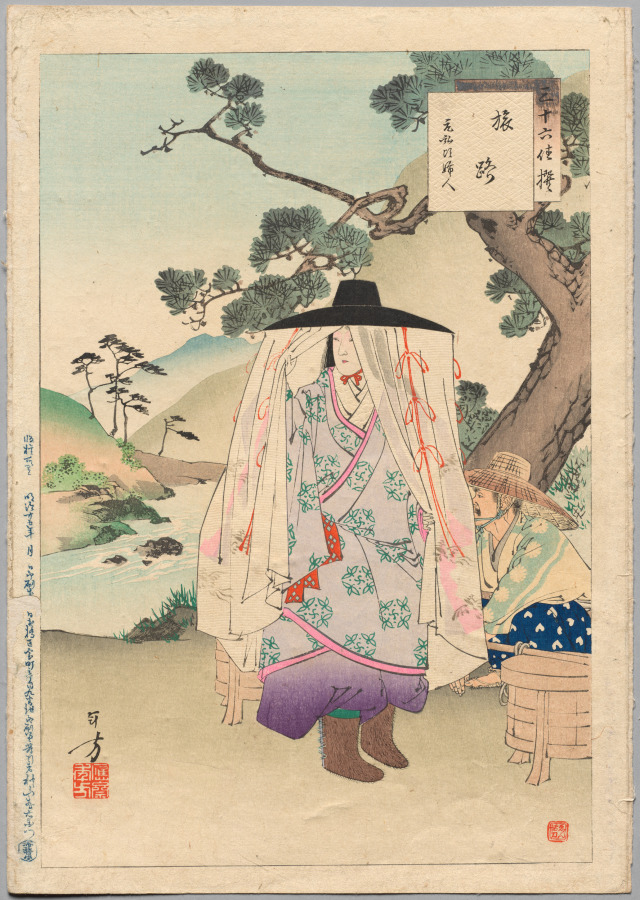
On the Road, A Lady of the Genkō Era (1313-34), from the series Thirty-Six Elegant Selections
1894
Woodblock print, ink and color on paper

Prime Minister Sanetomi Sanjo, with Samurai Daimyo
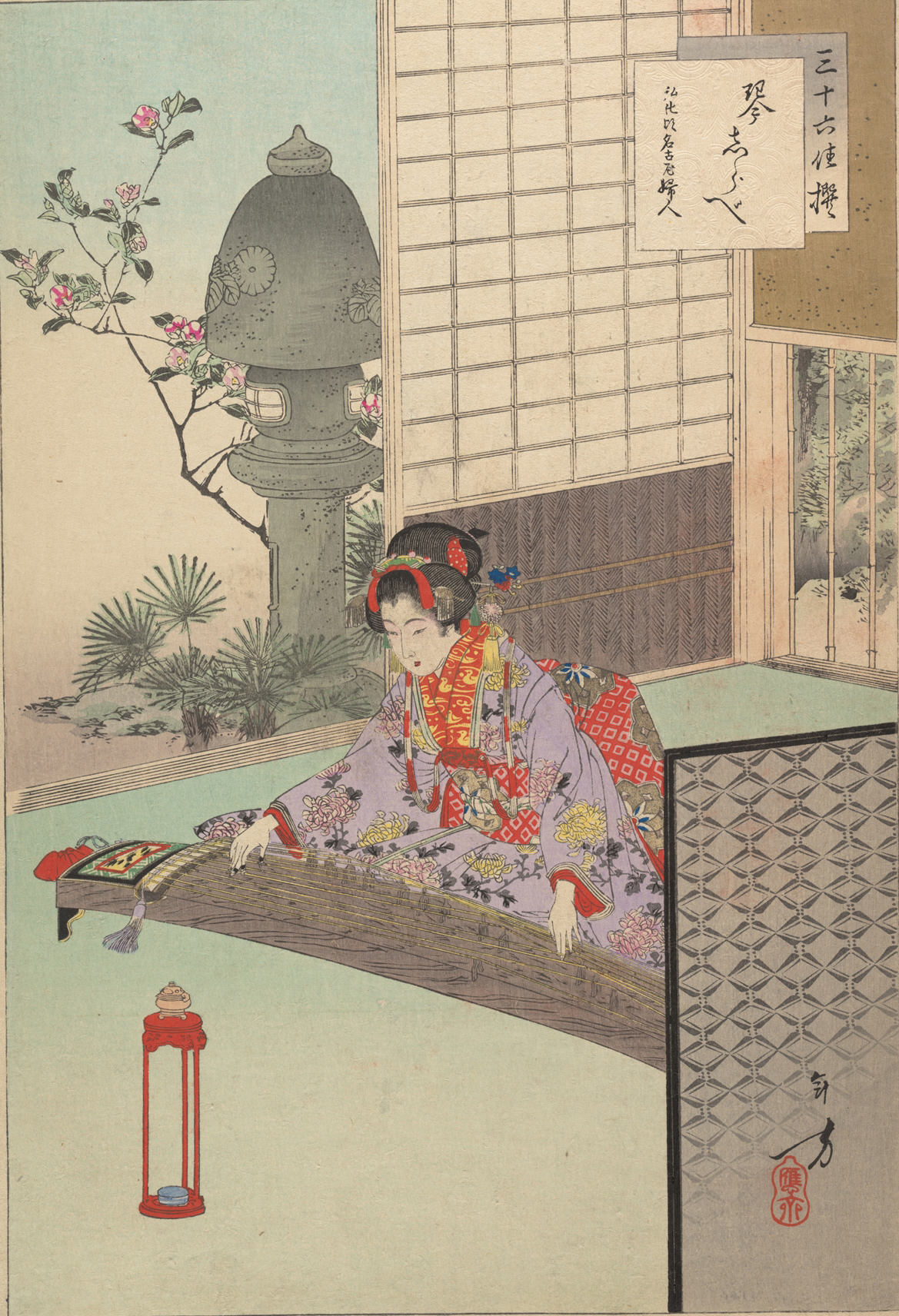
Noblewomen of the Tokugawa Period; Thirty-six Beauties (Sanjuroko kasensoro
1891–93
Album of 72 woodblock prints; ink and color on paper

Chanoyu hibigusa (Daily practice of the tea ceremony) 茶の湯日々草
1896-7
Frequently Asked Questions
The Mad Woman of Yawata (Yawata no kyōjo) from kuchie (frontispiece) of a novel was created by Mizuno Toshikata (水野年方) in ca. 1905.