
Woman Working at a Tea House
- Source:
- ukiyo-e.org
Description
Woman Working at a Tea House is a Meiji genre print by Mizuno Toshikata preserved through ukiyo-e.org's aggregation of the Art Gallery of Greater Victoria collection (image reference dscn1628). The subject of tea-house women had been a fixture of ukiyo-e since the eighteenth century, when artists such as Harunobu and later Utamaro depicted celebrated waitresses as fashionable subjects of bijinga; by Toshikata's period, the tradition had absorbed a wider range of more naturalistic genre subjects. Toshikata, a Yoshitoshi student, had inherited his teacher's interest in working women whose dignity is constructed through the small gestures of their craft, and that interest is evident in this print's framing. Rather than presenting an idealized beauty, the design positions the figure in the activity of her work — pouring, carrying, attending — and uses textile pattern and the architecture of the tea house to construct social meaning around her. This kind of attention to women's labor was part of what made Mizuno Toshikata a respected Meiji prints designer in the 1890s; he worked it through major series such as the Thirty-six Elegant Selections, where historical women are similarly characterized by their occupations and accomplishments. Although he is often grouped with the senso-e war-print specialists because of his Sino-Japanese War output, the bijinga and genre tradition remained central to his practice. The ukiyo-e.org record does not specify date or publisher, but the style and treatment fit comfortably within his mature 1890s period.
More Prints by Mizuno Toshikata
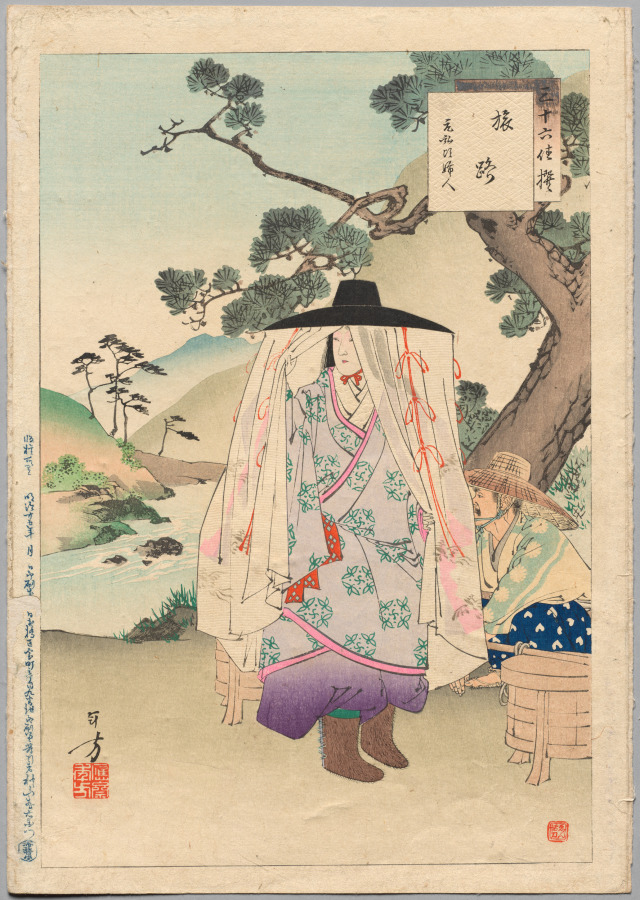
On the Road, A Lady of the Genkō Era (1313-34), from the series Thirty-Six Elegant Selections
1894
Woodblock print, ink and color on paper

Prime Minister Sanetomi Sanjo, with Samurai Daimyo
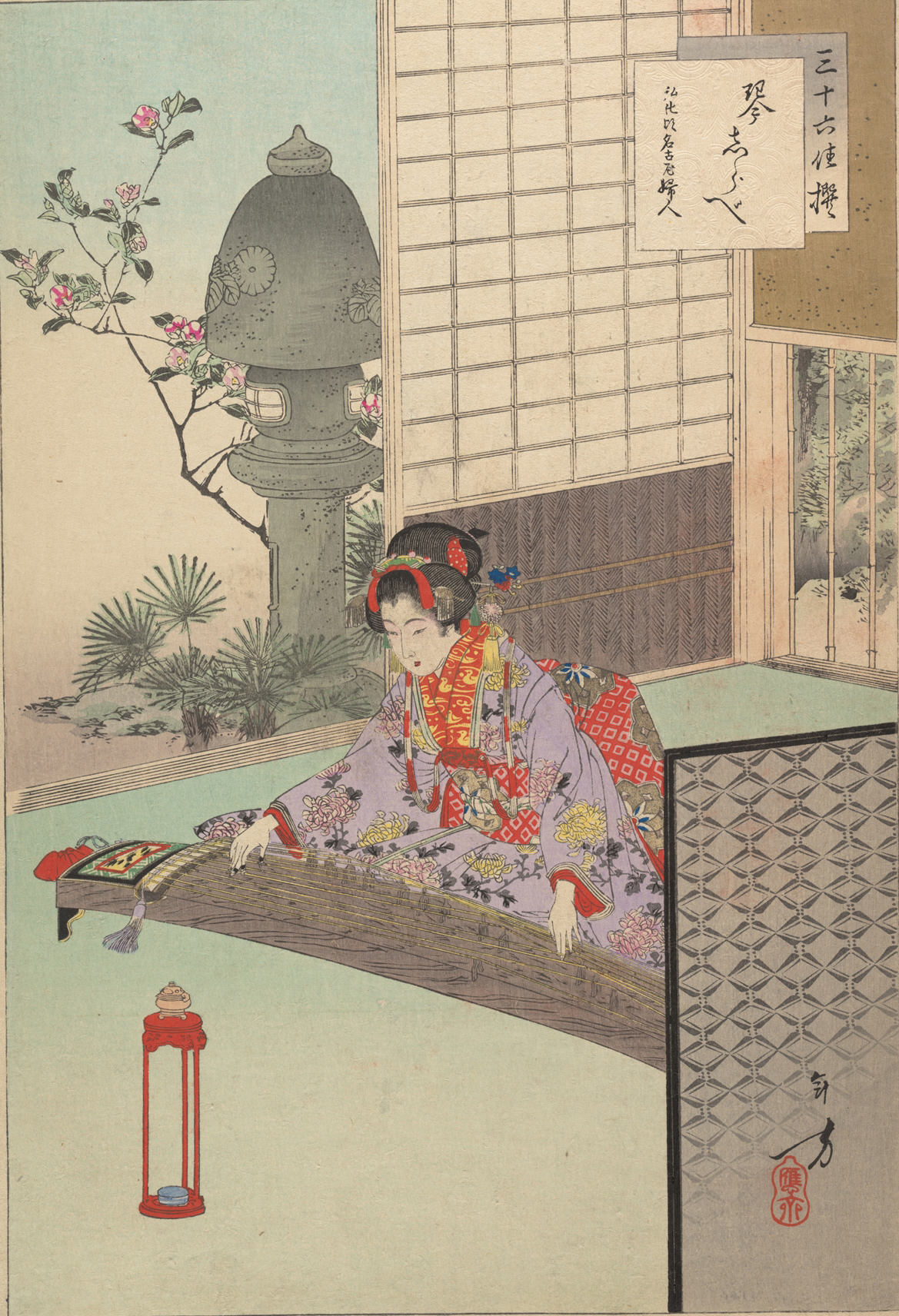
Noblewomen of the Tokugawa Period; Thirty-six Beauties (Sanjuroko kasensoro
1891–93
Album of 72 woodblock prints; ink and color on paper

Chanoyu hibigusa (Daily practice of the tea ceremony) 茶の湯日々草
1896-7
Frequently Asked Questions
Woman Working at a Tea House was created by Mizuno Toshikata (水野年方).