
Black Bull
黒牛図
- Date:
- late 19th–early 20th century
- Medium:
- Hanging scroll; ink and color on silk
Description
Black Bull is a hanging-scroll painting by Mochizuki Gyokusen depicting a single dark-coated bull standing in profile, executed in ink and color on silk in the careful Shijō observational manner that Gyokusen practised throughout his career. Bull subjects in Japanese painting had a long pedigree in both Chinese-influenced Zen ink painting (the herding-the-ox sequence and related allegories of self-cultivation) and in the secular Maruyama-Shijō tradition of animal portraiture descended from Maruyama Ōkyo's late-eighteenth-century studies of horses, dogs, and cattle. Gyokusen's treatment falls firmly within the second of those traditions: the animal's musculature, the set of its hooves, and the texture of its coat are drawn with a naturalism shaped by the Shijō practice of working from living models, while the spare composition (the bull alone against an undeveloped silk ground) shows the strong Meiji preference for figural simplification over densely modelled settings. The Minneapolis Institute of Art's scroll (accession 2013.31.48) entered the museum in 2013 as part of the Mary Griggs Burke bequest and is a clear example of how Gyokusen extended the Shijō animal-portrait tradition into the late Meiji period.
More Prints by Mochizuki Gyokusen

Landscape with Fisherman Outside a Cave
洞窟漁夫山水図
late 19th–early 20th century
Hanging scroll; ink and light color on silk
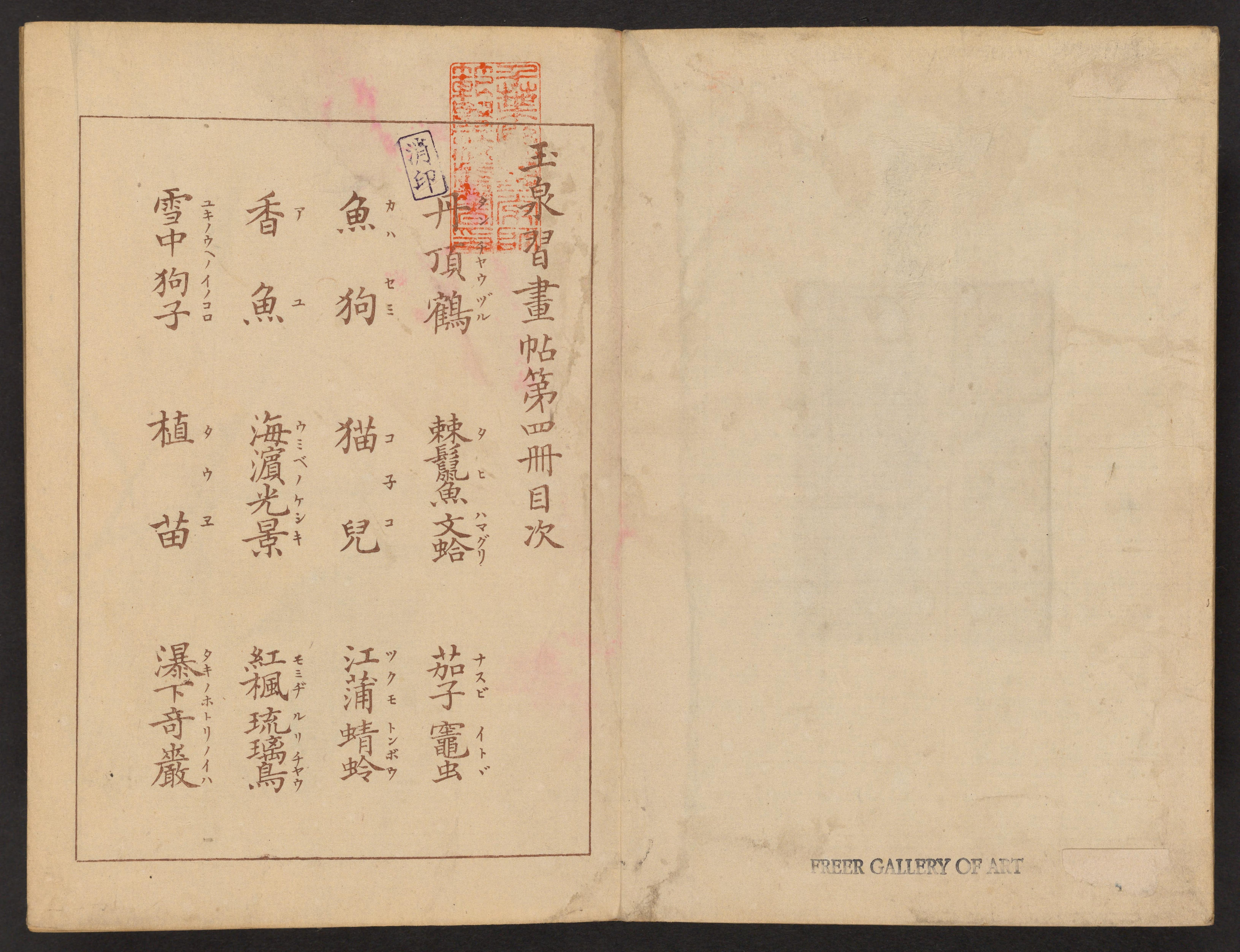
Gyokusen shūgajō (Gyokusen's Collected Picture Album)
玉泉習画帖
1891
Woodblock-printed book; ink and color on paper

Snow Landscape
雪景山水図
1879
Hanging scroll; ink on silk

Eagle on Rock by Waves
怒涛巖上鷲図
late 19th–early 20th century
Pair of hanging scrolls; ink and color on silk
Frequently Asked Questions
Black Bull (黒牛図) was created by Mochizuki Gyokusen (望月玉泉) in late 19th–early 20th century.