
Eagle on Rock by Waves
怒涛巖上鷲図
- Date:
- late 19th–early 20th century
- Medium:
- Pair of hanging scrolls; ink and color on silk
Description
Eagle on Rock by Waves is a large pair of hanging scrolls by Mochizuki Gyokusen depicting an eagle perched on a wave-battered rock — one of the most enduring subjects in Edo and Meiji Japanese painting, charged with associations of imperial sovereignty, martial vigilance, and the unyielding endurance of nature against the sea. Gyokusen's treatment shows the full scope of his late Meiji bird-and-animal practice: the eagle is rendered with the precise feathering and observational anatomy of the Shijō tradition (descended through his father from the Maruyama school of Ōkyo), while the rock, the foaming surf, and the spray are handled in broader ink washes that owe as much to Kanō decorative practice as to Shijō shasei. The composition belongs to a recognisable Meiji genre of large eagle-and-rock paintings produced for temple buildings, formal reception rooms, and Imperial Household commissions, and it would have served well in any of those contexts. The Minneapolis Institute of Art's set (accession 2013.31.16) entered the museum in 2013 through the gift of Mary Griggs Burke, whose collection of Japanese painting is a major resource for Edo-Meiji nihonga, and it is one of the most reproduced of Gyokusen's surviving large-format works.
More Prints by Mochizuki Gyokusen

Black Bull
黒牛図
late 19th–early 20th century
Hanging scroll; ink and color on silk

Landscape with Fisherman Outside a Cave
洞窟漁夫山水図
late 19th–early 20th century
Hanging scroll; ink and light color on silk
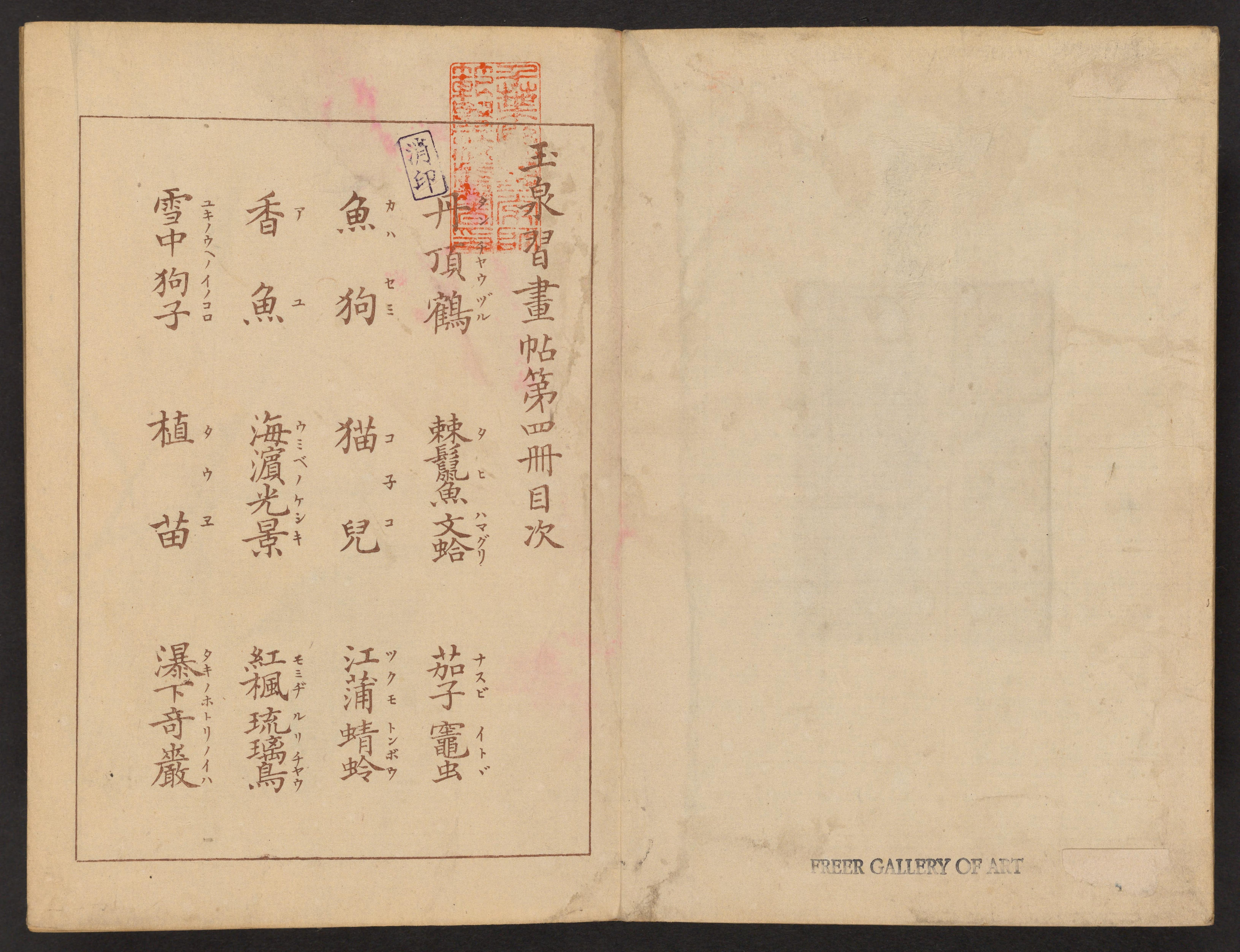
Gyokusen shūgajō (Gyokusen's Collected Picture Album)
玉泉習画帖
1891
Woodblock-printed book; ink and color on paper

Snow Landscape
雪景山水図
1879
Hanging scroll; ink on silk
Frequently Asked Questions
Eagle on Rock by Waves (怒涛巖上鷲図) was created by Mochizuki Gyokusen (望月玉泉) in late 19th–early 20th century.