
Wild Geese and Waterweeds
蘆雁図
- Date:
- 1900–1913
- Medium:
- Pair of two-panel folding screens; ink and color on paper
Description
Wild Geese and Waterweeds is a pair of two-panel folding screens by Mochizuki Gyokusen depicting wild geese among rushes and waterweeds at the edge of a marsh — one of the canonical subjects of Japanese painting (rogan, 蘆雁), with roots both in the Chinese literary trope of the descending goose and in the seasonal kachō-e tradition that organised so much of Edo and Meiji painting around poetic associations of season and place. The screens, dated by the Honolulu Museum of Art to circa 1900-1913 and so representing Gyokusen's late maturity, combine the careful Shijō observation of the geese (the differentiation of resting, preening, and standing birds is closely studied) with the decorative two-panel byōbu format favoured for tokonoma alcoves and reception rooms. Gyokusen's treatment of the rushes and water shows the late Meiji Kyoto handling of marsh subjects: long diagonals through the reeds, soft graduated washes for the water surface, and the geese disposed asymmetrically across the two screens so as to read as one continuous composition when the pair is displayed in sequence. The Honolulu Museum of Art's pair (accession 2.826ab) is a representative example of the kind of formal Kyoto nihonga that Gyokusen produced for senior patrons during the years of his Teishitsu Gigeiin appointment after 1904.
More Prints by Mochizuki Gyokusen

Black Bull
黒牛図
late 19th–early 20th century
Hanging scroll; ink and color on silk

Landscape with Fisherman Outside a Cave
洞窟漁夫山水図
late 19th–early 20th century
Hanging scroll; ink and light color on silk
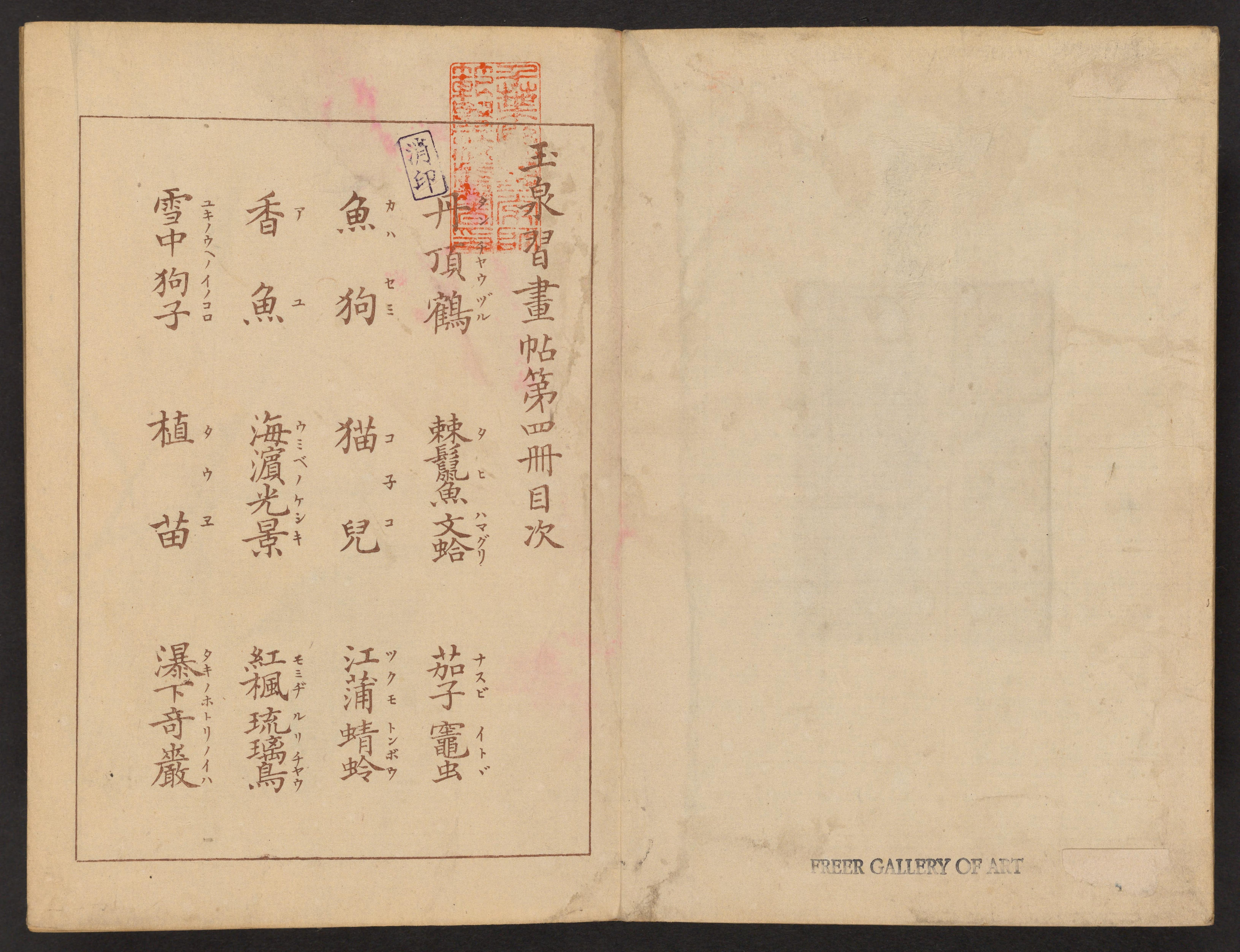
Gyokusen shūgajō (Gyokusen's Collected Picture Album)
玉泉習画帖
1891
Woodblock-printed book; ink and color on paper

Snow Landscape
雪景山水図
1879
Hanging scroll; ink on silk
Frequently Asked Questions
Wild Geese and Waterweeds (蘆雁図) was created by Mochizuki Gyokusen (望月玉泉) in 1900–1913.