
Kamigamo Shrine in Summer
夏の上賀茂神社図
by Mori Kansai
- Date:
- circa 1860–1870
- Medium:
- Six-panel screen; ink, color, and gold on paper
Description
Kamigamo Shrine in Summer is a six-panel folding screen (byōbu) by Mori Kansai in ink, color, and gold wash on paper, held by the Walters Art Museum in Baltimore (accession 35.147) and acquired by the museum in 1989 with funds from the W. Alton Jones Foundation. The screen depicts the Kamigamo Shrine — one of the two oldest Shintō shrines in Kyoto, founded in the seventh century and dedicated to the deity Kamo-wake-ikazuchi — in its summer landscape: cypress and pine trees in deep summer green, the iconic torii gate and shrine buildings rising above the trees, and the famous Kamo River curving through the foreground. The painting is paired in the Walters with a companion screen of Byōdō-in Temple in Winter, the two screens together forming a meditation on the great religious sites of the ancient Kyoto and Uji landscape across opposing seasons. Datable to between 1860 and 1870, the screens belong to Kansai's mature pre-Meiji and early Meiji production and exemplify the Mori-Kishi school's command of large-scale landscape composition, combining the close-observed pine and cypress drawing of the school's natural-history practice with the broad horizontal sweep that the byōbu format demanded.
More Prints by Mori Kansai
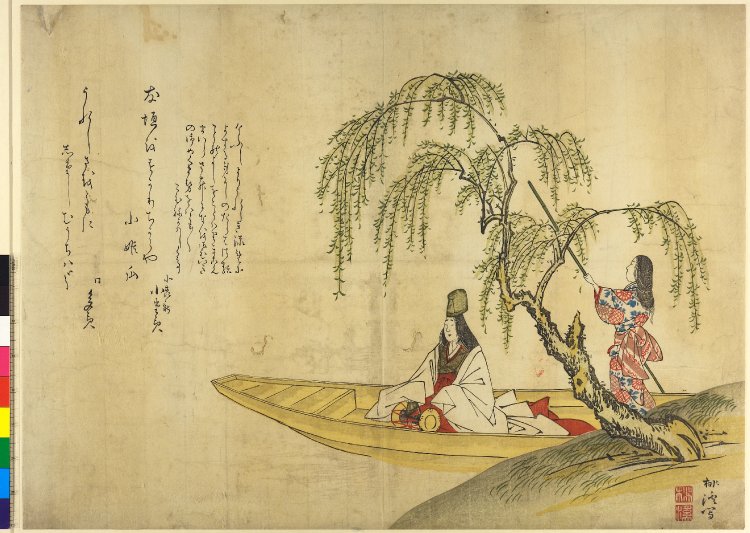
Asazuma Punting Beneath a Willow Tree (surimono diptych)
朝妻舟図摺物
mid-19th century
Woodblock print diptych (surimono); ink and color on paper with metallic pigments

Flowering Plum and Birds
梅花小禽図
1873
Album leaf; ink and color on silk
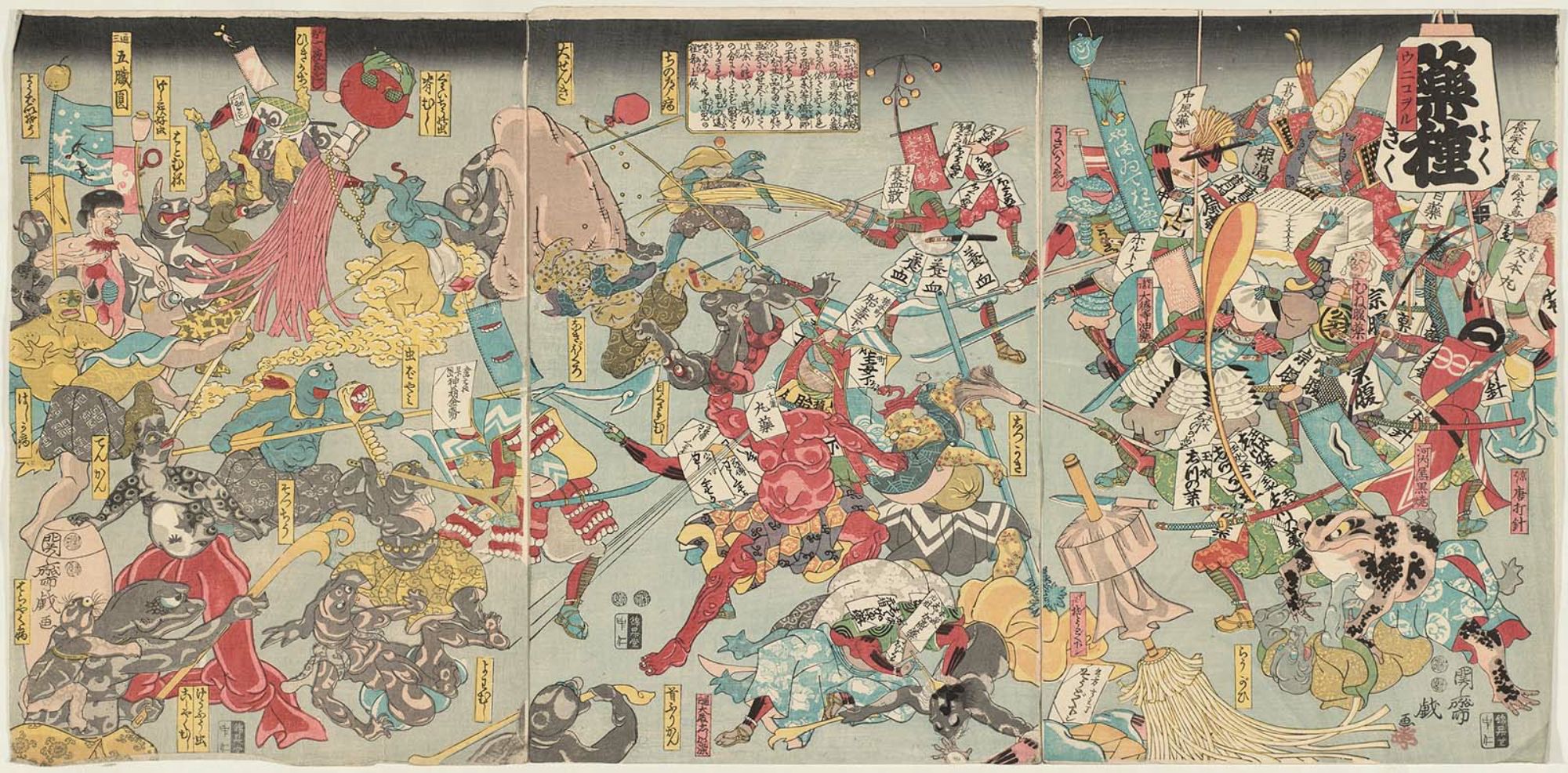
Effective Medicines (Yoku kiku yakushū)
能効藥種
circa 1847–1852
Woodblock-printed book illustration; ink and color on paper

Waves and Seashells
波貝図
1873
Album leaf; ink and color on silk
More Summer Prints
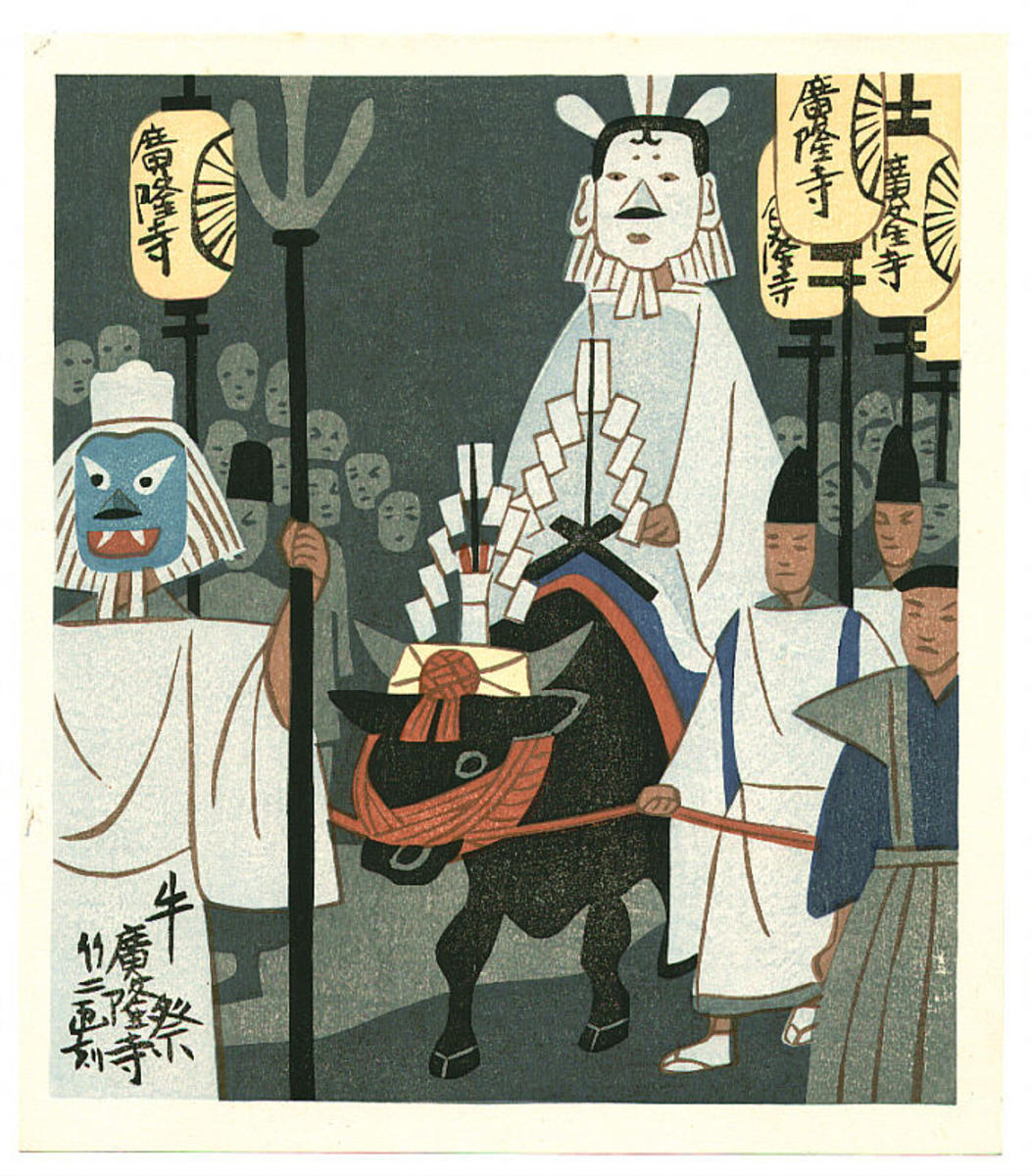
Bull Festival at Koryuji
広隆寺牛祭
Woodblock print
February (The Annual Festival of the Fushimi Inari)
二月 (伏見稲荷大社祭)
second half 20th century
Woodblock print, ink and color on paper

July (Gorgeous Procession of Yama-hoko or the Floats at the Gion Festival)
七月 (祇園祭山鉾巡行)
second half 20th century
Woodblock print, ink and color on paper

August (The Bonfire Festival of the Daimonji Hill Viewed from the Sanjo Bridge)
八月 (三条大橋より大文字)
second half 20th century
Woodblock print, ink and color on paper
Frequently Asked Questions
Kamigamo Shrine in Summer (夏の上賀茂神社図) was created by Mori Kansai (森寛斎) in circa 1860–1870.
Kamigamo Shrine in Summer depicts summer.