
Kiyohime at the Hidaka River
日高川清姫図
- Date:
- 1919
- Medium:
- Color on silk; hanging scroll
Description
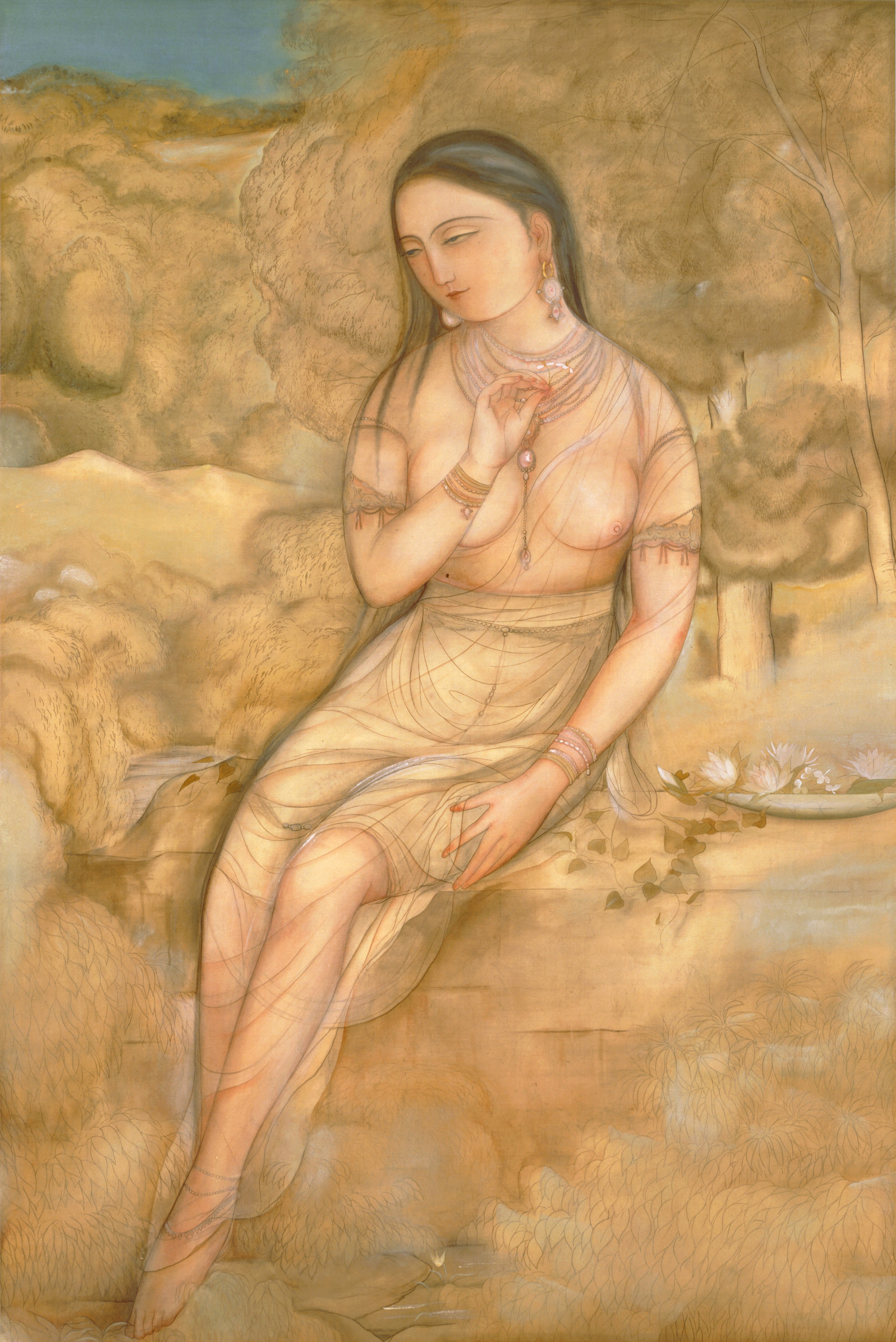
Kiyohime at the Hidaka River is a hanging-scroll painting by Murakami Kagaku in color on silk, completed in 1919 and now held by the National Museum of Modern Art, Tokyo. The work was Kagaku's contribution to the second Kokuten exhibition of the Kokuga Sōsaku Kyōkai in 1919 and was a critical sensation of the year — one of the major works that established Kagaku's reputation as a leader of the new Kyoto nihonga. The painting depicts the climactic scene of the Dōjōji legend, in which Kiyohime, scorned by the monk Anchin and transformed by jealous fury into a serpent, pursues him across the Hidaka River to her final vengeance. The subject had been treated in painting, Noh, kabuki, and bunraku for centuries, but Kagaku's treatment — drawing on the brilliant ultramarine of the river, on the long horizontal format of the handscroll tradition, and on the dramatic figural intensity of Indian Ajanta cave painting that he was studying intensively at the time — gave the legend a new visual force. The work belongs to the same moment in Kagaku's career as the 1920 Rafu (Nude), and shares with that painting a willingness to integrate Indian Buddhist precedents with the Japanese narrative tradition.
More Prints by Murakami Kagaku



Frequently Asked Questions
Kiyohime at the Hidaka River (日高川清姫図) was created by Murakami Kagaku (村上華岳) in 1919.