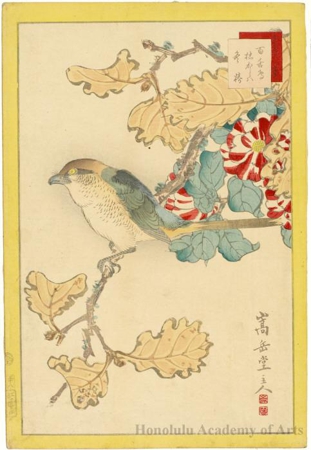
Butcherbird, Oak Tree and Camellia
- Date:
- 1859
- Medium:
- Color woodblock print
- Source:
- Honolulu Museum of Art
Description
Butcherbird, Oak Tree and Camellia is a plate from Nakayama Sūgakudō's 1859 Forty-eight Birds Drawn from Life depicting a butcherbird (a Western popular name for the shrike, mozu) perched on the branch of an oak tree alongside winter-flowering camellia blossoms. The composition is closely related to the better-known Shrike, Withered Oak, Water Camellia plate (No. 38 of the series) and demonstrates the way in which Sūgakudō and his publisher Tsutaya Kichizō built variant designs around a single ornithological subject, giving collectors multiple compositional treatments of the same bird. The shrike's habit of impaling its small prey on thorns earned it the Western popular name "butcherbird," reflected in the Honolulu Museum's cataloguing of the print; in Japanese poetic tradition, by contrast, the mozu is a more neutral autumn-and-winter songbird associated with bare branches and the sharp cold of late November. The Honolulu Museum impression (accession 7859), printed in Edo by Kōeidō, preserves the original 1859 color registration and the careful bokashi gradation that distinguishes Sūgakudō's bird studies from earlier and more conventional Edo kachō-e.
More Prints by Nakayama Sūgakudō
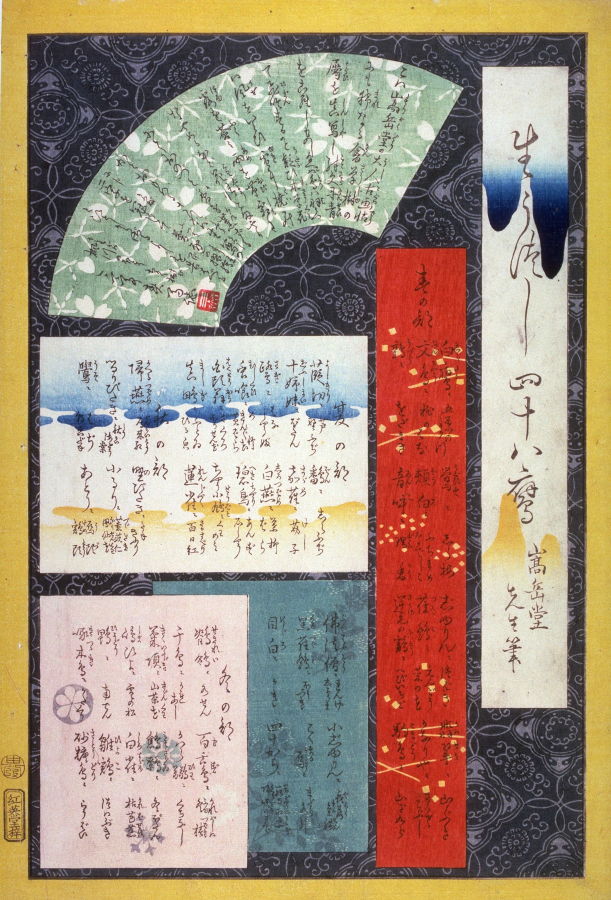
Title page, from the series Forty-eight Birds Drawn from Life (Ikiutsushi yonjuhachiyo)
生写四十八鷹
1859–60
Color woodblock print
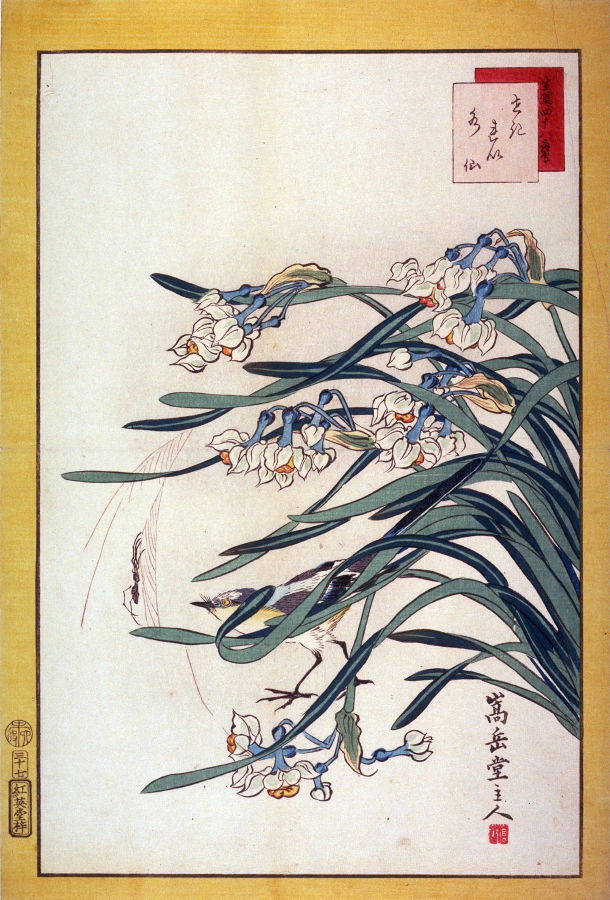
Wagtail and Narcissus (Sekirei suisen), No. 23 from the series Forty-eight Birds Drawn from Life
鶺鴒 水仙
1859
Color woodblock print
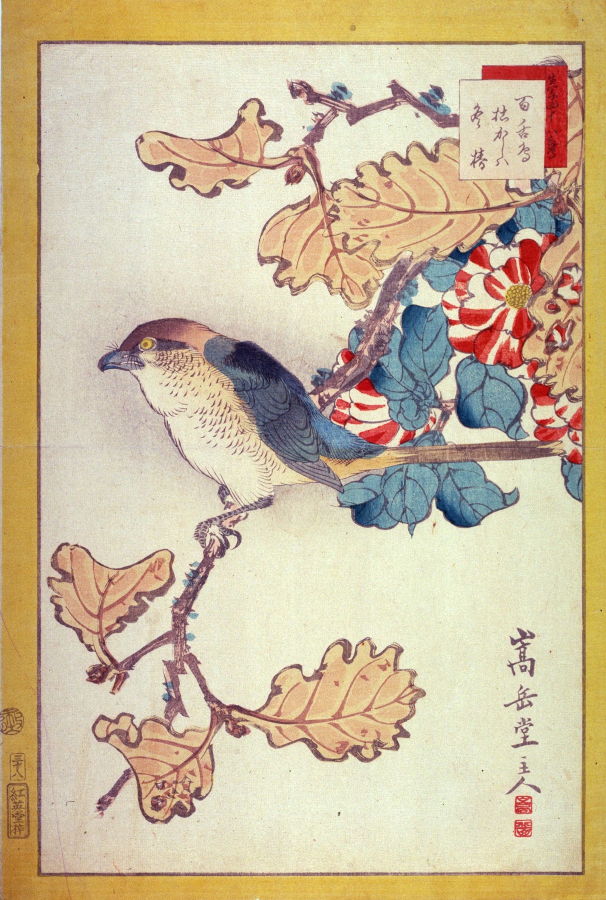
No. 38, Shrike, Withered Oak, Water Camellia (Mozu karegashiwa fuyutsubaki), from the series Forty-eight Birds Drawn from Life
百舌 枯柏 冬椿
1859
Color woodblock print
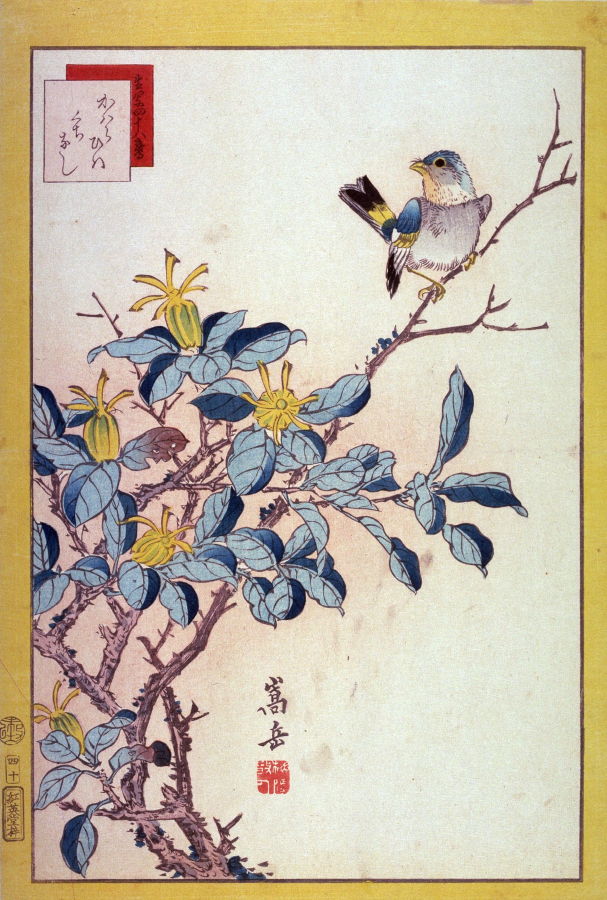
River Sparrow and Kuchinashi Flowers (Kawara hiwa kuchinashi), No. 40 from the series Forty-eight Birds Drawn from Life
河原鶸 梔子
1859
Color woodblock print
Frequently Asked Questions
Butcherbird, Oak Tree and Camellia was created by Nakayama Sūgakudō (中山嵩岳堂) in 1859.