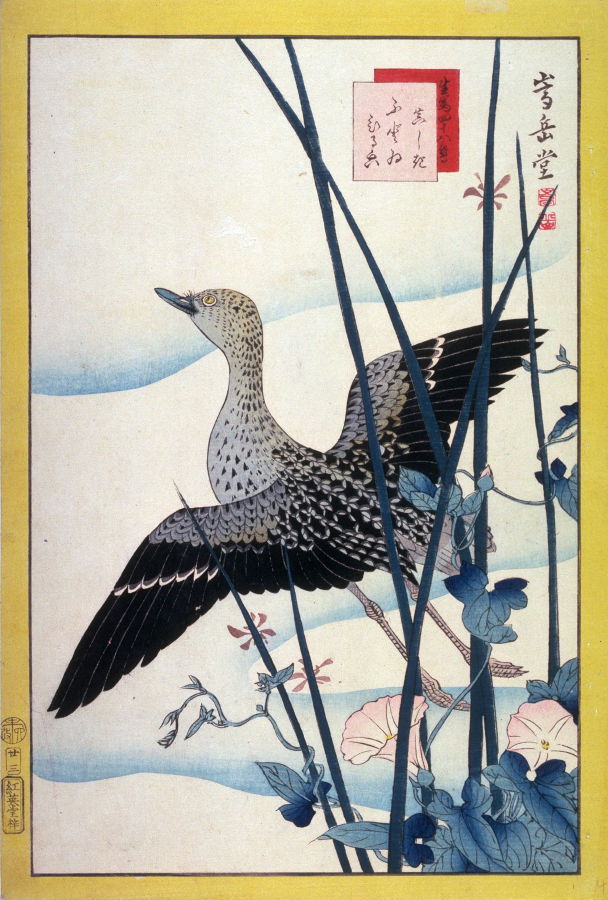
Snipe, Reeds, and Morning Glory, from the series Forty-eight Birds Drawn from Life
鴫 葦 朝顔
- Date:
- 1859
- Medium:
- Color woodblock print
Description
Snipe, Reeds, and Morning Glory is one of the most often-reproduced compositions from Nakayama Sūgakudō's 1859 Forty-eight Birds Drawn from Life, pairing a snipe (shigi) wading among reeds with the trailing tendrils of a morning glory (asagao). Snipe in reeds is one of the canonical motifs of Japanese poetry, treated by Saigyō and many subsequent waka poets as the type-image of autumn dusk, while morning glory carries the contrary, summery association of the dew-fresh dawn; the pairing produces the kind of temporal compression characteristic of kachō-e, in which a single composition gestures at multiple seasonal moments at once. Sūgakudō's drawing of the snipe shows the close observation of plumage and standing posture that the series' Ikiutsushi ("copying from life") title programmatically claims, while the reeds are rendered with the long diagonals and asymmetric placement that the Hiroshige tradition had codified for waterside subjects. The Fine Arts Museums of San Francisco impression (Achenbach 1963.30.5553) was printed by Tsutaya Kichizō's Kōeidō imprint in Edo and demonstrates the high level of color registration and bokashi gradation that the firm's bird-and-flower production had reached by the late 1850s.
More Prints by Nakayama Sūgakudō
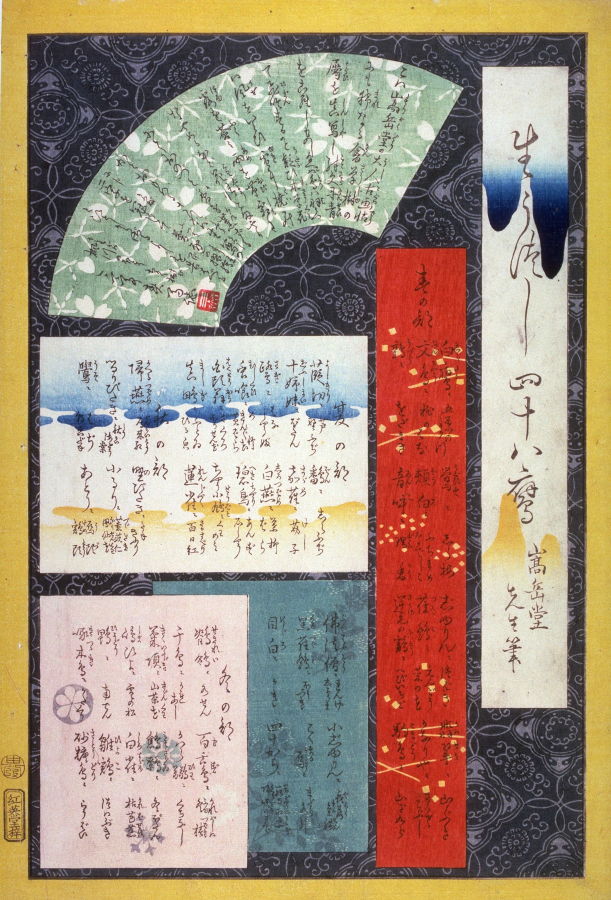
Title page, from the series Forty-eight Birds Drawn from Life (Ikiutsushi yonjuhachiyo)
生写四十八鷹
1859–60
Color woodblock print
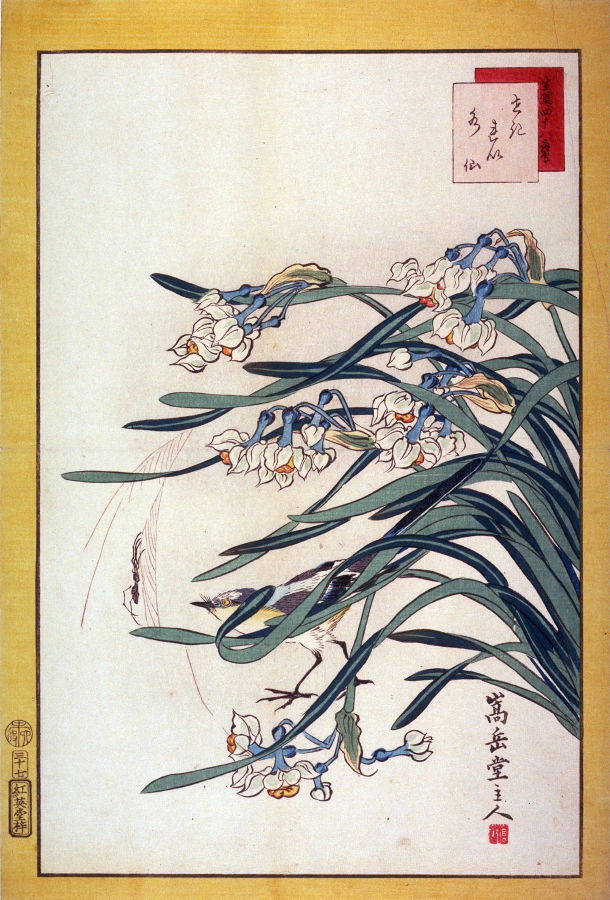
Wagtail and Narcissus (Sekirei suisen), No. 23 from the series Forty-eight Birds Drawn from Life
鶺鴒 水仙
1859
Color woodblock print
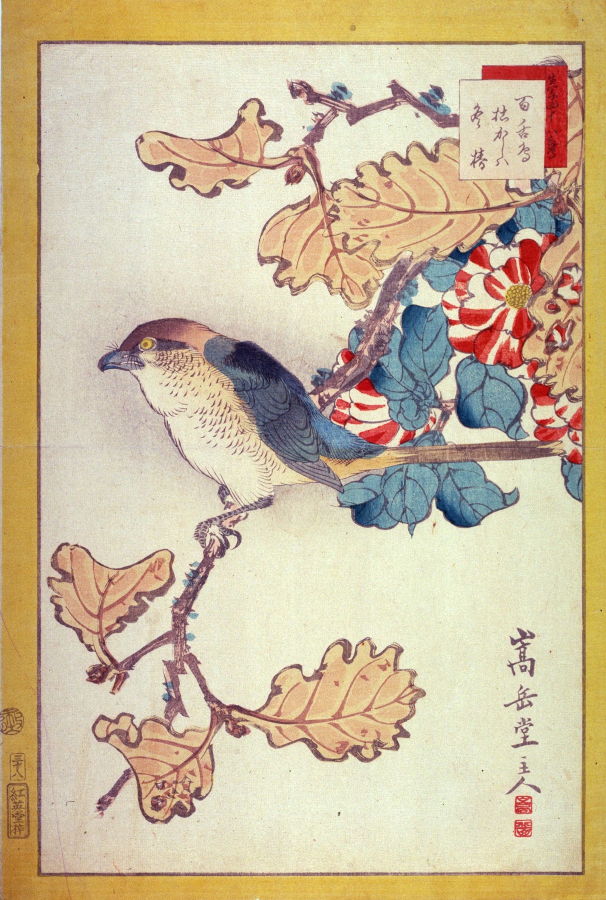
No. 38, Shrike, Withered Oak, Water Camellia (Mozu karegashiwa fuyutsubaki), from the series Forty-eight Birds Drawn from Life
百舌 枯柏 冬椿
1859
Color woodblock print
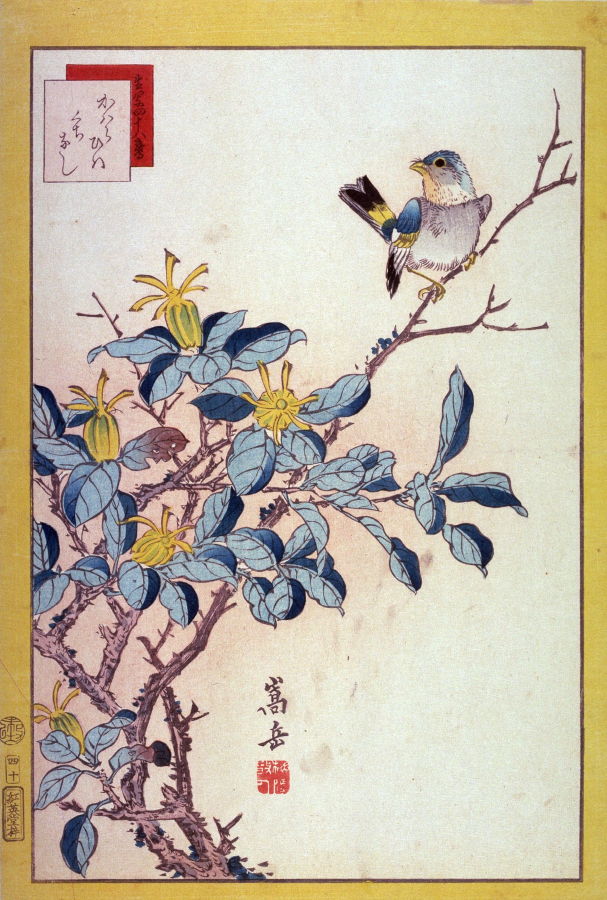
River Sparrow and Kuchinashi Flowers (Kawara hiwa kuchinashi), No. 40 from the series Forty-eight Birds Drawn from Life
河原鶸 梔子
1859
Color woodblock print
Frequently Asked Questions
Snipe, Reeds, and Morning Glory, from the series Forty-eight Birds Drawn from Life (鴫 葦 朝顔) was created by Nakayama Sūgakudō (中山嵩岳堂) in 1859.