
Pine Tree (Matsu)
- Medium:
- Woodblock print
- Source:
- Museum of Fine Arts Boston
- Image courtesy of
- Museum of Fine Arts Boston
Description
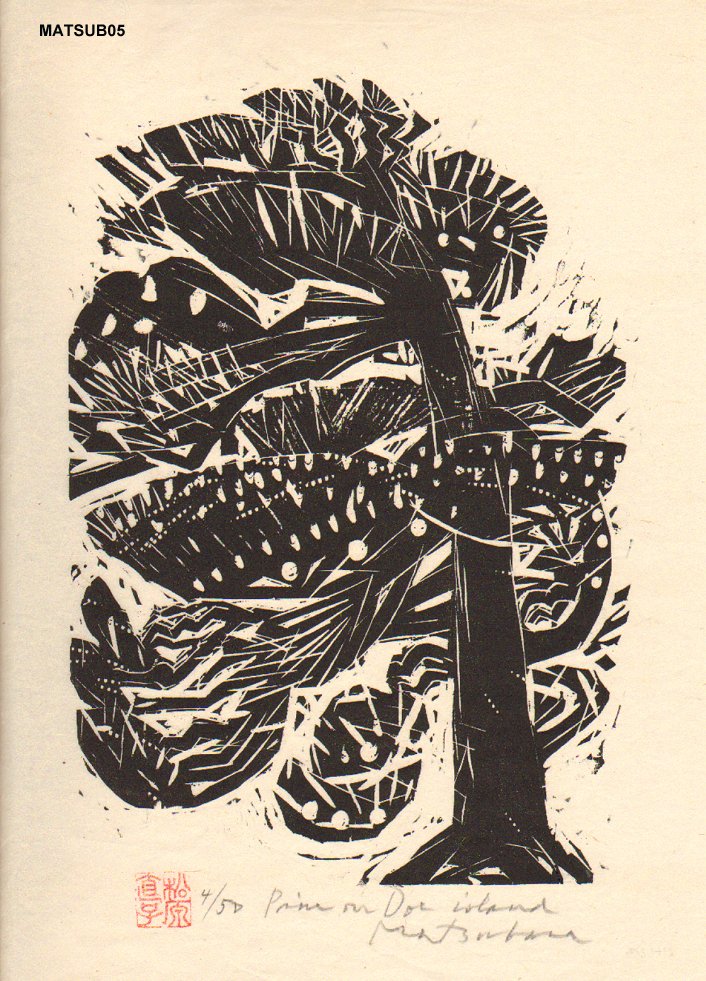
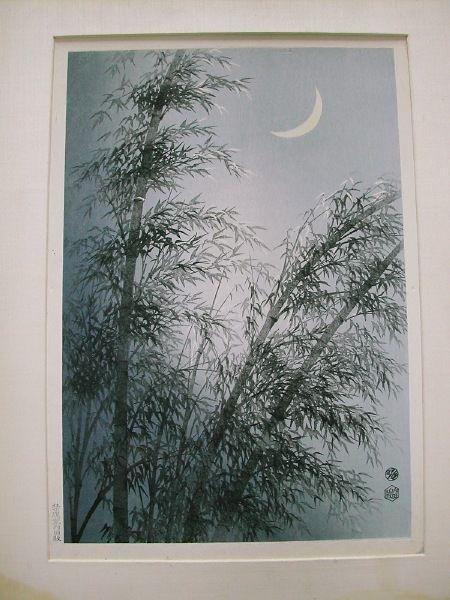
Pine Tree (Matsu) takes as its subject one of the most symbolically resonant motifs in Japanese visual culture — the pine, long associated with longevity, constancy, and the presence of kami, and a defining feature of the shoreline setting of Noh drama. Matsubara's sosaku-hanga treatment of the subject brings a modern expressiveness to this traditional imagery: the trunk and branches are likely rendered through bold, directional gouge marks that follow the organic irregularity of the wood grain, while the needle clusters are built up through dense repeated lines that create a sense of textural weight. The composition may emphasize the gnarled, lateral growth patterns that distinguish mature Japanese black pine (kuro-matsu) from younger specimens, giving the tree a quality of endurance made visible through accumulated form. Printed by hand on washi, the image's ink qualities — slight variations in density and surface absorption — reinforce the organic presence of the subject. The title's inclusion of the Japanese word matsu acknowledges the cultural specificity of the tree as a symbol within the tradition Matsubara works from.
More Prints by Naoko Matsubara

More Trees Prints


Featured in Collections
Curated cross-cuts that include this print.
Frequently Asked Questions
Pine Tree (Matsu) was created by Naoko Matsubara (松原直子).
Pine Tree (Matsu) depicts trees.