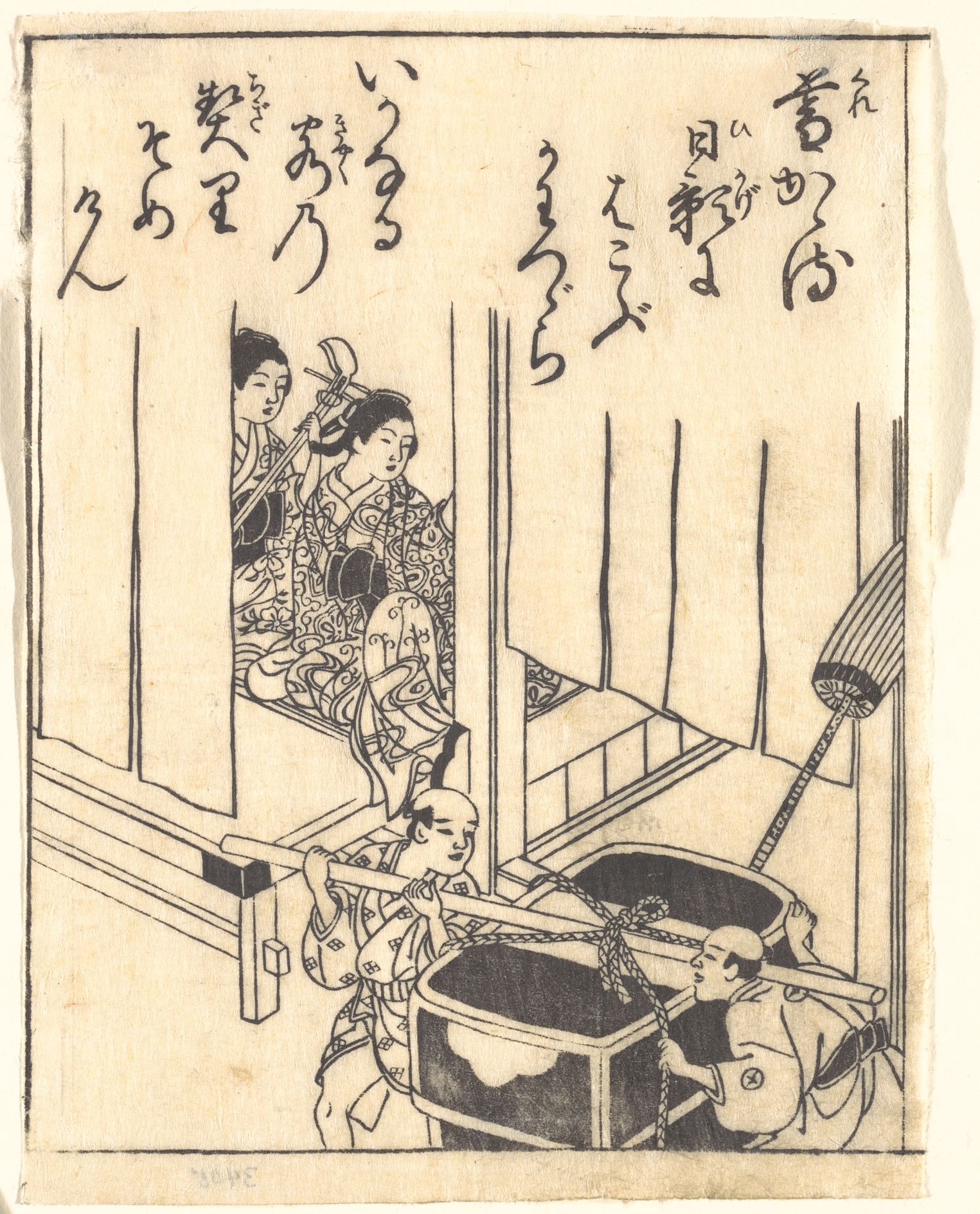
- Medium:
- Monochrome woodblock print; ink on paper
- Source:
- Metropolitan Museum of Art
Description
An untitled monochrome woodblock print in ink on paper at the Metropolitan Museum of Art, identified only as 'Print' in the museum's records, is representative of the many Sukenobu single-sheet impressions that survive without a securely identified source publication. Sukenobu produced very few prints designed to be sold as single sheets; almost everything in his output originated as a page within a multi-volume ehon. Single-sheet impressions in modern museum collections are therefore usually pages that have been separated from their parent volumes at some point in the eighteenth, nineteenth, or twentieth century — sometimes by collectors who preferred individual leaves for mounting and display, sometimes by dealers who could sell separated leaves for more than the intact volume. The Met's print, dated by the museum to the late seventeenth or early eighteenth century, shows the spare monochrome line characteristic of Sukenobu's ehon page work: figures rendered with a fluent contour, no shading, and large unworked areas of paper. Without identification of the parent book, the image must be read on its own terms — but as such it functions as a compressed example of the Sukenobu approach to figural composition in the medium where he was the dominant national voice.
More Prints by Nishikawa Sukenobu
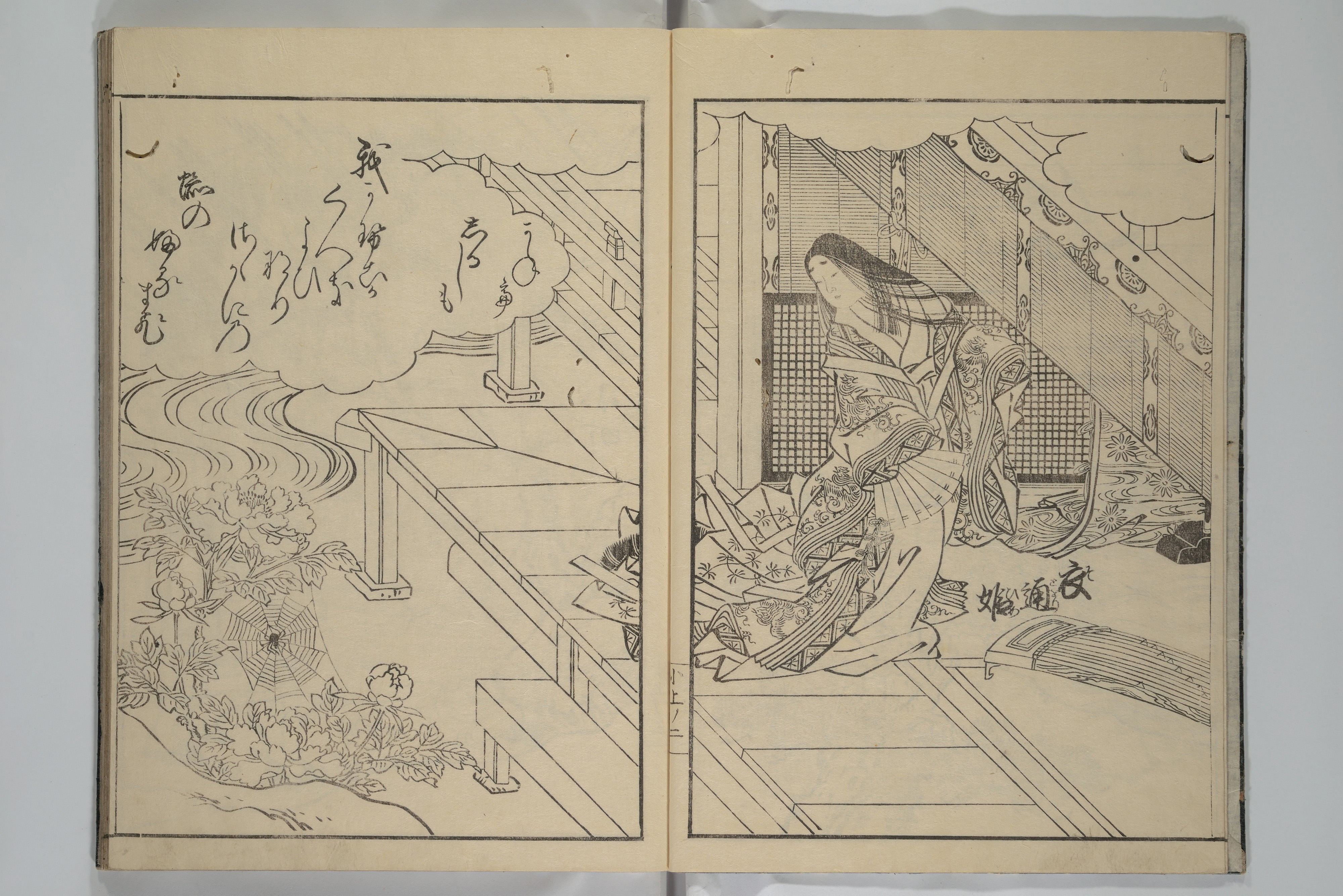
Picture Book of Komatsubara (Ehon komatsubara) 絵本小松原
1761
Woodblock-printed book; ink on paper

Courtesan Walking
1739
From a woodblock printed book (sumizuri-e), ink on paper

Kayō hyakunin isshu taisei
1781 Anei 10
Woodblock- printed book; 1 vol.

Ehon Tokiwagusa
17th/18th century
Woodblock- printed book; 3 vols.
Frequently Asked Questions
Print was created by Nishikawa Sukenobu (西川祐信).