
Cranes (pair of screens, left panel)
群鶴図屏風 (左隻)
- Date:
- early 20th century
- Medium:
- One of a pair of six-panel folding screens; ink and color on paper
Description
Cranes (left panel of a pair of six-panel folding screens) shows one half of a Goun byōbu treatment of crane subject matter — one of his most prized themes alongside the polar bear and the macaque. According to his pupil Yamaguchi Kayō, Goun made cranes a particular focus of his studio practice, observing them at the imperial gardens and at zoological gardens before working them up into both painted screens and printed designs. The left panel of the pair foregrounds several cranes in a landscape setting, rendered in ink and soft color on paper with the wash-and-line discipline that the Maruyama-Shijō tradition had inherited from Maruyama Ōkyo. Cranes carry deep auspicious meaning in East Asian painting — symbols of longevity, fidelity, and the well-ordered cosmos — and Goun's pair of screens belongs to the long tradition that includes Suzuki Kiitsu, Mori Sosen, and Goun's teacher Kishi Chikudō, who had himself painted celebrated crane screens at the late-Edo end of the Kishi school's line. Goun would later be commissioned to paint the six-panel-screen pair Cranes in a Pine Grove (Eisei Bunko, Kumamoto) around 1911; the present image likely represents an earlier or related pair from his studio output. The work was documented through the Bachmann Eckenstein Japanese Art catalogue, which has held a number of Goun works on consignment from Japanese estates.
More Prints by Nishimura Goun
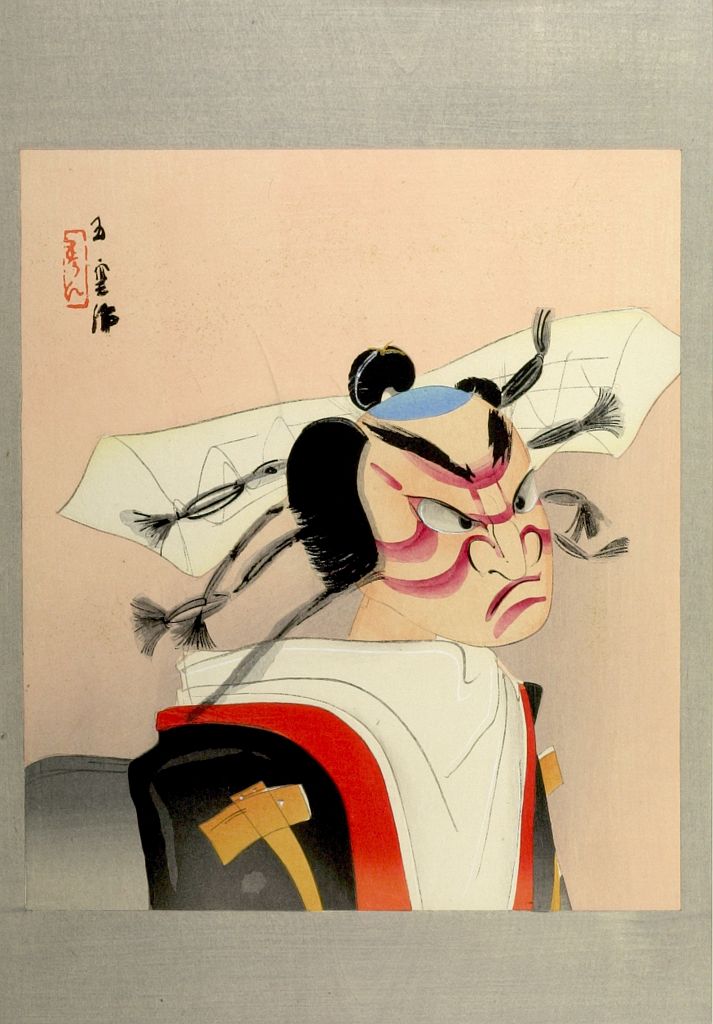
Bunraku Puppet
文楽人形
c. 1922-1928 (Dai Chikamatsu Zenshū album, Asahi Shimbunsha, Osaka)
Color woodblock print

Spontaneous Garden Plat (Shizen no en)
自然の苑
1938
Hanging scroll; ink and color on silk
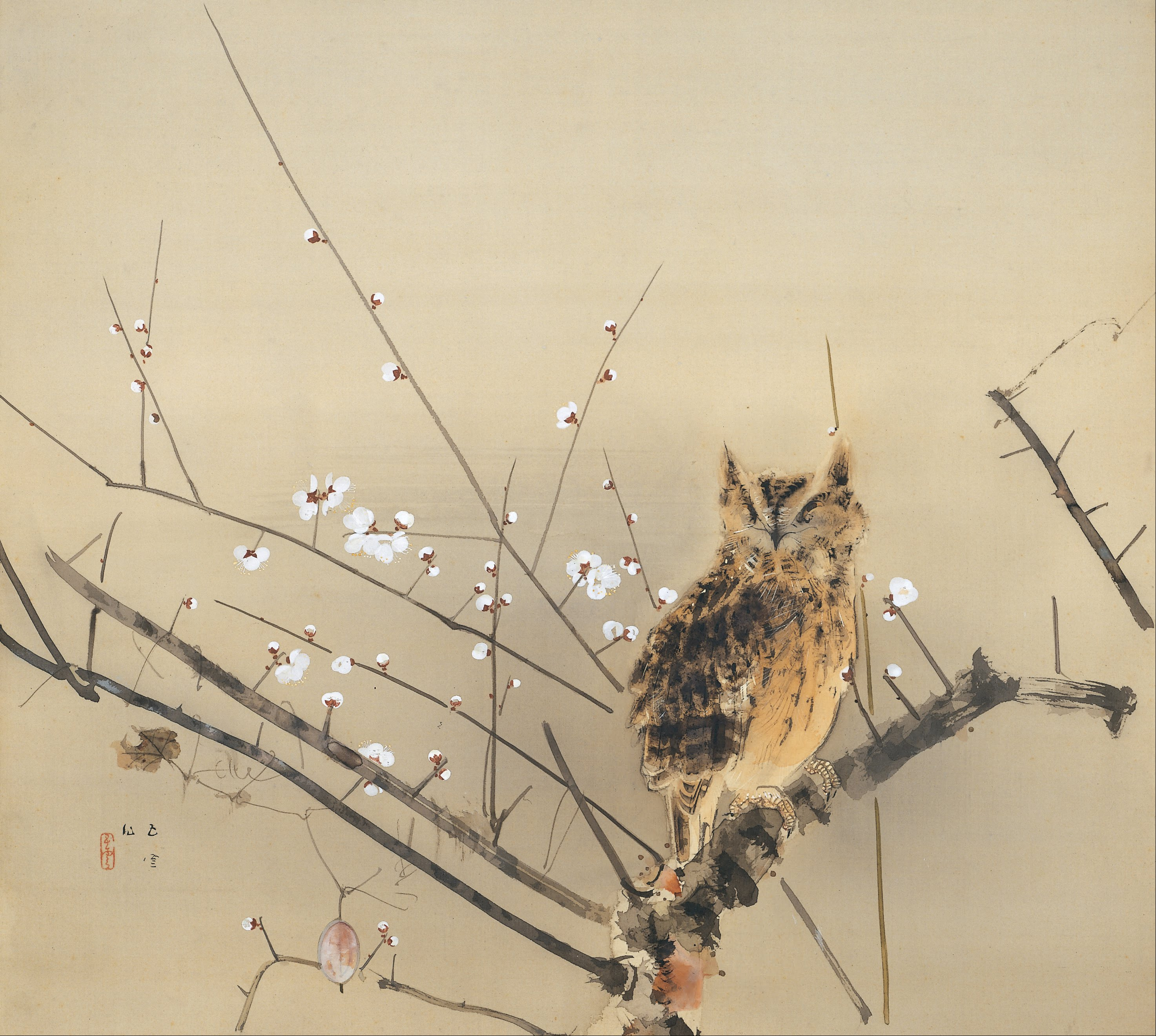
Early Plum Blossoms
早梅
1936
Hanging scroll; ink and color on silk

Quietness (Seishuku)
静寂
1932
Hanging scroll; ink and color on silk
More Birds & Flowers Prints
Frequently Asked Questions
Cranes (pair of screens, left panel) (群鶴図屏風 (左隻)) was created by Nishimura Goun (西村五雲) in early 20th century.
Cranes (pair of screens, left panel) depicts birds & flowers.