
Cranes (pair of screens, right panel)
群鶴図屏風 (右隻)
- Date:
- early 20th century
- Medium:
- One of a pair of six-panel folding screens; ink and color on paper
Description
Cranes (right panel of a pair of six-panel folding screens) is the companion to the left-panel composition described above. The pair is presented as a single integrated landscape — cranes wading and standing in a shallow water, with rocky banks and reeds linking the left and right halves — and the right panel completes the implied compositional sweep. Goun's handling of the pair format follows the Kyoto-school convention of treating each panel as both independently legible and continuous with its partner, allowing the screens to be hung in pairs in a formal alcove arrangement or arranged at right angles in a tatami-mat room. The cranes are rendered with the close anatomical attention Goun brought to all his animal subjects — note the careful angling of the legs, the precise rendering of the wing feathers, and the slight differentiation between adult and juvenile birds — supported by a soft tonal ground that suggests early-morning mist over a marshland. The pair belongs to the broader twentieth-century revival of the screen format among Kyoto nihonga painters, which the Bunten exhibitions consistently encouraged through their submission categories. Goun's screens are scarcer than his hanging scrolls and printed plates, partly because his constitutional fragility limited the number of large-scale commissions he could complete and partly because the screens that did leave his studio tended toward private rather than institutional collections. The image is preserved on Wikimedia Commons under the public-domain status of pre-1939 Japanese painting.
More Prints by Nishimura Goun
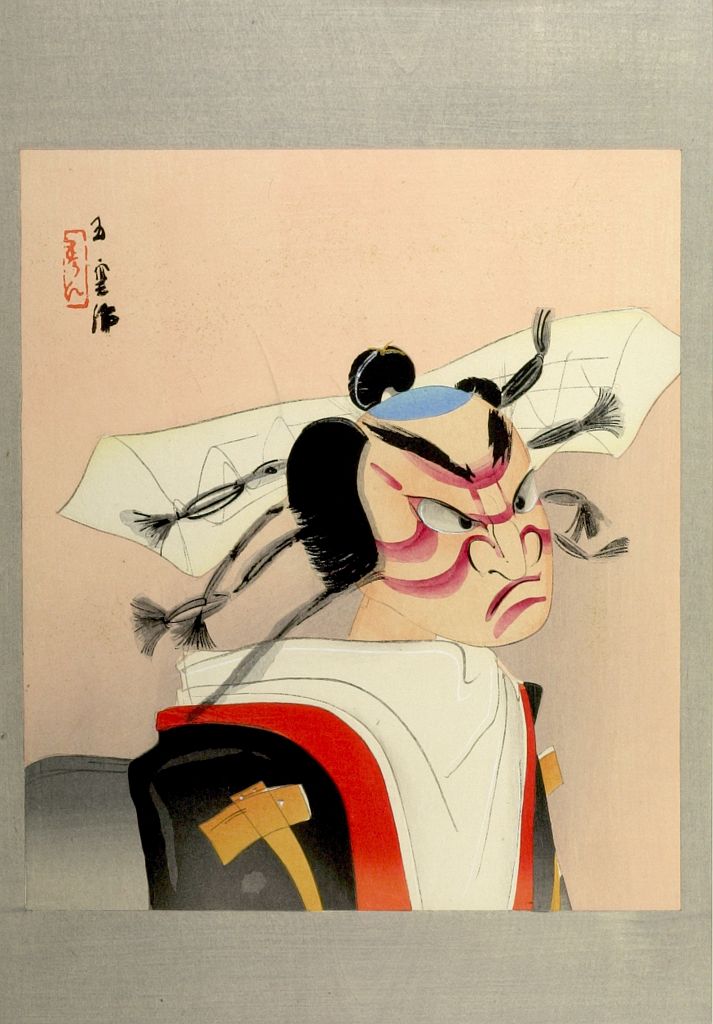
Bunraku Puppet
文楽人形
c. 1922-1928 (Dai Chikamatsu Zenshū album, Asahi Shimbunsha, Osaka)
Color woodblock print

Spontaneous Garden Plat (Shizen no en)
自然の苑
1938
Hanging scroll; ink and color on silk
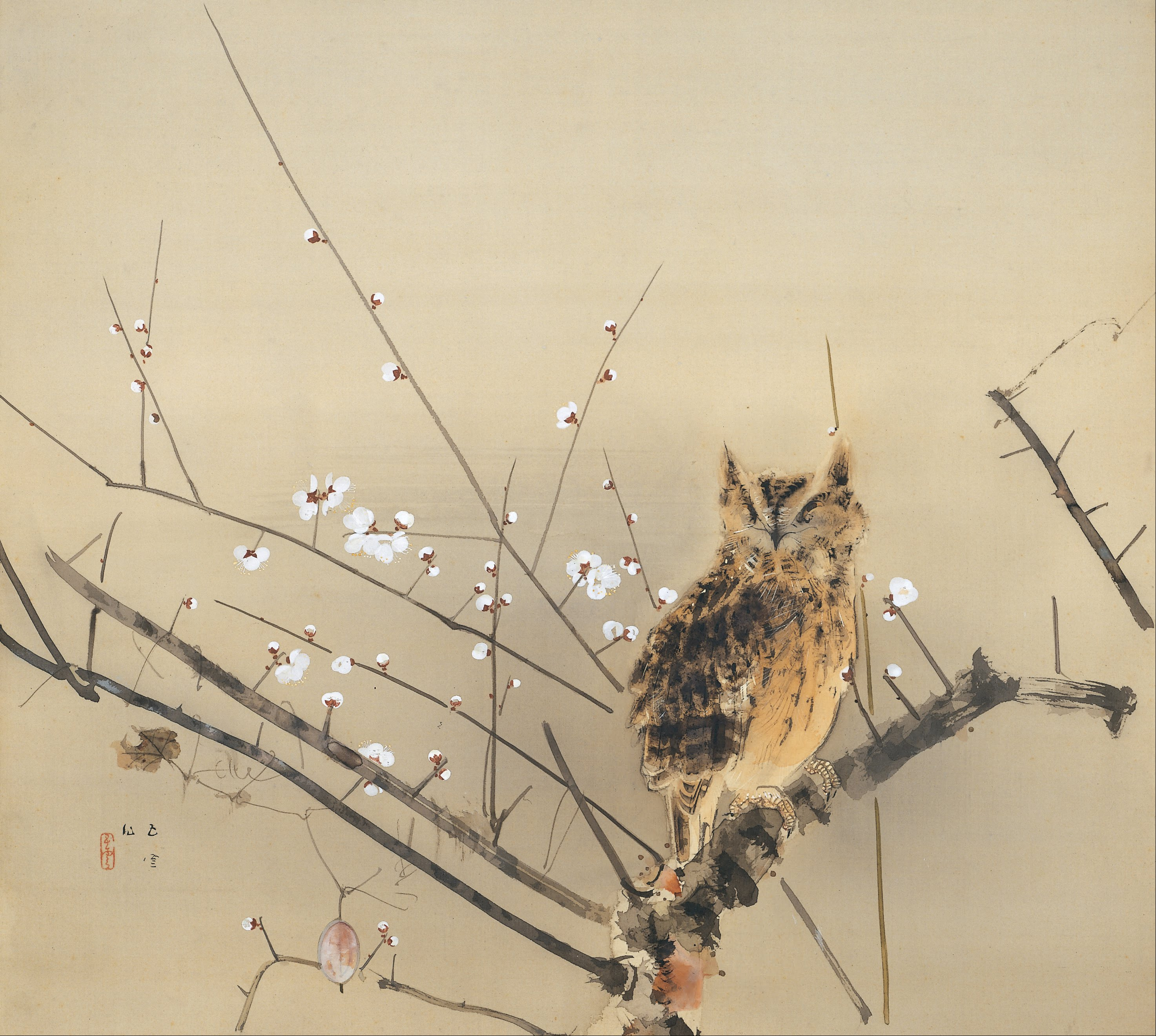
Early Plum Blossoms
早梅
1936
Hanging scroll; ink and color on silk

Quietness (Seishuku)
静寂
1932
Hanging scroll; ink and color on silk
More Birds & Flowers Prints
Frequently Asked Questions
Cranes (pair of screens, right panel) (群鶴図屏風 (右隻)) was created by Nishimura Goun (西村五雲) in early 20th century.
Cranes (pair of screens, right panel) depicts birds & flowers.