
Cucumber and Vegetables
胡瓜と野菜
- Date:
- early 20th century
- Medium:
- Ink and color on paper
Description
Cucumber and Vegetables is a small still-life study in ink and light color on paper, showing two trailing cucumber stems with their characteristic five-pointed leaves, twining tendrils, and a few green melon-like fruits arranged across the sheet. The composition belongs to the unpretentious vegetable-and-fruit register that the Maruyama-Shijō tradition had inherited from Edo Nagasaki painting and that Goun's teacher Takeuchi Seihō had also developed in his late prints (Seihō's Bulbs and Foliage and Yams series are close parallels). Cucumbers (kyūri) are not a traditionally prestigious painting subject in pre-modern Japan; they belong to the humble seasonal vegetables of summer and were treated by Kyoto-school painters as objects of close observation rather than as carriers of symbolic meaning. Goun's handling stays close to the direct sketch, with quick brushwork on the leaves and tendrils giving way to more careful color modeling on the fruits themselves. The German-language file title 'Gurken und Gemüse' indicates the work entered Western collecting circuits through European dealers, in this case via Bachmann Eckenstein Japanese Art. As a small, undated work it likely belongs to Goun's middle period, when he was producing intimate studies for collectors alongside his larger Bunten exhibition paintings. The composition demonstrates the Kyoto-school commitment to elevating ordinary subjects through the patient observation that Maruyama Ōkyo had codified two centuries earlier.
More Prints by Nishimura Goun
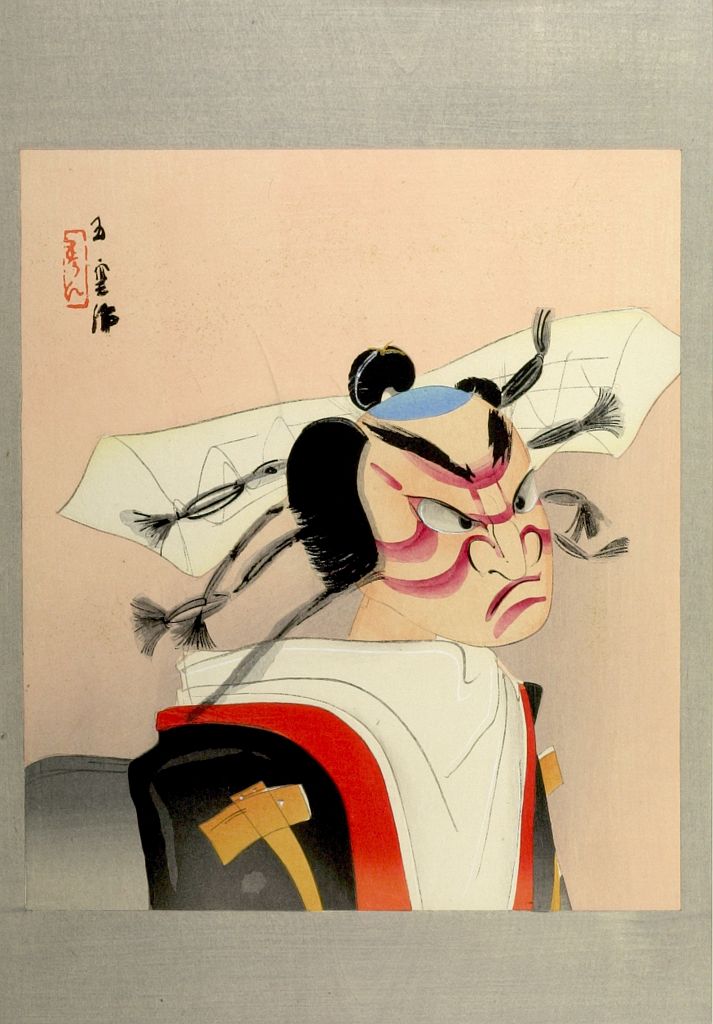
Bunraku Puppet
文楽人形
c. 1922-1928 (Dai Chikamatsu Zenshū album, Asahi Shimbunsha, Osaka)
Color woodblock print

Spontaneous Garden Plat (Shizen no en)
自然の苑
1938
Hanging scroll; ink and color on silk
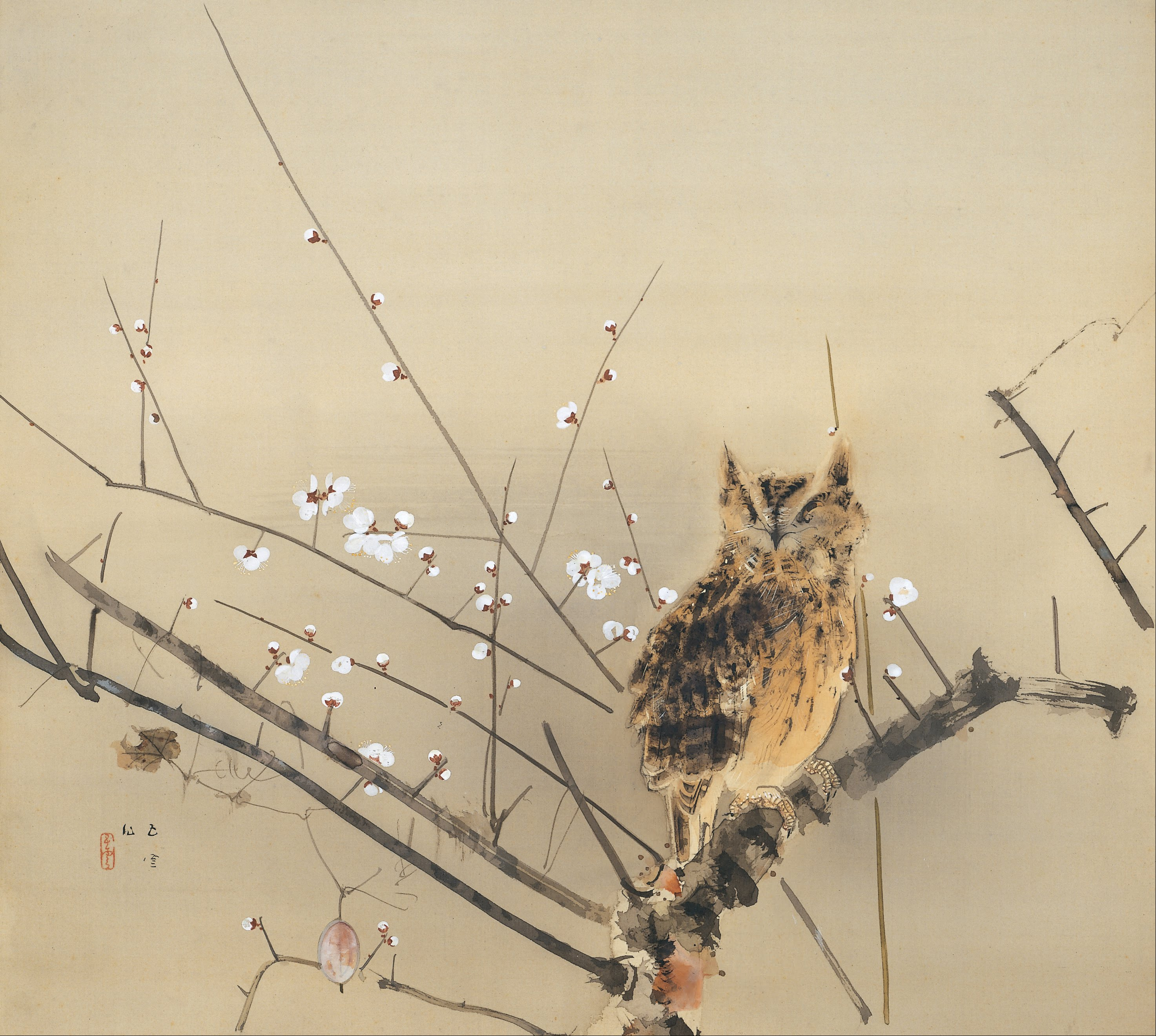
Early Plum Blossoms
早梅
1936
Hanging scroll; ink and color on silk

Quietness (Seishuku)
静寂
1932
Hanging scroll; ink and color on silk
Frequently Asked Questions
Cucumber and Vegetables (胡瓜と野菜) was created by Nishimura Goun (西村五雲) in early 20th century.