
Landscape of Yoshino
吉野山風景
- Date:
- c. 1900
- Medium:
- Color and ink on silk
Description
Landscape of Yoshino (Yoshino-yama fūkei, 吉野山風景) is an early hanging scroll dated to around 1900, the year after Goun transferred from the studio of Kishi Chikudō to that of Takeuchi Seihō. The composition shows the wooded slopes of Mount Yoshino in central Japan, a site celebrated since the Heian period for its mountain-cherry forests and for its association with both Buddhist pilgrimage and the imperial loyalist resistance of the fourteenth-century Nanboku-chō war. Yoshino's cherry trees bloom in three distinct elevation bands — Shimo-Senbon (lower thousand), Naka-Senbon (middle thousand), and Kami-Senbon (upper thousand) — producing a sequence of staggered blossoming that became one of the most poetically charged spectacles of Japanese nature. Goun's landscape is rendered in soft brushed tones, the distant mountain rendered in graded ink wash and the foreground vegetation in pale ochre and grey. The painting is an early work and demonstrates his absorption of the Kyoto-school landscape conventions he had begun studying under Chikudō in 1890 and was now developing further under Seihō, who had returned from his European trip just one year earlier. The work was offered for sale through Bachmann Eckenstein Japanese Art and entered the Wikimedia Commons record through that gallery's catalogue. As a documented early-period Goun, the painting provides important context for the dramatic stylistic development that would carry him to the First Bunten and his Polar Bear award only seven years later.
More Prints by Nishimura Goun
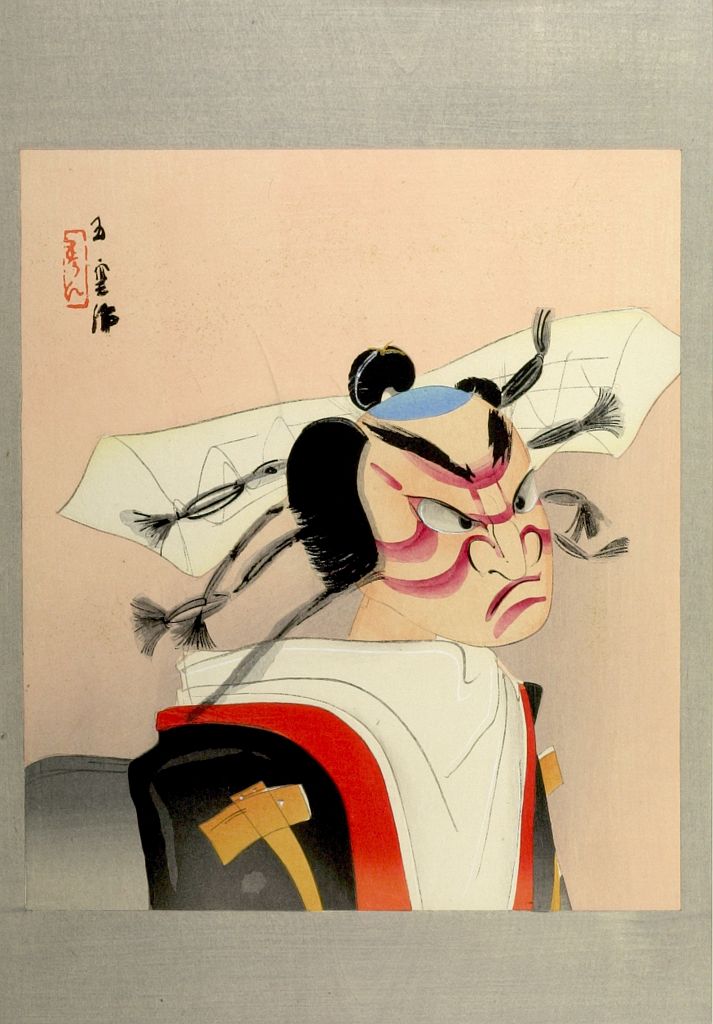
Bunraku Puppet
文楽人形
c. 1922-1928 (Dai Chikamatsu Zenshū album, Asahi Shimbunsha, Osaka)
Color woodblock print

Spontaneous Garden Plat (Shizen no en)
自然の苑
1938
Hanging scroll; ink and color on silk
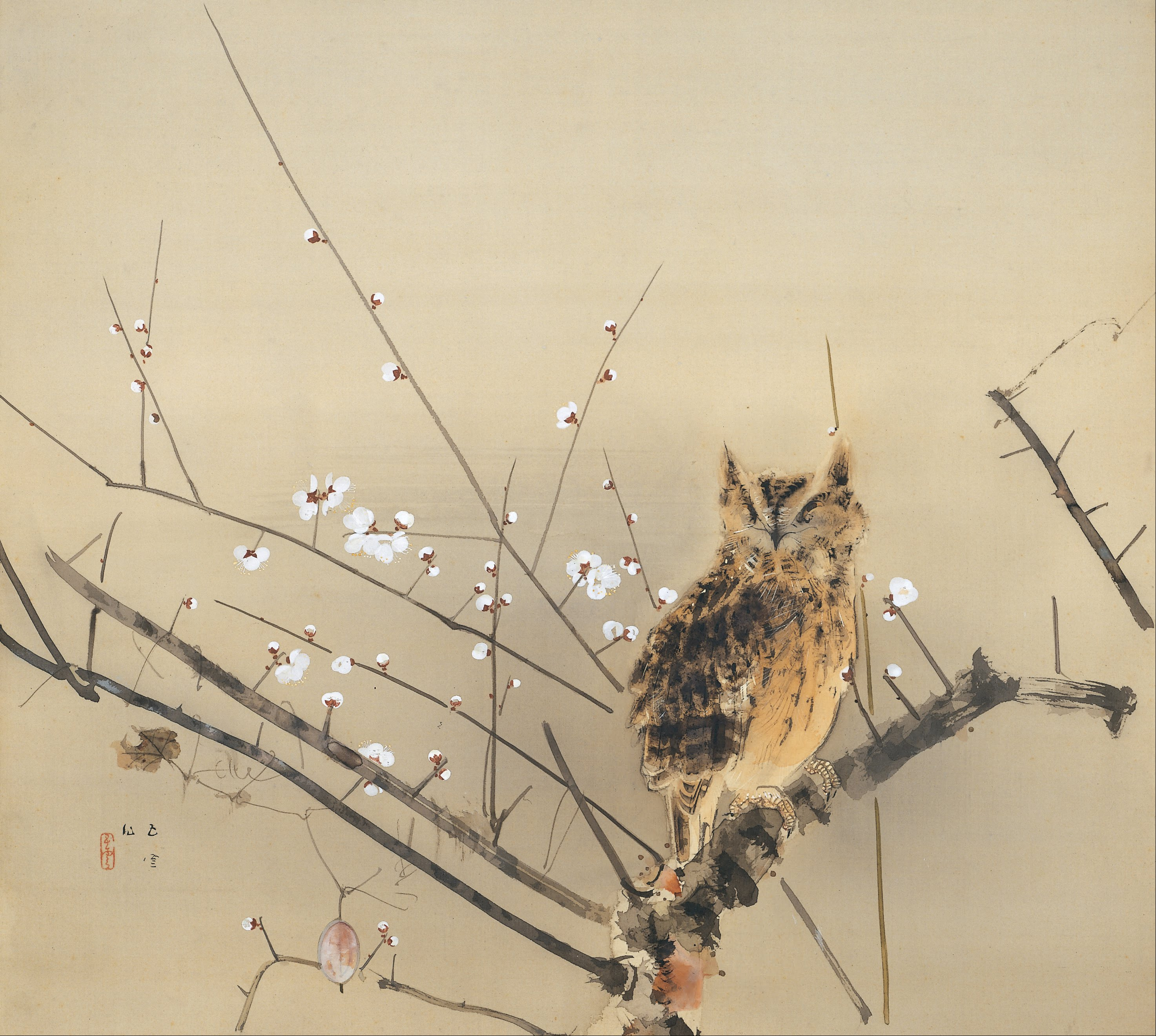
Early Plum Blossoms
早梅
1936
Hanging scroll; ink and color on silk

Quietness (Seishuku)
静寂
1932
Hanging scroll; ink and color on silk
Frequently Asked Questions
Landscape of Yoshino (吉野山風景) was created by Nishimura Goun (西村五雲) in c. 1900.