
Yoshino Kumano National Park
- Medium:
- Mokuhanga (Japanese woodblock)
- Image courtesy of
- Saru Gallery
Description
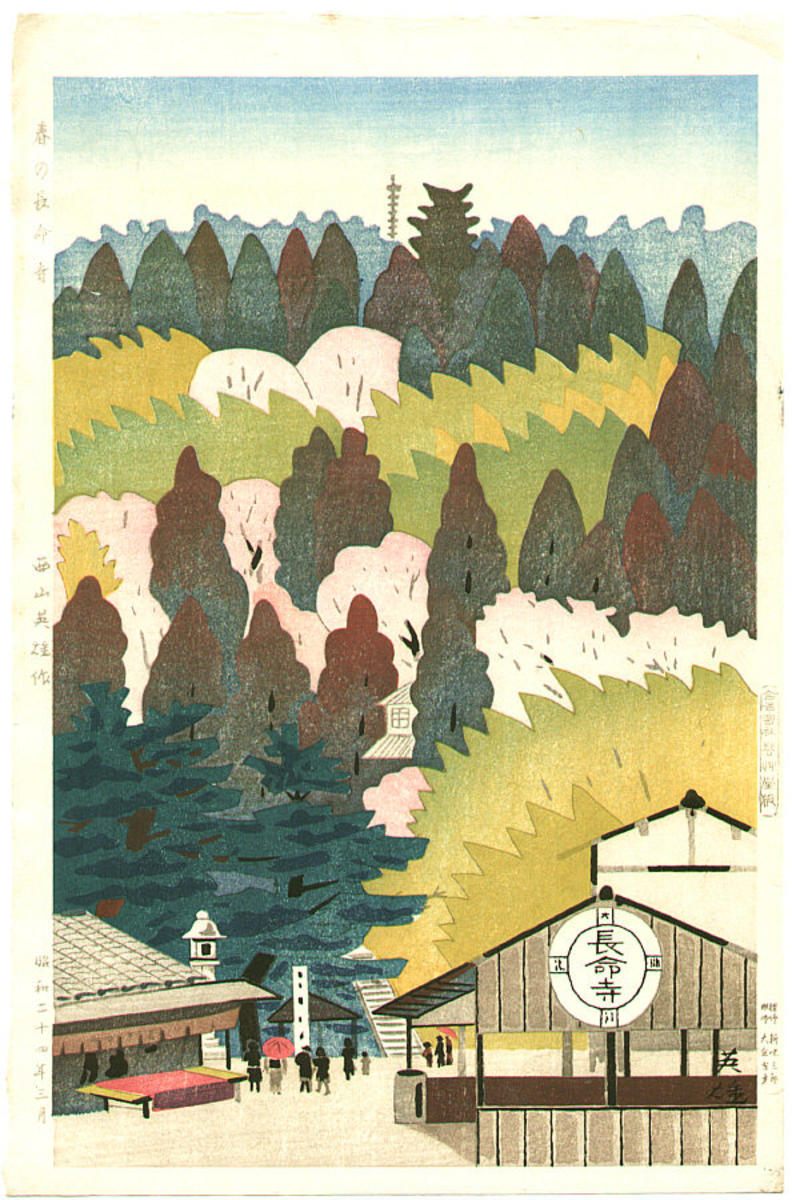
This print depicts a scene from Yoshino-Kumano National Park, the mountainous region straddling Nara, Mie, and Wakayama prefectures known for its sacred peaks, dense cedar forests, and pilgrimage routes. Yoshino in particular is associated with banks of mountain cherry trees that bloom in succession up the slopes, while Kumano evokes deep wooded valleys and shrine architecture. Nishiyama would have drawn on his nihonga training to render the layered ridgelines with soft tonal gradations, likely using bokashi to suggest atmospheric haze receding into distance. The composition probably stacks foreground foliage against middle-ground slopes and a paler sky, a meisho-e convention adapted to twentieth-century shin-hanga sensibilities. The mokuhanga technique, with its multiple keyblock impressions on washi, suits the subject's muted palette of greens, ochres, and indigos. Within Nishiyama's wider body of work, national-park subjects formed a recurring thread, reflecting the postwar period's renewed interest in domestic scenic regions and shin-hanga's tradition of place-based landscape series following Hasui and Yoshida.
More Prints by Nishiyama Hideo


More Gardens Prints
![[Garden of] Taj Mahal, No. 1 (Taji Maharu no niwa, dai ichi) by Hiroshi Yoshida](https://www.artic.edu/iiif/2/230993a7-d4f0-c979-c267-127d48e1ef1c/full/843,/0/default.jpg)
[Garden of] Taj Mahal, No. 1 (Taji Maharu no niwa, dai ichi)
Taji Maharu no niwa, dai ichi
1931
Color woodblock print; oban

Kiyozumi Garden in Moonlight
January 1938
Woodblock print, ink and color on paper

Moon over Kiyosumi Garden (Tsuki no Kiyosumien)
1938
Color woodblock print; oban
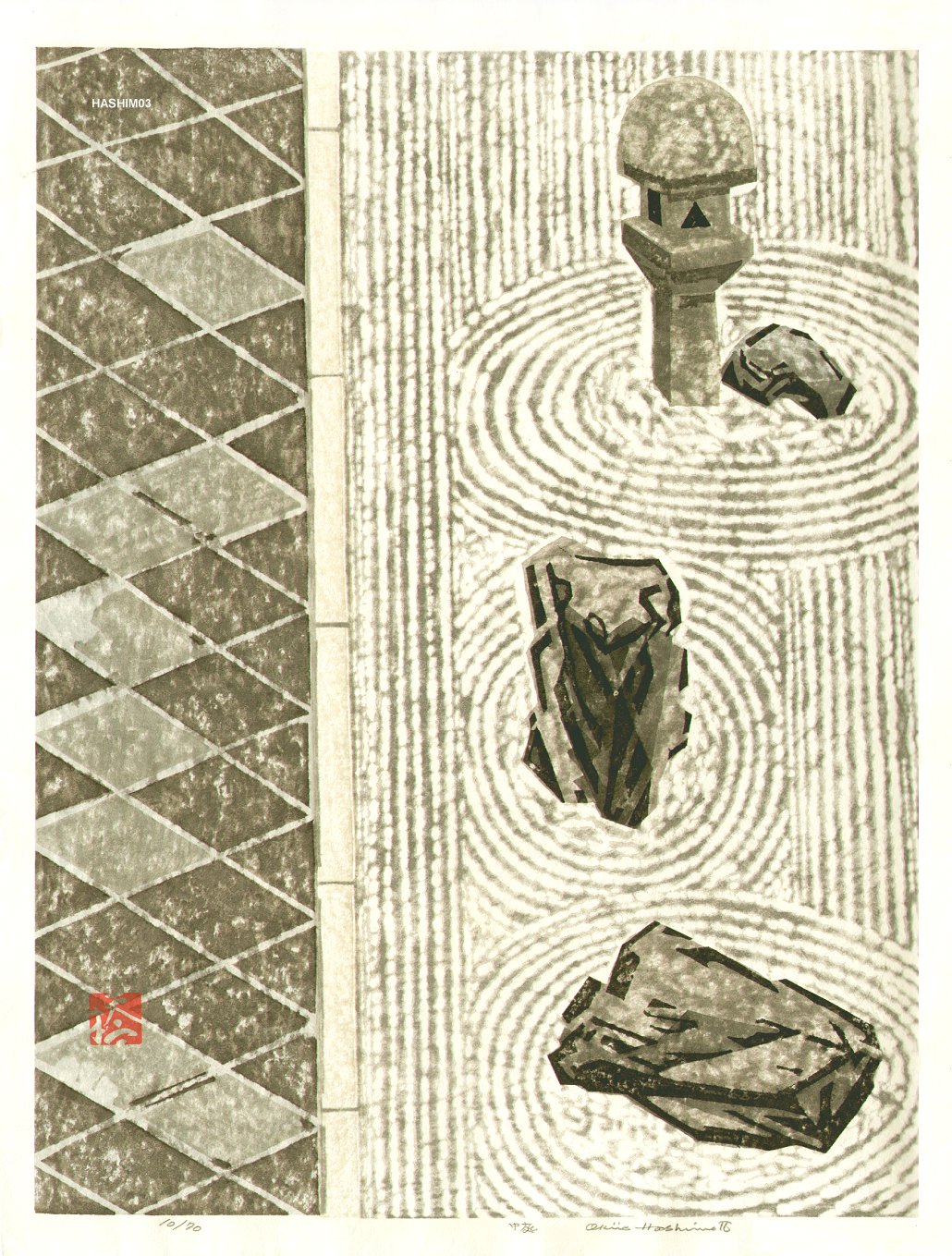
Rock garden
10/70, 1966
Woodblock print
Featured in Collections
Curated cross-cuts that include this print.
Frequently Asked Questions
Yoshino Kumano National Park was created by Nishiyama Hideo (西山英雄).
Yoshino Kumano National Park depicts gardens.