
Shoji 14 - Autumn
- Medium:
- Etching and mezzotint
- Image courtesy of
- Hanga Ten
Description
The fourteenth print in Norikane's Shoji series places the traditional paper-and-wood sliding screen at the center of an autumn composition. Shoji screens, constructed from translucent washi stretched across a gridded wooden frame, function as a mediating plane between interior and exterior in Japanese architecture — diffusing light, filtering views, and marking the threshold of domestic space. In autumn, light through shoji takes on the warm, low-angled quality of the season. The etching and mezzotint medium is well-matched to this subject: the regular geometry of the shoji grid translates directly to etched lines, while the mezzotint ground renders the soft luminosity of diffused light through paper. The series format — numbered prints sharing a recurring architectural element — suggests an extended meditation on how a single structural feature transforms across seasons and conditions, a strategy reminiscent of Monet's serial investigations of a single motif.
More Prints by Norikane Hiroto

More Landscapes Prints

Lake Kugushi in Wakasa Province (Wakasa Kugushiko), from the series Souvenirs of Travel I (Tabi miyage dai isshu)"
Wakasa Kugushiko
1920
Color woodblock print; oban
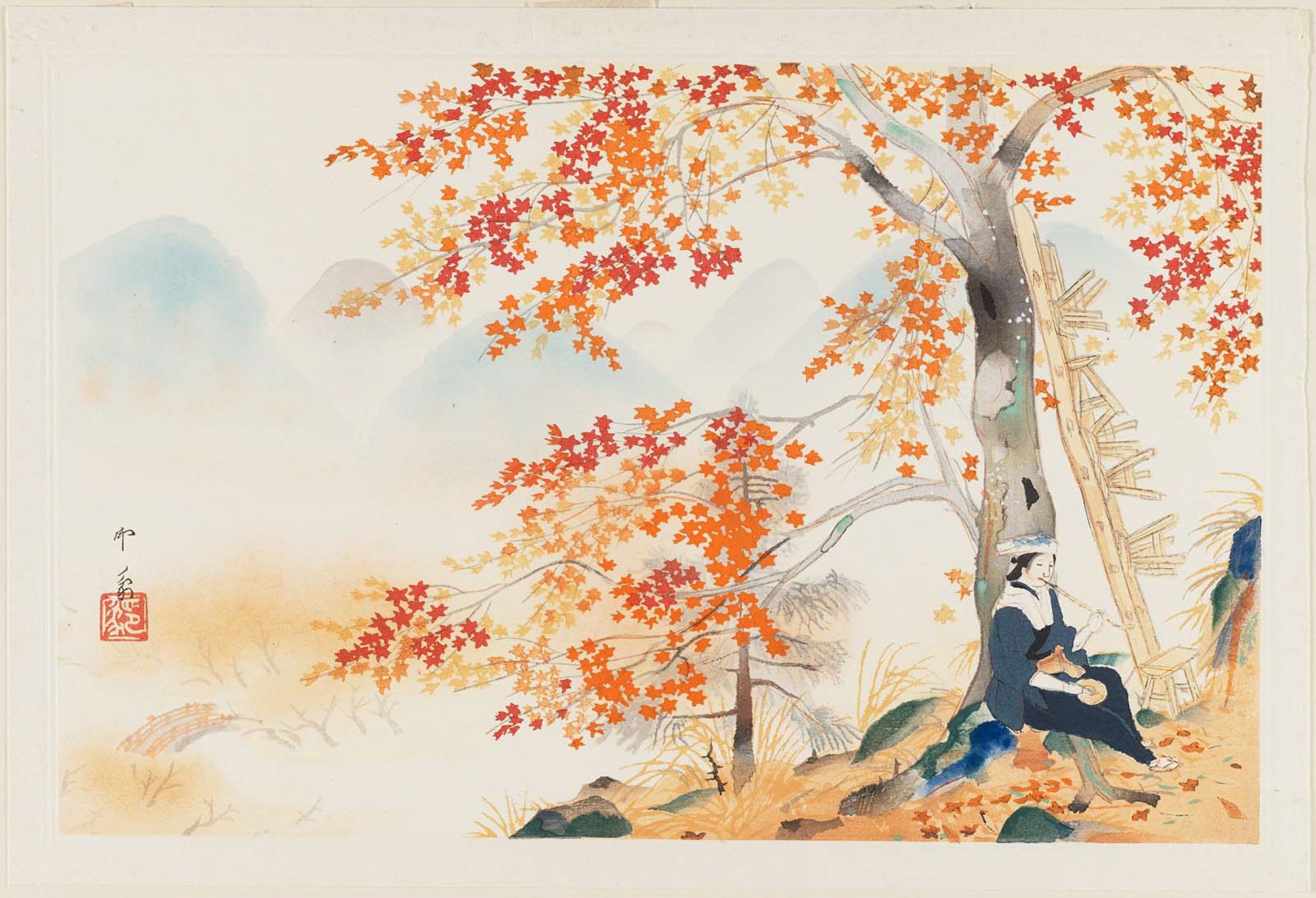
Autumn Maple Leaves at Takao, from the album Eight Views of Kyoto (Kyôto hakkei)
Woodblock print

The Beach at Kaiganji in Sanuki Province (Sanuki Kaiganji no hama), from the series "Collection of Views of Japan II, Kansai Edition (Nihon fukei shu II Kansai hen)"
1934
Color woodblock print; oban

Tea Kettle, section of a sheet from the series "Mirror of Stone Rubbings of Views of the Provinces" (Kohon meihitsu ishizuri kagami)
n.d.
Woodblock print; ishizuri-e, section of harimaze sheet
Featured in Collections
Curated cross-cuts that include this print.
Frequently Asked Questions
Shoji 14 - Autumn was created by Norikane Hiroto (乗兼広人).
Shoji 14 - Autumn depicts landscapes.