
Brown-eared Bulbul and Dioecious Holly, from Pictorial Monograph of Birds (Shūchō gafu)
聚鳥畫譜 — 鵯と柊
by Numata Kashū
- Date:
- 1885
- Medium:
- Color woodblock print from a book; ink and color on paper
Description
Brown-eared Bulbul and Dioecious Holly pairs the hiyodori (brown-eared bulbul), one of the most familiar garden and woodland birds of the Japanese archipelago, with a sprig of dioecious holly, a winter-flowering and red-berried shrub long associated in Japanese folk practice with the warding off of evil at the seasonal turn from old year to new. Kashū's drawing of the bird in the Shūchō gafu (1885) shows the long body, sharp beak, and slightly disheveled crest that distinguish the species from related songbirds, and his composition uses the holly branch as both a perch and a decorative scaffold for the asymmetric vertical placement that the older kachō-e tradition had inherited from centuries of Edo-period printmaking. The hiyodori is a common bird in Japanese poetry — a noisy, aggressive feeder whose call is one of the audible signs of winter and early spring in the Japanese countryside — and Kashū's plate is one of several pages in the album in which a single closely observed species is paired with a seasonal plant of equally strong literary association, producing an image at once naturalist and lyric.
More Prints by Numata Kashū

Brown-eared Bulbul and Rosa Rugosa, from Pictorial Monograph of Birds (Shūchō gafu)
聚鳥畫譜 — 鵯と浜茄子
1885
Color woodblock print from a book; ink and color on paper

Reed-Bunting and Reed, from Pictorial Monograph of Birds (Shūchō gafu)
聚鳥畫譜 — 蒿雀と葦
1885
Color woodblock print from a book; ink and color on paper

Japanese Golden Eagle and Dark Blue Sea, from Pictorial Monograph of Birds (Shūchō gafu)
聚鳥畫譜 — 鷲と荒海
1885
Color woodblock print from a book; ink and color on paper
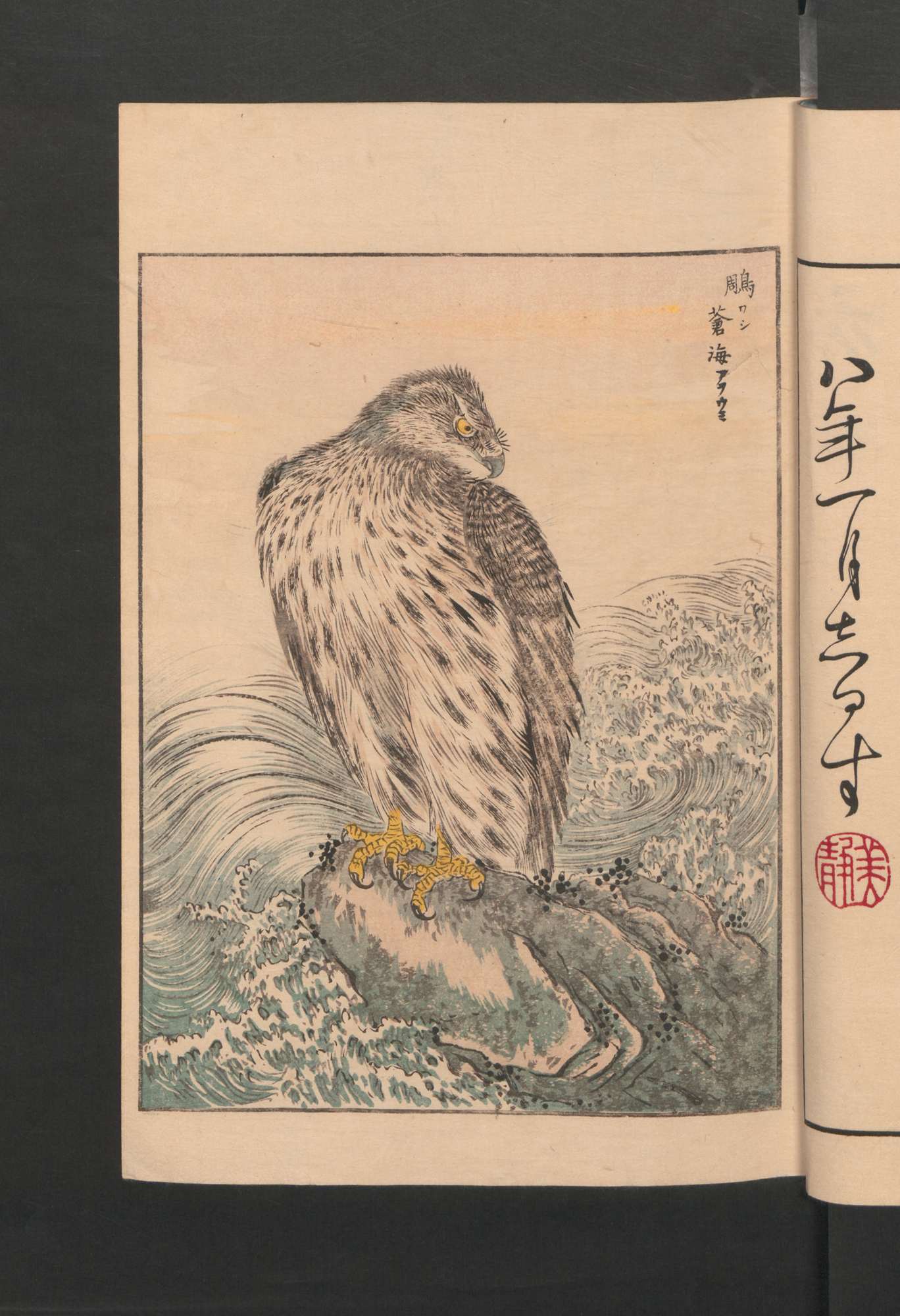
Picture Album of Various Birds (Shūchō gafu)
聚鳥畫譜
1885, first month
Polychrome woodblock printed book; ink and color on paper
More Birds & Flowers Prints
Frequently Asked Questions
Brown-eared Bulbul and Dioecious Holly, from Pictorial Monograph of Birds (Shūchō gafu) (聚鳥畫譜 — 鵯と柊) was created by Numata Kashū (沼田荷舟) in 1885.
Brown-eared Bulbul and Dioecious Holly, from Pictorial Monograph of Birds (Shūchō gafu) depicts birds & flowers.