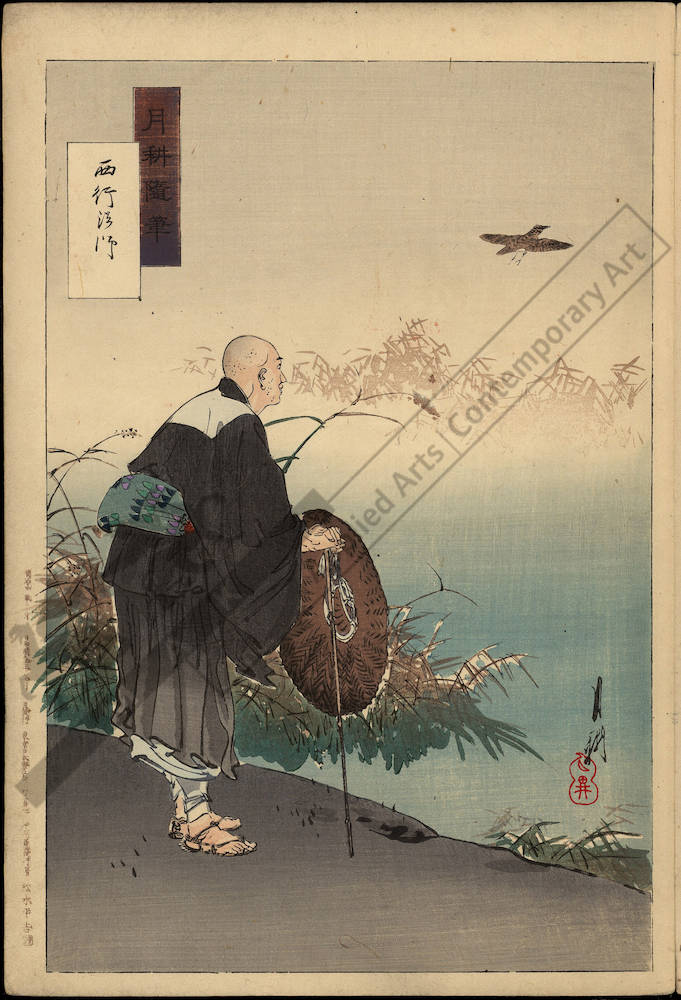
The priest Saigyo
by Ogata Gekko
- Medium:
- Woodblock print
- Source:
- Museum of Applied Arts Vienna
- Image courtesy of
- Museum of Applied Arts Vienna
Description
Saigyō Hōshi (1118–1190) was a former imperial guardsman who took Buddhist orders and became one of the most celebrated waka poets of the late Heian period, his wanderings through the provinces producing the verse collected in the Sankashū. He is conventionally depicted in Japanese painting and prints as a solitary tonsured figure in traveling robes with a staff and reed hat, often pausing before a landscape that evokes one of his poems — Mount Fuji, the Yoshino cherries, or a remote moor. Gekko's treatment would draw on this iconographic tradition, with line work suited to the ascetic subject and a palette held to muted earth tones and ink. The figure of the wandering poet-priest was a recurring motif across Gekko's output, fitting his interest in literary and historical subjects pursued through his self-directed study of older painting traditions. Printed as a nishiki-e on washi, the sheet places the poet within Meiji-period revaluations of classical literary heroes.
More Prints by Ogata Gekko
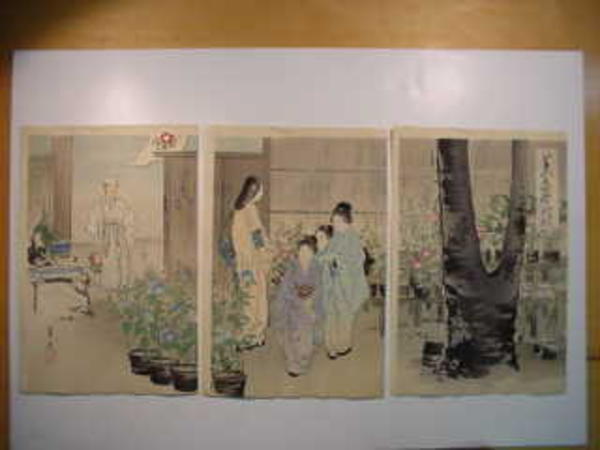
MORNING GLORIES AT IRIYA, TOKYO
Woodblock print

Nippon-damashii, Kyokaku 日本魂 侠客 / Gekko zuihitsu 月耕随筆
Woodblock print
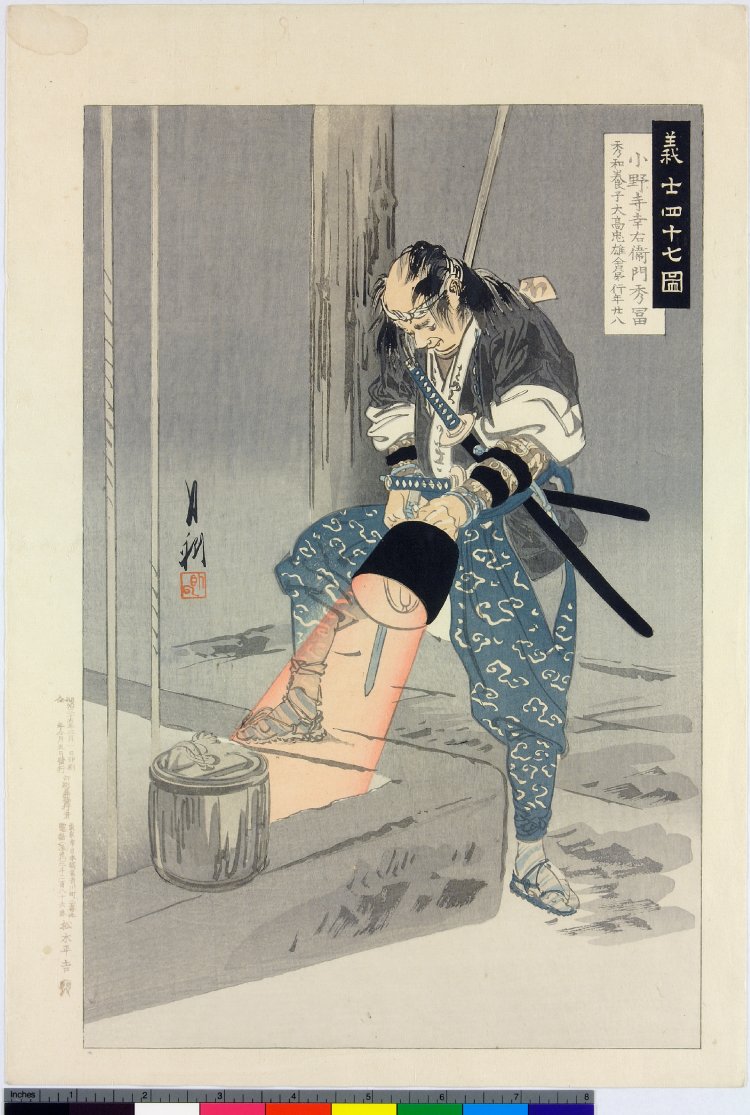
Onodera Koemon Hidetomi 小野寺幸右衛門秀富 / Gishi shijushichi zu 義士四十七図
Woodblock print
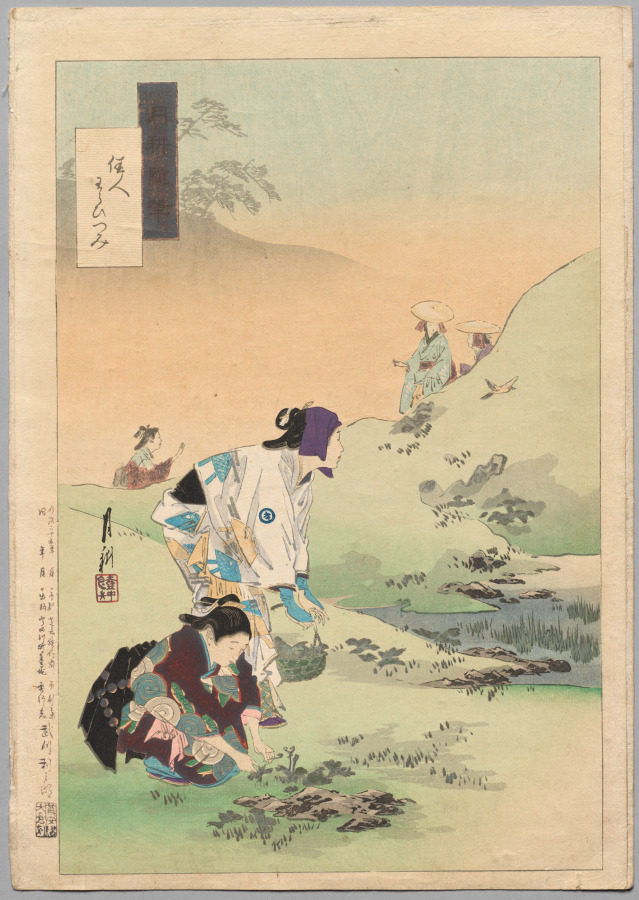
Beauties Harvesting Bracken, from the series Gekkō’s Miscellaney
c. 1886–1899
Woodblock print, ink and color on paper
More Religious Prints

The Great Buddha, Kamakura (Kamakura Daibutsu)
Kamakura Daibutsu
1930
Color woodblock print

Hall of the Great Buddha (Nara Daibutsuden)
1950
Color woodblock print
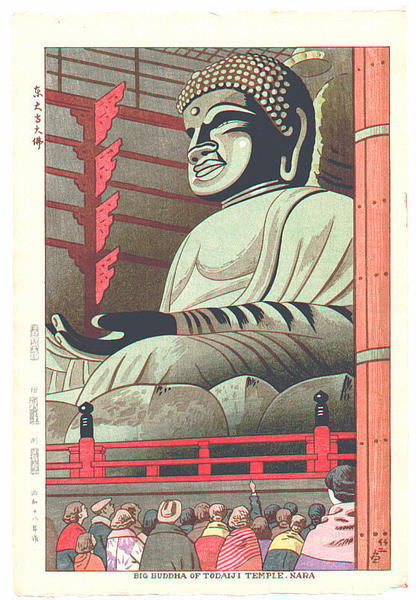
Great Buddha
大仏
Woodblock print

Clearing after a Snowfall at the Kannon Temple in Asakusa (Asakusa Kannon no yukibare), from the series "Twenty Views of Tokyo (Tokyo nijukkei)"
1926
Color woodblock print; oban
Frequently Asked Questions
The priest Saigyo was created by Ogata Gekko (尾形月耕).
The priest Saigyo depicts religious.