
Two Deers
by Ohara Koson
- Medium:
- Mokuhanga (Japanese woodblock)
- Image courtesy of
- Saru Gallery
Description
Two deer — almost certainly sika deer (Cervus nippon), the species native to Japan and most often depicted in Japanese art — rendered as a paired composition. Deer carry deep iconographic weight in Japan, associated with the sacred precincts of Kasuga Shrine in Nara, with autumn and the calling of the stag, and with the seasonal poetry of the Kokin Wakashu. Koson's pair are likely placed among maple leaves, hagi (bush clover), or pampas grass to specify the autumnal mood, with the dappled summer coat or the plainer winter coat carved as a separate block to be printed in a soft, ochre tone. As with his rabbit subjects, deer represent the mammalian margin of Koson's largely avian output, and prints of this type connect his shin-hanga practice back to the long lineage of stag-and-doe imagery in classical Japanese painting from the Rinpa school onward, while retaining the tighter, more naturalistic observation that defines his work.
More Prints by Ohara Koson

Cat and Goldfish
c. 1928–1930
Woodblock print, ink and color on paper
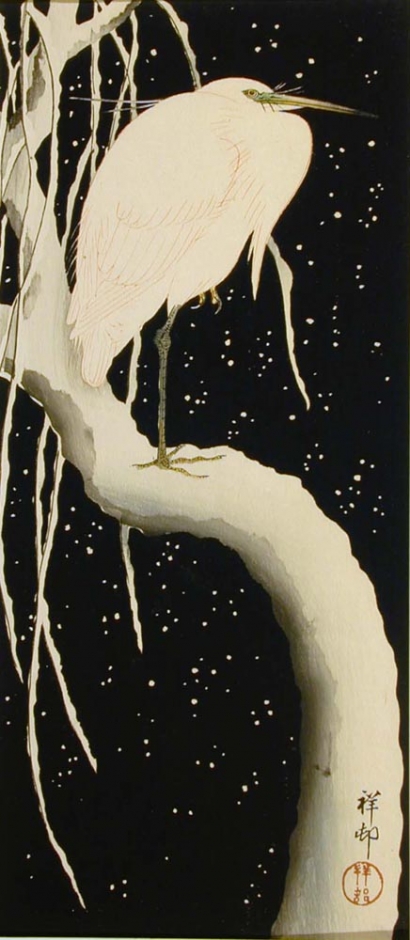
Heron or Egret
c. 1900–1945
Woodblock print
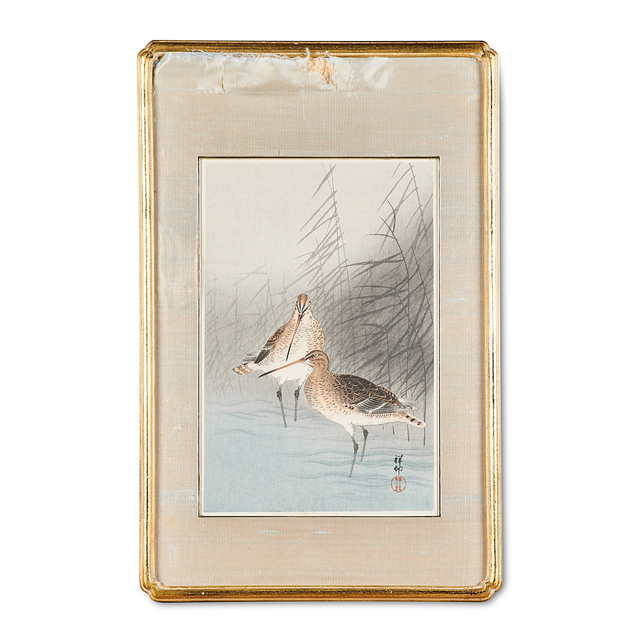
"Snipes and Reeds," 1926 and "Wild Ducks and Pampas Grass"
Two woodblocks in colors (framed separately)
Magpie with Pink and White Magnolia Blossoms
Shōwa period, circa 1931
Woodblock print in "ōban" format; ink and color on paper
Featured in Collections
Curated cross-cuts that include this print.
Frequently Asked Questions
Two Deers was created by Ohara Koson (小原古邨).