
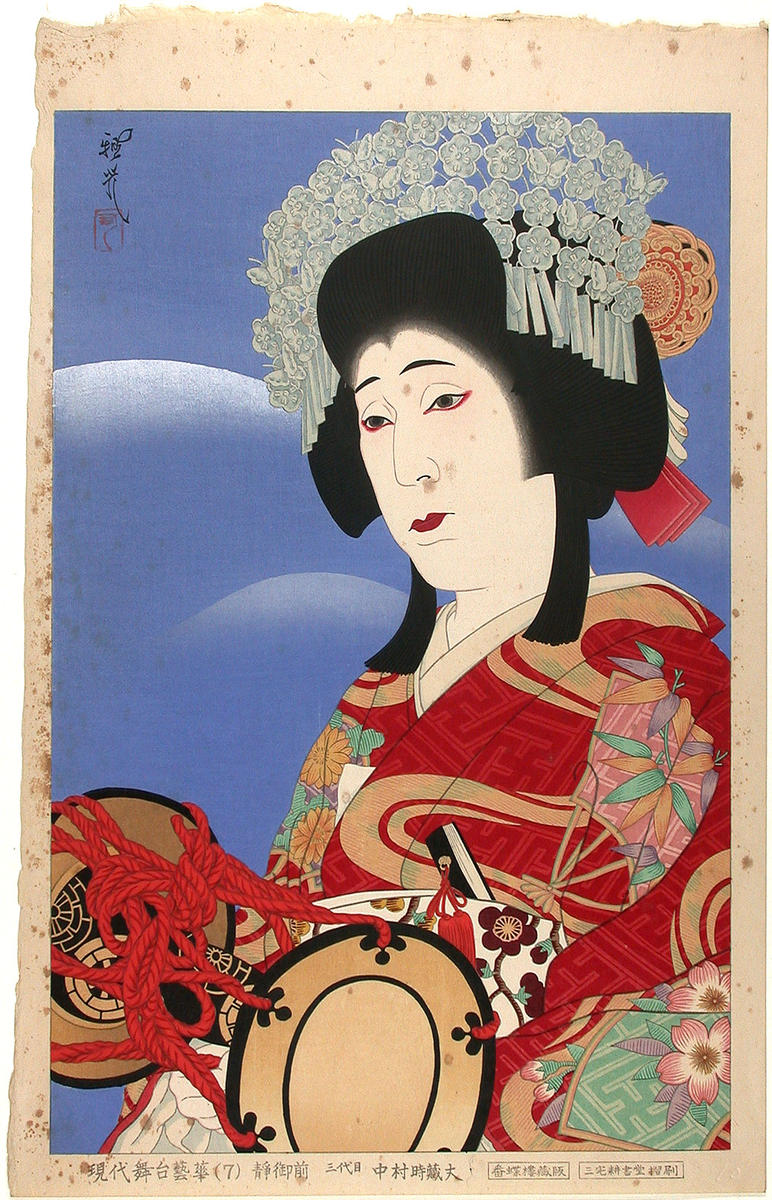
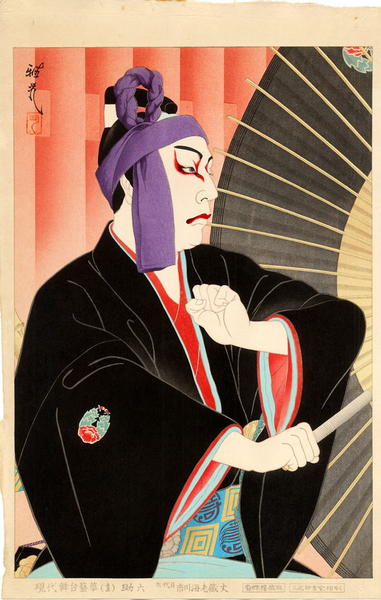
Two small envelops with actor portraits
- Medium:
- Mokuhanga (Japanese woodblock)
- Image courtesy of
- Saru Gallery
Description
Departing from Ota's typical large-format oban portraits, these two miniature envelope designs reflect the broader print culture of Showa-era kabuki, which generated programs, postcards, and small commemorative ephemera alongside the formal print editions. The envelope format carried actor portraits into circulation as keepsakes, with the small surface demanding tighter cropping and bolder facial emphasis than full-sheet compositions allowed. Ota would have reduced his observational drawings to head-and-shoulder studies, eliminating the costume detail and stage business that animate his larger sheets. The carving for such small formats required a particularly disciplined hand, with the horishi reserving subtle line for facial features that on a full oban would carry across multiple blocks. Within Ota's catalogue this category sits at the intimate end of his production: not the formal yakusha-e meant for the wall, but the portable, functional object that brought the actor's likeness into daily use among devoted theatergoers and collectors.
More Prints by Ota Masamitsu


More Theater Prints


![Kabukiza [Kabuki Theater] by Sonoyama Harumi](https://www.artic.edu/iiif/2/10806d46-109a-d67f-30ac-d57e9b374873/full/843,/0/default.jpg)
![Inside Scene of Kabukiza [Kabuki theater] (One Hundred Views of Tokyo, Message to the 21st Century) by Obata Tsutomu](https://www.artic.edu/iiif/2/33905fb8-c304-71f5-6150-cb9260cf9efa/full/843,/0/default.jpg)
Featured in Collections
Curated cross-cuts that include this print.
Frequently Asked Questions
Two small envelops with actor portraits was created by Ota Masamitsu (太田雅光).
Two small envelops with actor portraits depicts theater.