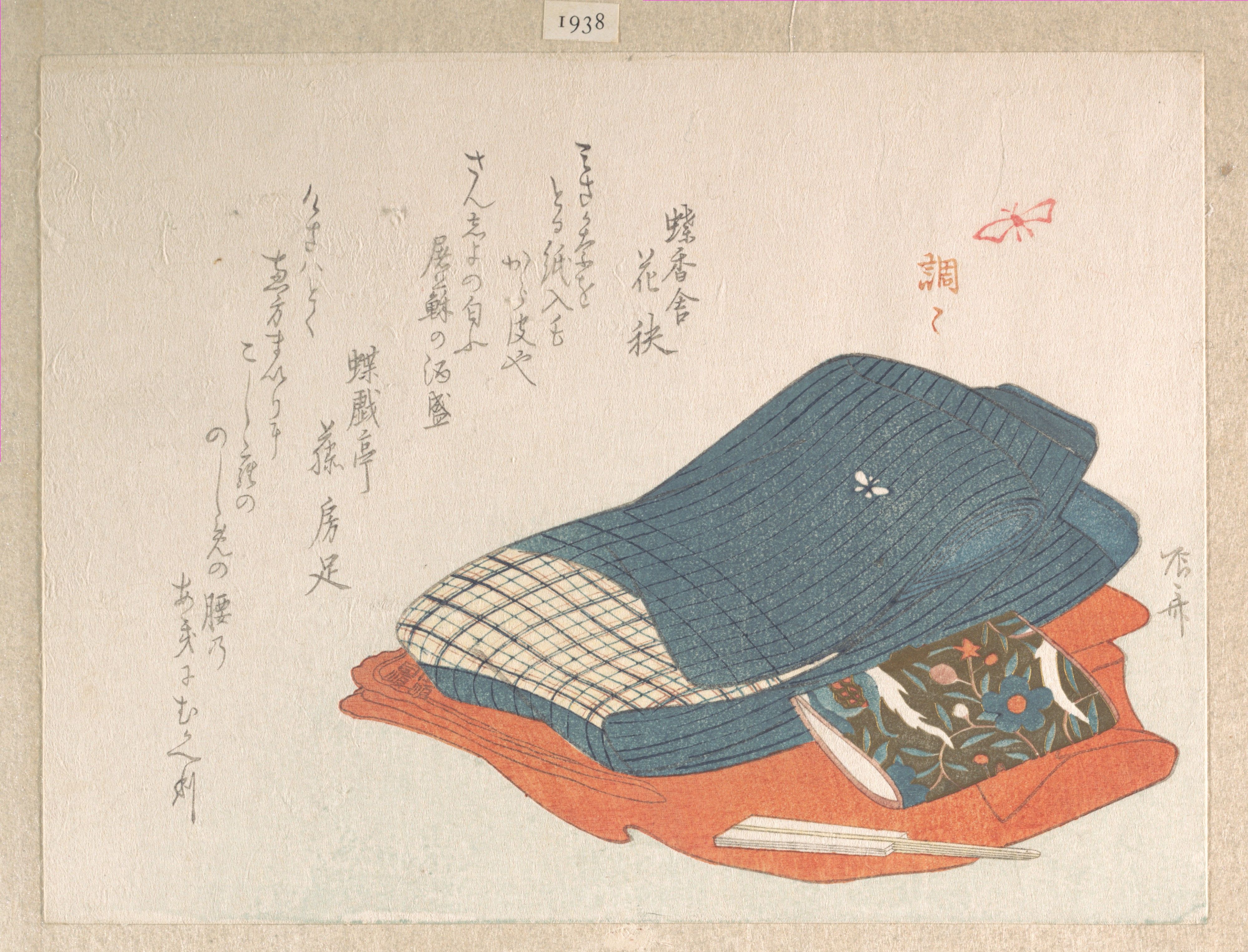
Bed-clothing
- Medium:
- Woodblock print (surimono); ink and color on paper
- Source:
- Metropolitan Museum of Art
Description
Bed-clothing is a surimono print by Ryuryukyo Shinsai held in the Metropolitan Museum of Art, where it is associated with the dating circa 1750 in the museum's record. Because Shinsai was active in the early nineteenth century, the early date almost certainly reflects a database placeholder or cataloguing artifact rather than the actual print date, and most other surimono by Shinsai of this character are dated to around 1800 to 1820. The composition isolates folded bedding, a futon and its coverings, as a self-contained still life, treating the textiles as the subject in their own right. As a designer working within the Hokusai school after his apprenticeship with Tawaraya Sori, Shinsai used this kind of intimate object portrayal to suggest the absent sleeper and to give kyoka poets a starting point for verses on rest, intimacy, or the passage of nights. The folded textiles offer the surimono printer an opportunity to mark crisp creases with blind embossing while applying restrained colors and metallic accents to the patterns of the upper layer. The implied interior, the season, and the household status of the imagined owner all emerge from the careful selection of textiles and their precise arrangement. The Metropolitan Museum of Art preserves the sheet as part of its broad Shinsai holdings, where it stands beside related still lifes of cabinets, bowls, and accessories that together build a portrait of Edo domestic life.
More Prints by Ryūryūkyo Shinsai
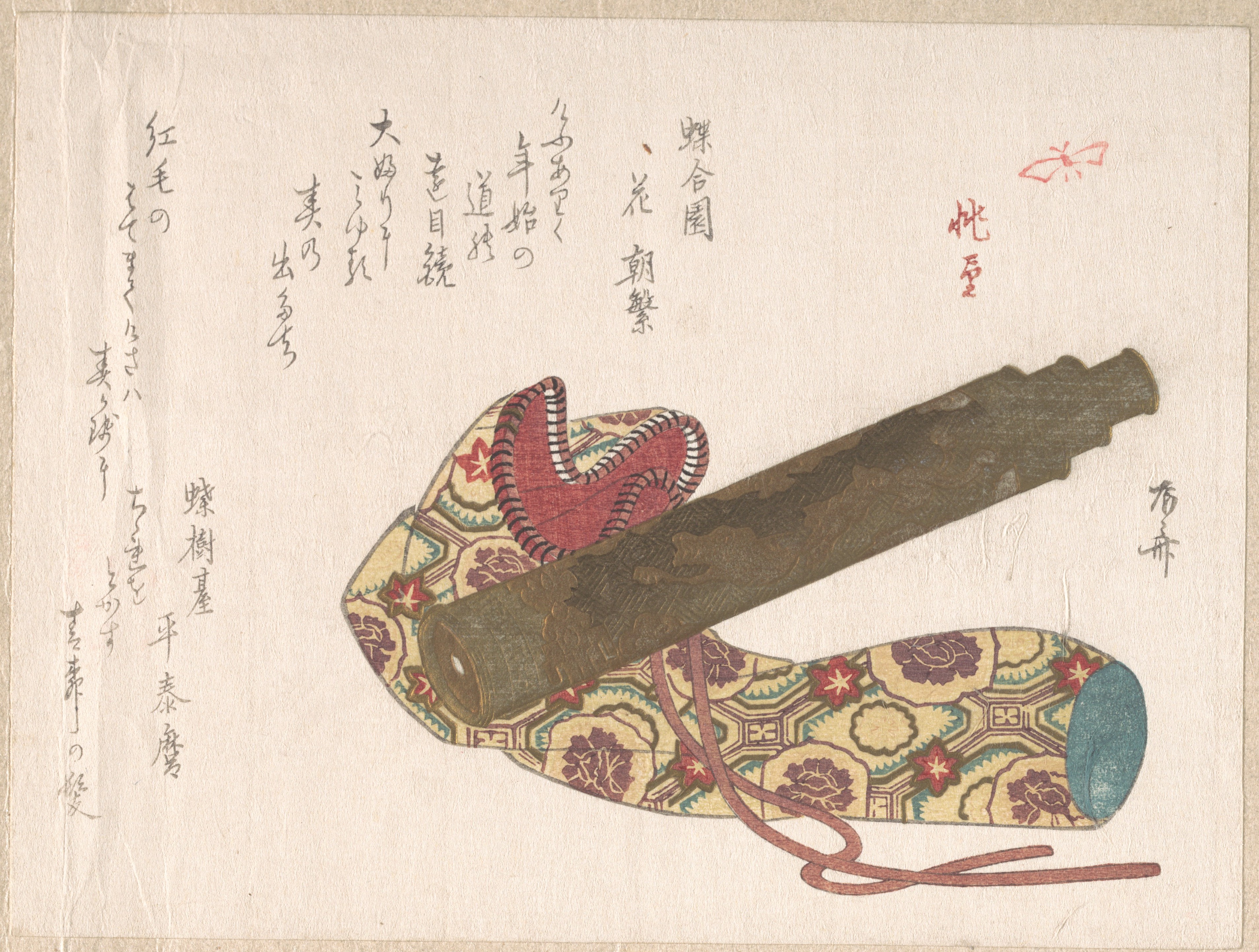
Telescope with Its Bag
19th century
Woodblock print (surimono); ink and color on paper
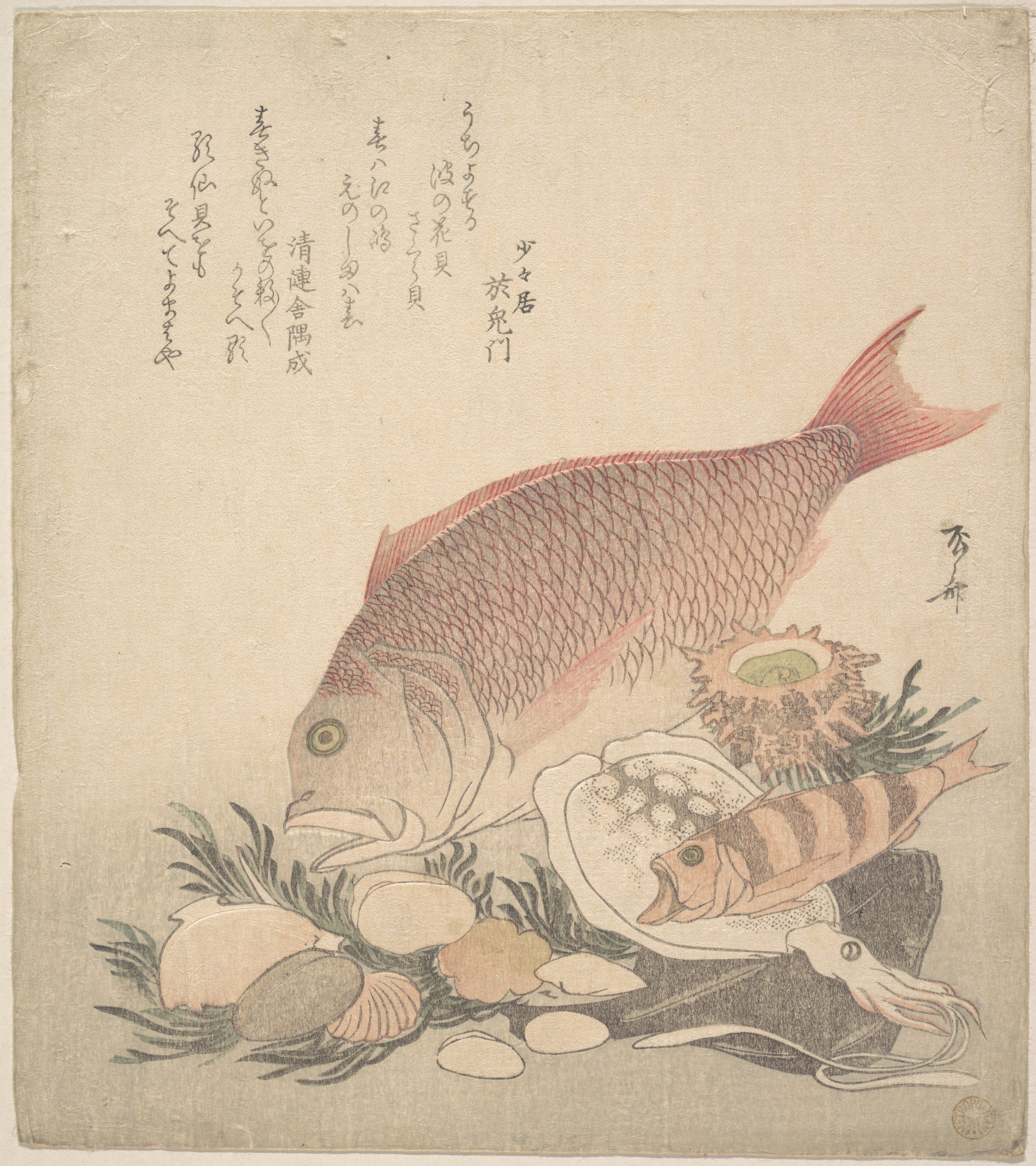
Large and Small Fish Swimming Among Shells and Moss at the Bottom of the Sea
ca. 1830
Woodblock print (surimono); ink and color on paper
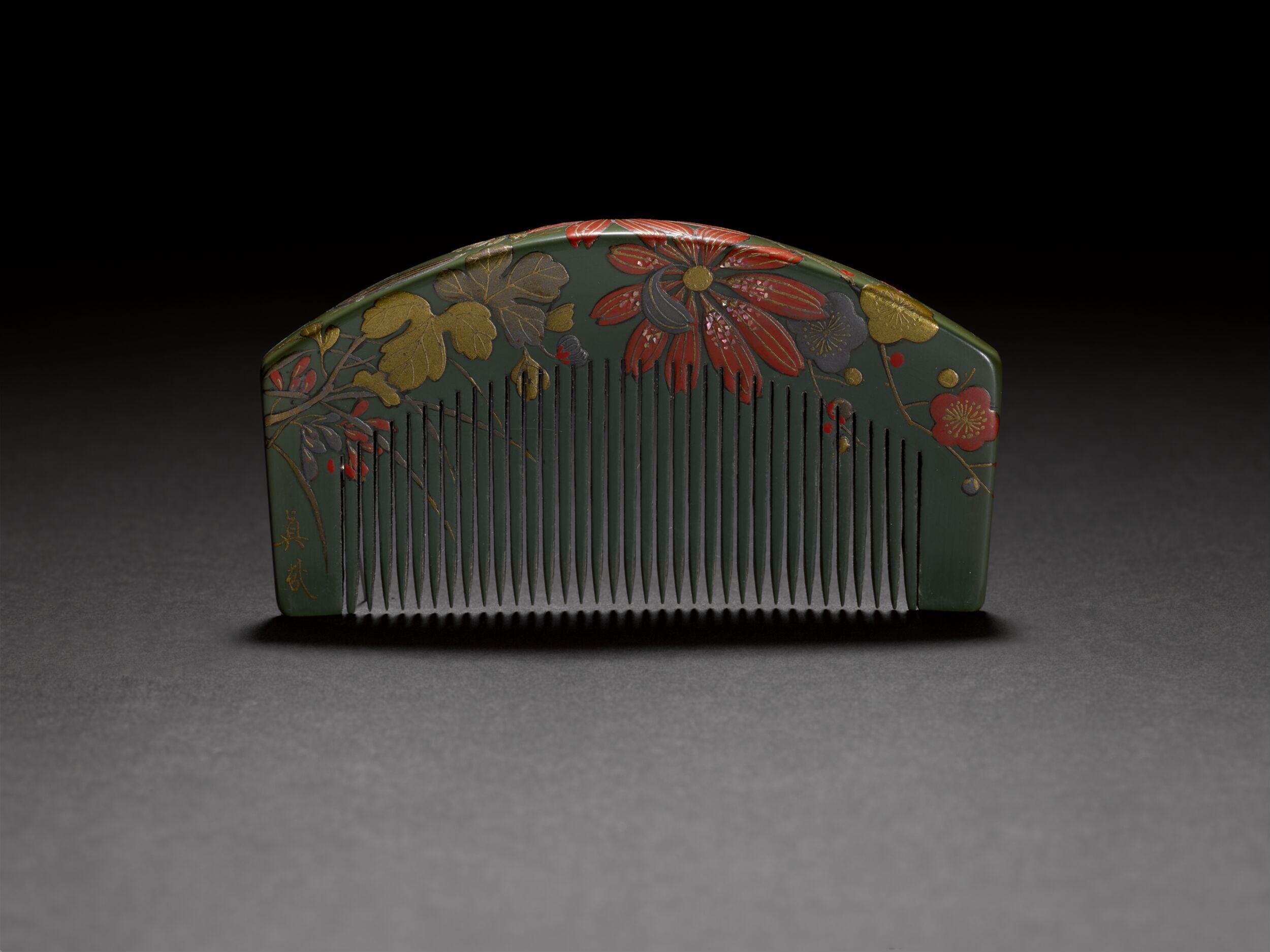
Untitled
1880 - 1895
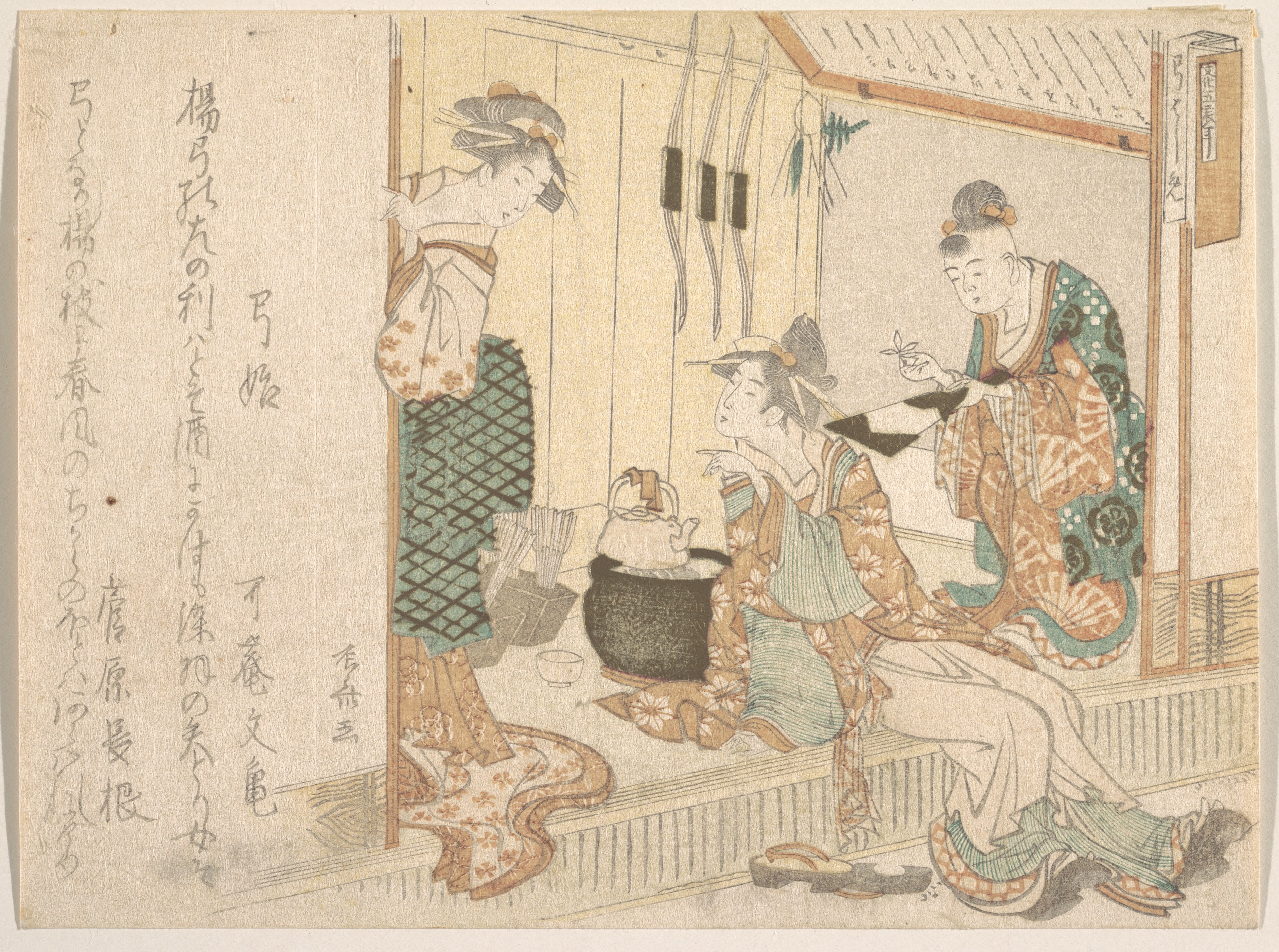
Two Young Ladies Having Tea Attended by Elderly Servant
Woodblock print (surimono); ink and color on paper
Frequently Asked Questions
Bed-clothing was created by Ryūryūkyo Shinsai (柳々居辰斎).