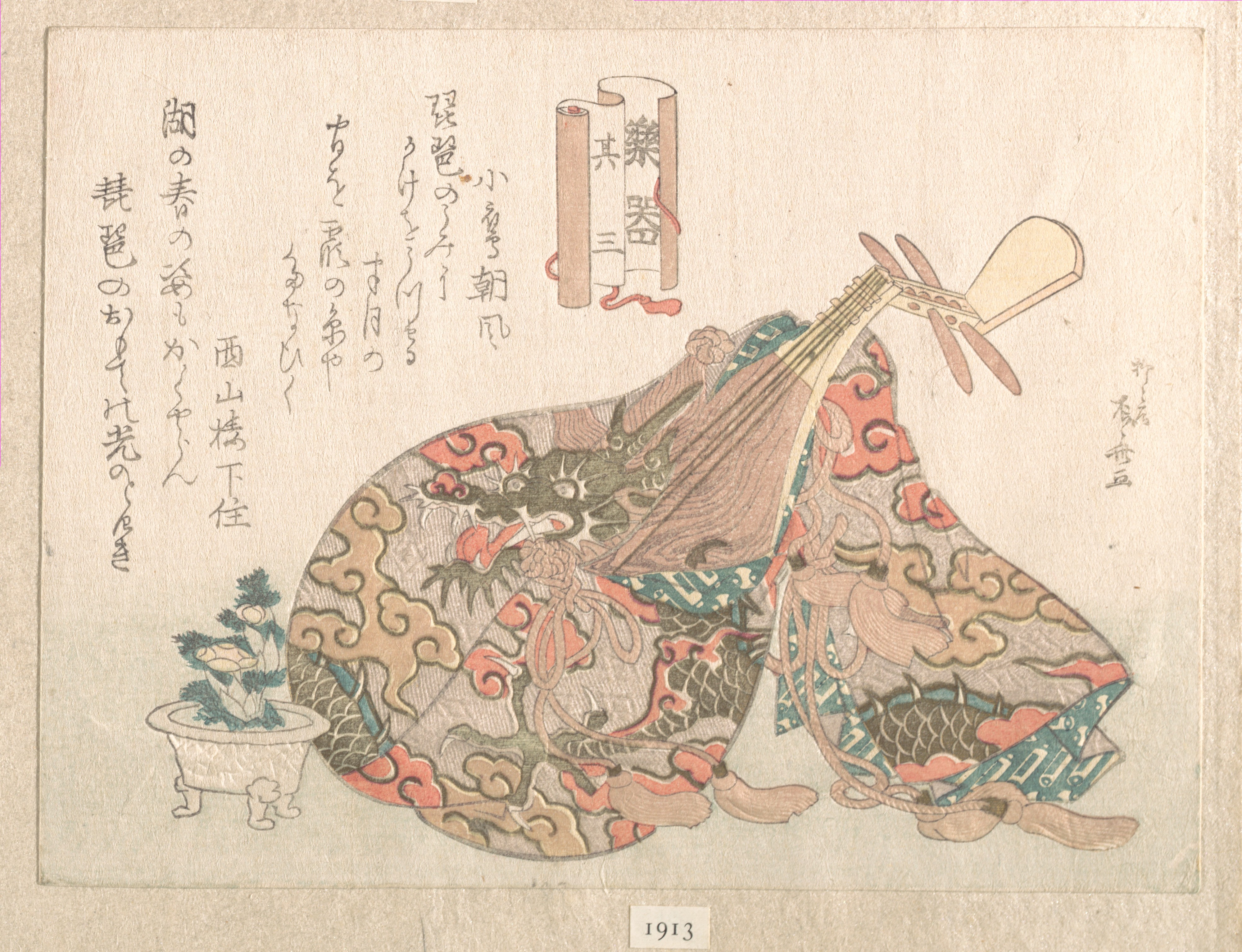
Biwa with Brocade Cover, from the series Musical Instruments
- Date:
- probably 1808
- Medium:
- Woodblock print (surimono); ink and color on paper
- Source:
- Metropolitan Museum of Art
Description
Biwa with Brocade Cover, from the series Musical Instruments, is a surimono print by Ryuryukyo Shinsai in the Metropolitan Museum of Art, dated to about 1808. The composition shows the lute-like biwa, partly draped or wholly enclosed in a brocade cover, presented as a poised still life rather than as an instrument in performance. As a designer trained under Tawaraya Sori and absorbed into the Hokusai school's network, Shinsai used this kind of single-object surimono to explore the intersection of craft, refinement, and poetic suggestion. The biwa's elongated body and slim neck offer a strong diagonal that anchors the sheet, while the brocade cover provides a counterweight of pattern and color, its textile motifs rendered with the careful registration that surimono printers achieved through luxury techniques such as blind embossing and metallic pigments. The instrument's storied associations with classical literature, blind itinerant musicians, and the goddess Benten gave kyoka poets a rich field for the verses that accompanied the print, with possible references to memory, devotion, or the slow tuning of feeling. Within the Musical Instruments series, the biwa sheet stands as a typical example of how Shinsai used a single subject per sheet to build a comparative meditation across the set. The Metropolitan Museum of Art preserves this impression as part of its broader holdings of Shinsai surimono, demonstrating the Hokusai school's range in object-centered design.
More Prints by Ryūryūkyo Shinsai
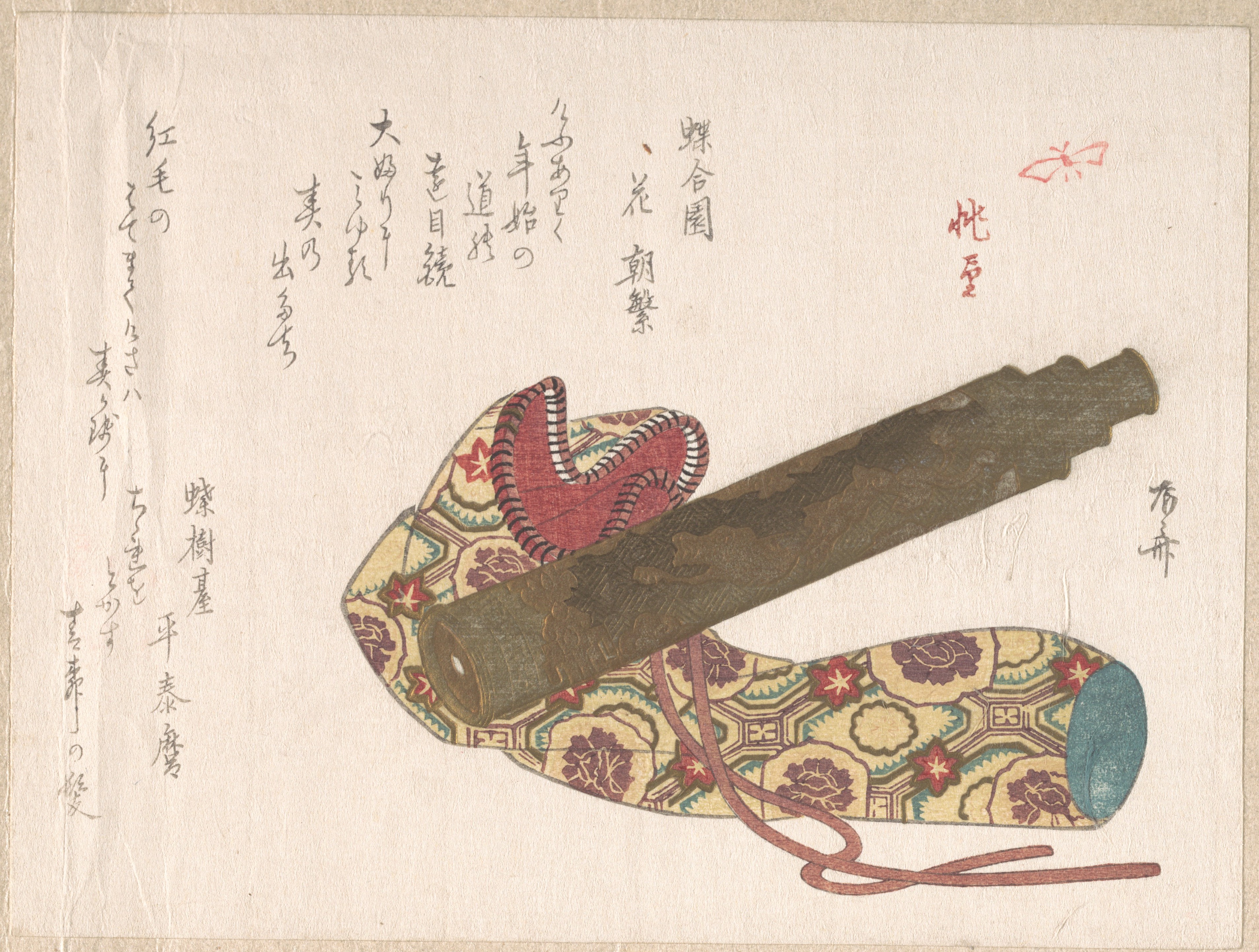
Telescope with Its Bag
19th century
Woodblock print (surimono); ink and color on paper
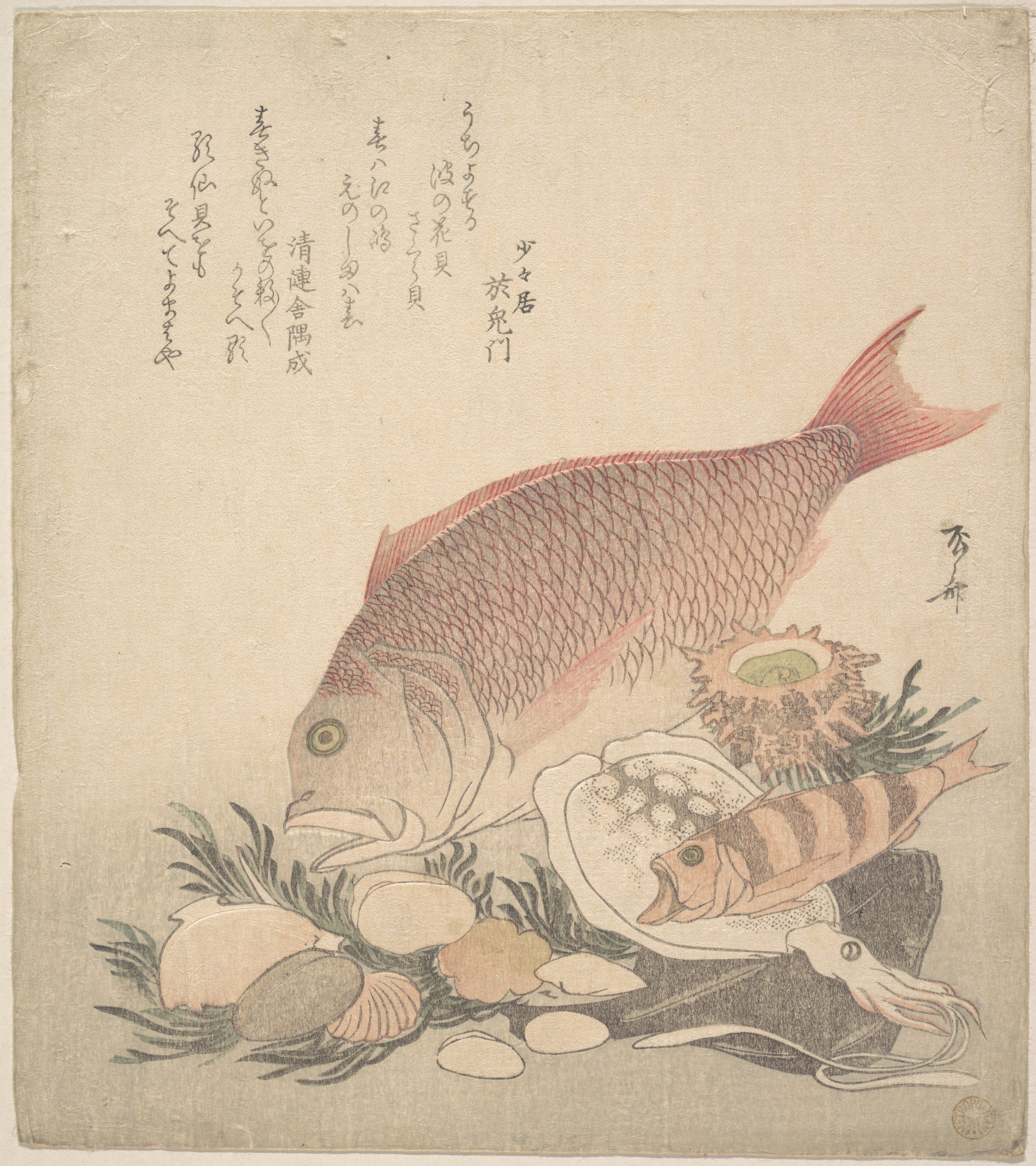
Large and Small Fish Swimming Among Shells and Moss at the Bottom of the Sea
ca. 1830
Woodblock print (surimono); ink and color on paper
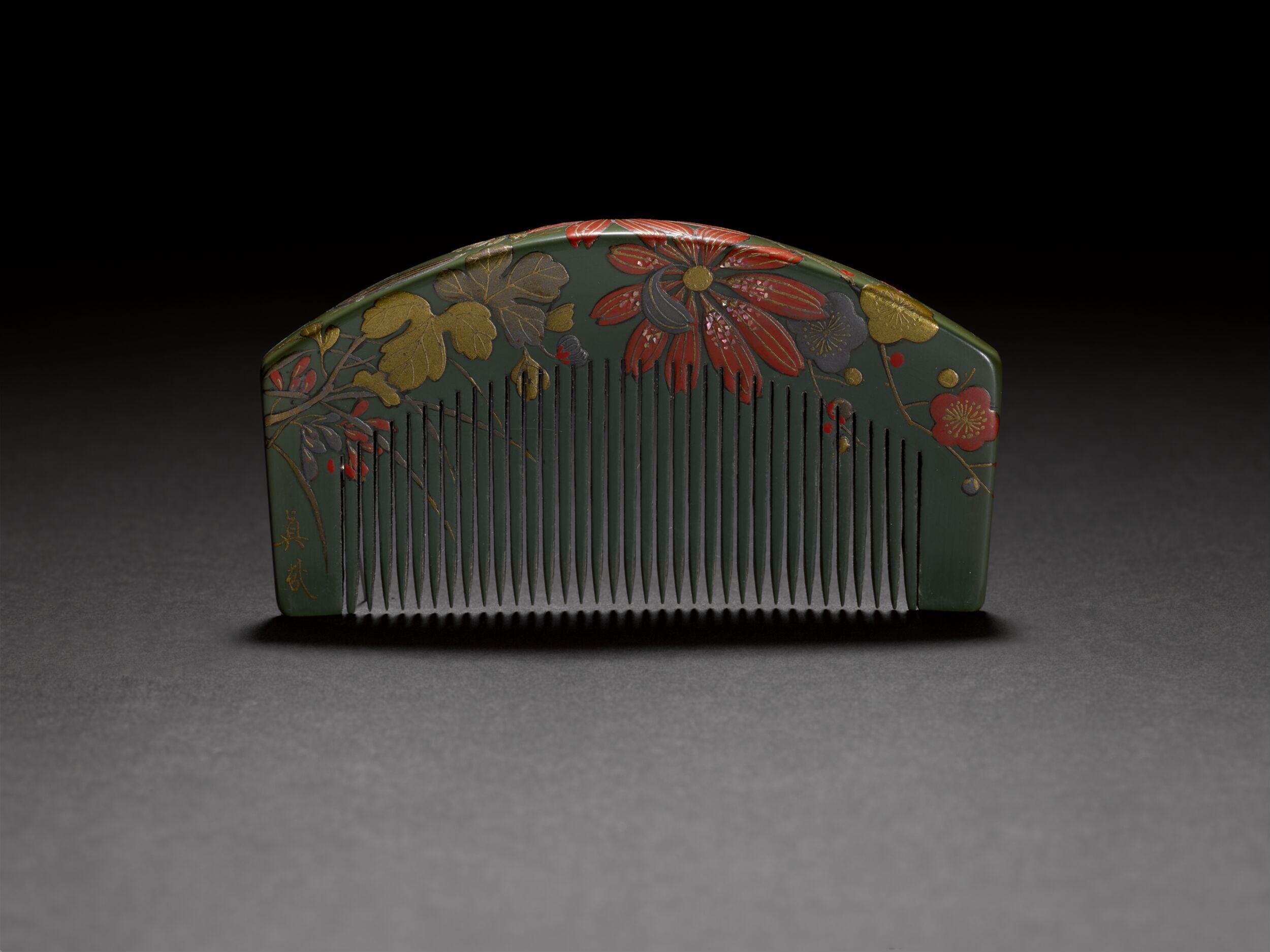
Untitled
1880 - 1895
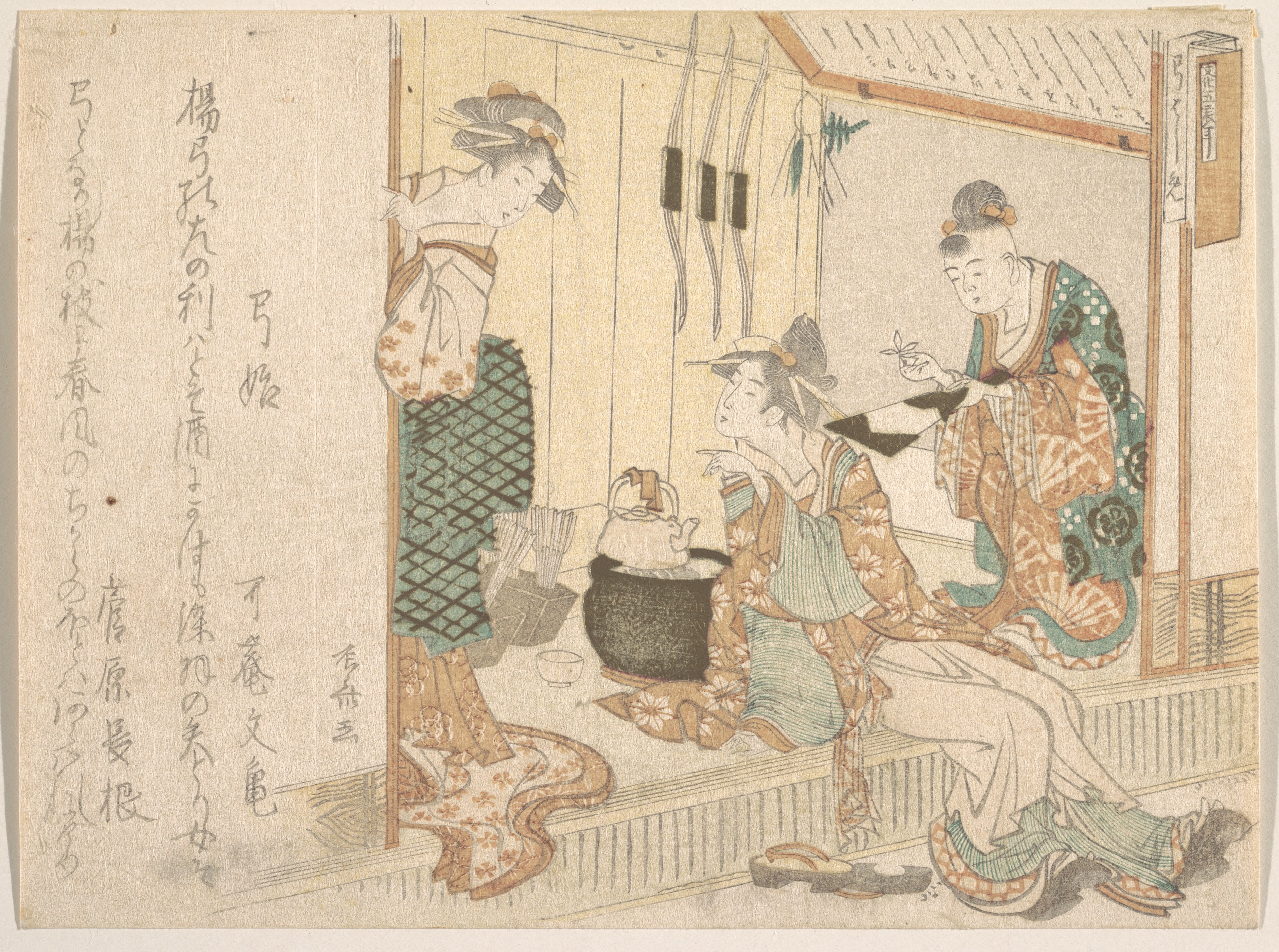
Two Young Ladies Having Tea Attended by Elderly Servant
Woodblock print (surimono); ink and color on paper
Frequently Asked Questions
Biwa with Brocade Cover, from the series Musical Instruments was created by Ryūryūkyo Shinsai (柳々居辰斎) in probably 1808.