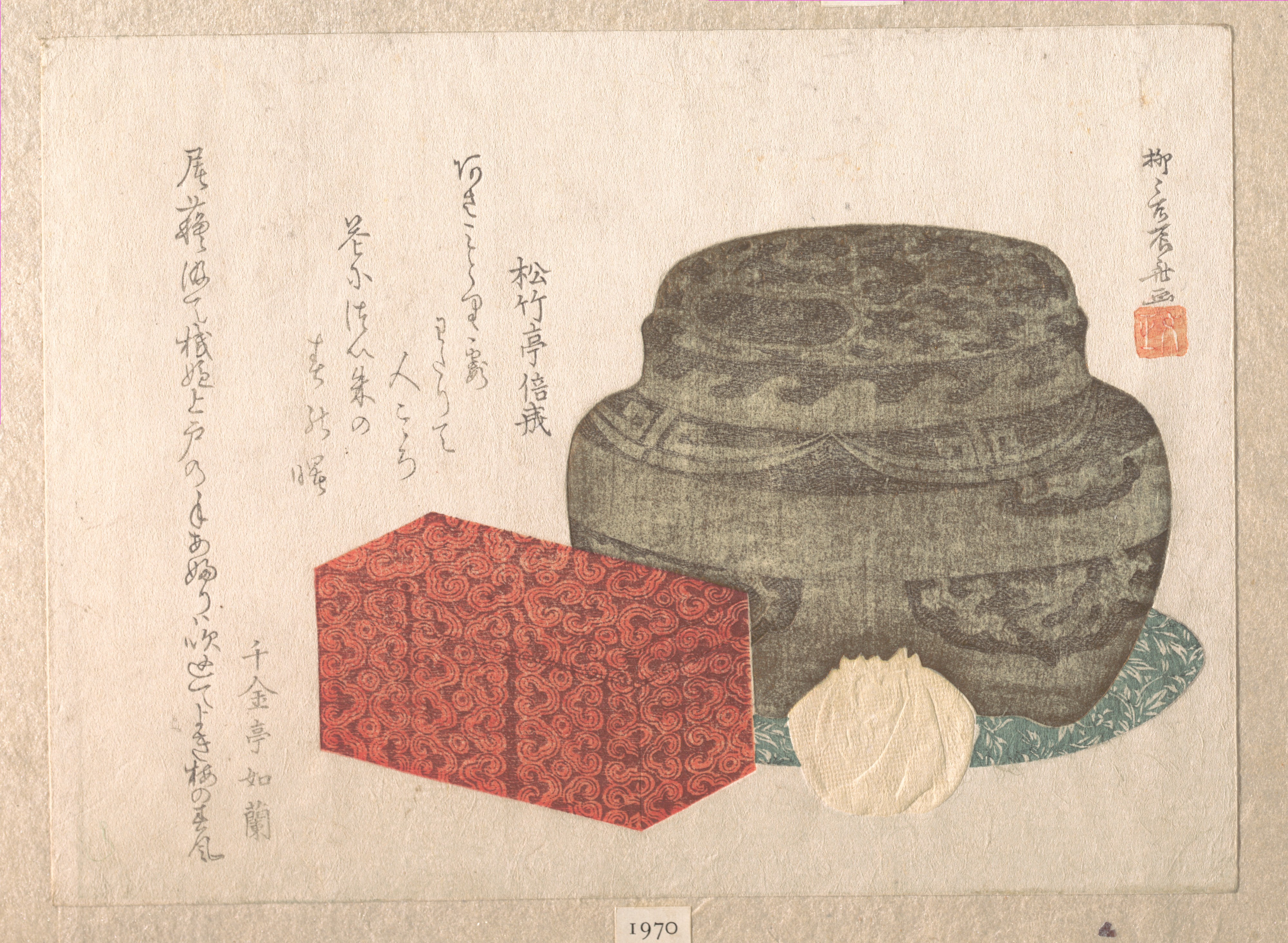
Fire-Holder and Tea-Box
- Date:
- 19th century
- Medium:
- Woodblock print (surimono); ink and color on paper
- Source:
- Metropolitan Museum of Art
Description
Fire-Holder and Tea-Box is a surimono by Ryuryukyo Shinsai in the Metropolitan Museum of Art. As a pupil of Katsushika Hokusai and a designer working in the Hokusai school, Shinsai often centered his surimono on the implements of domestic ritual. The fire holder (hibachi or small portable brazier) and tea box form a compact tableau of objects used in the preparation and sharing of tea, an everyday practice elevated by careful selection of utensils. Together they represent the welcoming warmth of the hearth and the cultural pleasures associated with tea drinking, both central to social life in Edo-period townhouses. Shinsai treats the two objects with quiet attentiveness, allowing the volumes of the brazier and the rectilinear form of the tea box to play off each other. The print employs the lavish techniques typical of surimono: embossed blindprinting (karazuri) suggesting the textured ceramic, lacquer, or wooden surfaces, soft color gradations across glazed or lacquered finishes, and restrained metallic pigments highlighting fittings, handles, or inset decoration. As a privately commissioned surimono distributed within a kyoka poetry circle, the sheet served both as a New Year greeting and as a poetic prompt, accompanied by verses that might play on the warmth of fire, the ritual of tea, and the seasonal change. The print is a fine example of how the Hokusai school transformed common household objects into vehicles for refined aesthetic experience. Source: Metropolitan Museum of Art, https://www.metmuseum.org/art/collection/search/54555.
More Prints by Ryūryūkyo Shinsai
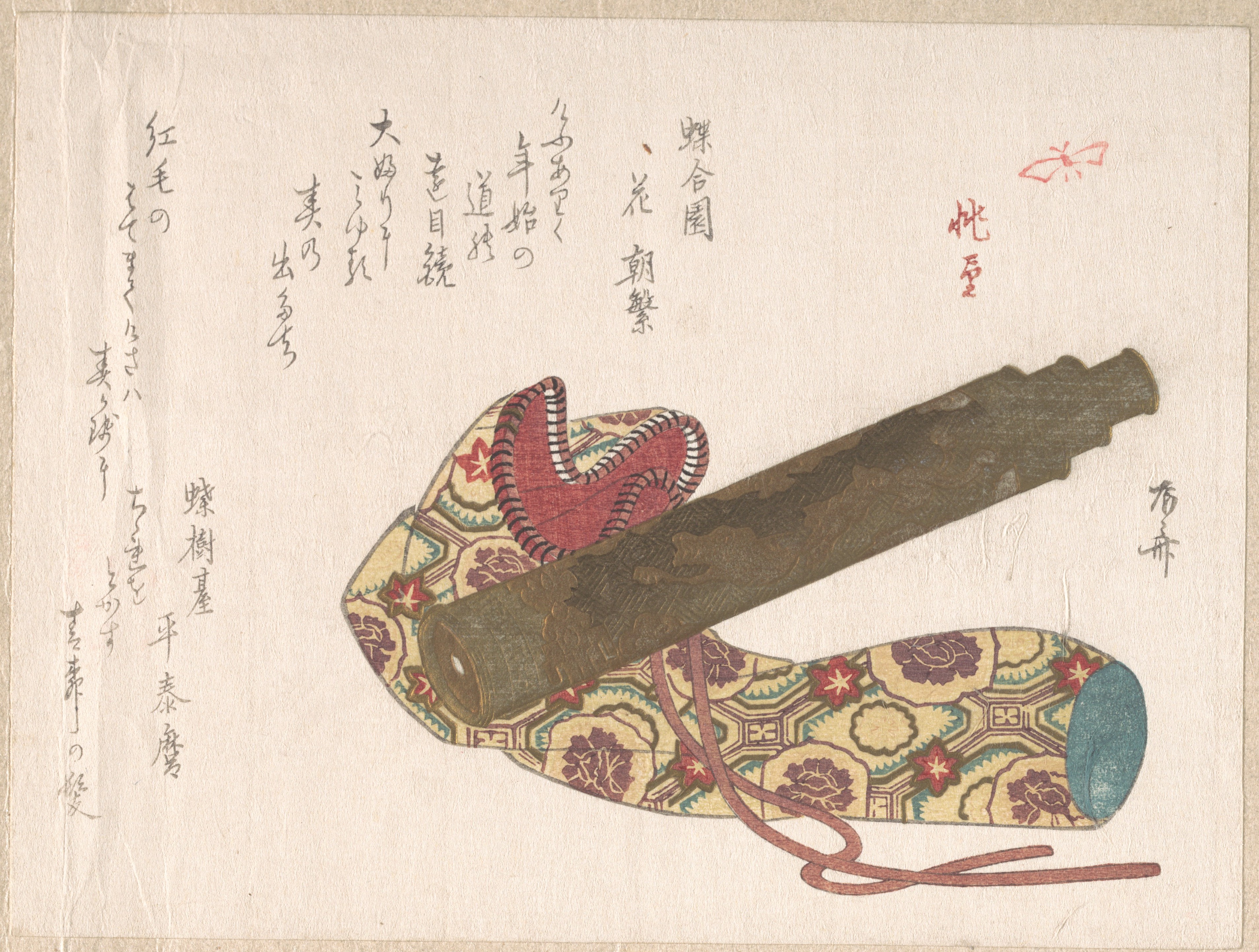
Telescope with Its Bag
19th century
Woodblock print (surimono); ink and color on paper
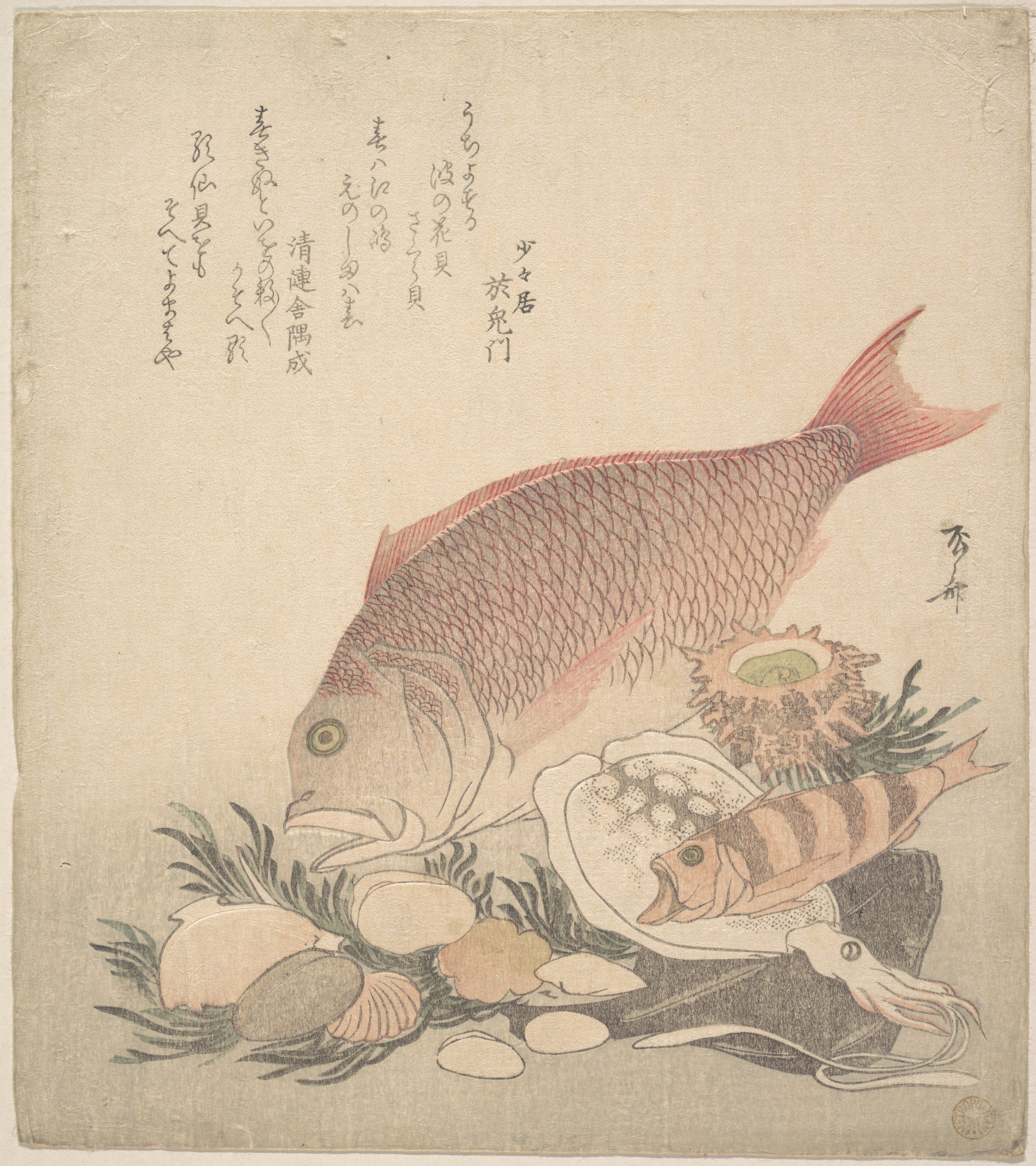
Large and Small Fish Swimming Among Shells and Moss at the Bottom of the Sea
ca. 1830
Woodblock print (surimono); ink and color on paper
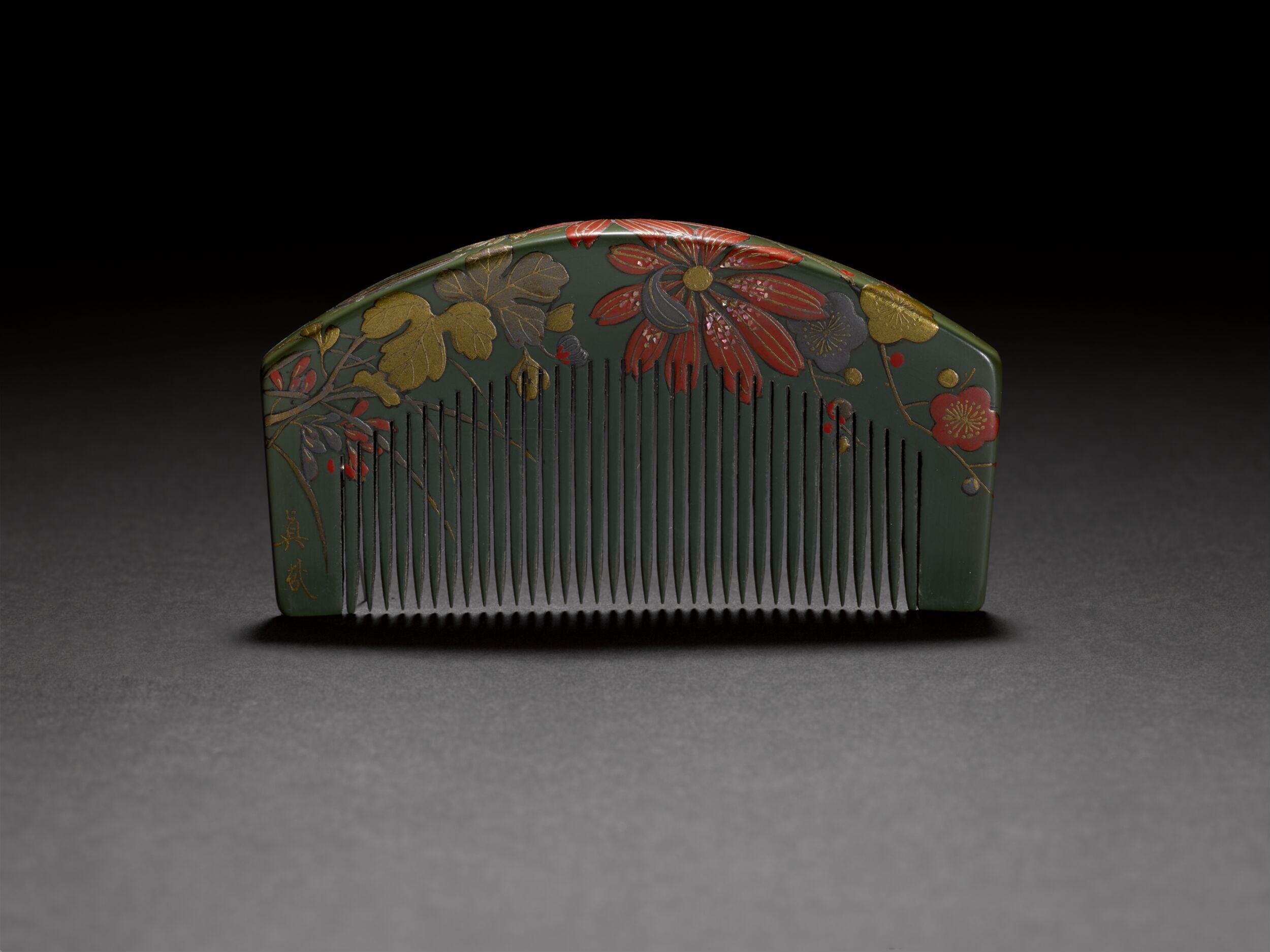
Untitled
1880 - 1895
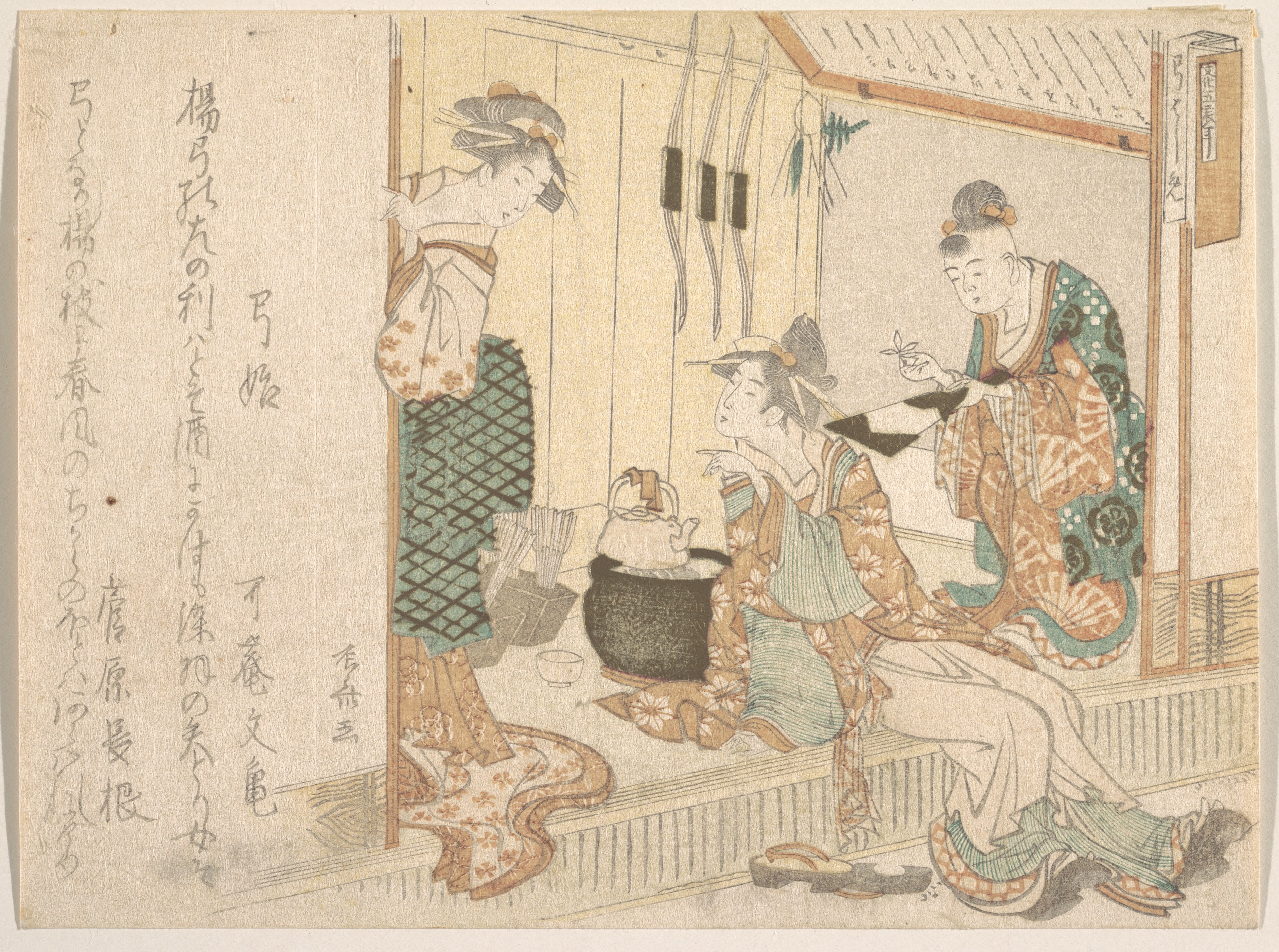
Two Young Ladies Having Tea Attended by Elderly Servant
Woodblock print (surimono); ink and color on paper
Frequently Asked Questions
Fire-Holder and Tea-Box was created by Ryūryūkyo Shinsai (柳々居辰斎) in 19th century.