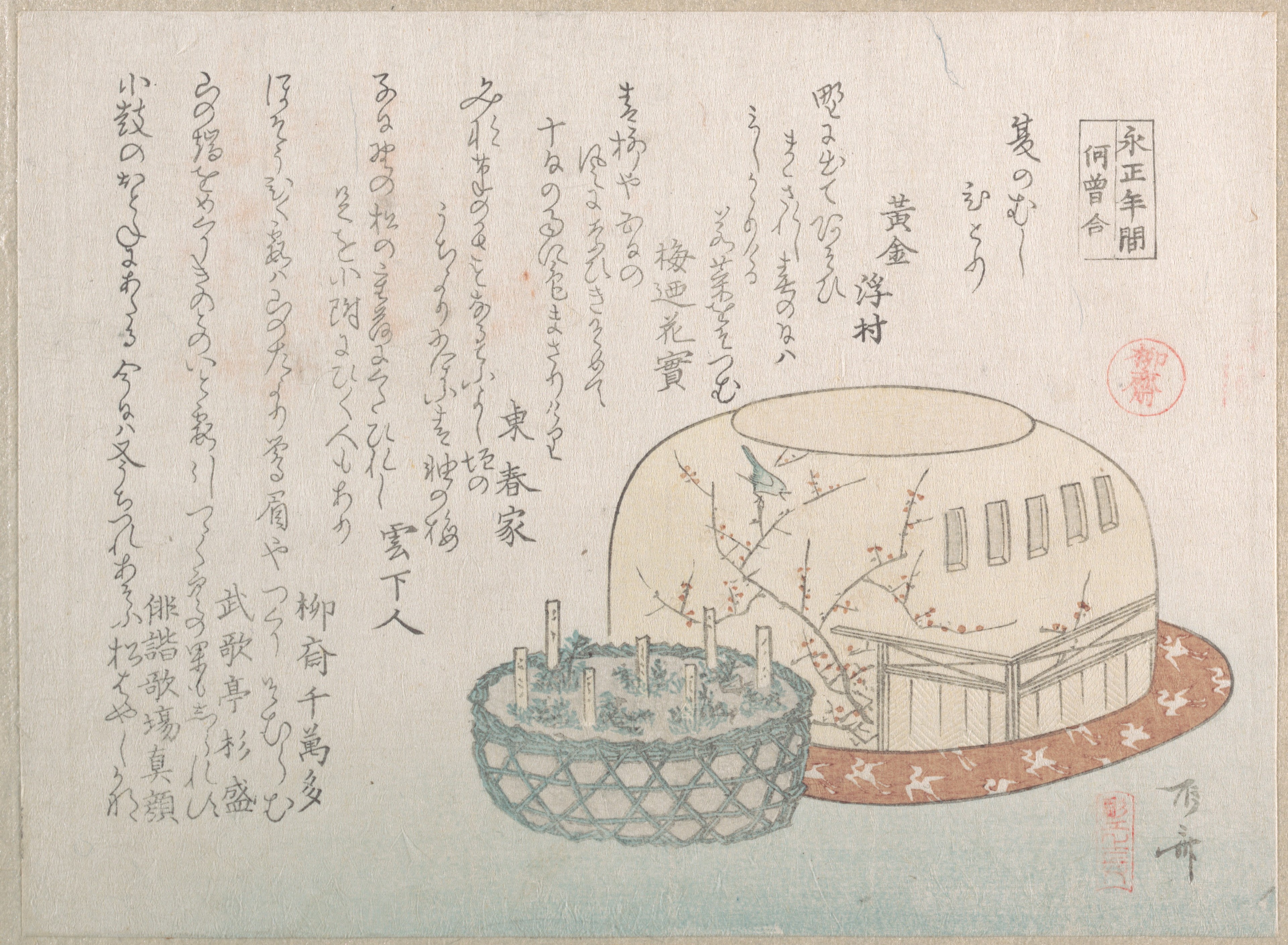
Insect Catcher and Potted Herbs
- Date:
- 19th century
- Medium:
- Part of an album of woodblock prints (surimono); ink and color on paper
- Source:
- Metropolitan Museum of Art
Description
Insect Catcher and Potted Herbs is a surimono by Ryuryukyo Shinsai in the Metropolitan Museum of Art. Working in the Hokusai school as a pupil of Katsushika Hokusai, Shinsai often gathered the implements of a small, focused pastime into a single still life for surimono distribution. Here an insect cage or catcher is paired with potted herbs, evoking the seasonal pleasures of summer, when Edo-period townsmen and women caught singing crickets to enjoy their music in the cool of the evening, and when fresh herbs from the garden featured in food and medicine. The pairing thus links the world of sound with that of scent and taste, a characteristically surimono-like juxtaposition of small pleasures. Shinsai treats the items with the close observation characteristic of his school, attentive to the lattice of the cage and the leafy contours of the plants. The sheet displays the lavish printing techniques associated with surimono: embossed blindprinting (karazuri) in the woven cage and the textured pot, soft color gradations modeling the foliage, and discreet metallic pigments highlighting metal or lacquer fittings. Surimono were privately commissioned by kyoka poetry circles, and the verses inscribed alongside the image would have played on the season's themes of insect song, herb gathering, and quiet pleasures of the garden. The print exemplifies Shinsai's gift for using small everyday subjects to capture the texture of a particular season. Source: Metropolitan Museum of Art, https://www.metmuseum.org/art/collection/search/54034.
More Prints by Ryūryūkyo Shinsai
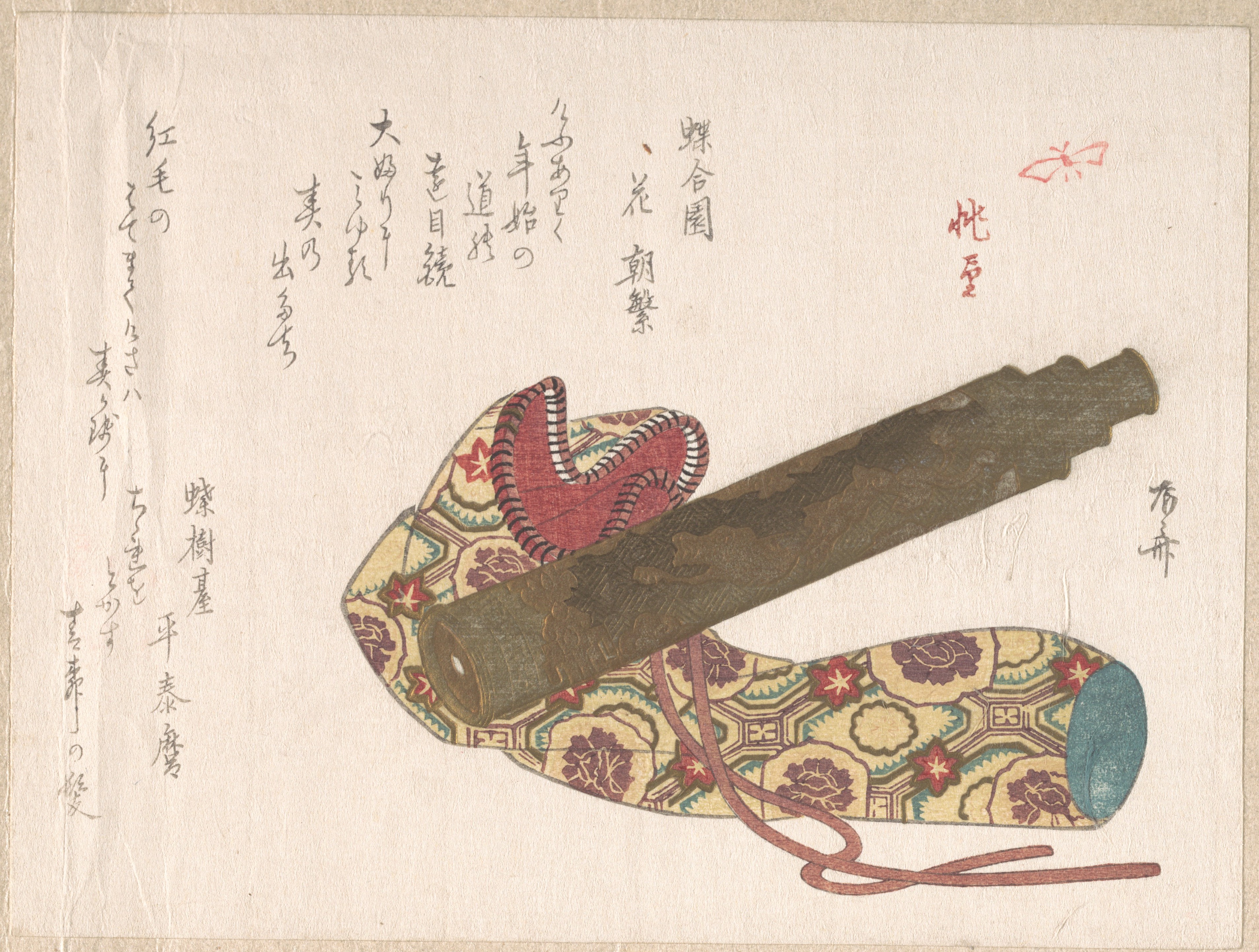
Telescope with Its Bag
19th century
Woodblock print (surimono); ink and color on paper
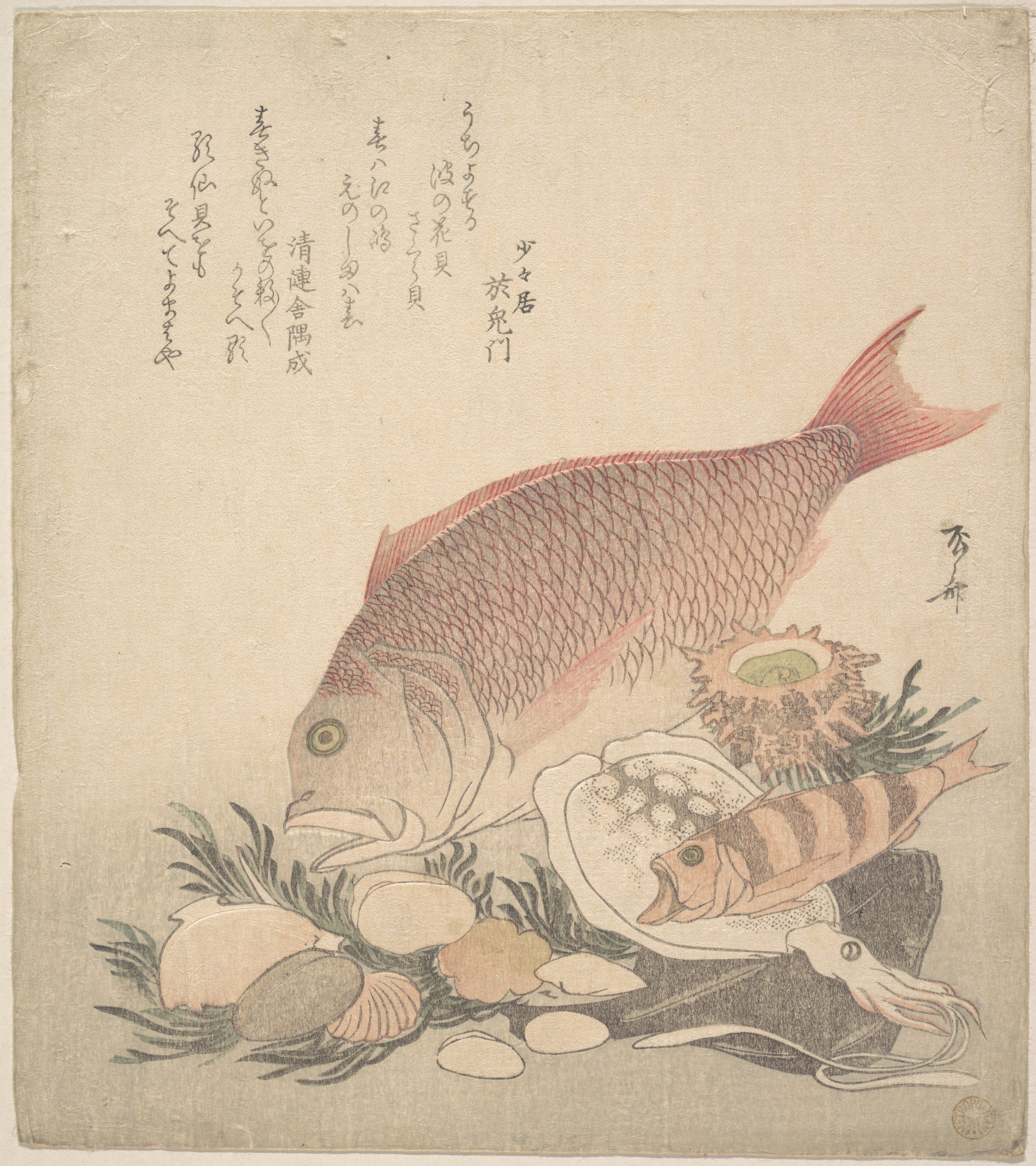
Large and Small Fish Swimming Among Shells and Moss at the Bottom of the Sea
ca. 1830
Woodblock print (surimono); ink and color on paper
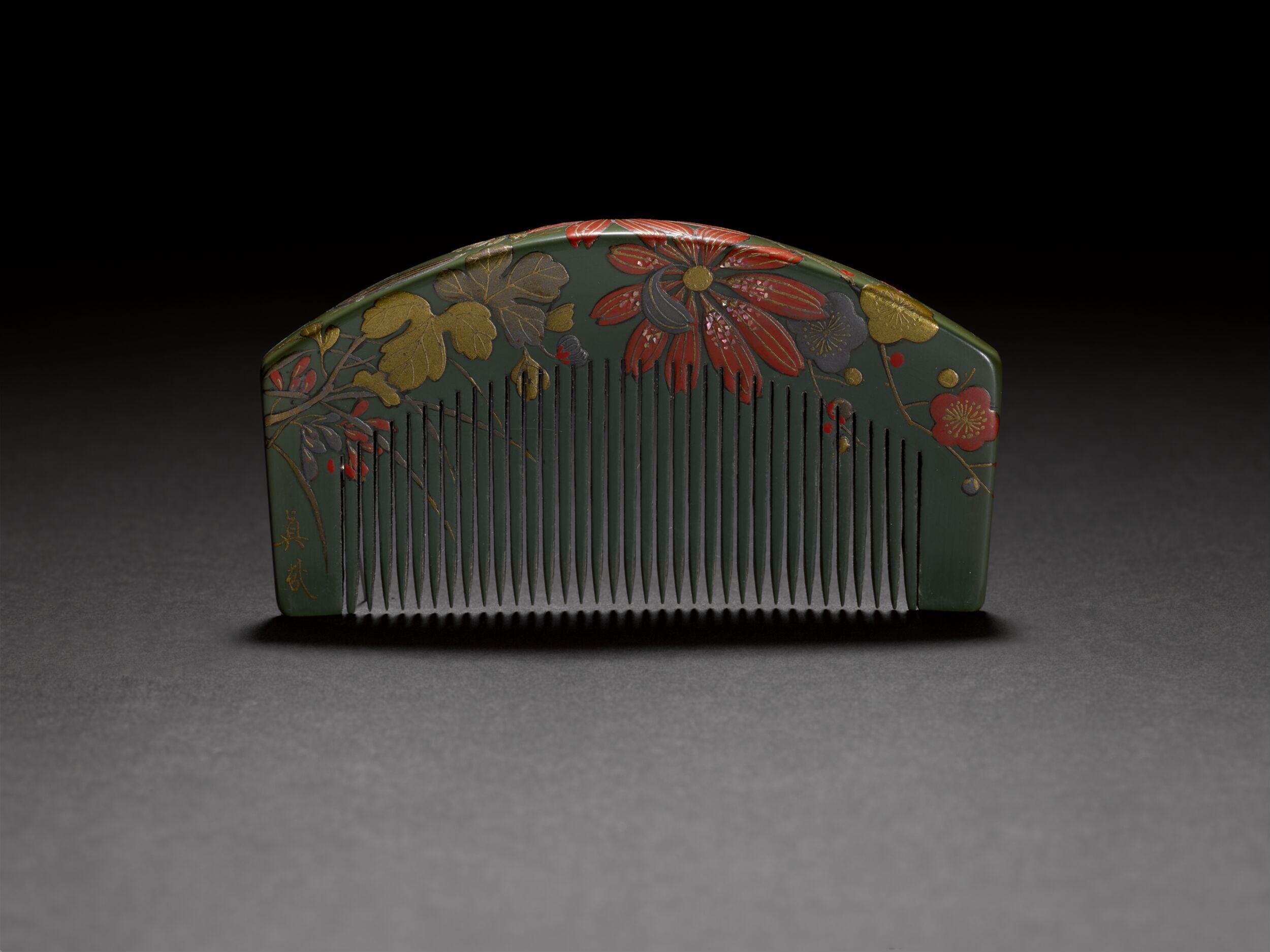
Untitled
1880 - 1895
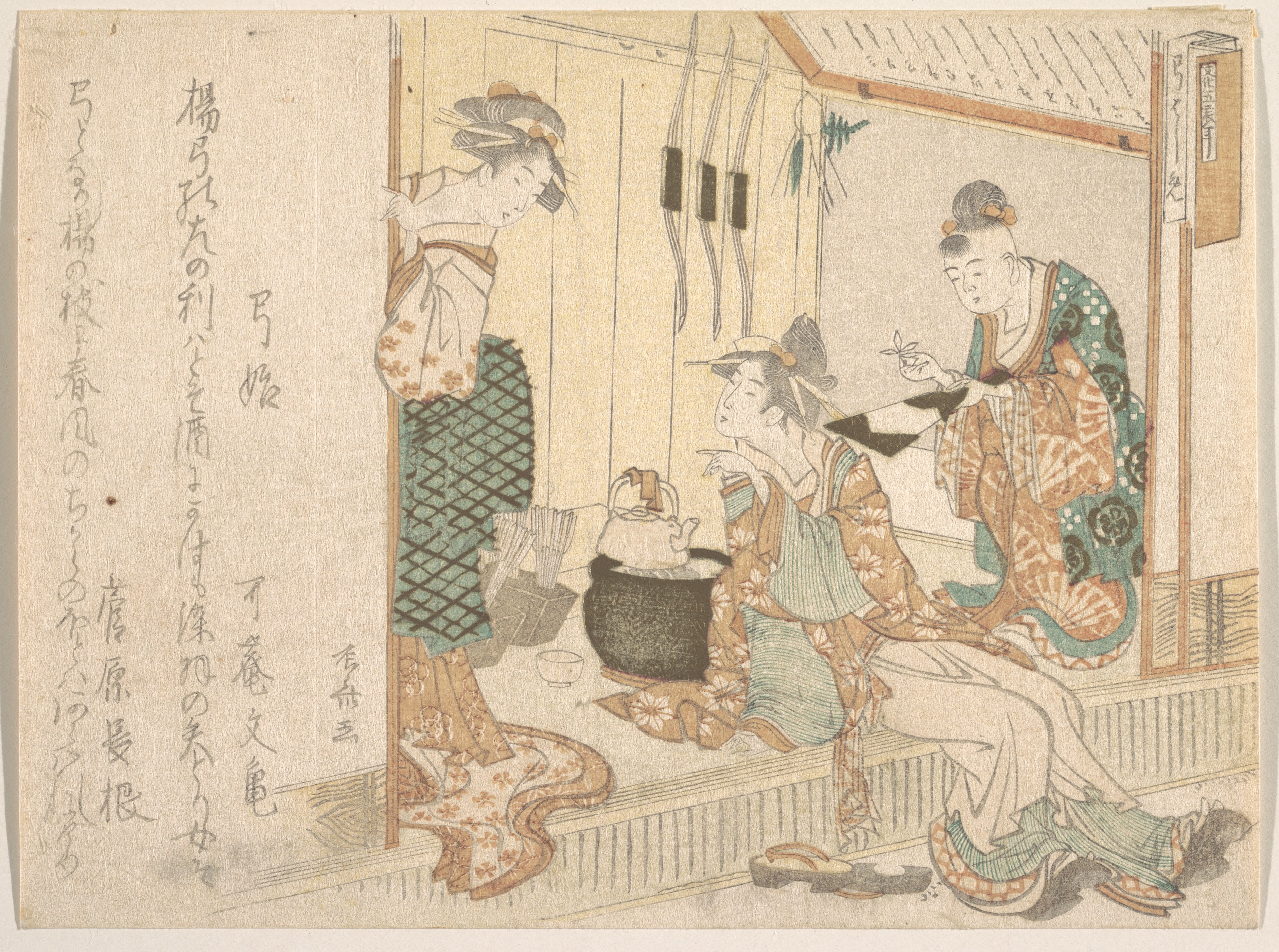
Two Young Ladies Having Tea Attended by Elderly Servant
Woodblock print (surimono); ink and color on paper
Frequently Asked Questions
Insect Catcher and Potted Herbs was created by Ryūryūkyo Shinsai (柳々居辰斎) in 19th century.