
Jewel of the Full Tide (Manju), from the series "The Palace of the Dragon King (Ryugu)"
- Date:
- 1820
- Medium:
- Color woodblock print; shikishiban, surimono
- Source:
- Art Institute of Chicago
Description
Jewel of the Full Tide (Manju), from the series The Palace of the Dragon King (Ryugu), is a surimono by Ryuryukyo Shinsai dated around 1820 in the Art Institute of Chicago. The print belongs to a sequence of designs themed around Ryugu, the legendary undersea palace of the Dragon King, where the kami Watatsumi was said to possess the magical jewels that controlled the tides. The manju, or tide-flooding jewel, paired with the kanju, or tide-ebbing jewel, plays a famous role in Japanese mythology, most notably in the tale of Empress Jingu, who is said to have used the jewels to defeat her enemies at sea. Shinsai, a leading pupil of Katsushika Hokusai and a senior figure of the Hokusai school, gives the legend a refined surimono treatment. The composition centers the luminous jewel and likely incorporates the curling forms of waves, dragons, and attendant kami, all rendered with the dynamic linework and inventive design instincts characteristic of his master. As a privately commissioned surimono, the sheet exploits techniques rarely seen on commercial ukiyo-e, including embossed blindprinting (karazuri), graded color washes, and metallic pigments that evoke pearl and gold beneath water. The print would have circulated among members of a kyoka poetry circle, who supplied verses pairing the imagery of the rising tide with their own seasonal reflections. Source: Art Institute of Chicago, https://www.artic.edu/artworks/81536.
More Prints by Ryūryūkyo Shinsai
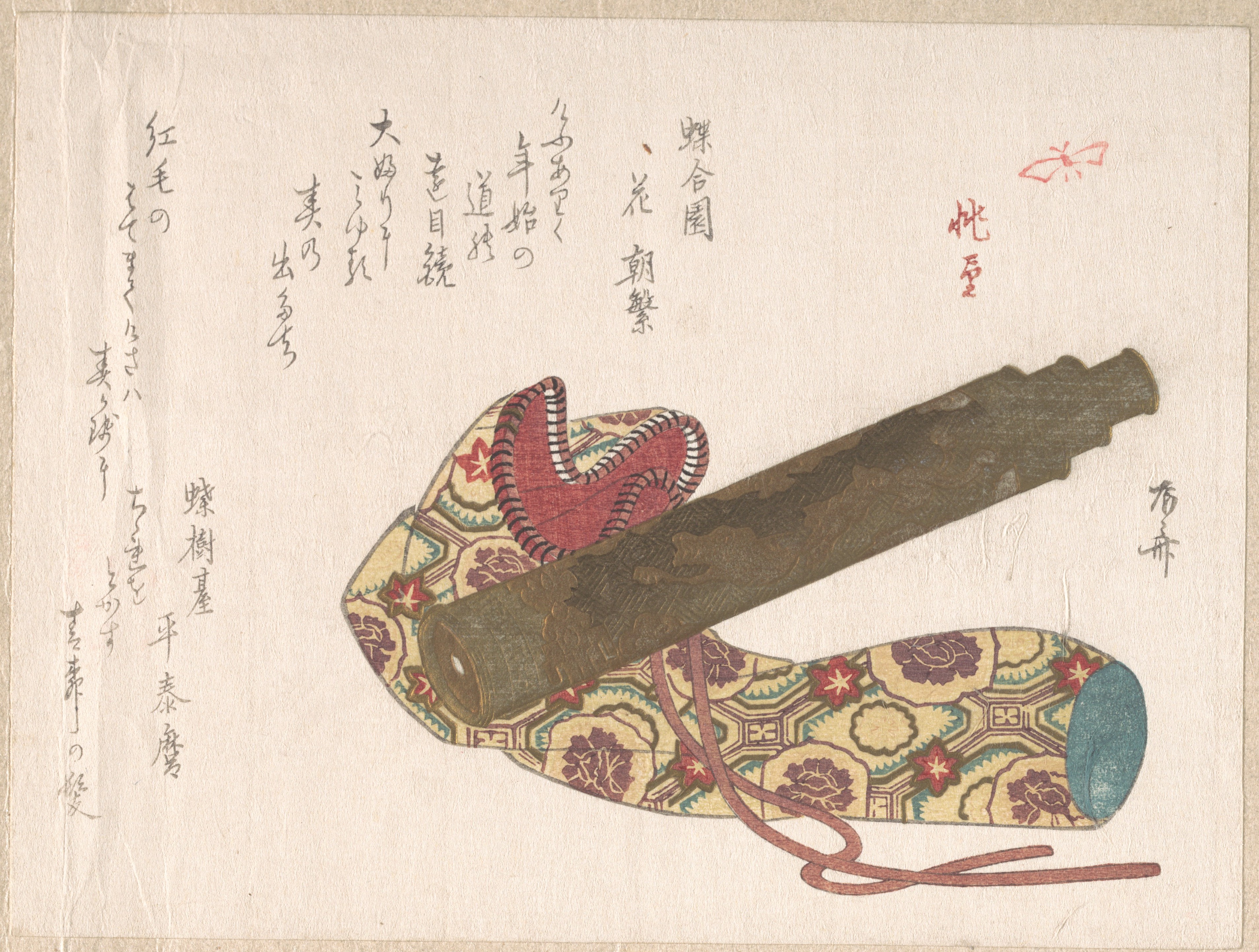
Telescope with Its Bag
19th century
Woodblock print (surimono); ink and color on paper
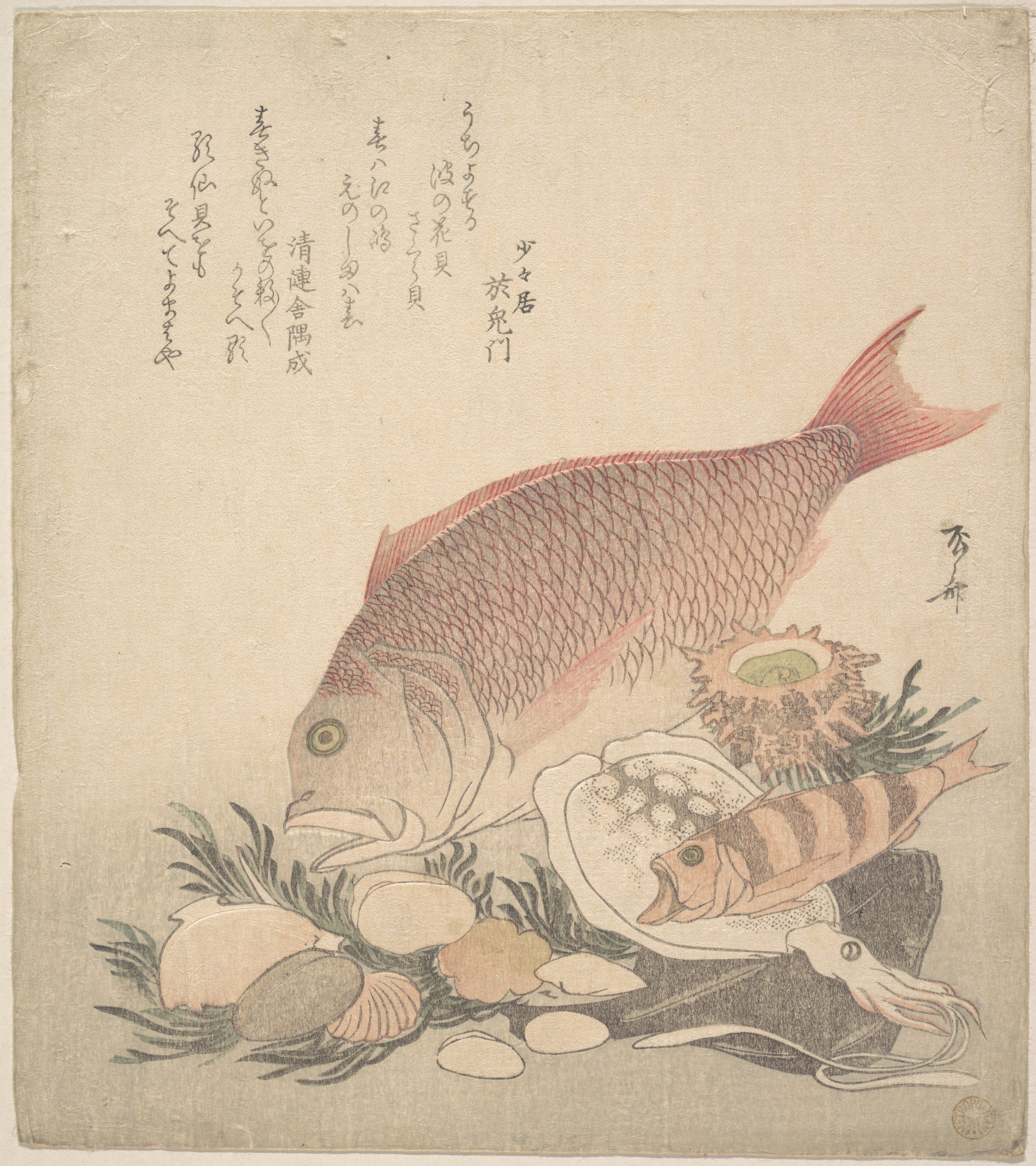
Large and Small Fish Swimming Among Shells and Moss at the Bottom of the Sea
ca. 1830
Woodblock print (surimono); ink and color on paper
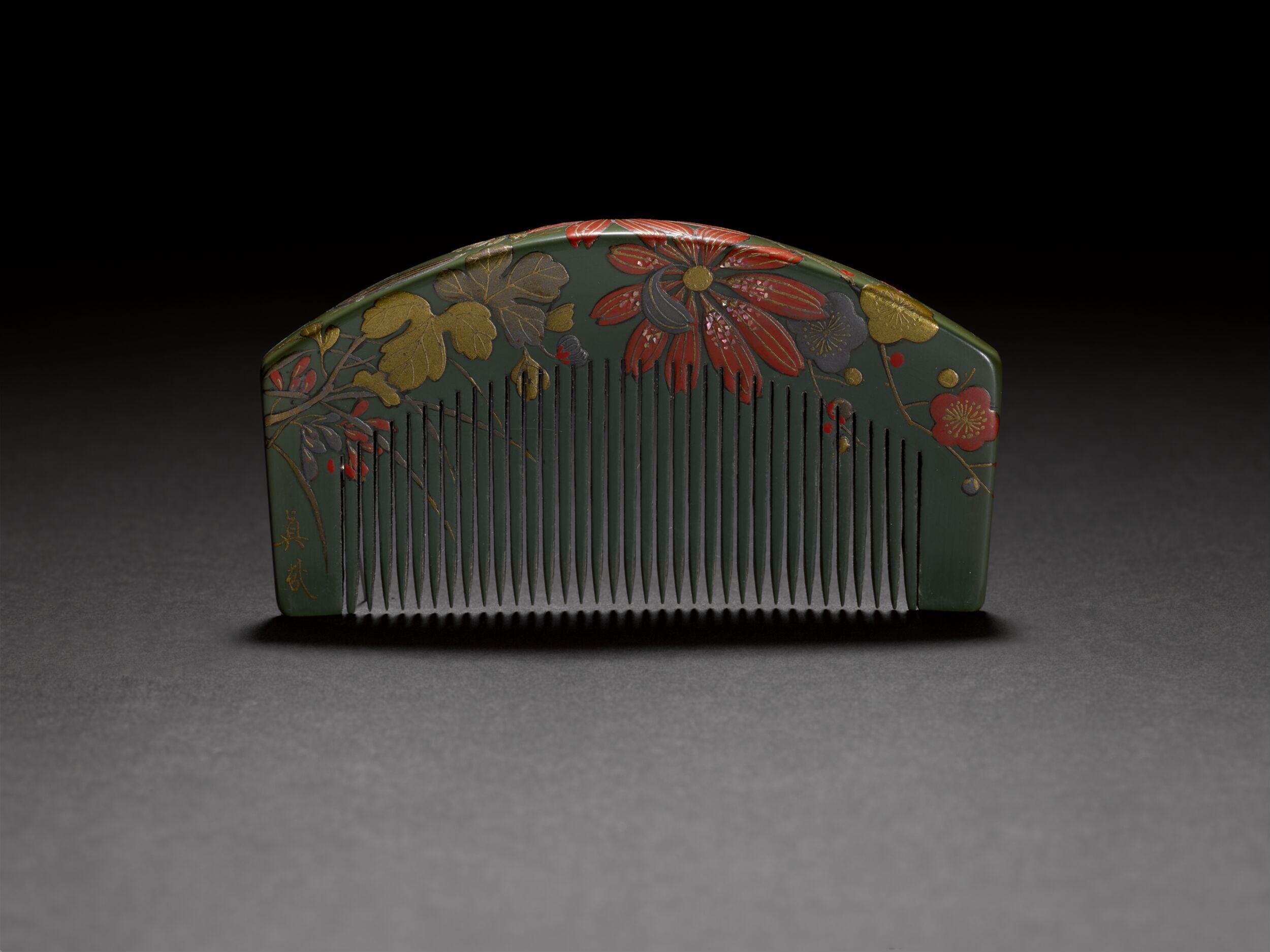
Untitled
1880 - 1895
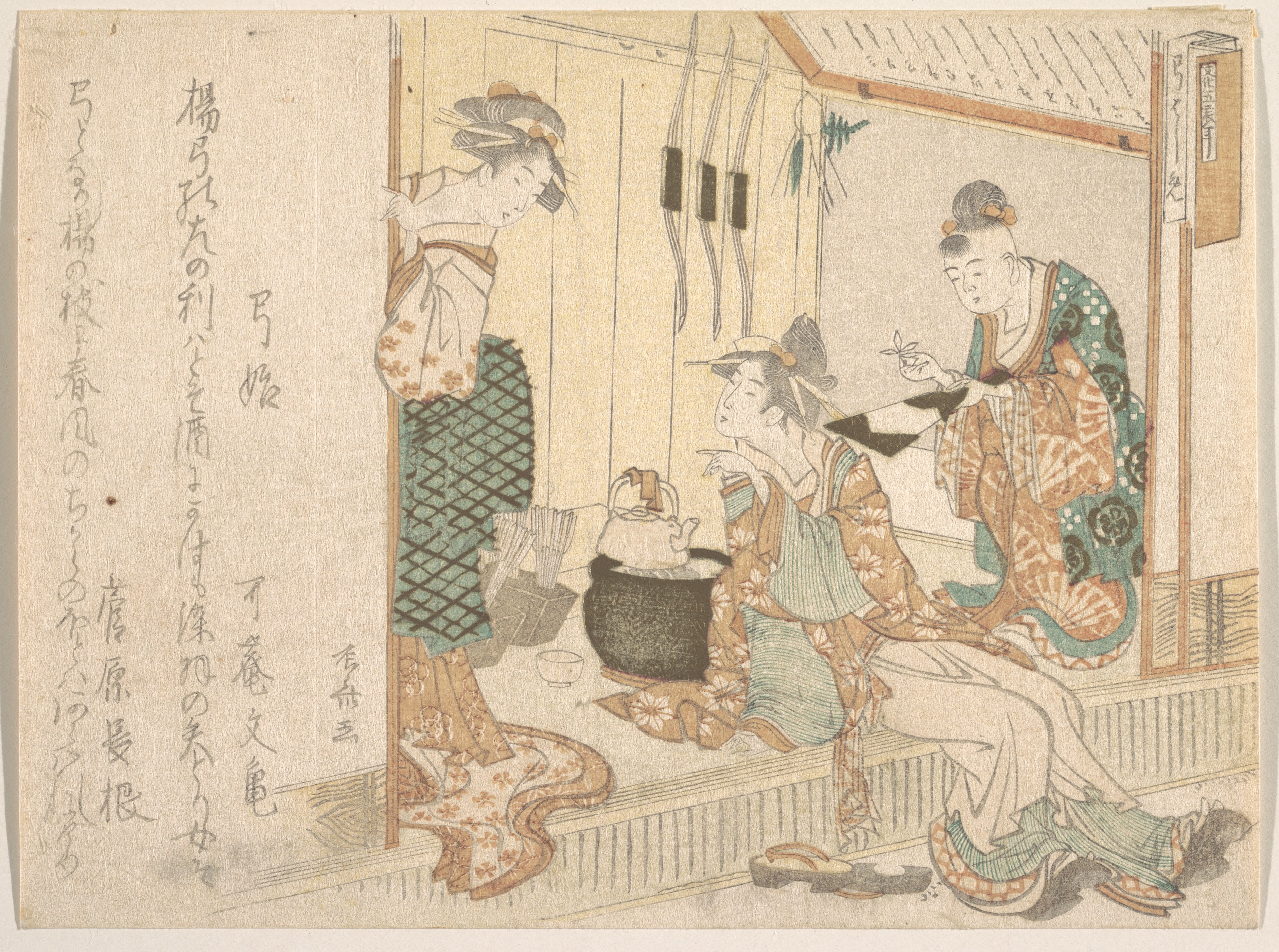
Two Young Ladies Having Tea Attended by Elderly Servant
Woodblock print (surimono); ink and color on paper
Frequently Asked Questions
Jewel of the Full Tide (Manju), from the series "The Palace of the Dragon King (Ryugu)" was created by Ryūryūkyo Shinsai (柳々居辰斎) in 1820.