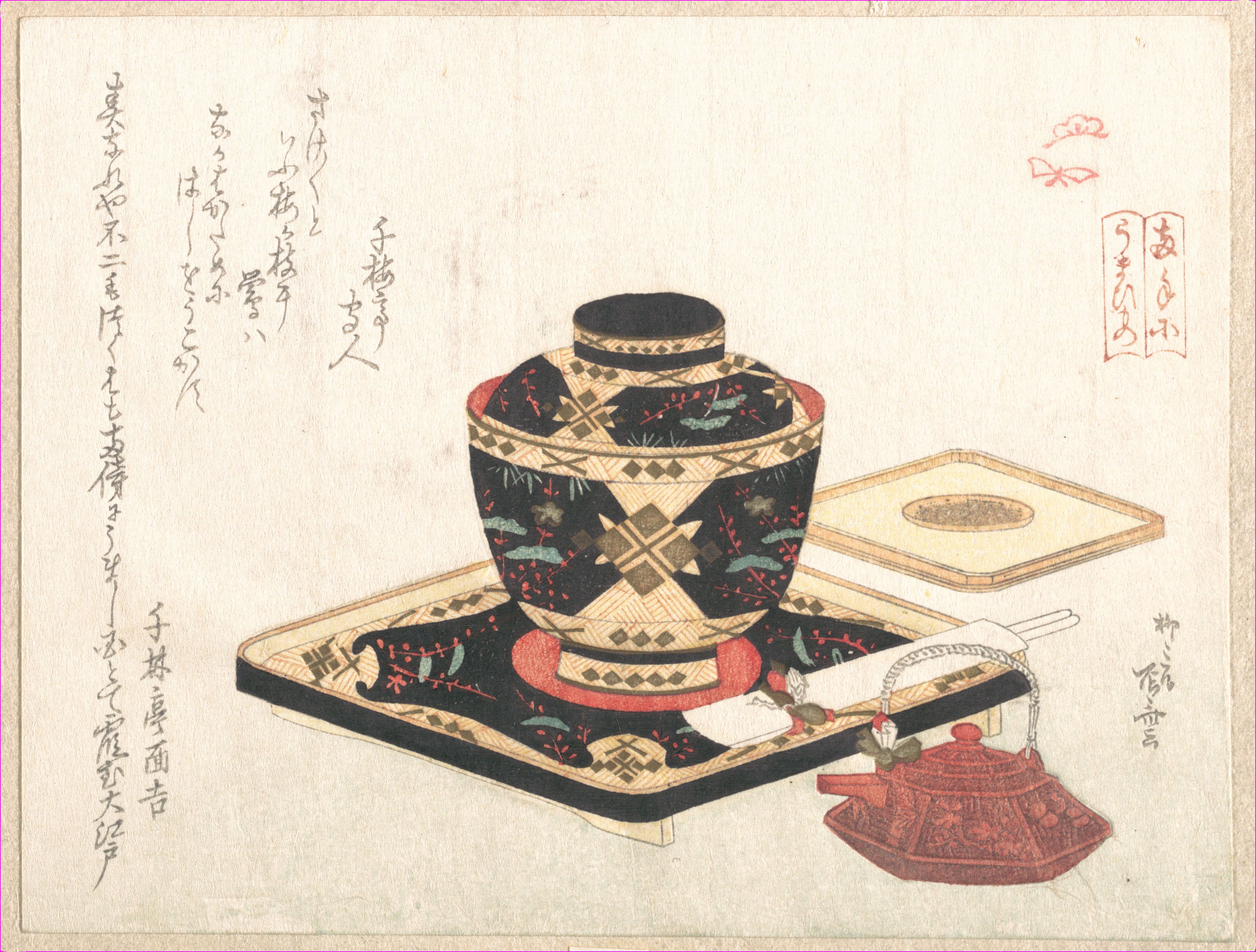
Lacquer Bowl for New Year Food
- Date:
- 19th century
- Medium:
- Woodblock print (surimono); ink and color on paper
- Source:
- Metropolitan Museum of Art
Description
Lacquer Bowl for New Year Food is a surimono print by Ryuryukyo Shinsai held in the Metropolitan Museum of Art and dated to around 1800. Shinsai, a leading pupil within the Hokusai school after his earlier training with Tawaraya Sori, became known for elegant still-life surimono commissioned by poetry clubs to mark the New Year and other occasions. The composition focuses on a covered lacquer bowl, the type used to present celebratory foods such as zoni or shaped sweets at the opening of the year, treating an ordinary utensil as the carrier of layered cultural meaning. The bowl's gleaming lacquer surface is rendered with the careful tonal grading that surimono printers achieved through luxury materials, including metallic pigments and embossing (karazuri) that catch raking light. Around or beside the bowl, Shinsai typically arranges small attributes that hint at the season and the poems printed on the sheet, so the still life functions as a visual prelude to the kyoka verses contributed by the commissioning club's members. The restrained framing, low viewpoint, and quiet symmetry are characteristic of Shinsai's mature still-life mode and align with the Hokusai school's broader interest in elevating everyday objects to subjects worthy of careful design. Because surimono were printed in limited editions for private circulation, surviving impressions like the Metropolitan's preserve the original delicacy of color and texture better than most commercial prints of the period.
More Prints by Ryūryūkyo Shinsai
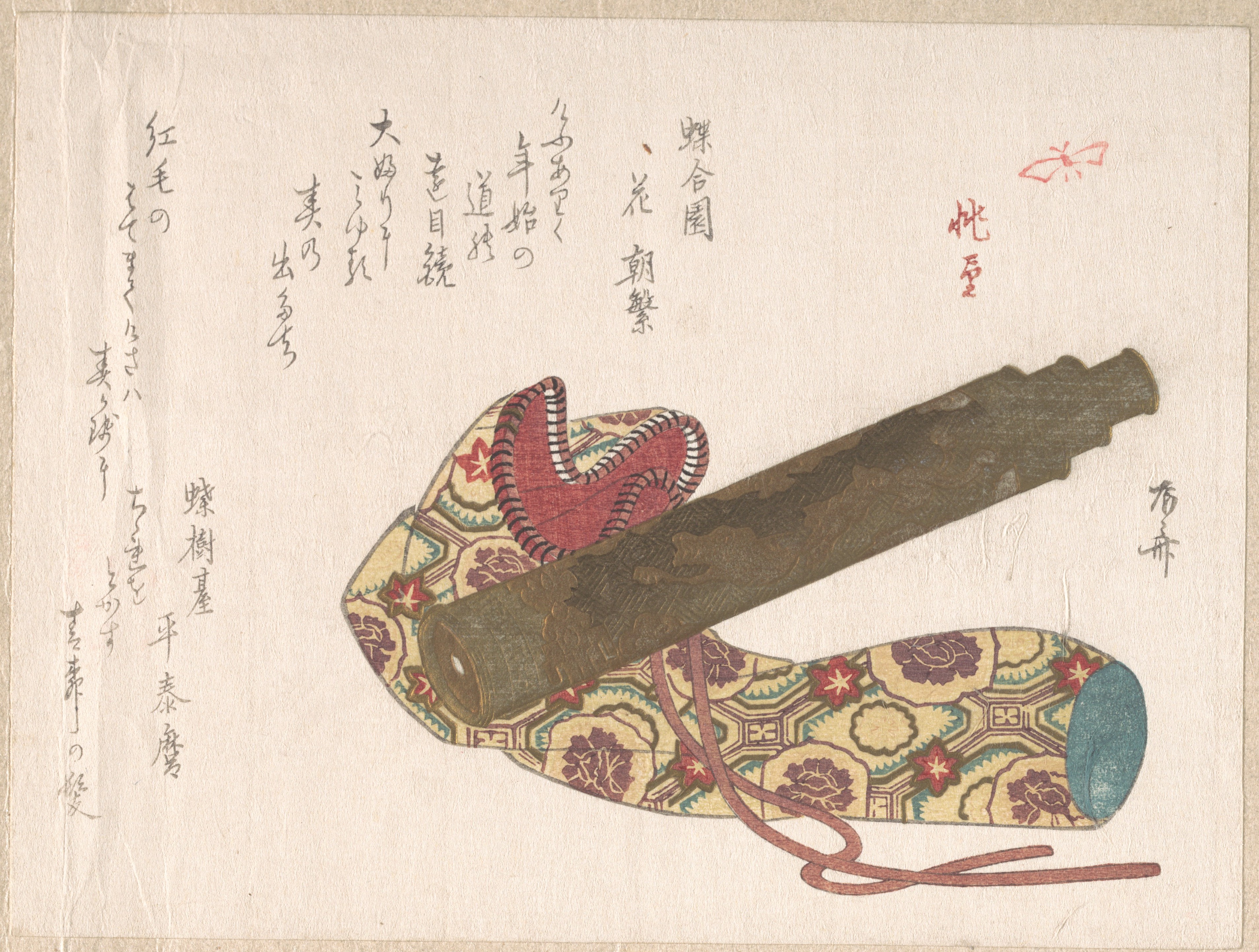
Telescope with Its Bag
19th century
Woodblock print (surimono); ink and color on paper
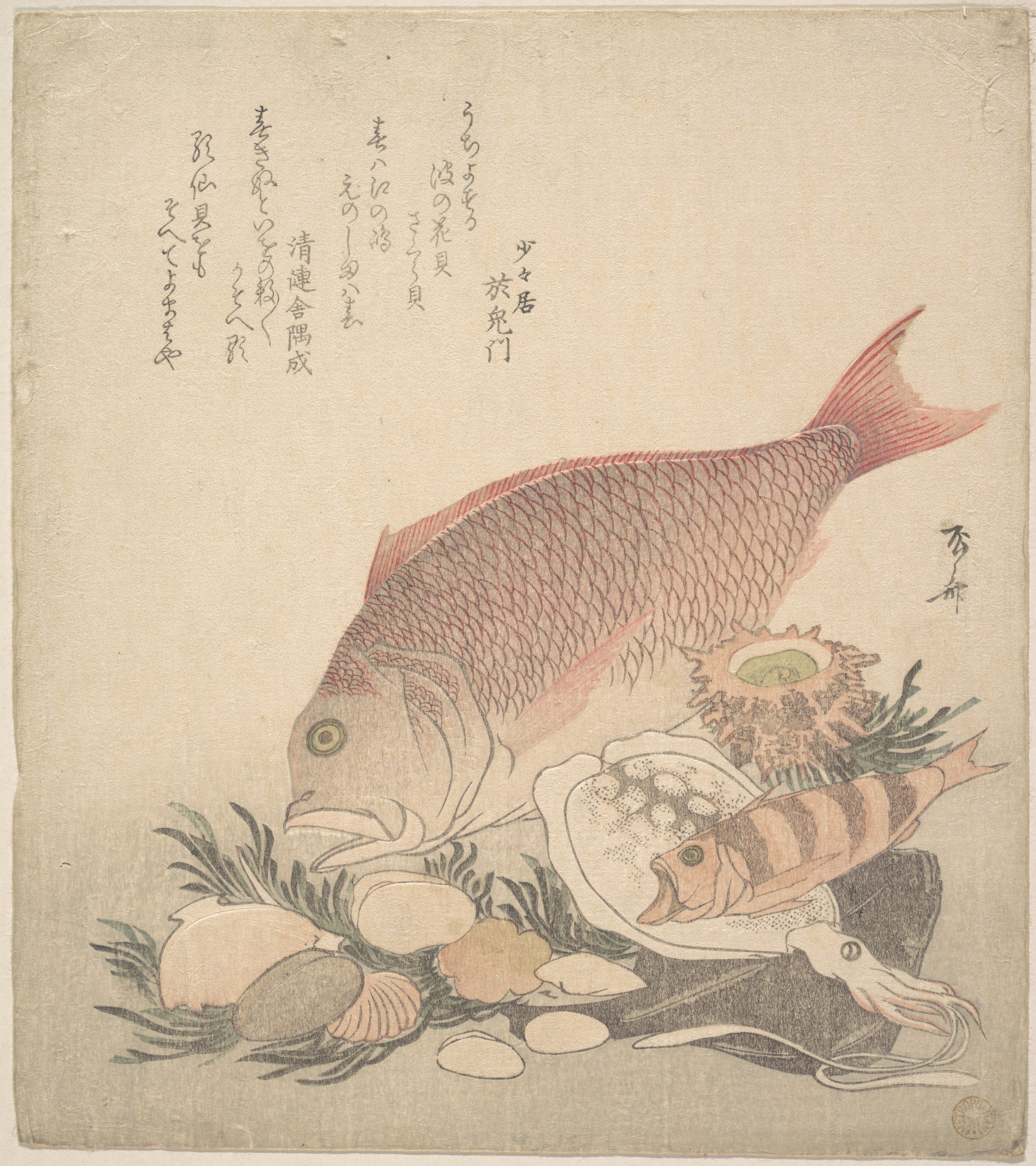
Large and Small Fish Swimming Among Shells and Moss at the Bottom of the Sea
ca. 1830
Woodblock print (surimono); ink and color on paper
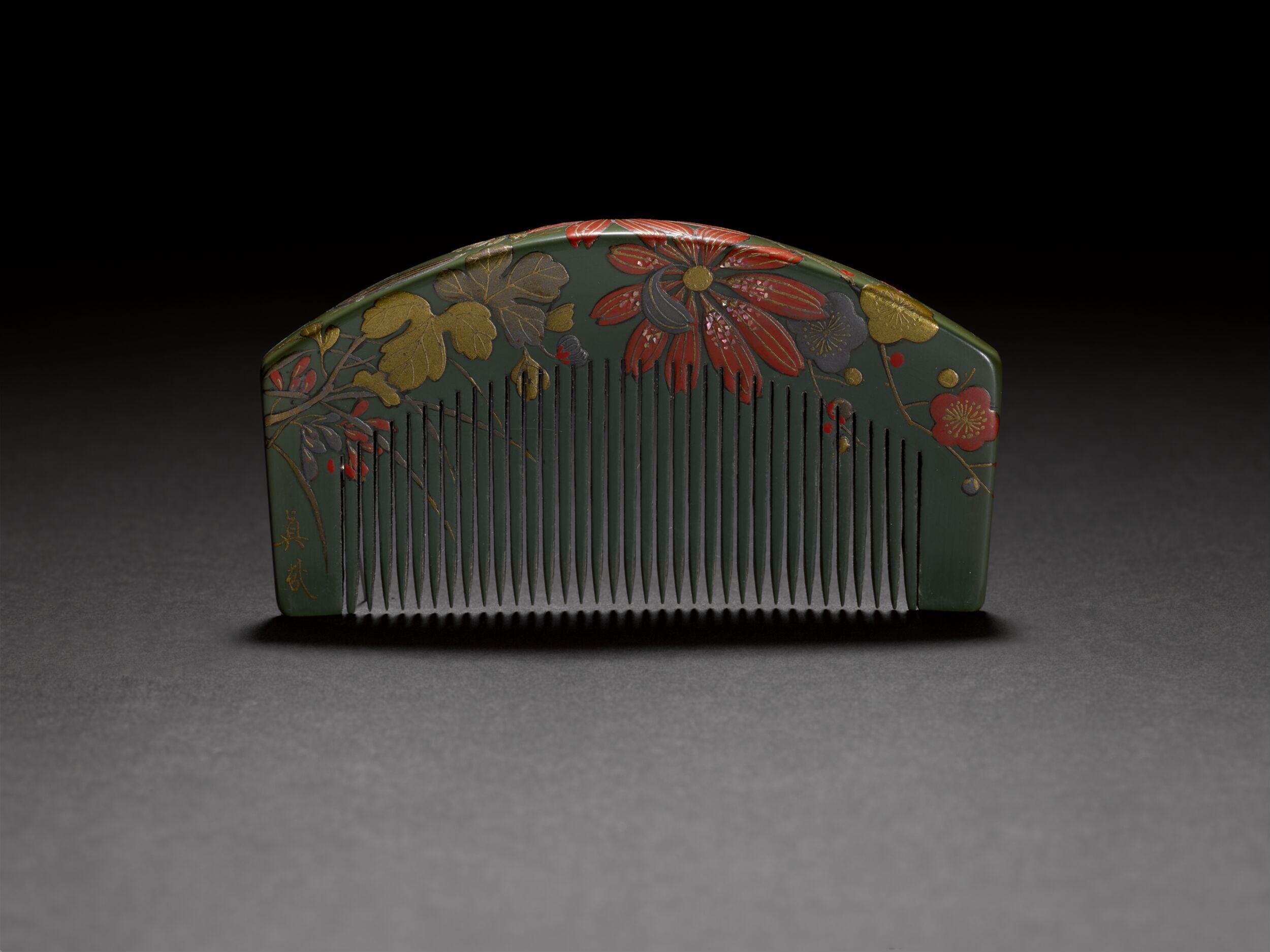
Untitled
1880 - 1895
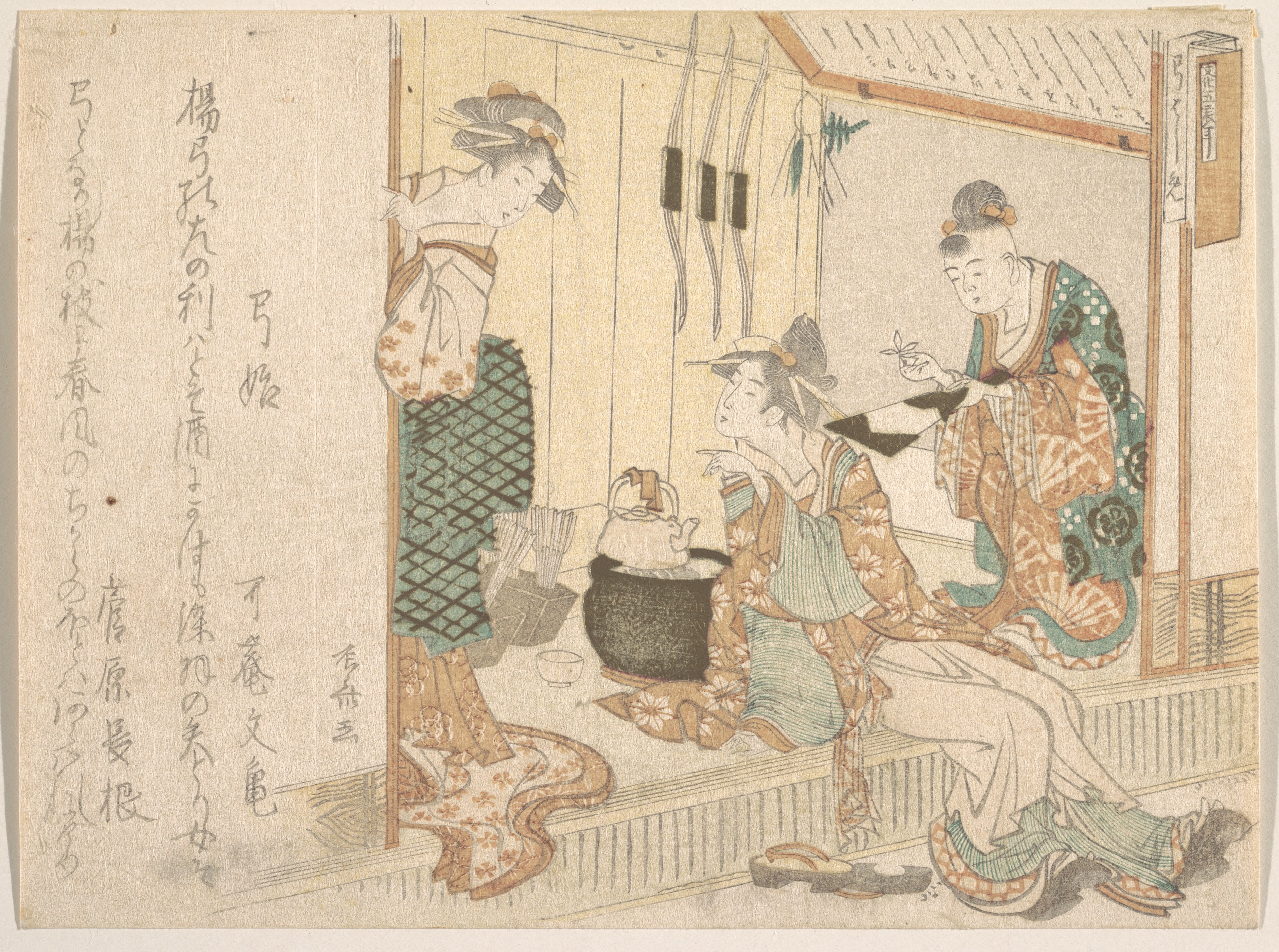
Two Young Ladies Having Tea Attended by Elderly Servant
Woodblock print (surimono); ink and color on paper
More Birds & Flowers Prints
Frequently Asked Questions
Lacquer Bowl for New Year Food was created by Ryūryūkyo Shinsai (柳々居辰斎) in 19th century.
Lacquer Bowl for New Year Food depicts birds & flowers.