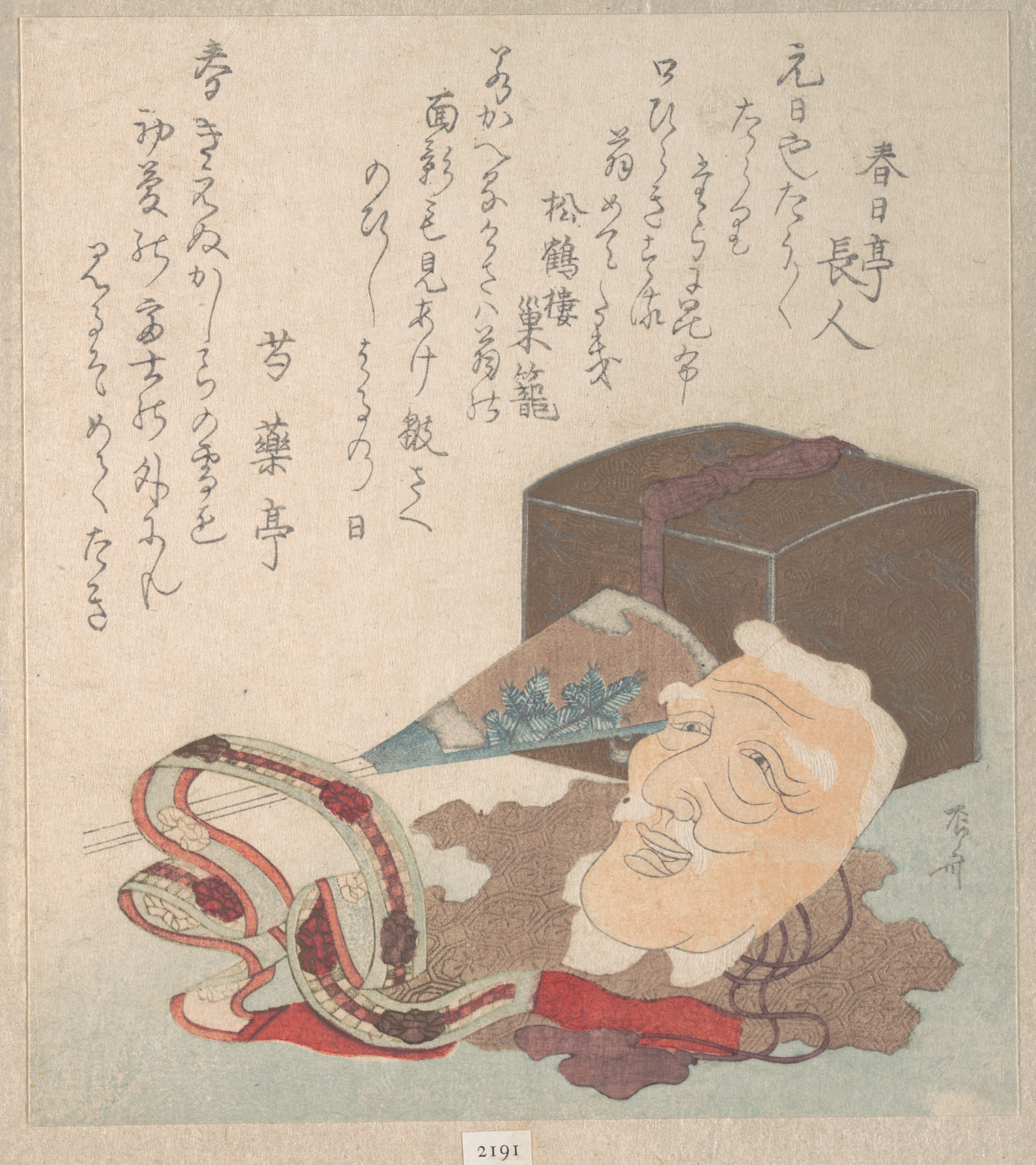
Mask and Other Objects for the Noh Dance
- Medium:
- Woodblock print (surimono); ink and color on paper
- Source:
- Metropolitan Museum of Art
Description
Mask and Other Objects for the Noh Dance is a surimono by Ryuryukyo Shinsai in the Metropolitan Museum of Art. As a senior pupil of Katsushika Hokusai and a designer within the Hokusai school, Shinsai often gathered the implements of a single cultural practice into a still life that functioned as both an emblem of taste and an accompaniment to kyoka poetry. Here the focal point is a noh mask, accompanied by other paraphernalia used in the classical drama, perhaps a fan, costume elements, or sashes. Noh was patronized by the samurai elite and remained a touchstone of cultivated taste throughout the Edo period; its masks, with their carefully carved expressions, conveyed entire characters at a glance. Shinsai arranges the objects with characteristic poise, balancing the carved features of the mask against the linear silhouettes of supporting items. As a surimono, the sheet permits lavish production techniques: soft color gradations across the mask's surface, embossed blindprinting (karazuri) in the textured fabrics, and selective metallic pigments to evoke gold leaf and lacquer. Surimono were privately commissioned by kyoka poetry circles to mark the New Year and other occasions, and they often saluted the cultural enthusiasms of their commissioners. By concentrating on a single emblematic art form, Shinsai allowed members of the poetry circle to project their own aesthetic identifications onto the still life. The print is a refined example of how the Hokusai school used surimono to honor traditional performance arts. Source: Metropolitan Museum of Art, https://www.metmuseum.org/art/collection/search/55107.
More Prints by Ryūryūkyo Shinsai
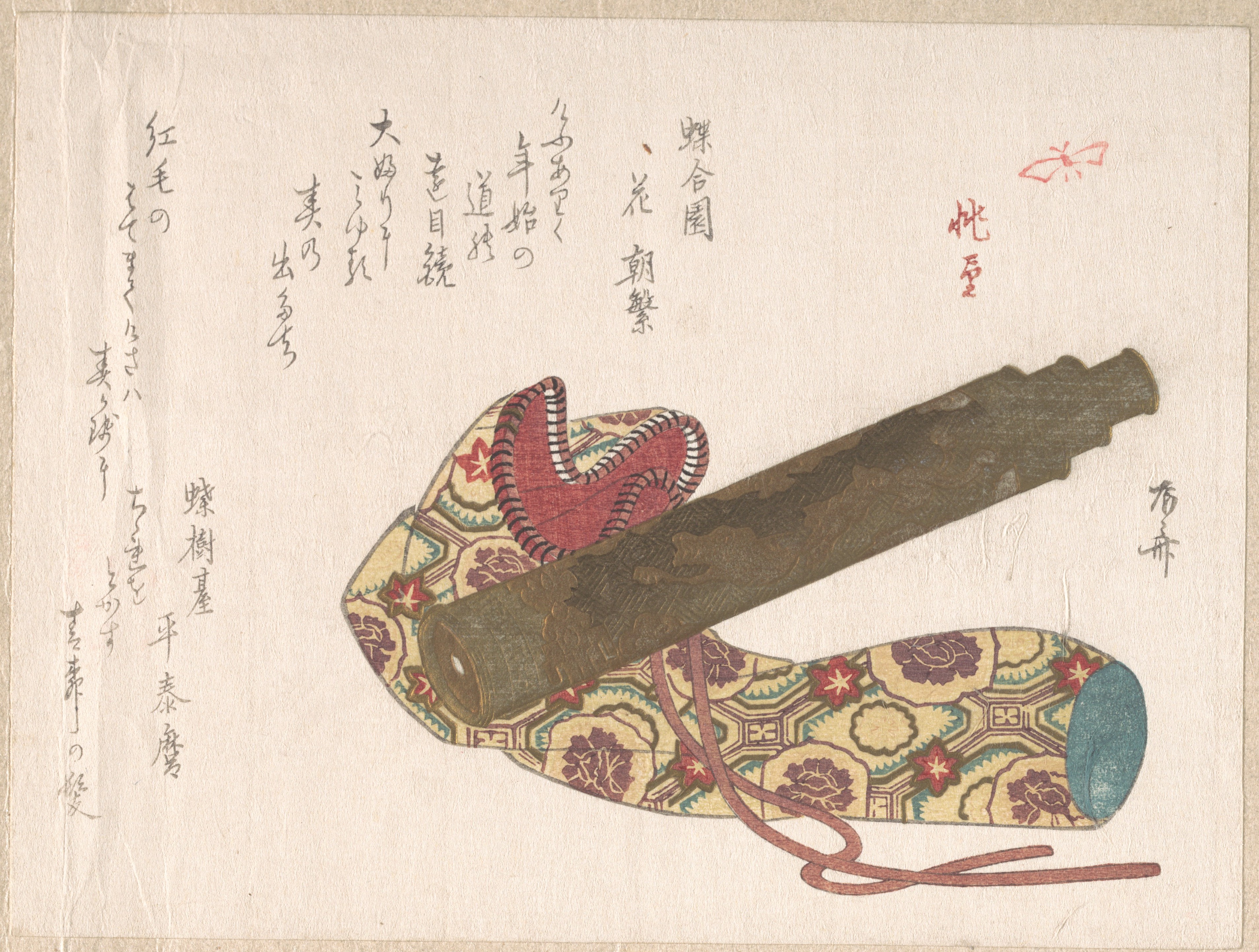
Telescope with Its Bag
19th century
Woodblock print (surimono); ink and color on paper
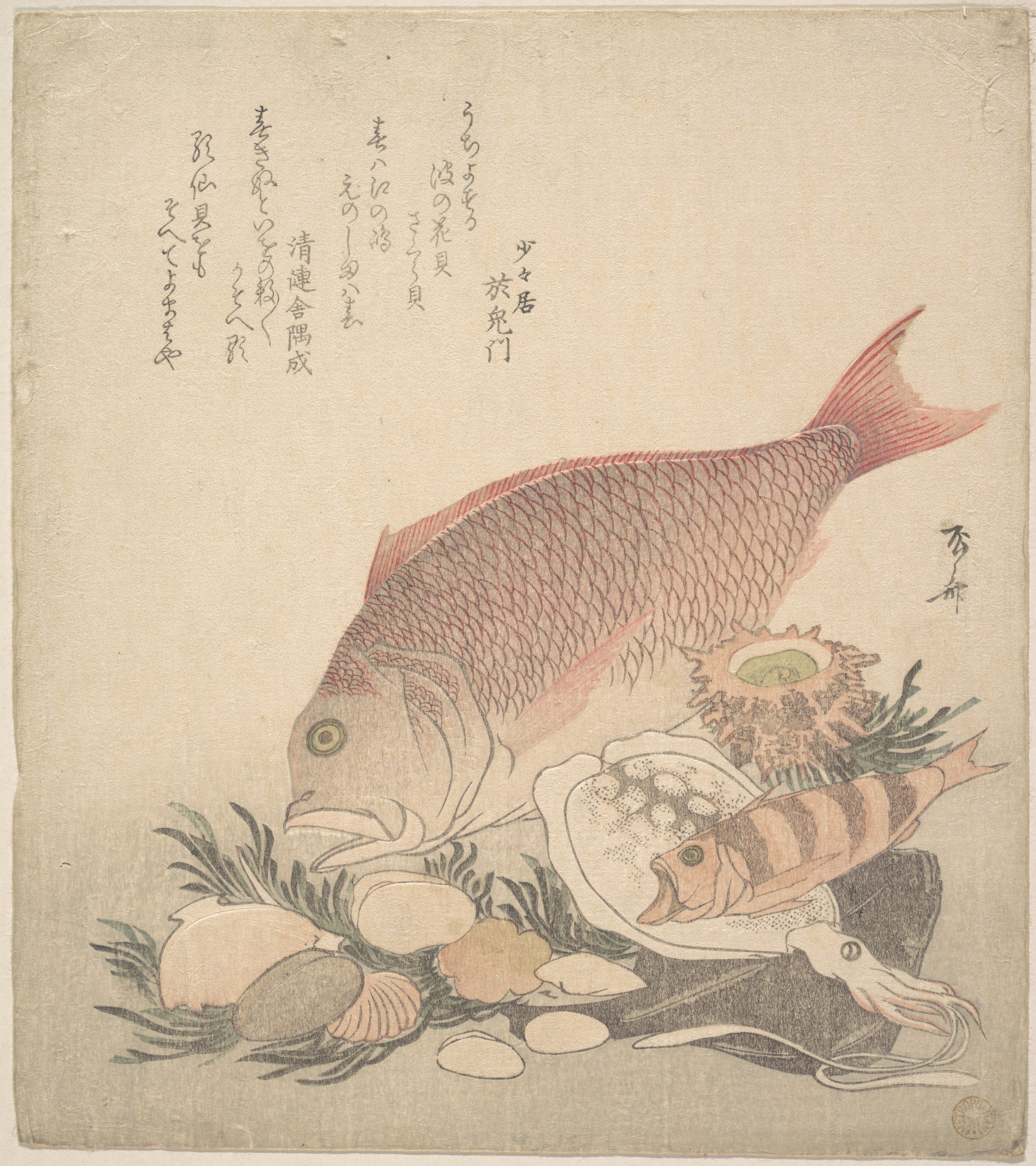
Large and Small Fish Swimming Among Shells and Moss at the Bottom of the Sea
ca. 1830
Woodblock print (surimono); ink and color on paper
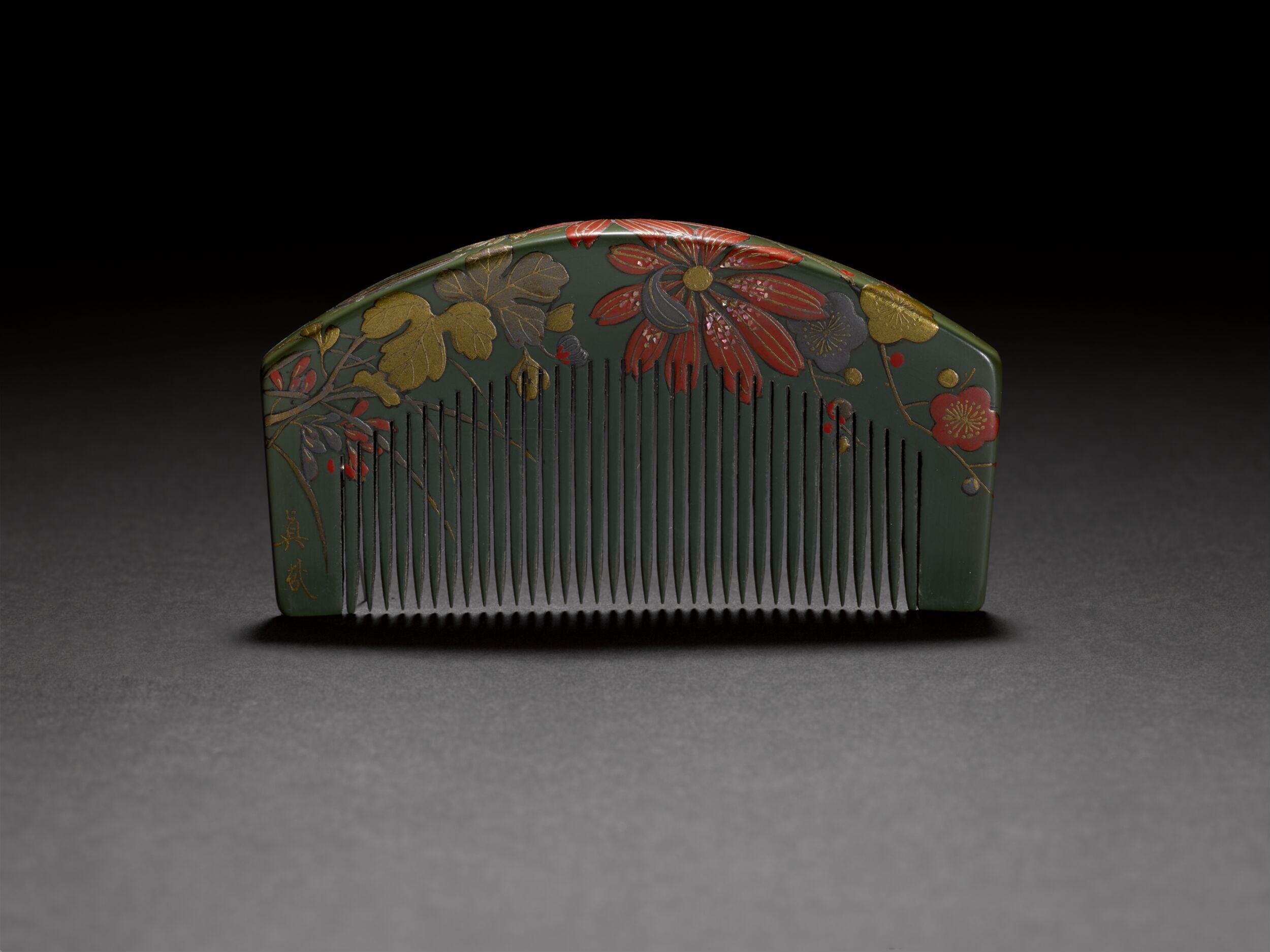
Untitled
1880 - 1895
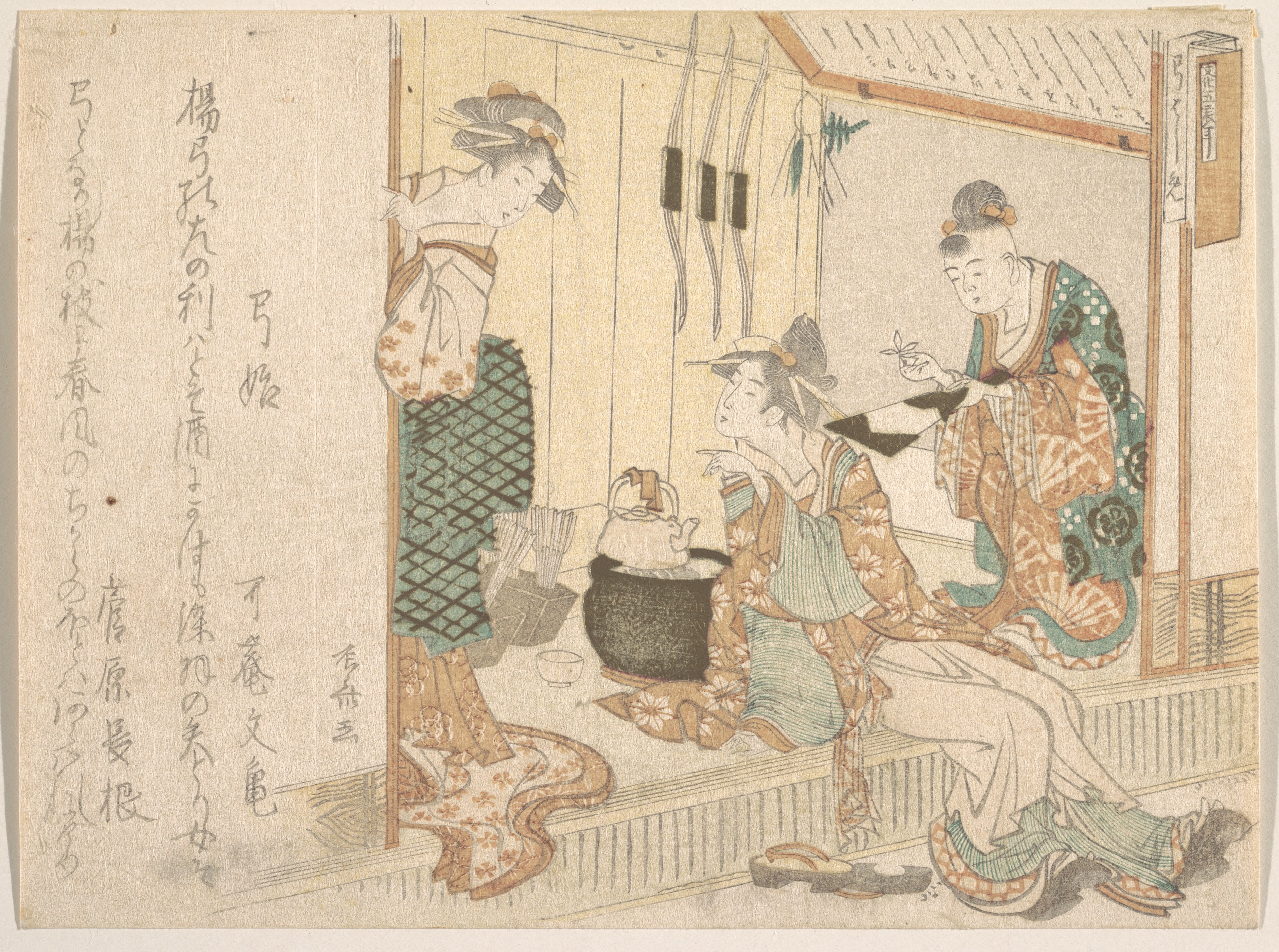
Two Young Ladies Having Tea Attended by Elderly Servant
Woodblock print (surimono); ink and color on paper
Frequently Asked Questions
Mask and Other Objects for the Noh Dance was created by Ryūryūkyo Shinsai (柳々居辰斎).