
Mii Temple, from the series "Eight Views of Omi (Omi hakkei)"
- Date:
- early 19th century
- Medium:
- Color woodblock print; surimono
- Source:
- Art Institute of Chicago
Description
From his early-nineteenth-century surimono series Eight Views of Omi, Shinsai's Mii Temple takes up one of the most established themes in East Asian landscape art. The Eight Views format originated in twelfth-century Chinese landscape painting and was domesticated in Japan as the Omi hakkei, the eight views of the area around Lake Biwa. Shinsai's interpretation, executed in the shikishiban surimono format, departs from the pure landscape tradition by treating the views through the indirect, allusive logic of mitate-e: each scene is filtered through contemporary objects, figures, or settings rather than rendered as straightforward topography. The print's deluxe production, with metallic and embossed details typical of Shinsai's Bunka-era output, identifies it as a privately commissioned work for an Edo kyoka circle. The Art Institute of Chicago, which holds the impression, has built one of the most comprehensive Shinsai collections in any museum.
More Prints by Ryūryūkyo Shinsai
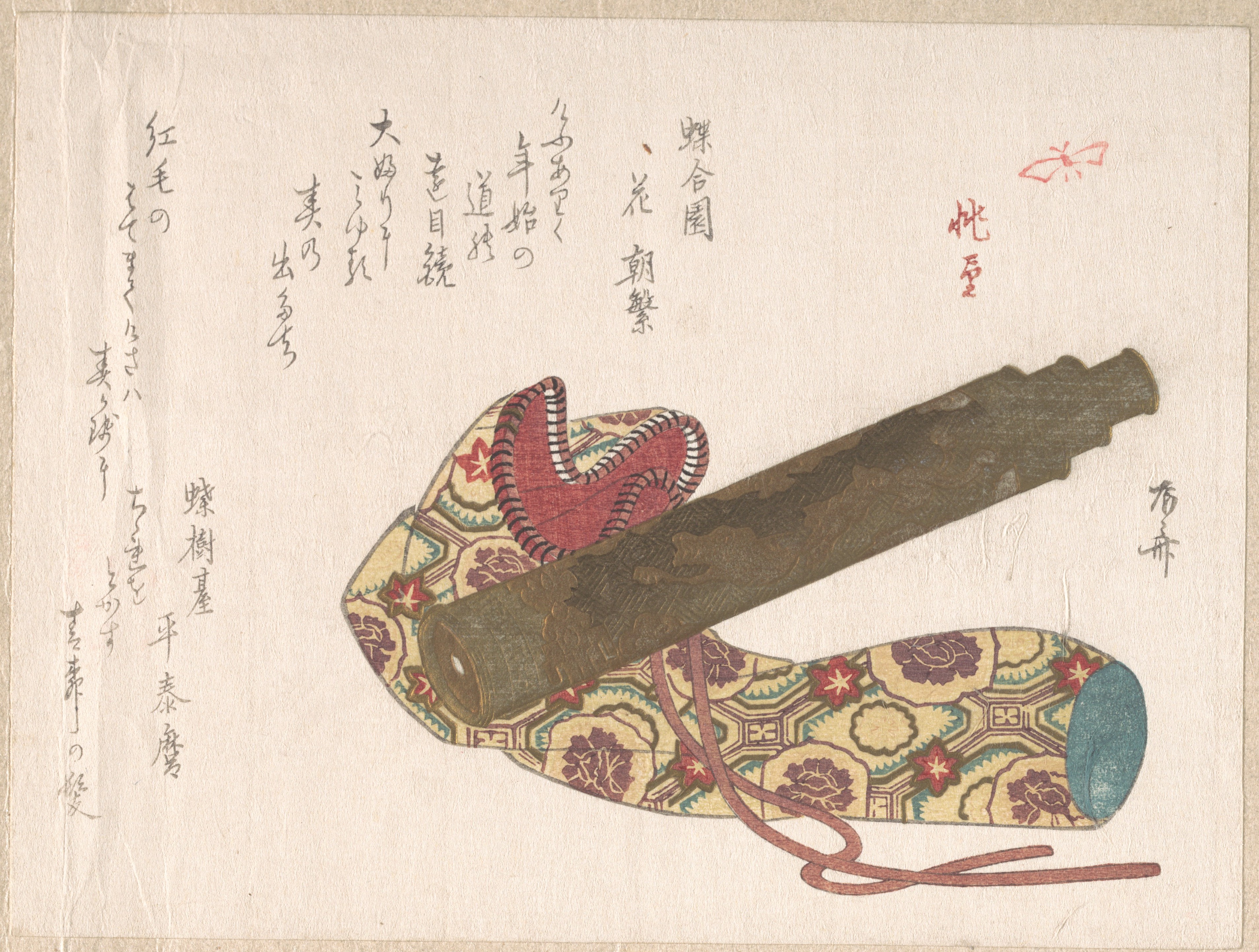
Telescope with Its Bag
19th century
Woodblock print (surimono); ink and color on paper
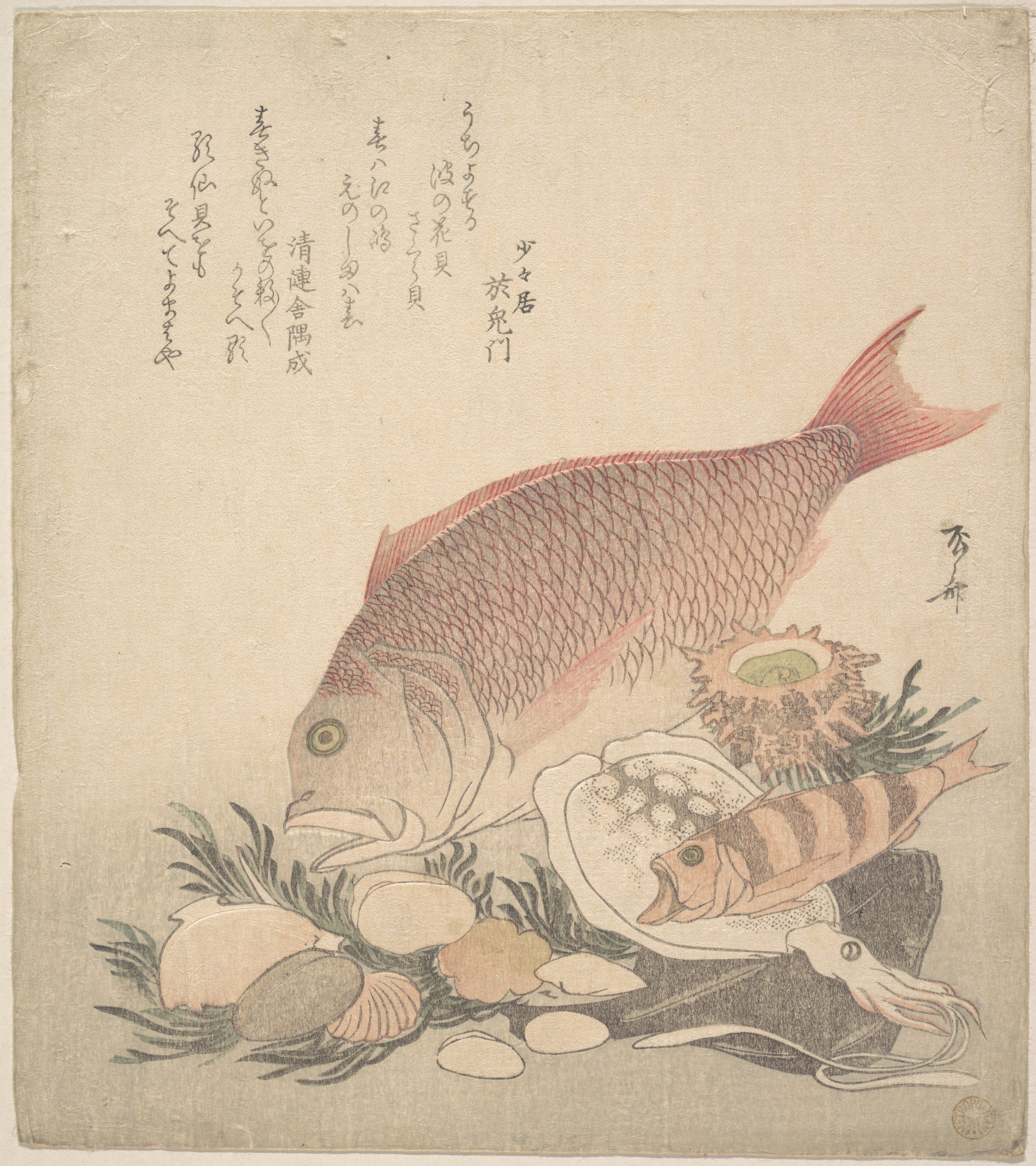
Large and Small Fish Swimming Among Shells and Moss at the Bottom of the Sea
ca. 1830
Woodblock print (surimono); ink and color on paper
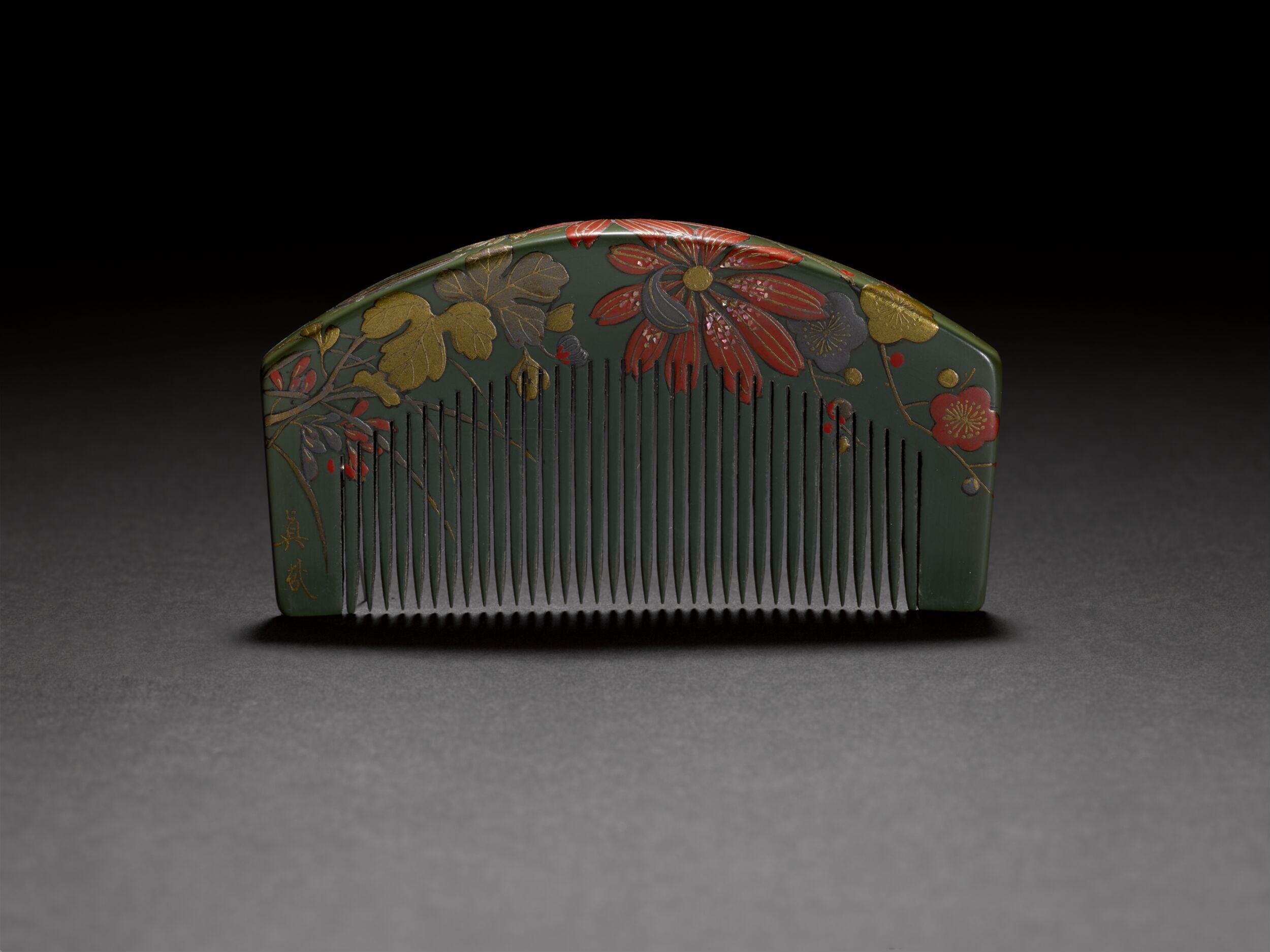
Untitled
1880 - 1895
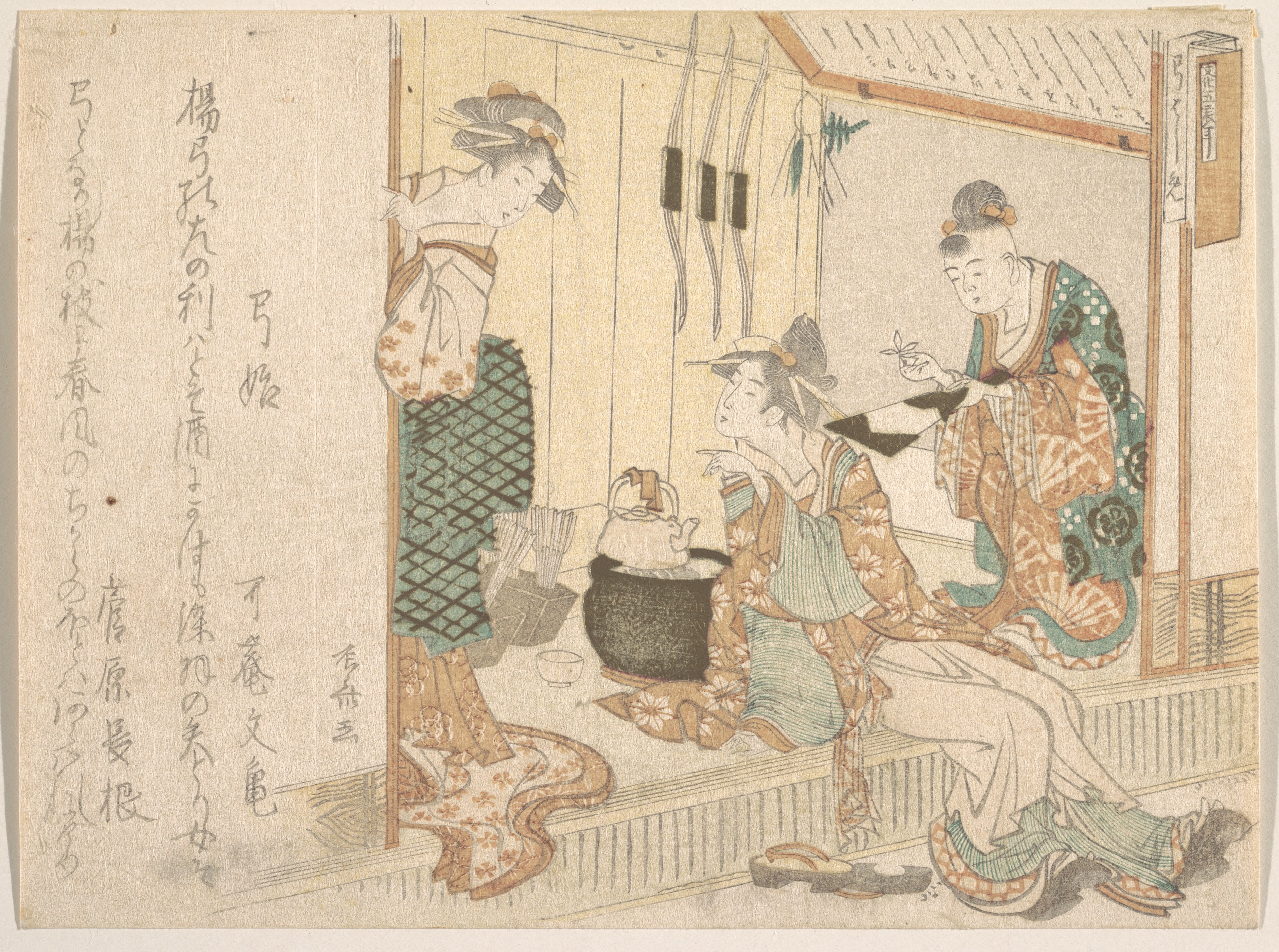
Two Young Ladies Having Tea Attended by Elderly Servant
Woodblock print (surimono); ink and color on paper
Frequently Asked Questions
Mii Temple, from the series "Eight Views of Omi (Omi hakkei)" was created by Ryūryūkyo Shinsai (柳々居辰斎) in early 19th century.