
Nihonbashi
- Date:
- early 19th century
- Medium:
- Color woodblock print; long surimono
- Source:
- Art Institute of Chicago
Description
Nihonbashi, the great wooden bridge at the symbolic heart of Edo, supplied subject matter for generations of ukiyo-e designers. Shinsai's early nineteenth-century treatment is unusual in that it appears in the long surimono (naga-surimono) format, a horizontal panel that allowed him to extend the bridge and the surrounding river-side activity into a landscape-scaled composition. Long surimono were less common than the shikishiban format and were typically commissioned for special occasions, often by senior figures within a kyoka club. The deluxe production values—metallic pigments, embossed details, refined color gradation—and the bridge's centrality to Edo civic identity together suggest a print of some ceremonial weight. The Art Institute of Chicago holds the impression as part of its surimono collection.
More Prints by Ryūryūkyo Shinsai
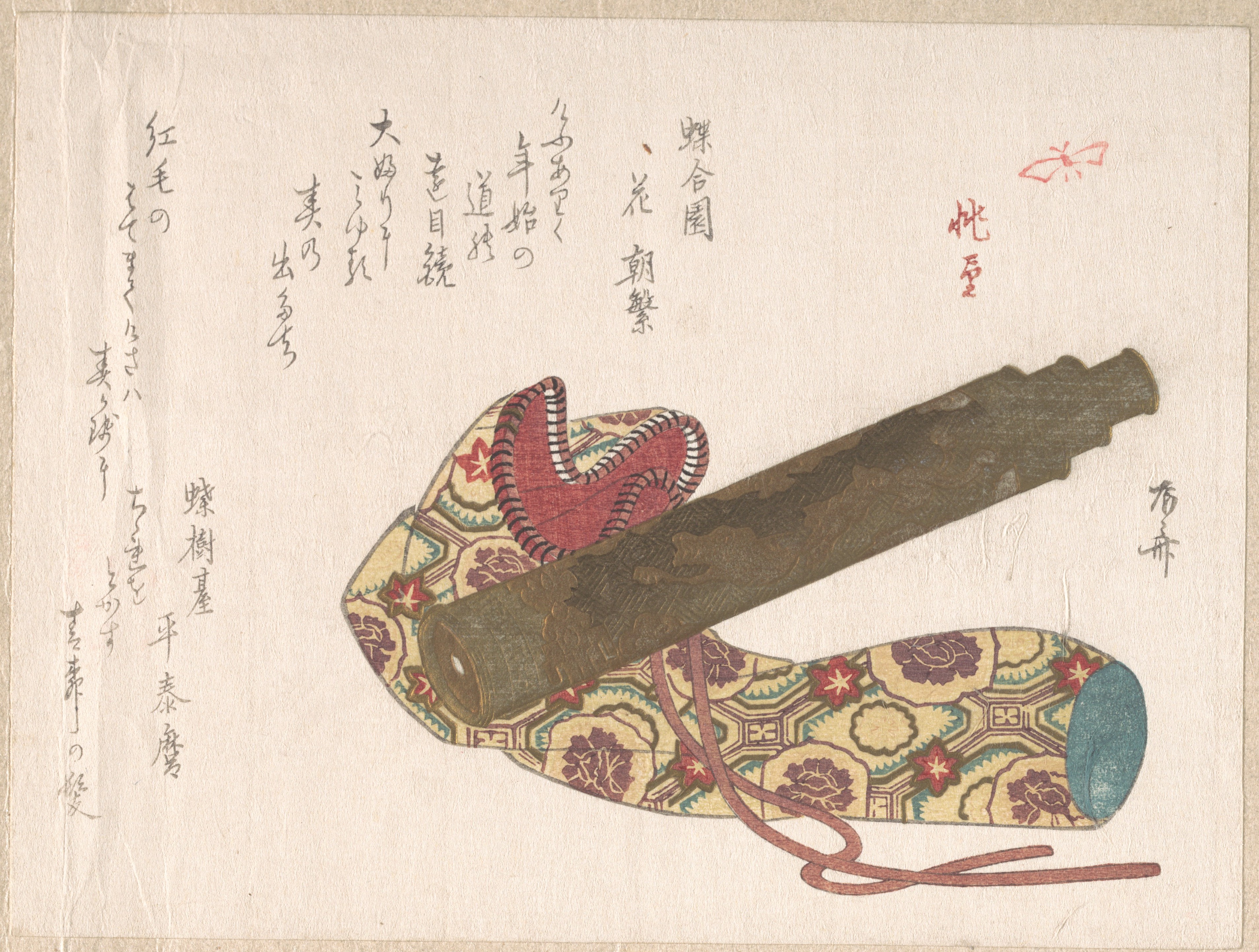
Telescope with Its Bag
19th century
Woodblock print (surimono); ink and color on paper
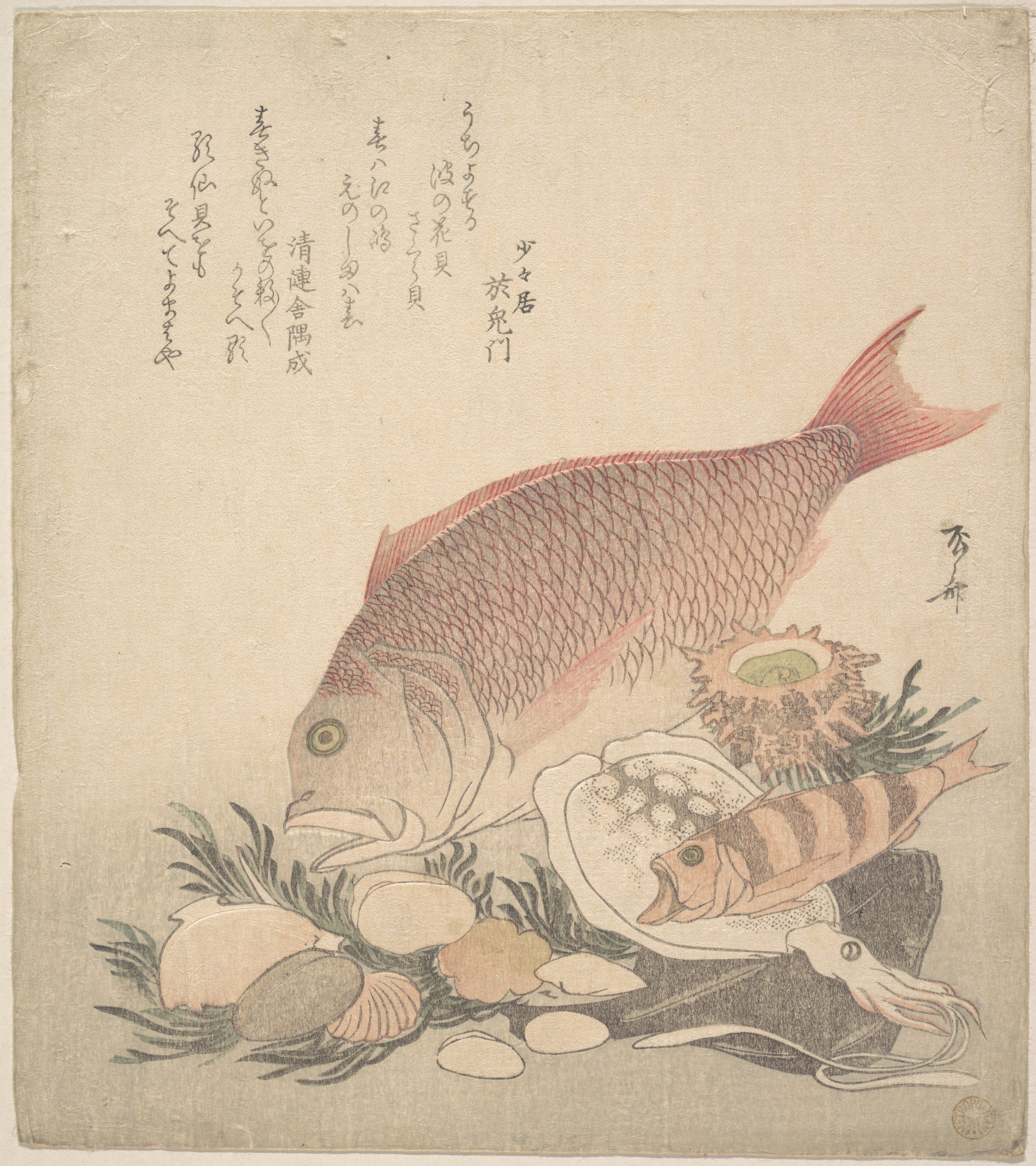
Large and Small Fish Swimming Among Shells and Moss at the Bottom of the Sea
ca. 1830
Woodblock print (surimono); ink and color on paper
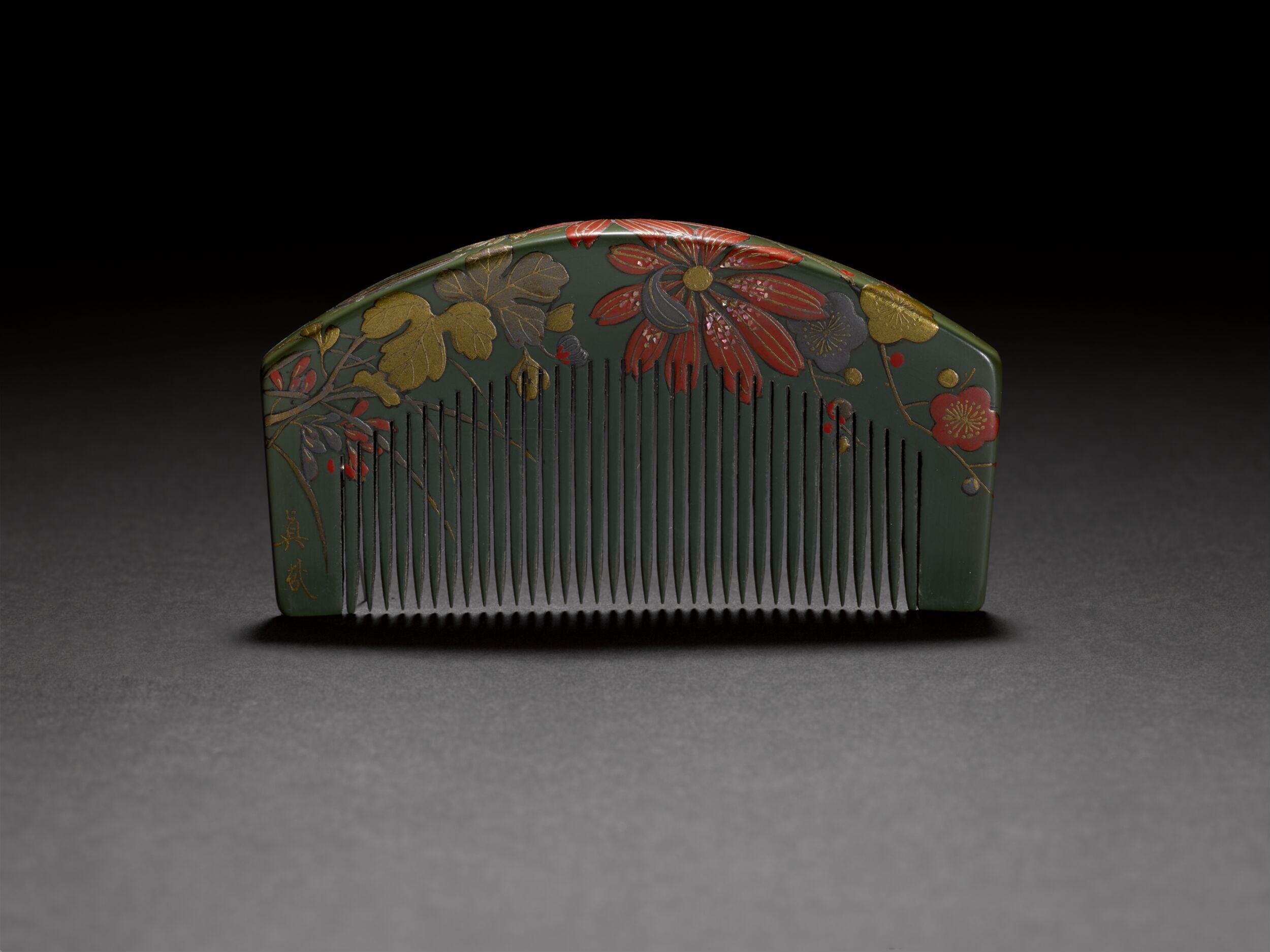
Untitled
1880 - 1895
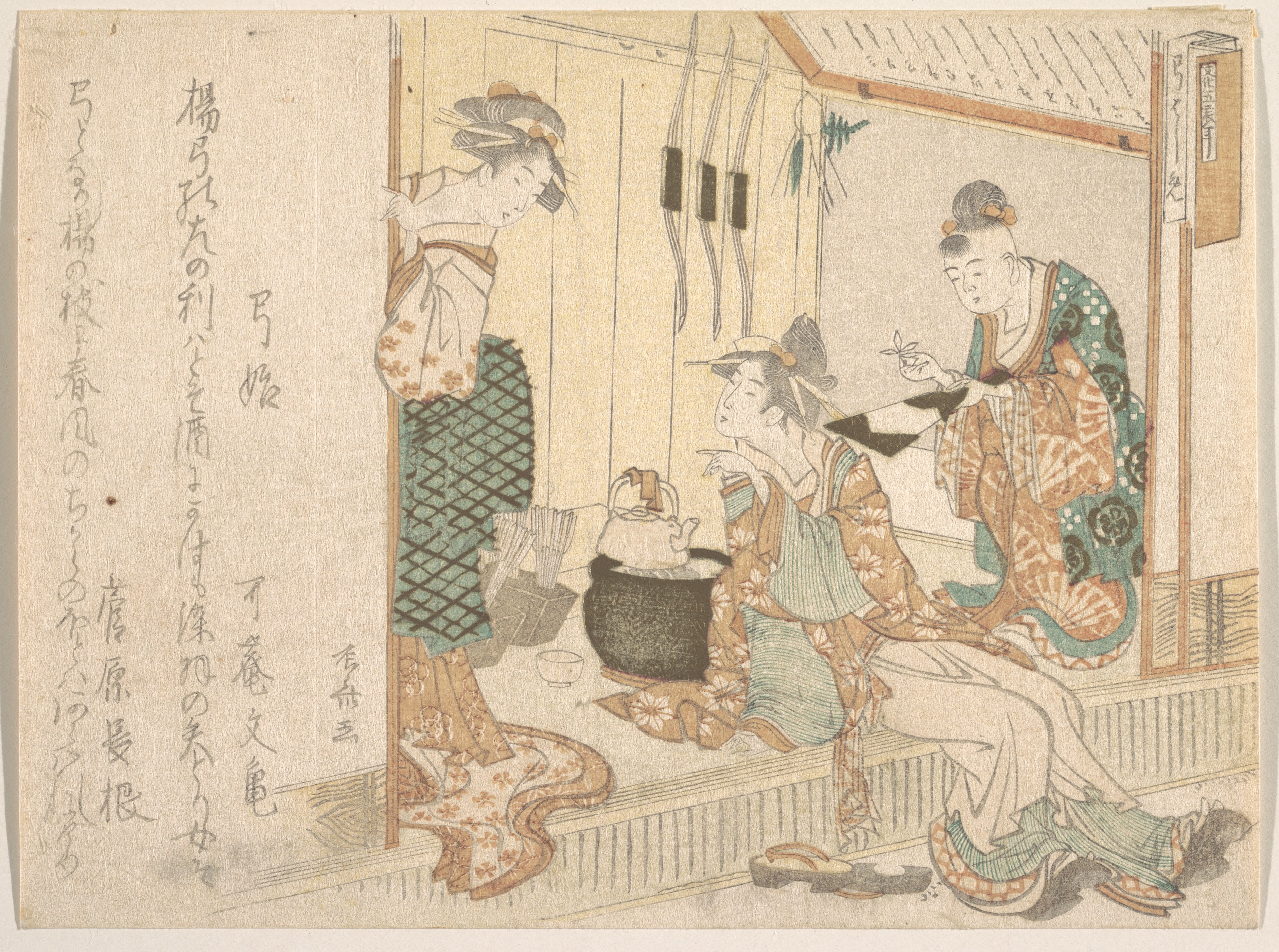
Two Young Ladies Having Tea Attended by Elderly Servant
Woodblock print (surimono); ink and color on paper
Frequently Asked Questions
Nihonbashi was created by Ryūryūkyo Shinsai (柳々居辰斎) in early 19th century.